

We may earn a commission when you buy through links on this page, at no extra cost to you. Learn more.
White wine tasting notes describe a wine’s aromas, flavors, acidity, sweetness, body, texture, and finish, helping you recognize its style and understand what makes each bottle distinctive. Common descriptors include lemon, green apple, pear, peach, tropical fruit, white flowers, fresh herbs, and toasted nuts. Learning to recognize these characteristics makes it easier to compare grapes such as Chardonnay, Sauvignon Blanc, Pinot Grigio, and Riesling. You do not need professional tasting experience or an elaborate vocabulary to describe a white wine accurately.
A useful tasting note goes beyond saying that a wine tastes fruity or refreshing. It explains which fruits you recognize, how the wine feels in your mouth, whether its acidity is prominent, and what remains after each sip. These observations provide a practical way to understand different white wine styles, choose bottles that suit your preferences, and make more informed food pairings. The following guide explains the main characteristics to look for and provides examples you can use during your next tasting.
The Main Elements of White Wine Tasting Notes
Good white wine tasting notes describe six main characteristics: appearance, aroma, flavor, acidity, body, and finish. Evaluating these elements separately gives you a clearer picture of the wine before combining them into a concise description.
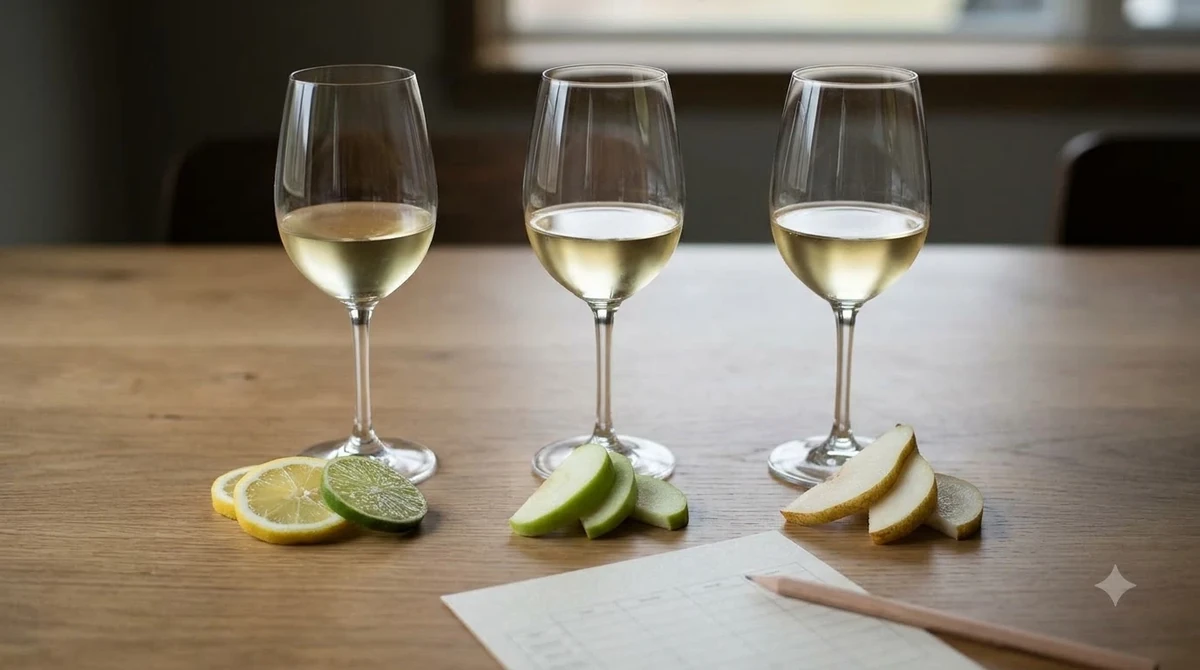
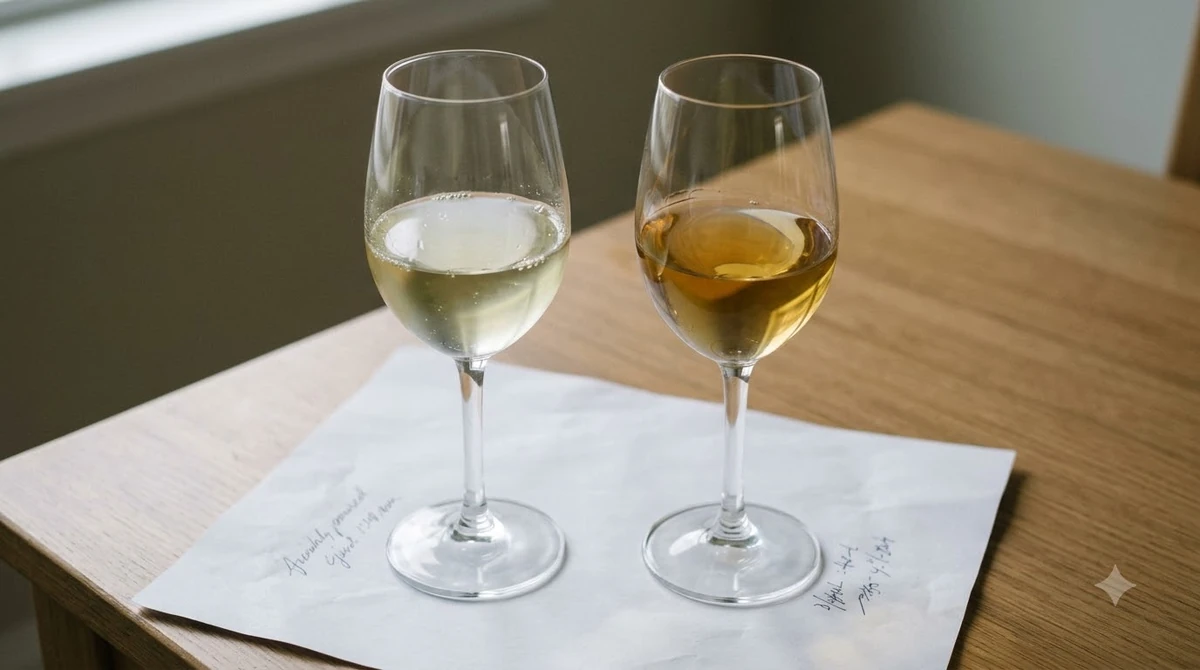
Appearance is the first characteristic to examine. White wines can range from nearly transparent with a greenish tint to pale straw, deeper yellow, gold, and amber. A young Sauvignon Blanc might appear pale lemon-green, while an oak-aged Chardonnay can have a deeper golden appearance. Color provides useful information, although it cannot establish grape variety, age, or quality by itself.
Aroma describes what you smell before tasting. Common white wine aromas include lemon, grapefruit, apple, pear, peach, pineapple, jasmine, honeysuckle, and fresh-cut grass. Flavor describes what you perceive while the wine is in your mouth. Aromas and flavors frequently overlap, but they do not always match exactly. A wine might smell strongly of lime while delivering more noticeable peach and apple flavors.
The remaining characteristics explain how the wine behaves on the palate. Acidity creates freshness and mouthwatering sensations, sweetness describes perceptible residual sugar, and body refers to the wine’s weight and texture. Finish describes how long its flavors linger after the sip.
For a practical tasting, give each characteristic its own short description rather than trying to identify everything simultaneously. For example, you might record pale straw color, medium-intensity lemon and pear aromas, high acidity, light body, and a clean citrus finish. This is already a useful tasting note because it communicates the wine’s structure as well as its flavors.
Fruit, Floral, Herbal, and Mineral Aromas
White wine aromas generally fall into recognizable families, including citrus, tree fruit, stone fruit, tropical fruit, flowers, herbs, and earthy or mineral impressions. Identifying the broad family first makes it easier to find a more precise descriptor without guessing at complicated terminology.
Citrus aromas are among the easiest to recognize. Lemon, lime, grapefruit, orange peel, and mandarin are common descriptions. Sauvignon Blanc and Riesling frequently show pronounced citrus characteristics, while Chardonnay can display lemon and grapefruit, particularly in fresher, cooler-climate expressions.
Tree fruit aromas include green apple, yellow apple, pear, quince, and sometimes baked apple. Pinot Grigio frequently shows pear and apple, while Chardonnay can move from crisp green apple toward riper yellow apple and baked fruit. These descriptions communicate ripeness as well as fruit character.
Stone fruit aromas include peach, apricot, nectarine, and sometimes white peach. They are particularly useful descriptors for Viognier, Riesling, Chenin Blanc, and fuller expressions of Chardonnay. Tropical fruit descriptions include pineapple, mango, guava, passion fruit, and melon. These aromas often become more noticeable in wines made from grapes grown in warmer conditions.
Floral aromas include jasmine, honeysuckle, orange blossom, acacia, and white rose. Muscat, Gewürztraminer, Riesling, and Viognier can be particularly expressive in this category. Herbal aromas include cut grass, basil, mint, thyme, fennel, and green pepper. Sauvignon Blanc is especially associated with fresh herbs and grassy notes.
Mineral descriptions require a little more care. Wine professionals sometimes use words such as flint, chalk, wet stone, slate, and saline to describe sensations or impressions. These terms are useful tasting vocabulary, but they should not be interpreted as proof that the wine literally contains the mineral it seems to resemble.
Tip: Start with a broad category before choosing a specific aroma. If you recognize citrus, decide whether it resembles lemon, lime, grapefruit, or orange. If you cannot distinguish the exact fruit, simply writing citrus is a perfectly useful tasting observation.
A practical way to improve your vocabulary is to smell familiar ingredients separately. Compare a fresh lemon with an orange, a green apple with a ripe pear, and fresh basil with cut grass. These everyday references make it easier to recognize similar aromatic impressions in a wine glass.
How Popular White Grapes Taste
Different white grape varieties have recognizable tasting patterns, although climate, vineyard conditions, harvest timing, and winemaking can change their expression. Chardonnay, Sauvignon Blanc, Pinot Grigio, and Riesling are particularly useful starting points because their typical profiles offer clear contrasts.
Chardonnay is versatile and can produce wines ranging from crisp and restrained to rich and full-bodied. Unoaked examples commonly show green apple, lemon, pear, and sometimes white flowers. Oak-aged versions may introduce vanilla, toast, hazelnut, baking spice, and buttery impressions. Chablis in Burgundy is a familiar example of a fresher Chardonnay style, while some California expressions are richer and more generous in texture.
Sauvignon Blanc is generally aromatic, dry, and high in acidity. Common tasting notes include grapefruit, lime, gooseberry, green apple, fresh grass, and green herbs. Sancerre in France’s Loire Valley often provides a restrained citrus and herbal expression, while Marlborough in New Zealand is widely associated with pronounced aromatic intensity and tropical or citrus fruit.
Pinot Grigio, also called Pinot Gris, often produces light-bodied wines with refreshing acidity. Italian examples commonly display lemon, pear, green apple, and subtle floral notes. Pinot Gris from Alsace can be fuller-bodied, more aromatic, and sometimes off-dry or sweet. The difference is primarily one of regional style and winemaking rather than a different grape variety.
Riesling is known for high acidity and expressive aromas. Its flavor profile can include lime, green apple, peach, apricot, flowers, and sometimes a distinctive petrol-like note in developed wines. Riesling is produced in dry, off-dry, and sweet styles. German examples can demonstrate a broad range of sweetness, while Alsace is particularly associated with dry expressions.
Several other grapes are useful to recognize. Albariño from Rías Baixas in Spain commonly displays lemon, peach, and saline impressions. Grüner Veltliner from Austria can show green apple, citrus, and white pepper. Chenin Blanc from the Loire Valley and South Africa ranges from crisp and dry to richly sweet, while Viognier is associated with apricot, peach, and white flowers.
The following table provides a practical reference for comparing the most recognizable styles. The characteristics are typical descriptions rather than rules that every bottle must follow.
| Grape variety | Common tasting notes | Acidity | Typical body | Common style |
|---|---|---|---|---|
| Chardonnay | Apple, lemon, pear, vanilla, toast | Medium | Medium to full | Dry |
| Sauvignon Blanc | Grapefruit, lime, grass, gooseberry | High | Light to medium | Dry |
| Pinot Grigio | Pear, lemon, green apple | Medium to high | Light | Usually dry |
| Riesling | Lime, peach, apple, flowers | High | Light to medium | Dry to sweet |
| Albariño | Lemon, peach, saline notes | High | Light to medium | Dry |
| Viognier | Apricot, peach, white flowers | Medium to low | Medium to full | Usually dry |
| Chenin Blanc | Apple, quince, honey | High | Light to full | Dry to sweet |
| Grüner Veltliner | Lime, green apple, white pepper | High | Light to medium | Usually dry |
These comparisons are especially helpful when tasting two wines side by side. A Sauvignon Blanc and a Chardonnay might both display citrus aromas, but the Sauvignon Blanc will typically feel more sharply acidic and herbaceous, while the Chardonnay may have greater weight and a rounder texture. Comparing similar characteristics makes the differences easier to recognize.
For another comparison of the familiar flavor profiles of these three popular grapes, the Total Wine white wine tasting guide discusses their typical aromas, regional differences, and food pairings.
Acidity, Sweetness, and Body on the Palate
Acidity, sweetness, and body are three of the most important structural characteristics in white wine. They explain why two wines with similar fruit aromas can feel completely different when tasted.
Acidity creates freshness and stimulates saliva production. A high-acid wine can make your mouth water and leave a lively, crisp impression. Sauvignon Blanc and Riesling are classic examples of high-acid white varieties. A wine with lower acidity generally feels softer and rounder, while insufficient acidity can make it seem flat or flabby.
To assess acidity, take a small sip and notice what happens along the sides of your tongue and beneath your jaw. Does your mouth water immediately? Does the wine feel sharply tart, moderately refreshing, or relatively soft? Descriptors such as crisp, lively, fresh, bright, and sharp help communicate different levels of acidity.
Sweetness refers to the sugar remaining after fermentation, known as residual sugar. A dry white wine has little perceptible sweetness, while an off-dry wine has a noticeable but restrained sweet impression. Medium-sweet and sweet wines have progressively more pronounced sweetness. Riesling and Chenin Blanc demonstrate how the same grape can produce very different sweetness levels.
It is important to distinguish sweetness from ripe fruit aromas. A wine that smells of pineapple, mango, or ripe peach can still be completely dry. Likewise, alcohol can create a slightly sweet impression even when little residual sugar remains. Describe what you actually perceive on the palate rather than assuming that fruity aromas mean sweet wine.
Body describes the weight and thickness of the wine in your mouth. A useful comparison is milk: skim milk represents a light body, whole milk represents a medium body, and cream represents a full body. Pinot Grigio is often light-bodied, while an oak-aged Chardonnay can be noticeably fuller and creamier.
Alcohol, extract, residual sugar, and winemaking choices can all influence perceived body. A wine with more alcohol may feel warmer and heavier, while oak aging and malolactic fermentation can contribute additional richness and texture. These characteristics are particularly useful when comparing a lean Sauvignon Blanc with a fuller Chardonnay.
White wines generally contain much less noticeable tannin than red wines. You might occasionally encounter a slight drying sensation, particularly in certain skin-contact or textured white wines, but acidity and body usually provide more useful starting points for evaluating conventional white wine styles.
How Climate and Winemaking Change Wine Flavors
The same white grape can produce remarkably different wines depending on where it grows and how the winemaker handles fermentation and maturation. Climate influences fruit ripeness and acidity, while decisions involving stainless steel, oak, and malolactic fermentation influence aroma and texture.
Cool-climate conditions generally help grapes retain acidity and produce wines with fresher fruit characteristics. Chardonnay from Chablis, for example, commonly displays citrus, green apple, and a restrained texture. Sauvignon Blanc from the Loire Valley can show grapefruit, gooseberry, fresh herbs, and pronounced freshness.
Warmer growing conditions can encourage riper fruit flavors and a fuller impression. Sauvignon Blanc may shift toward passion fruit, melon, and other tropical notes, while Chardonnay can show peach, pineapple, and yellow apple. This does not mean warmer-climate wine always has low acidity; vineyard altitude, harvest decisions, and regional conditions also matter.
Stainless-steel fermentation is frequently used to preserve fresh fruit and floral characteristics. It is common in styles of Sauvignon Blanc and Pinot Grigio where aromatic freshness is a priority. Oak barrels, on the other hand, can contribute notes of vanilla, toast, baking spice, and nuts, while maturation can change the wine’s texture.
Malolactic fermentation is another important influence, particularly in Chardonnay. During this process, sharper malic acid is converted into softer lactic acid. Depending on the wine and its production, this can create a rounder mouthfeel and buttery or creamy impressions. It is not the same process as simply adding butter flavor to the wine.
Lees aging can also influence texture and aroma. Lees are the spent yeast cells remaining after fermentation. Contact with them, particularly when accompanied by stirring, can contribute a fuller mouthfeel and notes reminiscent of bread dough, pastry, or yeast. These characteristics are common in some richer white wines and traditional sparkling wine styles.
When comparing tasting notes, consider these influences before deciding that a particular aroma is an inherent characteristic of the grape. Two Chardonnays may share apple and citrus flavors but differ substantially in richness, oak character, and finish. The grape establishes a starting point, not a complete description.
For additional context on how alcohol, oak aging, malolactic fermentation, and lees contact influence texture, the Wine.com guide to full-bodied white wines explains several of the main winemaking factors behind richer white wine styles.
How to Taste and Record White Wine Properly
A consistent tasting method makes it easier to identify aromas and compare wines accurately. Use the same sequence for each bottle, give yourself time to notice individual characteristics, and write down your observations before looking at other people’s descriptions.
Step 1: Examine the appearance. Pour a small sample into a clean, clear glass. Hold it against a white background and observe its clarity, color, and intensity. Record whether the wine appears pale greenish, lemon, straw, gold, or amber. Avoid assuming that a darker color automatically indicates better quality.
Step 2: Swirl and smell. Gently swirl the wine to release its aromas. Bring the glass toward your nose and take a few short sniffs. Start with the strongest impression, then identify additional details. You might recognize citrus first, followed by green apple, white flowers, or fresh herbs.
Step 3: Taste a small amount. Take a modest sip and let the wine spread across your palate. Notice whether the flavors match the aromas. Pay attention to sweetness, acidity, alcohol warmth, and texture. Try to distinguish between a light, crisp wine and one that feels rounded and substantial.
Step 4: Evaluate the finish. Notice what remains after swallowing or spitting. Does the citrus disappear quickly? Does peach linger? Do you notice bitterness, mineral impressions, or a pleasant fresh sensation? A long finish is generally a desirable characteristic, although a short, clean finish does not automatically make a wine unpleasant or poorly made.
Step 5: Summarize the wine. Combine your observations into one or two sentences. Mention the dominant aromas, principal flavors, acidity, body, sweetness, and finish. Add a personal preference if useful, but distinguish your enjoyment from the wine’s measurable characteristics.
A simple tasting notebook can include the producer, grape variety, region, vintage, appearance, aroma, palate, finish, and overall impression. Writing the same categories for each bottle allows you to compare different producers and regions without relying on memory alone.
Tip: Taste two contrasting wines side by side, such as an Italian Pinot Grigio and an oak-aged Chardonnay. Use the same glass shape and serving conditions, then compare acidity, body, fruit character, and finish. The differences will help you develop a more precise vocabulary.
Serving temperature also matters. Light white wines and rosé are generally best served at 45–50°F, while fuller-bodied white wines are better around 50–55°F. Excessive chilling can mute aromas, so allowing a cold Chardonnay to warm slightly in the glass can reveal more of its fruit and texture.
For a more structured exploration of varieties and styles, the Wine by Type resource provides a useful starting point. You can also compare white grape characteristics with Sancerre tasting notes, particularly when exploring the relationship between Sauvignon Blanc, citrus aromas, herbal characteristics, and acidity.
Writing Better Tasting Notes and Pairing White Wine
A strong tasting note is specific without becoming complicated. The goal is to communicate the wine’s most recognizable characteristics in a way another person can understand, rather than collecting as many descriptive words as possible.
Start by selecting two or three dominant aromas. For a crisp Sauvignon Blanc, you might write grapefruit, lime, and fresh-cut grass. For an oak-aged Chardonnay, you might select baked apple, vanilla, and toasted hazelnut. This approach makes the description more useful than a long list of unrelated fruits and spices.
Next, describe the wine’s structure. Terms such as high acidity, medium body, dry, creamy, and crisp help explain how the wine feels. Include the finish if it contributes something distinctive, such as lingering citrus, peach, or a subtle mineral impression.
For example, a useful Sauvignon Blanc tasting note could read: “Pale lemon in color, with expressive grapefruit, lime, and fresh herb aromas. The palate is dry and light-bodied, with high acidity, crisp citrus flavors, and a clean, refreshing finish.”
A Chardonnay description might read: “Medium-gold in color, with aromas of ripe apple, pear, and vanilla. The palate is dry and medium-bodied, with moderate acidity, a rounded texture, and lingering toasted notes.” These examples communicate both aroma and structure without relying on elaborate language.
Food pairing is another practical reason to understand tasting notes. High-acid Sauvignon Blanc and Albariño can complement oysters, shellfish, and fresh seafood because their acidity provides a refreshing contrast. Chardonnay with a fuller body and softer acidity can work well with roast chicken, creamy pasta, and richer fish dishes.
Sweetness matters when pairing wine with desserts and spicy food. A wine should be at least as sweet as the dessert accompanying it, or the wine can seem unpleasantly sharp. Off-dry Riesling can also complement spicy Asian dishes, as its sweetness can soften the impression of chili heat.
Acidity in food requires attention too. Highly acidic dishes, including those featuring lemon or vinegar, generally need a wine with equal or greater acidity. Otherwise, the wine can taste flat beside the food. Salt and fat can soften the perception of tannin in red wine, while oily fish can clash with tannic reds, making appropriately selected white wines useful alternatives.
When exploring red wines alongside white varieties, compare the softer tannin structure of white wine with styles such as Grenache tasting notes and Petit Verdot tasting notes. These contrasts help explain why acidity, body, and tannin matter when choosing a wine for a particular meal.
The best tasting note is one that accurately communicates what is in your glass. Use familiar language, identify the dominant characteristics, and avoid claiming to detect aromas that you cannot actually recognize.
Frequently Asked Questions
Can white wine develop petrol aromas?
Yes. Some Rieslings develop a petrol-like or kerosene-like aroma as they mature in the bottle. This characteristic is associated with a naturally occurring aroma compound called TDN. Its presence does not automatically indicate that the wine has spoiled.
What does lees aging taste like in white wine?
Lees aging can produce impressions of bread dough, yeast, pastry, and biscuit. These characteristics are particularly noticeable in some Chardonnay and sparkling wine styles. The technique can also contribute a rounder, more textured mouthfeel.
Can white wine have a smoky or flinty aroma?
Yes. Some white wines display smoky, flinty, or struck-match impressions, particularly certain Chardonnay and Sauvignon Blanc styles. These descriptions can relate to winemaking and aromatic development rather than literal smoke or stones being added to the wine.
Why does an older white wine sometimes turn amber?
White wine can gradually develop deeper golden and amber hues through oxidation and other chemical changes during aging. Some deliberately aged dessert wines are naturally deep gold or amber. Color should be considered alongside aroma, flavor, and the intended style rather than treated as a standalone sign of spoilage.
How many aromas should a beginner include in a tasting note?
Three or four well-recognized aromas are usually enough for a useful beginner description. Professional tasting assessments may include more detailed aromatic categories, but precision matters more than quantity. Identifying lemon, pear, and jasmine accurately is more informative than listing ten aromas you are unsure about.
White wine tasting becomes easier when you learn to recognize a few familiar aromas and understand how acidity, sweetness, body, and finish influence the overall experience. Start with contrasting varieties such as Chardonnay, Sauvignon Blanc, Pinot Grigio, and Riesling, then expand your vocabulary as you explore different regions and winemaking styles. With consistent practice, your tasting notes will become clearer, more accurate, and more useful when choosing and enjoying white wine.
More in Wine Types & Grapes
 What Does Mourvèdre Taste Like? Flavor Profile, Regions, and PairingsUpdated Nov 20, 2026
 What Does Marsanne Taste Like? Flavors, Styles, and Food PairingsUpdated Nov 20, 2026
 What Does Malvasia Taste Like? Styles, Flavors, and Food PairingsUpdated Nov 20, 2026
 What Does Grenache Blanc Taste Like? Flavor Profile, Styles, and PairingsUpdated Nov 20, 2026
 What Does Garnacha Taste Like? Key Flavors, Styles, and Pairing TipsUpdated Nov 20, 2026
 What Does Fruit Wine Taste Like? A Complete Flavor and Style BreakdownUpdated Nov 20, 2026