

We may earn a commission when you buy through links on this page, at no extra cost to you. Learn more.
Where is tempranillo from? Tempranillo is originally from Spain, particularly the northern Spanish regions around Rioja and Navarra, where it has been cultivated for centuries. It is Spain’s best-known red wine grape and the foundation of celebrated wines from Rioja, Ribera del Duero, and Toro. Although the grape now grows in several countries, its Spanish heritage remains central to its identity, with different regions using local names such as Tinto Fino, Cencibel, and Tinta de Toro.
Tempranillo is one of the most recognizable grapes in Spanish winemaking, producing red wines that range from fresh and fruit-forward to concentrated and complex after years of aging. Understanding its origins helps explain why Rioja and Ribera del Duero make such different expressions of the same variety, why Portuguese bottles sometimes carry unfamiliar grape names, and what to expect when choosing a Tempranillo wine. Its history also reveals how one Spanish grape became an international favorite.
Tempranillo Originated in Northern Spain
Tempranillo comes from Spain, with its historical homeland generally associated with the northern regions around Rioja and Navarra. Its cultivation in Spain dates back at least to the 1500s, making it a deeply established part of the country’s wine culture.
Wine Enthusiast identifies the Rioja and Navarra area of northern Spain as the grape’s place of origin. These neighboring regions have the climate, vineyard traditions, and winemaking history that helped establish Tempranillo as one of the country’s defining red varieties. Rioja, in particular, became internationally recognized for wines built around this grape.
There is also historical evidence of the variety under alternative names. The Lodi Winegrape Commission discusses a possible reference to Aragonés in a Spanish document from 1513. Later records mention Tempranillo wines in Rioja and Navarra in 1807. By the middle of the 19th century, the grape was already firmly associated with Rioja’s wine production.
It is important to distinguish the grape’s ancient regional history from the broader history of Spanish winemaking. Grapes have been cultivated in the Iberian Peninsula since antiquity, including during Phoenician and Roman periods. However, evidence of ancient winemaking does not establish that Tempranillo itself existed in its modern form at that time.
Modern genetic research has provided a clearer explanation of the variety’s ancestry. DNA analysis identified two parent varieties, Albillo Mayor and Benedicto, connecting Tempranillo to older Spanish grape-growing traditions rather than to a grape originating in France or Portugal.
The Meaning Behind the Name Tempranillo
The name Tempranillo comes from temprano, the Spanish word for early. It describes a practical vineyard characteristic: this grape generally ripens earlier than many other red wine varieties grown in Spain.
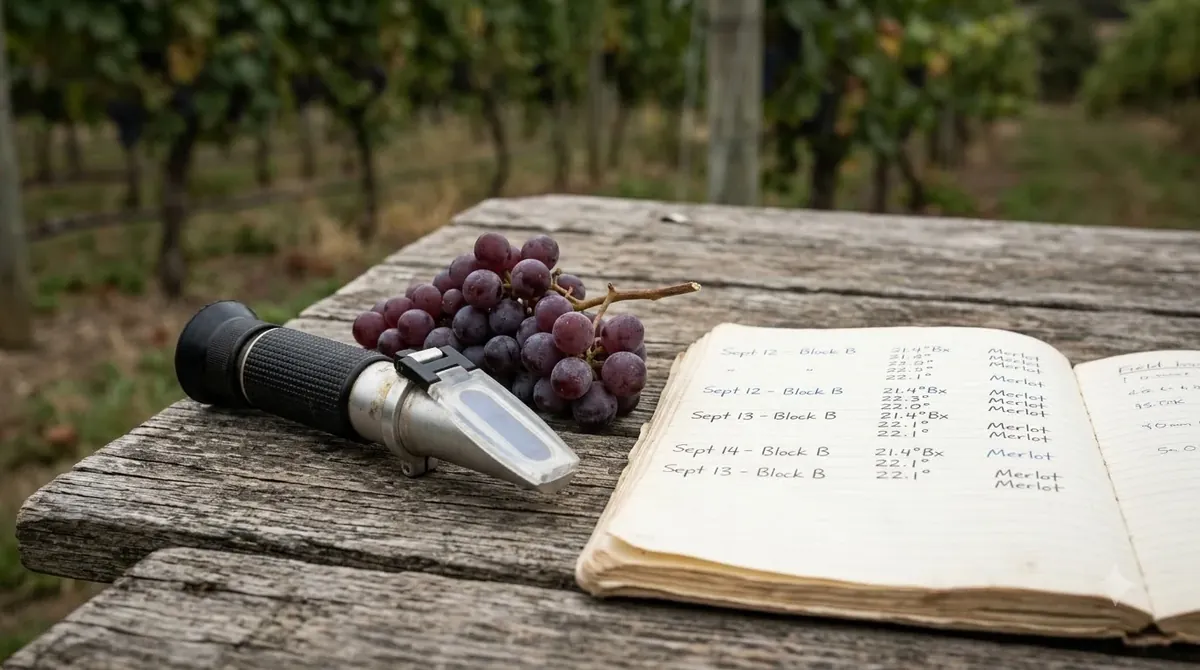
Early ripening is particularly useful in regions where autumn weather can bring cooler temperatures and rain. A grape that reaches maturity relatively early gives vineyard managers more flexibility when planning harvest dates. This characteristic is especially relevant in areas where growers must balance ripe fruit development with the preservation of freshness.
According to the International Organisation of Vine and Wine (OIV), Tempranillo has early budburst, early ripening, and a short growth cycle. The organization also describes the variety as vigorous, with an upright growth habit and yields that can range from 2 to 10 tonnes per hectare depending on vineyard conditions and cultivation practices.
These characteristics make Tempranillo a distinctive agricultural variety, but early ripening does not mean every Tempranillo wine tastes the same. Climate, soil, vineyard elevation, crop yields, and winemaking decisions all influence the finished bottle.
In warmer growing areas, the grapes can develop substantial color and sugar, potentially producing wines with higher alcohol and lower acidity. Cooler conditions and higher-altitude vineyards can help preserve freshness while allowing the fruit to reach maturity.
The name also helps explain why Tempranillo has adapted to several different Spanish regions. Its growing cycle can suit locations where growers want to harvest red grapes before increasingly unfavorable late-season weather arrives.
Tip: When choosing a Tempranillo, consider the growing region as well as the grape name. A bottle from Rioja, a high-altitude Ribera del Duero vineyard, and a warmer area such as Toro can offer noticeably different levels of concentration, freshness, and structure.
Rioja and Ribera del Duero Define Spanish Tempranillo
Rioja and Ribera del Duero are two of the most important Tempranillo regions in Spain, but they produce distinctive interpretations of the grape. Rioja is famous for its traditional blends and oak-aged wines, while Ribera del Duero is particularly associated with concentrated, structured red wines.
Rioja: The classic Spanish expression
Rioja is arguably the region most closely associated with Tempranillo internationally. According to Wine Enthusiast, the grape accounts for approximately 88% of the red grapes grown in Rioja. It provides the central structure and fruit character in many of the region’s best-known red wines.
Rioja producers commonly blend Tempranillo with smaller amounts of Garnacha, Graciano, and Mazuelo. These additional grapes can contribute different elements to the finished wine, including fruit character, acidity, aromatic complexity, and structure.
Rioja Tempranillo can show cherry, plum, and red berry flavors, with oak aging contributing notes of vanilla, spice, toast, and sometimes coconut. The exact profile depends on the producer’s approach and the amount of time spent in barrels and bottles.
Rioja also offers several aging classifications that help consumers understand how a wine has been matured. Crianza, Reserva, and Gran Reserva indicate different minimum aging requirements, although the precise rules vary according to the wine category and applicable regional regulations.
Ribera del Duero: Structure and concentration
Ribera del Duero is another major Tempranillo region, located in Castilla y León along the Duero River. The grape is frequently called Tinto Fino or Tinta del País in this area.
Compared with many traditional Rioja wines, Ribera del Duero Tempranillo is often more concentrated, with deeper color, firm tannins, and substantial fruit intensity. Higher-altitude vineyards and differences in local growing conditions contribute to the region’s distinctive style.
These wines can display ripe black cherry, plum, blackberry, and spice. Some producers emphasize freshness and fruit, while others use oak aging to develop more pronounced savory and toasted characteristics.
Toro and other Spanish growing areas
Toro is another important Spanish region for Tempranillo. There, the grape is known as Tinta de Toro, a regional name associated with the local expression of the variety.
Other Spanish areas also cultivate Tempranillo, including Navarra, La Mancha, and Penedès. In La Mancha, the grape is commonly called Cencibel, while Catalonia uses the name Ull de Llebre.
The regional differences are worth exploring because they demonstrate how one variety can produce a range of wine styles without losing its underlying identity. A fresh Rioja Crianza and a powerful Ribera del Duero Reserva may taste quite different, even though Tempranillo is central to both.
Tempranillo Has Different Names in Spain and Portugal
Tempranillo is a single grape variety with several regional synonyms, rather than a collection of unrelated grapes. Understanding these names makes it easier to recognize the variety when shopping for Spanish and Portuguese wines.
Regional naming developed through centuries of local cultivation and winemaking. As the grape spread across the Iberian Peninsula, growers and producers continued using familiar regional names instead of adopting one universal designation.
| Grape name | Region or country | Wine association |
|---|---|---|
| Tempranillo | Spain | General Spanish designation |
| Tinto Fino | Ribera del Duero | Structured red wines |
| Tinta del País | Castilla y León | Traditional Spanish reds |
| Tinta de Toro | Toro, Spain | Concentrated regional reds |
| Cencibel | La Mancha, Spain | Spanish varietal wines |
| Ull de Llebre | Catalonia, Spain | Regional red wines |
| Tinta Roriz | Douro, Portugal | Port and dry red blends |
| Aragonez | Alentejo, Portugal | Portuguese red wines |
These names are supported by grape-variety records maintained by organizations including UC Davis Foundation Plant Services. Its records identify Spain as the country of origin for the variety and list Portuguese Aragónez and Tinta Roriz among its recognized synonyms.
For wine shoppers, the most useful distinction is between the Spanish and Portuguese naming traditions. A bottle labeled Tinto Fino from Ribera del Duero is made from Tempranillo, while a Portuguese bottle labeled Aragonez can contain the same grape variety grown under different environmental conditions.
The name alone does not determine the finished wine’s flavor. Portuguese Aragonez grown in the warmer Alentejo region may show a different balance of fruit, alcohol, and acidity from Tinta Roriz grown in the Douro Valley.
It is also helpful to distinguish Tempranillo from genuinely different Spanish grapes. Garnacha, Graciano, and Monastrell are separate varieties, even though they may appear in wines alongside Tempranillo. Their contributions to a blend should not be confused with alternative names for the main grape.
How Tempranillo Spread Beyond Spain
Although Spain remains the grape’s historic center, Tempranillo has become an international variety. It is now cultivated in Portugal, the United States, Argentina, Australia, and several other wine-producing countries.
The OIV reported approximately 231,000 hectares of Tempranillo worldwide in 2015, with around 88% of the plantings located in Spain. Its report also identified Tempranillo as the world’s fifth most cultivated grape variety by vineyard area at that time.
Portugal is particularly important to the grape’s international history. Tempranillo is known as Tinta Roriz in the Douro and Aragonez in the Alentejo. In the Douro, it is used in both dry red wines and traditional fortified Port blends.
In the United States, Tempranillo has a longer history than many consumers realize. The Lodi Winegrape Commission reports that the grape reached California during the 1880s under the name Tinta Valdepeñas. For much of its early American history, it was planted in warmer areas and often used in blends.
Interest in more distinctive American Tempranillo wines increased later. Washington’s Red Willow Vineyard received plantings in 1993, while Oregon producers also developed a stronger focus on the variety. California’s Lodi region has become another area associated with Spanish grape varieties because of its Mediterranean-style growing conditions.
Other countries have also adopted Tempranillo. Australia, Argentina, Chile, and Mexico grow the variety, with local climates and vineyard conditions shaping their individual styles.
For consumers, the important point is that Spanish origin does not mean Spanish production is the only option. American and Australian producers can make varietal Tempranillo wines, but the results may differ substantially from traditional Rioja or Ribera del Duero bottlings.
What Tempranillo Wine Tastes Like
Tempranillo generally produces dry red wines with medium to full body, moderate acidity, and noticeable tannins. Its familiar flavor profile includes cherry, plum, raspberry, and darker berries, with additional savory notes developing through oak aging and bottle maturation.
Young Tempranillo often emphasizes fresh fruit. Depending on the region, drinkers may notice red cherry, strawberry, plum, blackberry, and hints of herbs. The wines can be approachable and relatively smooth, particularly when producers emphasize fresh fruit rather than extensive oak aging.
Oak-aged Tempranillo develops additional complexity. American oak can contribute vanilla, coconut, and sweet spice, while French oak may contribute different toasted, cedar-like, and spice characteristics. As the wine matures, secondary aromas can include tobacco, leather, dried herbs, and earthy notes.
How regional origin changes the flavor
Rioja Tempranillo often combines red fruit with recognizable oak influences. Traditional examples can develop savory complexity through extended maturation, while younger bottlings may be brighter and more fruit-driven.
Ribera del Duero wines frequently emphasize dark fruit, concentration, and firmer tannins. Toro examples can also be powerful, especially when grapes come from warm, dry vineyard sites.
Portuguese Tinta Roriz and Aragonez can show ripe fruit and substantial body, although their exact characteristics depend on the growing area and whether the wine is intended for dry table wine production or fortified Port.
Tempranillo compared with other red grapes
Tempranillo is sometimes compared with Merlot because both can produce approachable, fruit-forward red wines with medium to full body. However, the two varieties have different origins, growing characteristics, and typical expressions. Readers interested in the French grape can also explore where Merlot is from.
Compared with Cabernet Sauvignon, Tempranillo is generally less aggressively tannic, although some concentrated Ribera del Duero and Toro examples can have substantial structure. It can also develop savory complexity similar to wines made from Syrah, particularly after maturation.
These comparisons are useful starting points rather than strict rules. A young, lightly aged Tempranillo may feel very different from a mature Reserva, and the influence of climate and winemaking can be just as important as the grape variety itself.
Food Pairing and Serving Tempranillo
Tempranillo is a versatile food wine, particularly alongside roasted meats, grilled dishes, Spanish cured meats, and hard cheeses. Its fruit, acidity, and tannin structure make it a natural companion for many traditional dishes from Spain.
Roast lamb is one of the classic pairings. The savory flavors and rich texture of the meat complement Tempranillo’s ripe fruit and moderate tannins. Grilled beef, pork, and lamb chops also work well, particularly with wines from Ribera del Duero and Toro.
Spanish cured meats provide another excellent match. Jamón, chorizo, and other savory charcuterie pair naturally with fruit-forward Tempranillo. The salt and fat in these foods soften the perception of tannin, helping the wine feel more balanced.
Hard cheeses are also good choices. Manchego, in particular, is a traditional Spanish pairing because its nutty, savory character works with the grape’s fruit and oak influences. A mature Rioja can be especially satisfying with aged cheeses.
For lighter dishes, consider roasted vegetables, mushroom-based recipes, tomato-rich stews, and grilled chicken. Younger Tempranillo wines generally suit simpler meals, while more structured Reserva and Gran Reserva bottlings can accompany richer dishes.
Serving temperature and glassware
Serve Tempranillo at approximately 55–60°F. This temperature range allows its fruit aromas and savory characteristics to show without making the alcohol seem overly prominent. A bottle kept at typical room temperature may benefit from a short period in the refrigerator before serving.
Use a standard red wine glass with enough room for the wine to release its aromas. A 5-ounce pour is a practical serving size, and a standard 750-milliliter bottle provides approximately five glasses.
Young, full-bodied Tempranillo may benefit from 30–60 minutes of decanting to allow the wine to open up. Older bottles require more care because extended exposure to oxygen can diminish delicate mature aromas. For older wines, decanting may be useful primarily to separate sediment.
After opening, store leftover still Tempranillo in the refrigerator and aim to drink it within 3–5 days. Keeping the bottle properly sealed helps slow oxidation and preserve the wine’s fruit character.
Frequently Asked Questions
These answers cover common questions about Tempranillo’s Spanish identity, regional names, and place in Iberian winemaking.
Is Tempranillo related to Pinot Noir?
No. Genetic research identifies Albillo Mayor and Benedicto as the parents of Tempranillo. Pinot Noir is a separate grape variety with a different genetic background, despite historical speculation about a possible connection.
Is Tempranillo Spain’s most planted red grape?
Yes. The OIV’s Spanish vineyard figures identify Tempranillo as the country’s leading black-skinned grape variety. Its 2015 figures recorded approximately 203,000 hectares, representing 20.8% of Spain’s total vineyard area.
Is Tempranillo used to make white wine?
Tempranillo is principally known as a red grape, but it can also be used in rosé, sparkling, and dessert wine production. Wine Enthusiast lists all four wine categories among its possible uses.
Can Tempranillo be grown at high elevations?
Yes. Tempranillo can perform particularly well at higher elevations, where cooler conditions can help preserve freshness during grape development. Ribera del Duero is a prominent example of a Spanish region where altitude contributes to the character of the wines.
Does every Rioja wine contain Tempranillo?
No. Rioja producers make different styles, including white and rosé wines, and not every red Rioja has the same grape composition. Traditional red blends commonly include Garnacha, Graciano, and Mazuelo alongside Tempranillo, while some producers make wines with different varietal compositions.
Tempranillo’s home is Spain, particularly the historic vineyard areas around Rioja and Navarra, but its influence now extends across the Iberian Peninsula and beyond. Exploring Rioja, Ribera del Duero, Toro, and Portuguese Tinta Roriz wines is an excellent way to understand how geography and winemaking shape this versatile grape. For more information about grape origins and wine styles, explore our Wine by Type resources and guides to where Port is from and where Syrah is from.
More in Wine Types & Grapes
 What Does Mourvèdre Taste Like? Flavor Profile, Regions, and PairingsUpdated Nov 20, 2026
 What Does Marsanne Taste Like? Flavors, Styles, and Food PairingsUpdated Nov 20, 2026
 What Does Malvasia Taste Like? Styles, Flavors, and Food PairingsUpdated Nov 20, 2026
 What Does Grenache Blanc Taste Like? Flavor Profile, Styles, and PairingsUpdated Nov 20, 2026
 What Does Garnacha Taste Like? Key Flavors, Styles, and Pairing TipsUpdated Nov 20, 2026
 What Does Fruit Wine Taste Like? A Complete Flavor and Style BreakdownUpdated Nov 20, 2026