

We may earn a commission when you buy through links on this page, at no extra cost to you. Learn more.
The clearest answer to what wine goes with watermelon is a crisp, dry rosé, with sparkling wine and high-acid whites close behind. Choose a light-bodied wine that refreshes the palate without overpowering the melon’s delicate sweetness. When the fruit is served with feta, herbs, citrus, grilled ingredients, or dessert, adjust the wine to suit those additions rather than the melon alone.
Watermelon looks simple, but its flavor can shift from honeyed and candy-like to cucumber-fresh, herbal, or citrusy depending on ripeness and preparation. The most reliable match is a chilled wine with lively acidity, gentle fruit, and little or no tannin. The guide below covers easy summer pairings as well as salads, spicy dishes, and sweet courses.
Understand Watermelon’s Sweetness, Texture, and Flavor
Watermelon is gently sweet, juicy, and light in texture, so it calls for a wine with freshness rather than heavy oak or firm tannin. Its flavor can suggest honey, ripe melon, cucumber, and sometimes a faint citrus edge; those details help explain why several wine styles work.
Ripe watermelon carries a lingering, honeyed sweetness alongside an immediate burst of fruity sugar. Wine Enthusiast’s watermelon pairing advice points to a light-bodied wine with similar character, including off-dry Vouvray. This is a useful starting point because the wine has enough fruit to meet the melon’s sweetness without feeling heavy. A bone-dry, sharply acidic wine can seem austere beside a particularly ripe slice, while a rich, high-alcohol red can drown out the fruit.
Texture matters as much as flavor. Fresh watermelon releases plenty of juice and has a crisp bite, so a wine with lift and moderate weight feels more in step than a dense, oaky Chardonnay or a highly tannic Cabernet Sauvignon. Watermelon.org describes the fruit as sweet and fruity with cucumber notes and a crisp, juicy texture. Its flavor-pairing guidance also lists salty feta, flaky sea salt, lime juice, goat cheese, cucumber, dill, and parsley as natural companions. Those ingredients can change the best wine choice from a soft, fruit-led match to something sharper and more savory.
Think of the plate as a balance of sweetness, acidity, salt, and texture. The basic principles in this Wine Pairing primer are especially useful here: a sweet ingredient can make a dry wine seem less fruity, while salt often makes high-acid or sparkling wine taste more refreshing. The goal is not to make the wine taste exactly like watermelon. It is to find a bottle that keeps the fruit clear and the finish clean.
Choose Rosé, Vouvray, or Moscato for Fresh Watermelon
For plain chilled wedges, start with a dry Provençal rosé, a lightly off-dry Vouvray, or a gently sparkling Moscato. Each has enough fruit to complement the melon, but the right choice depends on whether the watermelon is very ripe or only mildly sweet.
Tip: Taste a bite of watermelon before pouring the wine. A very ripe, honeyed melon usually needs a fruitier or slightly sweeter match than a crisp, less-ripe slice.
A pale, dry rosé from Provence is the easiest all-purpose option. Its red-fruit character echoes watermelon’s bright, candy-like notes, while its acidity prevents the pairing from becoming syrupy. A rosé made with Grenache or Cinsault often gives a light, refreshing profile that works well for a picnic, poolside lunch, or a plate of cold fruit. Choose a dry style rather than assuming every pink wine tastes sweet. Rosé ranges from crisp to more structured, so grape, climate, and winemaking matter more than color. Decanter’s rosé food-pairing guide likewise recommends judging the wine by its style, acidity, and structure.
For a riper melon with a honeyed finish, try Vouvray from the Loire Valley, made from Chenin Blanc. A demi-sec or off-dry example can mirror the melon’s sweetness while retaining enough acidity to keep the finish lively. Moscato is another option when the fruit is especially fragrant or when the wine will be served as a casual summer dessert. Look for a gently sweet style rather than a concentrated, heavy dessert wine; the wine should complement the melon, not turn a few bites into a sugar-on-sugar pairing.
Serve still rosé and light whites at 45 to 50 degrees Fahrenheit, and sweet whites at 43 to 50 degrees. Chilling helps the fruit-driven aromas feel crisp and keeps the alcohol from seeming prominent. Avoid serving the wine icy cold for the entire meal: allow a little time in the glass for the aromas to open, especially with a more aromatic Chenin Blanc or Moscato.
Pair Watermelon Salads with Crisp Whites and Bubbles
When watermelon is mixed with feta, mint, basil, cucumber, or lime, move toward a high-acid white or a dry sparkling wine. The salt and herbs make the dish more savory, while citrus and vinegar call for a wine that can match their sharpness.
Watermelon and feta is a classic combination because the cheese’s saltiness contrasts with the fruit’s mild sweetness. Try Greek Assyrtiko for a firm, mineral, saline impression, or Sauvignon Blanc from New Zealand’s Awatere Valley for fresh herbal notes that echo mint and basil. Both styles have the acidity to stay lively beside a salad dressed with lemon or lime. A crisp rosé is also a natural option when the salad includes tomatoes, cucumber, red onion, or a generous amount of olive oil.
For more citrus character, pour Cava or another dry traditional-method sparkling wine. Wine Enthusiast points to citrusy Cava and Corpinnat from Penedès as matches for watermelon. The bubbles and brisk acidity are useful with feta, olives, and vinaigrette, and the wine can carry a salad from the first bite through the final forkful. A Brut style is a dependable starting point; an Extra Brut bottle can work too, provided the fruit in the salad is not very sweet or the dressing is not sharply sour.
Build the pairing around the strongest ingredient. A salad with plenty of feta, olives, or salted nuts needs a dry sparkling wine or a high-acid white rather than an oaky, low-acid Chardonnay. A salad with more fruit and less salt may be better with a fruitier rosé or off-dry Chenin Blanc. If you substitute a more pungent cheese, the wine choice can change: the advice in this guide to what wine goes with blue cheese is useful when blue cheese takes the place of feta. Keep the dressing restrained so that vinegar does not overwhelm the wine.
Match Grilled, Savory, and Spicy Watermelon to the Whole Plate
Grilling, charring, or seasoning watermelon makes it taste more savory, so a fuller rosé or a refreshing sparkling wine can be a better fit than a delicate white. When chili or strong seasoning is involved, keep alcohol and tannin moderate because both can make heat feel more intense.
Grilled watermelon develops browned edges and a more concentrated, savory impression. A fuller-bodied rosé with ripe berry fruit can meet that extra intensity, especially when the fruit is served with grilled vegetables, chicken, or pork. A dry rosé from southern France, a Spanish rosado, or a fruit-forward American rosé can work. The color alone does not tell you whether the wine is dry or sweet, so pay attention to the style and the way it is described.
Watermelon also appears with chili, jalapeño, harissa, black pepper, and tangy sauces. These ingredients create a more demanding pairing than plain fruit. A slightly off-dry Riesling or a gently sweet Moscato can soften the impression of spice, while a dry sparkling wine is refreshing when the heat is mild. Avoid a powerful Cabernet Sauvignon or a high-alcohol Syrah with a very spicy watermelon salsa: their tannin and alcohol can intensify the burn and overwhelm the fruit. For a salad with lime and jalapeño, a citrusy Sauvignon Blanc can work, but the wine should have enough fruit to stand beside the seasoning.
Consider the rest of the meal before choosing a bottle. If watermelon salsa is served alongside smoky beef brisket, the wine needs to support the meat as well as the fruit; this guide to what wine goes with beef brisket can help with the main-course decision. For a summer menu that also includes eggplant parmesan, see what wine goes with eggplant parmesan rather than expecting one delicate melon pairing to solve every dish. Salty cheese and rich grilled foods can soften tannin, but watermelon itself is too subtle to make a very structured red the first choice.
Serve Watermelon Desserts with Wine That Matches Their Sugar
For watermelon sorbet, granita, fruit salad, or a lightly sweet tart, choose a wine at least as sweet as the dessert. Off-dry Chenin Blanc, Moscato, and other lightly sweet aromatic whites are often more successful than bone-dry wines, which can taste sharp beside sugar.
A bowl of fresh watermelon with a squeeze of lime is less sweet than a syrupy fruit salad or a watermelon granita made with added sugar. Match the wine to the finished dessert, not only to the fruit. A dry rosé can work with plain melon and mint, but it may taste thin beside sorbet or a sweet glaze. For a sweeter preparation, try demi-sec Vouvray or Moscato. The wine’s fruit and residual sugar should hold their own against the dessert, while acidity keeps the combination from becoming cloying.
Chenin Blanc is especially flexible because it can be made in dry, off-dry, and sweet styles. A lightly sweet Vouvray can accompany watermelon with berries, citrus zest, or a small amount of cream. Moscato works when the dessert is simple and aromatic, such as chilled melon with mint or a fruit plate with peaches. For a richer dessert with pastry or cream, choose a wine with more concentration and sweetness so that it does not disappear after the first bite.
Do not confuse fruity aromas with actual sweetness. A wine can smell of peach, melon, or strawberry and still finish dry. That may be pleasant with plain watermelon, but sugar in the dessert changes the balance. The Washington State Wine Commission advises matching a sweet dish with equal or greater residual sugar; a tannic young red or highly acidic white can taste harsh beside it. Use that principle for watermelon popsicles, fruit-forward cakes, and sweet sauces as well as conventional desserts.
Serve, Chill, and Pour Watermelon-Friendly Wines
Temperature makes a noticeable difference with delicate fruit. Keep sparkling wine at 40 to 50 degrees Fahrenheit, light whites and rosé at 45 to 50 degrees, and sweet whites at 43 to 50 degrees so that the wine tastes fresh without losing all of its aroma.
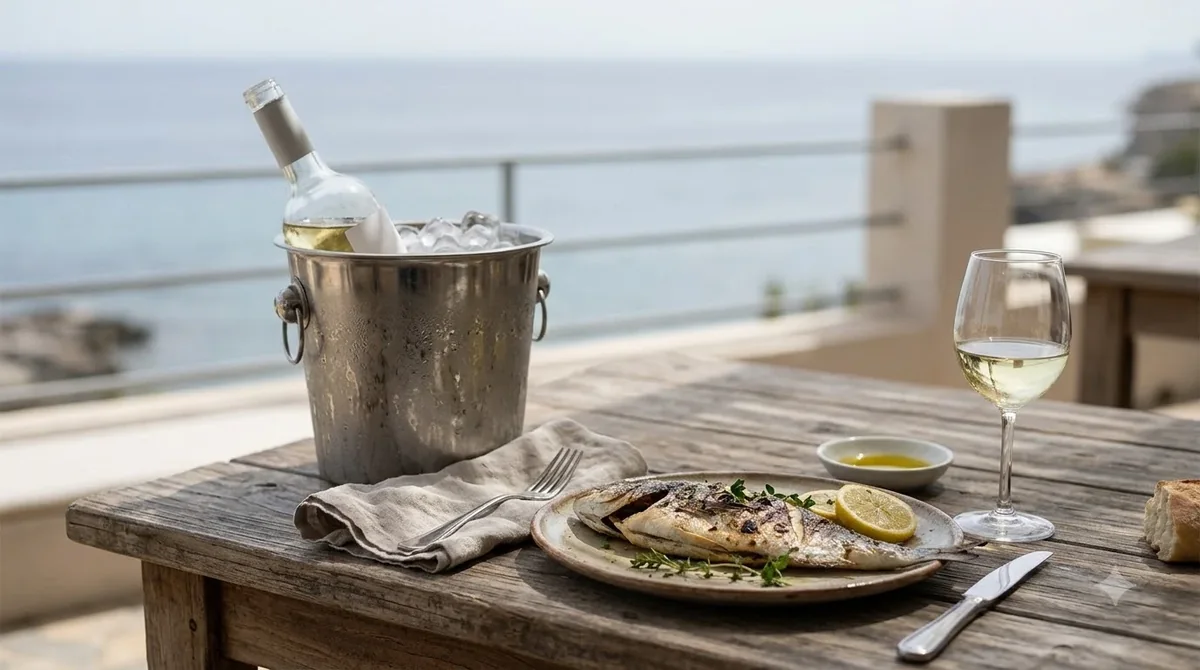
Place the bottle in the refrigerator well before serving, or use an ice bucket for a shorter chill. A white or rosé that warms on the table can begin to taste softer and more alcoholic, while a bottle served nearly frozen may seem muted. Sparkling wines need to stay cold enough to retain their lively bead. For a summer spread, it is easier to keep the bottle chilled between pours than to add ice directly to the glass, which dilutes the wine.
| Wine style | Best match | Serving temperature |
|---|---|---|
| Dry rosé | Fresh wedges, feta, herbs | 45–50°F |
| Dry sparkling | Feta, olives, citrus dressing | 40–50°F |
| High-acid white | Cucumber, lime, basil | 45–50°F |
| Sweet white | Sorbet, sweet fruit salad | 43–50°F |
Use a white-wine glass for still rosé and aromatic whites. A tulip-shaped glass gives sparkling wine room for bubbles and aromas. Pour about 5 ounces per glass; a standard 750-milliliter bottle yields roughly five servings at that size. Cut watermelon close to serving time so juice does not collect on the platter and dilute the dressing. Add feta and herbs near the end to keep their flavors distinct.
Refrigerate opened bottles with a proper closure: sparkling wine is best within 1 to 3 days, while still wine generally keeps for 3 to 5 days. Freshness varies with the wine, closure, and air left in the bottle.
Frequently Asked Questions
These quick answers cover a few details that can help when choosing rosé or serving the less familiar parts of a watermelon.
Is rosé made by mixing red and white wine?
Most rosé gets its pink color from brief contact between red-grape skins and juice during fermentation. VinePair describes a typical skin-contact period of about one to three days. Mixing finished red and white wine is technically possible, but it is not the usual method for still rosé.
Does rosé have to come from Provence?
No. Rosé is produced in many places, including Oregon, Washington State, and New York in the United States, as well as South Africa, Australia, and Chile. Italy commonly uses the word rosato, while Spain uses rosado, so those terms can help you spot the same broad style on a wine list.
Does a darker rosé mean a sweeter wine?
No. Color reflects factors such as grape variety and the amount of skin contact, not a simple scale of residual sugar. Tavel in France is known for a deeper ruby hue, yet a darker color by itself does not tell you whether the wine tastes dry or sweet.
Can watermelon rind be served with wine?
Yes, especially when the rind is pickled or seasoned rather than served plain. Watermelon.org describes the rind as crunchy with a slight tartness and lists pickling, stir-frying, sautéing, and braising among its possible uses. A pickled preparation will usually call for a crisp wine that can keep pace with its sharper flavor.
What is the difference between Cava and Champagne?
Cava is a Spanish sparkling wine, while Champagne comes from the Champagne region of France. Both use a second fermentation in the bottle to create their bubbles, but they come from different wine regions and have distinct production rules and typical flavor profiles.
For fresh watermelon, a crisp rosé is the easiest place to start; choose sparkling wine or a high-acid white when salt, herbs, and citrus enter the picture. Match the wine’s sweetness to the finished dish, serve it properly chilled, and let the preparation guide the final choice.
More in Food & Wine Pairing
 Risotto With White Wine Recipe: Make a Creamy Dinner at HomeUpdated Nov 20, 2026
 Wassail With Wine Recipe for a Festive Spiced Holiday DrinkUpdated Nov 20, 2026
 Spritz Veneziano Recipe: Make a Classic Venetian Aperitivo at HomeUpdated Nov 20, 2026
 Summer Wine Punch Recipe for Easy Homemade EntertainingUpdated Nov 20, 2026
 Bishop Recipe: How to Make a Bright, Citrus-Forward Red Wine CocktailUpdated Nov 20, 2026
 Wine Cupcakes Recipe: Bake Rich Chocolate Cupcakes at HomeUpdated Nov 20, 2026