
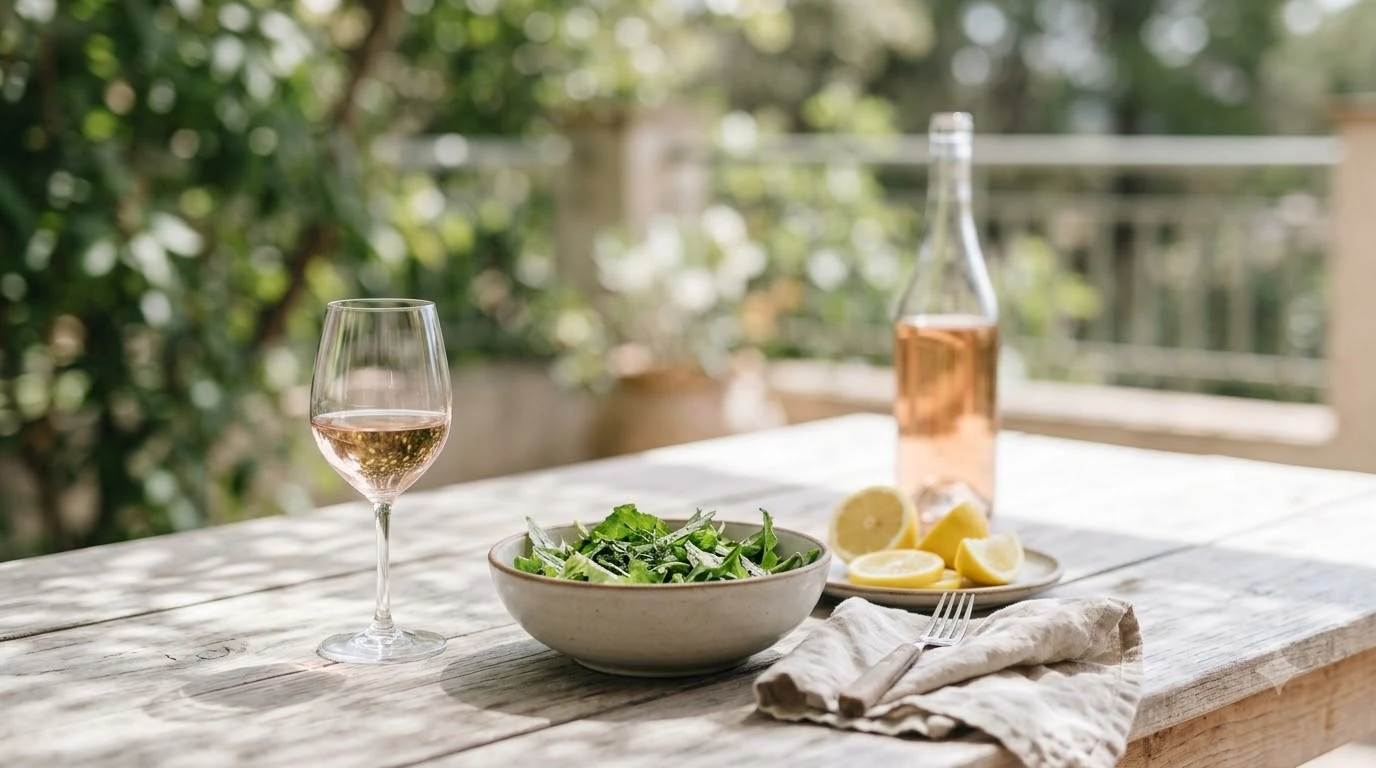

We may earn a commission when you buy through links on this page, at no extra cost to you. Learn more.
What wine goes with gazpacho? Sauvignon Blanc is one of the best choices, thanks to its crisp acidity, fresh citrus flavors, and herbal character that complement chilled tomatoes, cucumber, peppers, and garlic. Spanish Albariño, Verdejo, dry rosé, and Fino Sherry are also excellent options. The key is choosing a refreshing wine with enough acidity to stand up to the soup’s tomatoes and vinegar without overpowering its delicate vegetable flavors.
Gazpacho is a traditional Spanish cold soup, particularly associated with Andalusia, where ripe summer vegetables, olive oil, garlic, and vinegar come together in a refreshing dish. Unlike cooked soups, gazpacho retains the bright, sometimes sharp flavors of raw ingredients. That freshness makes wine selection especially important. A heavy, heavily oaked wine can overwhelm the vegetables, while a low-acid wine may taste flat beside the tomatoes and vinegar. Fortunately, several Spanish and international wines offer the freshness, acidity, and aromatic character needed for a successful pairing.
1. Why Gazpacho Needs a Fresh, High-Acidity Wine
The best wines for gazpacho have lively acidity, clean fruit flavors, and relatively light bodies. These characteristics help the wine remain refreshing alongside raw tomatoes, garlic, peppers, and vinegar rather than competing with them.
Traditional Andalusian gazpacho combines ripe tomatoes, cucumber, green bell pepper, garlic, bread, extra-virgin olive oil, salt, and Sherry vinegar. According to the traditional recipe published by Decanter, a six-serving preparation uses 1 kilogram of tomatoes, 1 cucumber, 1 green pepper, 1–2 garlic cloves, 100 milliliters of olive oil, and 2–3 tablespoons of Sherry vinegar. Each ingredient contributes something different to the pairing.
Tomatoes provide natural acidity and savory depth. Vinegar makes the soup even sharper, creating the biggest challenge for wine because an insufficiently acidic wine can seem dull or slightly sweet in comparison. The wine should have acidity equal to or greater than the food. Sauvignon Blanc, Albariño, and Verdejo are useful choices because their fresh acidity helps them maintain their character.
Raw garlic adds another complication. Its pungent flavor can overwhelm delicate wines, particularly those with subtle aromas or pronounced oak characteristics. A lively white with citrus, green herbs, or mineral notes has a better chance of remaining noticeable. This is one reason a young, unoaked white generally works better than a rich, buttery Chardonnay with classic tomato gazpacho.
Olive oil contributes richness and a smooth texture, while cucumber and bell pepper add refreshing green flavors. A wine with enough acidity balances the oil without making the pairing feel heavy. Salt can also make a wine seem softer and bring out its fruit, which is helpful when the soup has been seasoned generously.
Temperature matters, too. Gazpacho is served cold, so a wine with clear aromatics and lively fruit is preferable to one that depends on subtle oak or delicate secondary flavors. The wine should refresh the palate between spoonfuls rather than dominate the meal.
2. Sauvignon Blanc: The Most Reliable White Wine Choice
Sauvignon Blanc is an excellent first choice for traditional tomato gazpacho because its high acidity, citrus flavors, and green herbal aromas complement the soup’s fresh vegetables. Choose a young, unoaked bottle with a crisp finish rather than a rich or heavily oaked example.
The grape’s natural flavor profile makes it particularly compatible with cucumber, green peppers, tomatoes, and fresh herbs. Depending on its growing region, Sauvignon Blanc can show lemon, grapefruit, lime, green apple, grass, and fresh herb characteristics. These flavors echo the ingredients in gazpacho without making the pairing feel repetitive.
New Zealand Sauvignon Blanc is a recognizable option, especially wines from Marlborough. These wines often have pronounced citrus, tropical fruit, and grassy aromas. Their expressive character works well with a strongly seasoned gazpacho, although particularly intense examples may be too aromatic for a delicate version.
For a more restrained pairing, consider Sauvignon Blanc from the Loire Valley in France. Wines from Sancerre, Pouilly-Fumé, and Reuilly can provide fresh acidity and mineral or citrus characteristics without excessive tropical fruit. Fiona Beckett recommends a more restrained Loire style such as Reuilly when a full-on New Zealand Sauvignon Blanc might be too forward.
Serving temperature makes a difference. Keep Sauvignon Blanc around 45–50°F so its refreshing acidity remains prominent while its aromas are still noticeable. Avoid serving it so cold that the wine becomes difficult to smell or taste.
There is also a practical reason to choose Sauvignon Blanc when serving gazpacho to guests. It is widely recognized, relatively easy to find, and versatile enough to accompany other summer foods. If the meal includes cucumber salad, grilled vegetables, or fresh goat cheese, the same bottle can often work throughout the meal.
For the most dependable match, look for a dry, unoaked Sauvignon Blanc with lemon, lime, green apple, and herbal notes. This style offers the right combination of freshness and aromatic intensity without introducing excessive sweetness or oak. Wine Enthusiast also recommends Sauvignon Blanc for tomato gazpacho, noting that its acidity and herbal character complement the soup’s tomatoes and garnishes. Read its wine recommendations for summer soups for additional pairing ideas.
3. Spanish White Wines: Albariño, Verdejo, and Rueda
Spanish white wines are particularly natural partners for gazpacho because they share a culinary connection with the soup’s Andalusian origins. Albariño, Verdejo, and dry white wines from Rueda provide several ways to match the soup’s acidity, freshness, and vegetable flavors.
Albariño comes primarily from Spain’s Galicia region, particularly Rías Baixas. It typically offers bright acidity, citrus, stone fruit, and sometimes saline or mineral characteristics. These flavors work especially well with cucumber, ripe tomatoes, olive oil, and seafood garnishes. Albariño is also a useful choice when gazpacho is served as a starter before grilled fish or shrimp.
Its refreshing character makes Albariño a strong alternative to Sauvignon Blanc for people who prefer less pronounced grassy aromas. The wine still has enough freshness to accompany vinegar and raw vegetables, but its fruit profile can feel rounder and more generous.
Verdejo is another excellent option, especially from Rueda in central Spain. It can show citrus, fennel, green herbs, and orchard fruit. These characteristics complement the green pepper and cucumber in gazpacho, while its acidity helps balance the tomatoes.
Look for a young, dry Verdejo without significant oak influence. Some examples have pronounced herbal aromas and a slightly bitter finish. That can be appealing with vegetable-based dishes, although a particularly bitter wine may not be ideal if the soup already contains bitter green peppers.
Rueda white wine is a useful regional category to explore. Many recognizable Rueda whites are made predominantly from Verdejo, although Sauvignon Blanc and other permitted varieties also appear in the region’s wines. Their fresh citrus character makes them particularly suitable for summer meals.
Other Spanish whites deserve consideration, too. Dry wines from Málaga and neighboring Cádiz can complement the regional ingredients, while dry white wines from Ribeiro offer another Iberian alternative. The most important characteristic is freshness rather than simply choosing a wine because it comes from Spain.
Decanter’s gazpacho pairing recommendations include Albariño, Rueda, Verdejo, and dry whites from Málaga and Cádiz. Its discussion emphasizes tartness as an important quality for wines served with this sharply flavored uncooked soup. Explore Decanter’s guide to pairing wine with Andalusian gazpacho for more details. For additional guidance on balancing wine and food characteristics, explore our Wine Pairing resource.
4. Dry Rosé and Fino Sherry: Two Excellent Alternatives
Dry rosé and Fino Sherry provide two distinctive alternatives to conventional white wine. Rosé offers refreshing red-fruit flavors without substantial tannin, while Fino Sherry brings a dry, savory, and slightly saline character that works particularly well with Andalusian flavors.
Dry rosé
A dry rosé is a particularly good choice for people who want something fruitier than Sauvignon Blanc without moving toward a sweet wine. Look for fresh strawberry, raspberry, watermelon, citrus, and subtle herbal flavors. These characteristics complement the ripe tomatoes and peppers while keeping the overall pairing light.
Provençal rosé is a natural starting point. Its pale color and generally dry, refreshing profile make it suitable for chilled vegetable dishes. Spanish rosado can be equally interesting, particularly examples made in a fresh, Provençal-inspired style.
For a more substantial gazpacho containing extra olive oil, additional garlic, or a generous vegetable garnish, choose a medium-bodied dry rosé with noticeable aromatic intensity. Very delicate rosé can disappear beside strongly seasoned soup, while a heavy, tannic rosé may feel unnecessarily powerful.
Grenache-based rosé is another useful direction. It can provide ripe berry flavors and enough body to complement the soup without the firm tannins associated with many red wines. Serve dry rosé at approximately 45–50°F.
Fino and Manzanilla Sherry
Fino Sherry is one of the most interesting traditional pairings for gazpacho. Produced in the Jerez region of Andalusia, it is a dry fortified wine with a distinctive character developed through biological aging under a layer of yeast known as flor.
Fino commonly displays almond, bread, savory, and saline characteristics. These flavors complement garlic, olive oil, salt, and the vinegar in gazpacho. Its dry finish is particularly useful because it does not introduce noticeable sweetness into an already savory dish.
Manzanilla is another excellent option. It is a style of Fino Sherry associated with Sanlúcar de Barrameda and is often particularly fresh and coastal in character. Its delicate saline qualities can make it an appealing match for gazpacho served with shrimp, crab, or other seafood.
Freshness is important when choosing either style. An opened bottle that has been stored poorly or a bottle that has spent too long on a warm shelf may lose the lively character needed for this pairing. Serve Fino or Manzanilla well chilled, around 43–50°F, and use a suitable wine glass rather than treating it merely as a small after-dinner pour.
Tip: If you are serving traditional Andalusian gazpacho at a summer gathering, offer a crisp Sauvignon Blanc and a chilled Fino Sherry. The Sauvignon Blanc provides a familiar citrus-forward pairing, while the Sherry gives guests an opportunity to experience a classic regional combination.
5. Choosing Wine for Different Gazpacho Variations
Not every gazpacho tastes the same, and the best wine depends on the ingredients, texture, acidity, and garnishes. Tomato-based gazpacho generally favors crisp whites and dry rosé, while fruit-based, creamy, or spicy variations can benefit from different wine characteristics.
Classic tomato gazpacho: Sauvignon Blanc, Albariño, Verdejo, and dry rosé are dependable choices. The wine needs sufficient acidity to balance the tomatoes and vinegar. Fino Sherry is especially suitable when the soup has pronounced garlic, olive oil, and salt flavors.
Watermelon gazpacho: Watermelon introduces a sweeter, softer fruit character. Choose a dry rosé or a crisp Riesling with enough acidity to balance the fruit. If the recipe includes lime, cucumber, and mint, Sauvignon Blanc can also work well.
White gazpacho: Some Spanish cold soups use almonds, bread, garlic, olive oil, and grapes rather than red tomatoes. This richer, nut-based style can benefit from Fino Sherry or a fresh, aromatic white wine. The almond flavors in the soup can complement the savory, nutty character of Sherry.
Avocado-cucumber gazpacho: Avocado creates a creamier texture and a richer mouthfeel. Sauvignon Blanc remains useful because its acidity and herbal flavors contrast with the smooth avocado. A fuller Chardonnay may also work, particularly if the soup has a richer texture and less vinegar.
Spicy gazpacho: Recipes containing jalapeño, serrano peppers, or hot sauce require extra care. Chili heat is amplified by alcohol and tannin, so avoid powerful, high-alcohol red wines. A fresh, aromatic Sauvignon Blanc or a lower-alcohol, slightly off-dry Riesling can be a better choice.
Seafood gazpacho: If the soup includes shrimp, crab, or scallops, consider Albariño or Manzanilla. Both have refreshing qualities that work with seafood, while their dry finishes help maintain the clean character of the dish.
Gazpacho with bread and additional olive oil: Bread and olive oil create a thicker, richer texture. A structured dry rosé or Albariño can provide enough presence to complement the extra body. Fino Sherry is also worth considering, especially if garlic and vinegar remain prominent.
The garnish deserves attention, too. Diced cucumber, green peppers, fresh basil, and parsley reinforce the case for aromatic whites. Croutons, toasted almonds, and olive oil add texture and richness, making a slightly fuller wine more appealing. If the dish includes a substantial amount of cheese, a different pairing strategy may be necessary; for example, our article on what wine goes with blue cheese explains why salty, intensely flavored cheeses require special consideration.
6. Wines to Avoid and How to Serve the Pairing
Heavy reds, highly tannic wines, strongly oaked whites, and noticeably sweet wines are generally less successful with classic gazpacho. Choosing the right serving temperature and adjusting the wine to the soup’s acidity can make an otherwise good pairing considerably more enjoyable.
Why some wines struggle
Cabernet Sauvignon is usually a poor match for traditional gazpacho. Its high tannin and substantial structure can clash with raw tomato and vinegar, while its weight overwhelms the soup’s refreshing character. Merlot is generally softer, but its medium tannin and fuller fruit profile still make it less suitable than a crisp white.
Syrah can also be too powerful, particularly examples with high alcohol and medium-plus to high tannin. Pinot Noir is lighter, with low-to-medium tannin and high acidity, but its red-fruit character does not automatically make it an ideal choice for raw tomato and garlic.
Oaked Chardonnay is another wine to approach cautiously. Vanilla, butter, toast, and creamy textures can compete with the fresh vegetable flavors. An unoaked or lightly oaked Chardonnay is more suitable for creamy avocado gazpacho than for a sharply acidic traditional recipe.
Very sweet wines are usually unnecessary because classic gazpacho is savory rather than sugary. However, a slightly off-dry Riesling can work with particularly spicy variations because a touch of sweetness softens the perception of chili heat. The wine should still have enough acidity to match the soup.
Recommended serving temperatures
Serve the wine cool enough to refresh the palate, but not so cold that its aromas disappear. The following temperatures provide useful starting points for different wine styles.
| Wine style | Serving temperature | Best gazpacho match |
|---|---|---|
| Sauvignon Blanc | 45–50°F | Classic tomato gazpacho |
| Albariño | 45–50°F | Tomato and seafood gazpacho |
| Verdejo | 45–50°F | Green vegetable gazpacho |
| Dry rosé | 45–50°F | Tomato and watermelon gazpacho |
| Fino Sherry | 43–50°F | Garlic-rich Andalusian gazpacho |
| Manzanilla Sherry | 43–50°F | Seafood and traditional gazpacho |
| Riesling | 45–50°F | Spicy or fruit-based gazpacho |
| Chardonnay | 50–55°F | Creamy avocado gazpacho |
These temperatures fall within the recommended range for light white wines and rosé, with fuller white wines requiring slightly warmer service. The table provides practical starting points rather than strict rules.
Practical serving advice
Prepare the gazpacho before opening the wine and allow enough time for the soup to become thoroughly chilled. A traditional recipe may benefit from several hours in the refrigerator, allowing the vegetables, olive oil, garlic, and vinegar to combine. Decanter’s published Andalusian recipe recommends macerating the chopped ingredients for at least 2–3 hours, or overnight, when the tomatoes lack sufficient flavor.
Do not dilute the soup with melting ice. Serve it in chilled bowls and keep the wine in a refrigerator or ice bucket until needed. A standard 750-milliliter wine bottle provides approximately five 5-ounce glasses, making one bottle suitable for a small dinner gathering.
For a more varied summer menu, serve gazpacho as a starter before grilled seafood, roasted vegetables, or a light chicken dish. If the main course is considerably richer, consider a separate wine for that course rather than expecting one bottle to complement every ingredient. For example, the pairing considerations for what wine goes with eggplant parmesan differ because the dish contains tomato sauce, cheese, and a richer baked texture.
For entertaining, a simple approach is to pour the white wine first and offer Sherry as an alternative. Keep pours moderate, use smaller tasting portions when offering multiple styles, and allow guests to compare how acidity and savory flavors interact with the soup.
Frequently Asked Questions
Does gazpacho traditionally come from Spain?
Yes. Gazpacho is particularly associated with Andalusia in southern Spain, where it developed as a cold preparation using bread, olive oil, garlic, and vinegar. Tomatoes, peppers, and cucumbers became important ingredients after crops from the Americas reached Europe. Regional variations include white gazpachos made with almonds and grapes.
Can you serve sparkling wine with gazpacho?
Yes. Dry Cava is a suitable Spanish alternative, particularly when the gazpacho is served as part of a summer celebration. Traditional-method Cava undergoes its second fermentation in the bottle, producing bubbles and a refreshing texture. Choose Brut or Brut Nature rather than a noticeably sweet sparkling style.
Is gazpacho served as an appetizer or a main course?
It can be served either way. Smaller portions are commonly used as a starter, while larger bowls with bread, hard-boiled egg, or seafood can make a more substantial meal. The portion size and garnishes influence how much body the accompanying wine should have.
Can orange wine pair with gazpacho?
Some dry, lightly structured orange wines can work with gazpacho, particularly versions containing almonds, herbs, or roasted vegetable garnishes. However, skin-contact wines vary considerably in tannin and texture. Choose a fresh example with moderate tannin rather than an intensely structured bottle.
Should gazpacho be served before or after the wine is poured?
Pouring the wine shortly before serving the soup is a practical approach. This allows the wine to reach its intended temperature while the gazpacho stays cold in the refrigerator. A small initial pour also makes it easier to adjust the pairing before serving everyone.
The best wine for gazpacho is a refreshing, dry wine with enough acidity to complement tomatoes, vinegar, and raw vegetables. Sauvignon Blanc is the easiest starting point, while Albariño, Verdejo, Spanish rosé, and Fino Sherry offer excellent alternatives. For an authentic Andalusian-inspired meal, serve the soup thoroughly chilled with a crisp Spanish white or a fresh glass of Sherry.
More in Food & Wine Pairing
 Risotto With White Wine Recipe: Make a Creamy Dinner at HomeUpdated Nov 20, 2026
 Wassail With Wine Recipe for a Festive Spiced Holiday DrinkUpdated Nov 20, 2026
 Spritz Veneziano Recipe: Make a Classic Venetian Aperitivo at HomeUpdated Nov 20, 2026
 Summer Wine Punch Recipe for Easy Homemade EntertainingUpdated Nov 20, 2026
 Bishop Recipe: How to Make a Bright, Citrus-Forward Red Wine CocktailUpdated Nov 20, 2026
 Wine Cupcakes Recipe: Bake Rich Chocolate Cupcakes at HomeUpdated Nov 20, 2026