

We may earn a commission when you buy through links on this page, at no extra cost to you. Learn more.
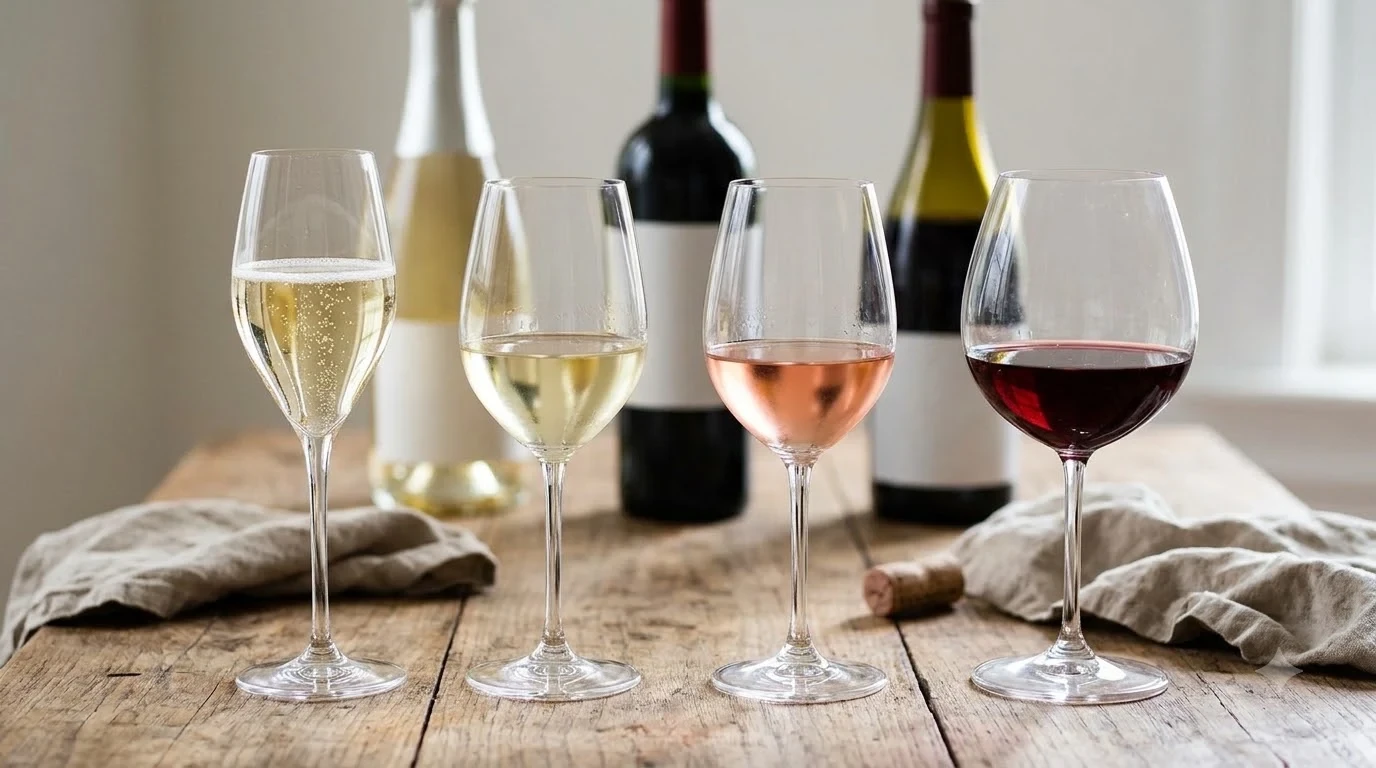
The answer to what wine goes with cheddar is Pinot Noir, dry sparkling wine, Grüner Veltliner, or fuller reds such as Cabernet Sauvignon, depending on the cheese’s age and intensity. Mild cheddar is creamy and gentle, so it suits fresh, lively wines that do not overwhelm it. Sharp or clothbound cheddar has more concentrated savory, nutty flavor and can pair with bolder reds or a gently sweet white. The best match keeps the cheese and wine at similar levels of intensity.
Cheddar is not one fixed flavor. A young supermarket block, a tangy 10-month cheddar, a crumbly clothbound wedge, and a smoked cheddar each call for a slightly different bottle. Start with the cheese itself, then account for the dish, condiments, and serving temperature. The pairings below give you dependable starting points for a cheese board, grilled cheese, burgers, and dinner.
Best Wine Pairings for Mild, Medium, and Aged Cheddar
The most reliable approach is to match a wine’s body and flavor intensity to the cheddar’s maturity. A mild cheddar aged for about 2 to 3 months is usually happiest with sparkling wine, Chardonnay, or Grüner Veltliner; an 8- to 12-month sharp cheddar can take Pinot Noir or a more structured red.
For mild cheddar, choose a dry sparkling wine such as English sparkling wine, Champagne, or Cava. Fine bubbles refresh the palate between bites, while bright acidity keeps the cheese’s creamy texture from feeling heavy. A restrained Chardonnay also works, especially when the cheese is served in slices with crackers or apple. Avoid a heavily oaked, high-alcohol Chardonnay if the cheddar is delicate: vanilla, toast, and alcohol can take over the pairing.
Medium cheddar has more tang and a fuller finish, so it gives you room to choose a light red or a fresh white. Pinot Noir’s low-to-medium tannin and high acidity keep the pairing lively, while red cherry and cranberry flavors sit comfortably beside the cheese’s lactic notes. Grüner Veltliner offers a similar sense of freshness with a subtle savory or herbal character.
Sharp, extra-sharp, and long-aged cheddars have the concentration to meet a bigger wine. Try a structured Cabernet Sauvignon, Syrah, Rioja, or Montefalco Sagrantino with a mature wedge, especially when the cheese has nutty, earthy, or beefy notes. The fat and protein in cheddar soften the grip of tannin, while the wine’s fruit gives the savory cheese a contrasting lift. For a sweeter contrast, pour a gently sweet Jurançon or demi-sec Vouvray; the touch of sweetness complements the salt and toasted-nut character.
How Aging Changes Cheddar’s Flavor and Texture
As cheddar matures, it generally becomes firmer, tangier, more savory, and often more crumbly. The University of Tennessee Extension groups mild cheddar at 2 to 3 months, medium at 4 to 7 months, sharp at 8 to 12 months, and extra sharp at more than 1 year, though individual makers use label terms differently.
| Cheddar style | Typical age band | Wine to try |
|---|---|---|
| Mild | 2–3 months | Brut sparkling wine or Chardonnay |
| Medium | 4–7 months | Pinot Noir or Grüner Veltliner |
| Sharp | 8–12 months | Pinot Noir, Syrah, or Rioja |
| Extra sharp | More than 1 year | Cabernet Sauvignon or gently sweet Jurançon |
Age changes more than the level of sharpness. Young cheddar tends to be smooth, elastic, milky, and easy to melt. With more time, moisture loss and ripening reactions concentrate the flavor, bringing out notes that can recall nuts, broth, browned butter, earth, or cooked onion. The texture may become drier and more crumbly, and a long-aged clothbound cheese can have a notably persistent finish.
Decanter’s cheese-and-wine matching guide includes traditional cheddar among hard cheeses that can stand up to bolder reds as well as Champagne and Cava. Use the label as a clue, not as a universal scale. A maker’s “sharp” may not taste exactly like another maker’s “sharp,” and two cheeses of similar age can differ because of milk, production choices, storage, and maturation style. For a pairing, smell and taste a small piece before opening the wine: does it feel mild and milky, tangy and buttery, or concentrated and savory? Choose the wine to match what is in front of you rather than relying on the name alone.
Red Wines That Work With Sharp and Clothbound Cheddar
Fuller reds are strongest with mature cheddar, especially wedges that have savory depth and a firm, crumbly texture. Cabernet Sauvignon, Syrah, Rioja, and Montefalco Sagrantino each bring enough flavor to meet a pronounced cheese, but their tannin and fruit profiles make the matches feel different.
Cabernet Sauvignon is a natural choice when the cheddar is dense, aged, and nutty. Its high tannin can seem firm on its own, but cheddar’s fat and protein soften that sensation. Choose a Cabernet with ripe black-fruit character rather than an especially austere example, and serve it with a 12-month or older cheddar, toasted walnuts, and plain water crackers. This pairing can also work with a roast-beef and cheddar sandwich, where the meat links the wine and cheese.
Syrah brings dark fruit, pepper, and a savory edge that can echo aged or smoked cheddar. Its medium-plus to high tannin makes it better with a bold cheese than with a mild, creamy slice. Try it with smoked cheddar, grilled onions, or a cheddar-topped burger. For a very powerful clothbound cheddar, Montefalco Sagrantino is another assertive option; the Wine Enthusiast cheddar pairing recommendations include Grüner Veltliner as a gentler choice for green notes, as well as English sparkling wine and Montefalco Sagrantino for other cheddar styles.
Pinot Noir is the flexible red for people who prefer less tannin. Its bright acidity and lighter structure work especially well with medium cheddar, young clothbound styles, or a board that includes apples and mushrooms. Choose a fruit-forward Pinot Noir with modest oak, and keep the portion of cheese moderate so the wine does not seem too light. Rioja can bridge the gap between Pinot Noir and Cabernet with red-fruit and savory notes. Serve lighter Pinot Noir around 55 to 60°F and fuller Cabernet or Syrah around 60 to 65°F; very warm red wine can make alcohol stand out.
White, Sparkling, and Sweet Wines for Cheddar
White wine is not a second-best option for cheddar: the right bottle can be fresher and more precise than a red. Grüner Veltliner, Chardonnay, English sparkling wine, Champagne, Cava, Jurançon, and demi-sec Vouvray cover a wide range, from crisp and dry to gently sweet.
Grüner Veltliner is a useful partner for cheddar with grassy, herbal, or delicate dairy notes. It gives the cheese a clean counterpoint without heavy oak or high alcohol; Sauvignon Blanc may seem obvious, but its citrus and tropical intensity can overwhelm subtle cheddar. The Wine Enthusiast cheddar pairing recommendations include Grüner Veltliner as a gentler choice for green notes, as well as English sparkling wine and Montefalco Sagrantino for other cheddar styles. Chardonnay is best with mild to medium cheddar: an unoaked or lightly oaked style preserves milky flavors, while a fuller version can work with macaroni and cheese. Its medium acidity is softer than high-acid Sauvignon Blanc or Riesling, an advantage with creamy rather than sharp cheese.
Sparkling wine is especially effective with melted cheddar. Champagne, Cava, or English sparkling wine brings acidity and bubbles to grilled cheese, Welsh rarebit, fondue, and macaroni and cheese. Choose Brut or Extra Brut for a salty, savory preparation; Extra Dry has a little more sweetness and can suit mild cheddar with fruit.
For aged cheddar, a sweet white can be a surprisingly balanced match. A modest level of sweetness cushions the cheese’s salt and echoes its nutty, caramel-like flavors. Try Jurançon from Southwest France or demi-sec Vouvray with a mature cheddar served on its own, with pear, or with a little fruit preserve. Keep the wine at least as sweet as any dessert served alongside it; a very dry wine can taste sour beside a sweet condiment or dessert course.
Pairing Wine With Cheddar Dishes and Toppings
Cheddar rarely arrives alone: bread, meat, vegetables, mustard, chutney, and cooking methods all shift the pairing. Choose around the whole dish, not just the cheese, and pay attention to whether the cheddar is melted, smoked, or served as a firm wedge.
For grilled cheese, macaroni and cheese, and Welsh rarebit, choose dry sparkling wine or a crisp white with enough acidity to refresh each rich bite. Brut Cava is dependable with buttery bread and melted mild cheddar; bacon or caramelized onion can call for medium-bodied Chardonnay or Pinot Noir. Chili heat needs care: alcohol and tannin can amplify the burn, so a high-alcohol Cabernet or tannic Syrah may make spicy cheddar nachos feel hotter. A fresh, lower-alcohol Riesling with a hint of sweetness is a better starting point for jalapeño cheddar or spicy queso.
Cheddar burgers and roast-beef sandwiches can handle a more assertive red: medium cheddar with a classic beef burger works with Pinot Noir or Rioja, while sharp cheddar on a smoky burger can move toward Syrah or Cabernet Sauvignon. For a brisket sandwich, factor in sauce and smoke as well as cheese; our guide to what wine goes with beef brisket explains how to match the beef and barbecue flavors.
Apple and pear slices echo cheddar’s fresh or nutty notes, while walnuts reinforce the toasted flavors in an aged wedge. Branston-style pickle, onion chutney, or fruit preserves add sweetness and acidity; try lightly sweet Jurançon with mature cheddar and fruit preserve, or Pinot Noir with apple and mushrooms. Do not force one wine to fit every cheese on a board: blue cheese is often saltier and more pungent than cheddar, and may call for Port or Sauternes. Keep the cheeses in separate tasting bites or use a second pour. See our guide to what wine goes with blue cheese for those styles. General Wine Pairing principles help when a dish has several dominant flavors.
Serving Temperature, Portions, and Cheese Board Setup
Serving temperature changes how clearly you perceive both wine and cheese. Keep light whites and rosé around 45 to 50°F, full-bodied whites around 50 to 55°F, sparkling wine around 40 to 50°F, and light reds around 55 to 60°F; fuller reds show best around 60 to 65°F.
Do not serve cheddar straight from the coldest part of the refrigerator. Take it out about 30 to 45 minutes before serving, leaving it covered as it warms slightly, then cut small wedges so guests can compare mild, medium, and aged styles. Arrange them in that order, with the strongest or smokiest cheese last, and keep fruit and chutney separate so the cheese can be tasted plain first.
A standard wine pour is 5 ounces, and a 750-milliliter bottle provides about five glasses. For a first tasting, set out 2 to 3 ounces each of mild and aged cheddar with brut sparkling wine and Pinot Noir, pouring smaller samples for comparison. Offer plain crackers or bread, water, apple slices, and unsalted nuts. Open sparkling wine shortly before pouring; a young, full-bodied red may benefit from 30 to 60 minutes of decanting. Add a fuller red or gently sweet white when the board centers on long-aged, smoky, or salty cheddar.
Tip: Taste the cheddar plain before adding honey, chutney, or fruit. That first bite tells you whether the cheese needs a fresher wine, a fuller red, or a touch of sweetness; then taste it again with the topping before choosing the final pour.
Frequently Asked Questions
These quick answers cover common cheddar details that affect shopping and serving, including the meaning of orange color, label terms, and the cheese’s origin. They are useful when choosing between blocks that look similar but may have very different character.
Does orange cheddar taste different from white cheddar?
Usually, no. Orange cheddar is commonly colored with annatto, a plant-derived coloring made from achiote seeds; it does not add a meaningful flavor to the cheese. Color alone is not a dependable guide to sharpness, quality, or age.
Are the crunchy crystals in aged cheddar salt crystals?
Not necessarily. Tiny crunchy specks in some long-aged cheddars can be tyrosine crystals, which form as proteins break down during maturation. They are one possible sign of extended aging, although not every aged cheddar develops them.
Is the word “sharp” a legally defined cheddar age?
No. “Sharp” is not a legally standardized age term, so producers may apply it differently. A stated aging period, such as 12 months or 18 months, gives a more concrete point of comparison than the word by itself.
Where did cheddar cheese originate?
Cheddar takes its name from the village of Cheddar in Somerset, southwest England. The cheese later spread far beyond the village, and cheddar is now made in many countries rather than only in its place of origin.
What is the difference between clothbound cheddar and a sealed block?
Clothbound cheddar is wrapped in cloth during maturation, while many commercial blocks mature in sealed packaging. The covering affects how moisture moves out of the cheese and how the exterior develops, so clothbound versions can have a drier texture and more pronounced savory character.
For most cheese boards, start with brut sparkling wine for mild cheddar and Pinot Noir for medium cheddar; move to Cabernet Sauvignon, Syrah, or a gently sweet white as the cheese becomes older and more intense. The best bottle is the one that matches the cheddar’s real flavor, the dish around it, and the balance of salt, fat, acidity, and sweetness on the plate.
More in Food & Wine Pairing
 Risotto With White Wine Recipe: Make a Creamy Dinner at HomeUpdated Nov 20, 2026
 Wassail With Wine Recipe for a Festive Spiced Holiday DrinkUpdated Nov 20, 2026
 Spritz Veneziano Recipe: Make a Classic Venetian Aperitivo at HomeUpdated Nov 20, 2026
 Summer Wine Punch Recipe for Easy Homemade EntertainingUpdated Nov 20, 2026
 Bishop Recipe: How to Make a Bright, Citrus-Forward Red Wine CocktailUpdated Nov 20, 2026
 Wine Cupcakes Recipe: Bake Rich Chocolate Cupcakes at HomeUpdated Nov 20, 2026