

We may earn a commission when you buy through links on this page, at no extra cost to you. Learn more.
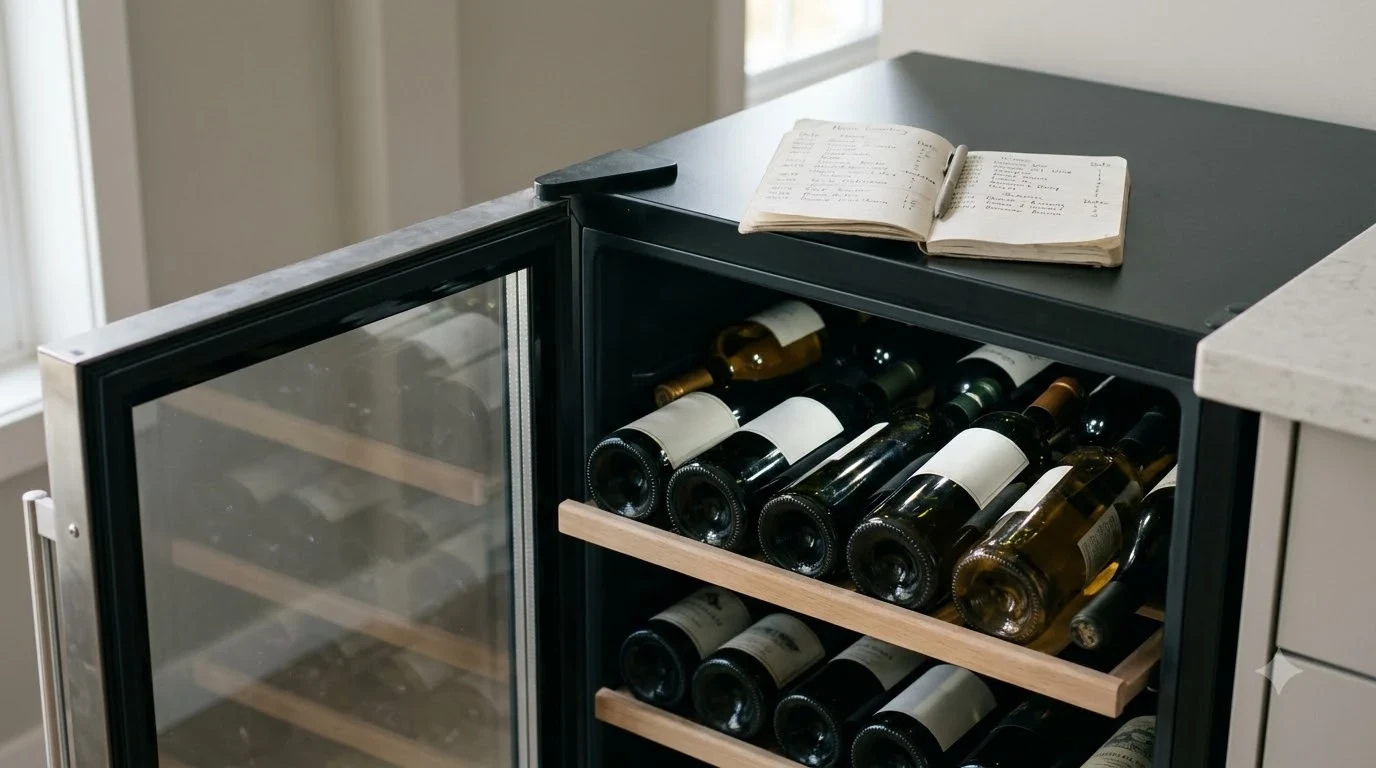
What to look for in a wine fridge comes down to stable temperature control, appropriate bottle capacity, reliable cooling, and protection from light and vibration. The right model should also fit your available space, accommodate your preferred bottle styles, and provide the storage conditions your collection needs. Whether you keep six bottles for weekend dinners or several dozen for longer-term storage, comparing these features helps you choose a refrigerator that protects your wine rather than simply keeping it cold.
A wine refrigerator is different from an ordinary kitchen refrigerator. It is designed around the needs of bottled wine, including consistent storage temperatures, suitable humidity, limited vibration, and protection from environmental conditions that can affect quality. However, not every wine drinker needs the same features. A small collection of everyday Sauvignon Blanc, Pinot Noir, and sparkling wine has different storage requirements from a collection of age-worthy Bordeaux or Burgundy. Understanding the available features before buying makes it easier to avoid paying for unnecessary capacity or choosing a unit that cannot accommodate your bottles.
Temperature Control and Storage Consistency
Temperature control should be the first consideration when comparing wine refrigerators. A dependable unit maintains a consistent environment instead of exposing bottles to repeated warming and cooling that can interfere with wine development.
A storage temperature around 55°F is a widely used target for keeping different wine styles in the same collection. Red, white, rosé, sparkling, and fortified wines can all be stored at this temperature, even though their ideal serving temperatures differ. The important distinction is that storage temperature protects the bottle over time, while serving temperature determines how the wine performs in the glass.
Look for a refrigerator with an adjustable thermostat, a clearly visible temperature display, and controls that allow small adjustments. Digital controls make it easier to monitor the cabinet without repeatedly opening the door. An accurate temperature sensor is also useful because the displayed temperature should represent the storage environment rather than simply the temperature near the cooling outlet.
Consistency matters just as much as the selected temperature. A refrigerator that repeatedly swings between warm and cold conditions can be less suitable than one that maintains a steady temperature slightly above or below your preferred setting. Frequent fluctuations can accelerate undesirable chemical changes and affect the wine’s aromas and flavor balance.
Choose a suitable temperature range
Compare the minimum and maximum temperatures offered by each model. A refrigerator with a narrow range centered on 55°F may be perfectly adequate for long-term storage. A wider adjustable range can be more practical if you also want to bring bottles closer to serving temperature before dinner.
For example, a household that regularly serves chilled Sauvignon Blanc and Chardonnay may appreciate the ability to lower the temperature of one compartment. Someone collecting Cabernet Sauvignon, Syrah, and other full-bodied reds may prioritize a stable storage setting instead. Avoid assuming that the coldest available setting is automatically the best one for wine.
Tip: Use approximately 55°F as a practical long-term storage target. Chill individual bottles to their preferred serving temperatures separately rather than storing an entire collection at serving temperature.
Single-Zone or Dual-Zone Storage
The number of temperature zones determines how flexibly a wine refrigerator can accommodate different wine styles. Single-zone models maintain one temperature throughout the cabinet, while dual-zone models provide two independently controlled compartments.
A single-zone refrigerator is generally the simpler choice for collectors who mainly store one type of wine or want to keep a mixed collection at approximately 55°F. Since red and white wines can share a suitable long-term storage temperature, separate zones are not essential for preserving a varied collection. A single-zone cabinet can therefore offer good practical value without introducing unnecessary controls.
Dual-zone refrigerators are useful for households that frequently serve different wine styles. One compartment can hold whites and rosés at a cooler temperature, while the other keeps reds at a slightly warmer temperature. This arrangement can reduce preparation time when entertaining, particularly if the household regularly serves sparkling wine, Chardonnay, Pinot Noir, and Cabernet Sauvignon.
How to decide between the two
Consider how you actually use your bottles. If most wines remain in storage until a meal or gathering, one consistent storage temperature may be sufficient. If you regularly move bottles from storage directly to the dinner table, separate temperature zones offer greater convenience.
Also examine how the zones are arranged. Some refrigerators divide the cabinet into upper and lower compartments, while others use side-by-side sections. The physical arrangement influences how many bottles each zone can accommodate and whether the shelves are convenient to reach.
Temperature separation can vary between models, so compare the advertised operating ranges rather than assuming every dual-zone refrigerator offers identical performance. Some units have a wider temperature difference between compartments than others. Check whether the controls operate independently and whether changing one zone affects the temperature of the other.
A dual-zone model is not automatically superior. If you rarely need different temperatures simultaneously, the additional compartment may consume space that could otherwise accommodate more bottles. For a practical comparison of ownership considerations, see do I need a wine fridge before deciding how much equipment your collection requires.
Bottle Capacity, Shelf Design, and Interior Space
Capacity determines how many bottles a refrigerator can store, but the advertised bottle count does not always reflect the amount of usable space available. A good buying decision accounts for bottle dimensions, shelf spacing, accessibility, and the number of bottles you expect to own.
Most wine refrigerators advertise capacity using standard 750 ml Bordeaux-style bottles. These bottles have relatively consistent dimensions and fit neatly into conventional wine racks. However, Burgundy bottles are often wider, Champagne bottles have larger bodies, and some sparkling wines require additional shelf clearance.
A refrigerator advertised for 30 bottles might not hold 30 bottles if your collection contains several wide-bodied bottles. The same issue applies to unusual bottle shapes from producers using distinctive glass designs. Consider the shape of the wines you actually purchase rather than relying entirely on the manufacturer’s headline capacity.
Allow room for collection growth
Think about your current collection and how quickly it changes. A person who typically owns six to eight bottles may find a compact refrigerator sufficient. Someone who purchases mixed cases or keeps several bottles for special occasions may benefit from a cabinet rated for 30 to 50 bottles.
Buying a refrigerator that is already close to full can become inconvenient. Bottles become harder to remove, shelf arrangements become less flexible, and there is little room for additional purchases. A reasonable amount of spare capacity makes it easier to organize wines by grape variety, region, or intended drinking date.
The following examples illustrate how different advertised capacities relate to common household storage needs.
| Advertised capacity | Typical collection size | Best suited to |
|---|---|---|
| 6-12 bottles | 4-10 bottles | Occasional wine drinkers |
| 18-24 bottles | 12-20 bottles | Regular home use |
| 28-36 bottles | 20-30 bottles | Mixed everyday collections |
| 40-50 bottles | 30-42 bottles | Frequent entertaining |
| 75-100 bottles | 60-85 bottles | Larger collections and enthusiasts |
These are planning estimates, not guaranteed loading capacities. Actual usable space depends on bottle dimensions, shelf configuration, and the refrigerator’s internal layout. A collection containing numerous Champagne bottles may require a larger cabinet than a collection consisting primarily of standard Bordeaux bottles.
Examine shelf construction
Pull-out shelves are convenient because they make it easier to access bottles stored toward the back. Wooden shelves can provide a traditional cellar appearance, while metal shelves may offer a lighter, more contemporary design. Whichever material you choose, look for sturdy supports and smooth movement.
Adjustable shelving is particularly valuable if your collection changes regularly. Removable shelves can create extra room for larger bottles, while individual storage sections can make it easier to separate everyday wines from bottles intended for special occasions.
Also consider whether the shelves support horizontal storage. Traditional cork-finished bottles are generally best stored on their sides to help maintain cork moisture. A well-designed interior should hold bottles securely without making them difficult to remove.
Humidity, UV Protection, and Vibration Control
A wine refrigerator should protect bottles from more than temperature changes. Humidity, light exposure, and mechanical vibration can also affect wine storage, particularly when bottles remain inside the cabinet for extended periods.
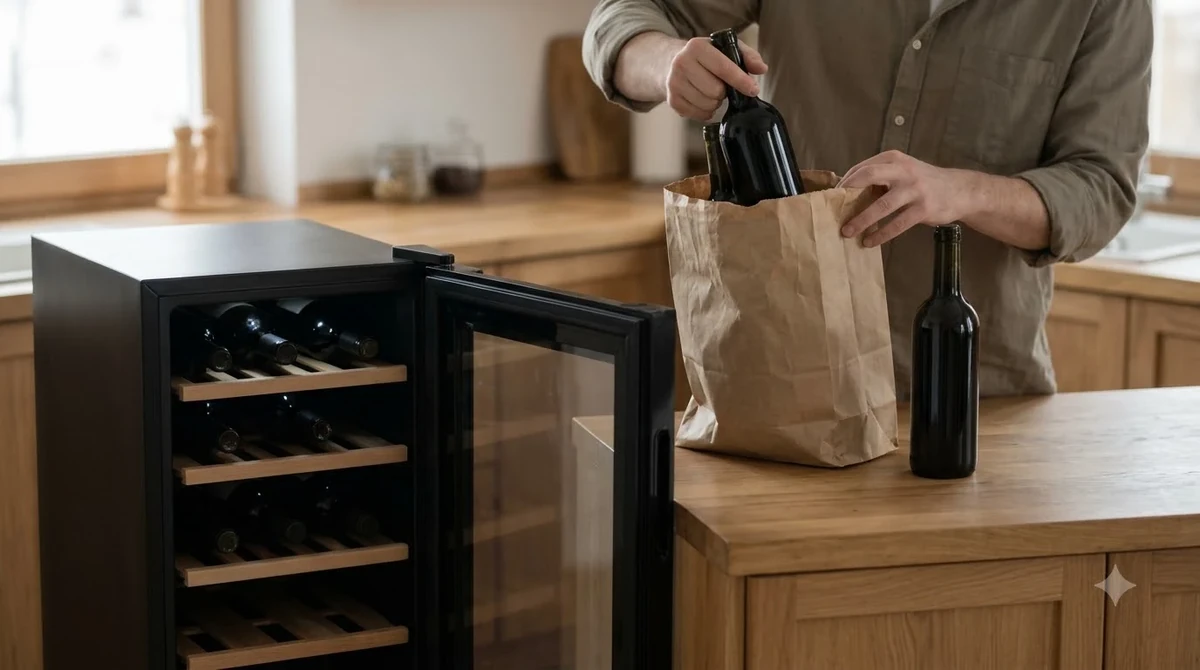
Humidity is important because natural cork closures need an appropriate moisture environment. Wine Enthusiast describes approximately 50-80% relative humidity as a useful storage range. Conditions that are too dry can contribute to cork deterioration, while excessive humidity can encourage mold and damage labels. For additional background on these storage considerations, consult Wine Enthusiast’s guide to storing wine.
Not every wine refrigerator includes an active humidity-control system. Some models rely on the cabinet’s construction and cooling system to maintain suitable conditions. If you intend to store expensive cork-finished wines for several years, humidity monitoring and an appropriate humidity-management design are useful features to investigate.
Protect bottles from ultraviolet light
Light exposure is another important consideration. Ultraviolet radiation can cause undesirable reactions in wine, sometimes producing unpleasant aromas and changes in flavor. White wines and sparkling wines can be particularly vulnerable to light damage.
Look for solid doors or UV-resistant glass. Glass doors are attractive because they make bottle labels visible and allow you to display a collection, but their protective properties matter more than their appearance. A darkened or UV-filtering glass door can help reduce exposure while maintaining visibility.
Interior LED lighting is another practical feature. LEDs generally produce less heat than traditional incandescent lighting and can illuminate shelves without creating unnecessary warming. Ideally, the lighting should be switchable rather than remaining on continuously.
Reduce unnecessary vibration
Cooling compressors, fans, and other mechanical components can generate vibration. Excessive movement may disturb sediment in older red wines and is undesirable for bottles intended for extended storage.
Look for a refrigerator with a design that minimizes vibration transfer to the shelves. Stable construction, properly supported racks, and well-isolated cooling components can all contribute to a quieter storage environment.
Noise is worth considering too. A refrigerator installed in a kitchen, dining room, or open-plan living area should operate quietly enough not to become distracting. Product specifications may list operating noise in decibels, allowing you to compare models, although actual noise levels depend on installation and surroundings.
Finally, consider odor protection. Wine stored in natural cork-finished bottles should be kept away from strong odors over long periods. A clean interior and properly sealed cabinet help maintain a more suitable environment for your collection.
Cooling Technology, Energy Use, and Reliability
The cooling system influences a wine refrigerator’s performance, noise, energy consumption, and suitability for different environments. Compressor and thermoelectric systems are the two common technologies worth comparing before purchasing.
Compressor wine refrigerators
Compressor refrigerators use a mechanical refrigeration system to remove heat from the cabinet. They are widely used in larger wine refrigerators because they can provide substantial cooling capacity and handle higher ambient temperatures than many small thermoelectric designs.
These units can be suitable for collections of 30, 50, or more bottles, depending on their construction and cooling capacity. They are also practical for homes where the refrigerator operates in a room that experiences noticeable temperature changes.
However, compressors have moving components, which means vibration and operating noise deserve attention. A well-designed model should isolate the cooling mechanism from the bottle storage area as effectively as possible.
Thermoelectric wine refrigerators
Thermoelectric systems use an electrical process to transfer heat rather than relying on a conventional compressor. Smaller wine refrigerators sometimes use this technology because it can offer quiet operation and relatively low vibration.
These models may suit compact collections in rooms with stable ambient temperatures. They can be attractive for apartments, home offices, and smaller living spaces where quiet operation is important.
The main limitation is cooling performance. Thermoelectric units generally have less cooling capacity than compressor models and can struggle when the surrounding room becomes very warm. Their performance is therefore closely connected to the temperature of the installation environment.
Compare energy efficiency
Energy consumption matters because a wine refrigerator typically operates continuously. Compare annual electricity consumption when available, rather than judging efficiency by cabinet size or cooling technology alone.
Insulation quality, door sealing, compressor efficiency, ambient temperature, and the frequency of door openings all influence electricity use. A refrigerator with better insulation may maintain its internal temperature without working as hard as a poorly insulated alternative.
Features such as automatic temperature recovery, efficient LED lighting, and well-designed ventilation can also contribute to practical operating efficiency. However, avoid assuming that a refrigerator with more electronic features necessarily uses less electricity.
For a closer look at this consideration, read about wine fridge energy efficiency when comparing models with similar capacities.
Reliability should also influence your choice. Look for a clear manufacturer’s warranty, accessible customer support, replacement-part availability, and a cooling system with a documented service history. A refrigerator is a long-term household appliance, so dependable operation is generally more valuable than a collection of decorative features.
Installation, Dimensions, and Everyday Convenience
A wine refrigerator must fit its intended location and receive adequate ventilation. Measuring the available space before purchasing is essential because built-in and freestanding models have different installation requirements.
A built-in wine refrigerator is designed for installation beneath countertops or inside suitable cabinetry. These models commonly use front ventilation to release heat, allowing them to operate in enclosed kitchen spaces when installed according to the manufacturer’s instructions.
A freestanding wine refrigerator needs open space around its ventilation areas. Wine Enthusiast’s installation guidance identifies approximately 2-3 inches of clearance around the sides and rear as typical for freestanding models, although individual requirements vary. Placing a freestanding unit inside a tightly enclosed cabinet can restrict airflow, increase operating temperatures, and affect performance.
Measure before ordering
Measure the available width, height, and depth rather than relying on the nominal dimensions of the cabinet opening. Wine Enthusiast recommends checking the width at three positions: the front, middle, and back. This approach helps account for walls and cabinets that are not perfectly straight.
Use the smallest measurement when determining whether a refrigerator will fit. For example, an opening measuring 24 inches at the front but 23.75 inches at the back should be treated as a 23.75-inch opening for installation planning.
Depth also requires attention. Account for the door handle, hinges, electrical outlets, baseboards, and any plumbing behind the unit. A refrigerator that fits the cabinet opening on paper may still extend too far into a walkway or interfere with nearby appliances.
Check door movement and shelf access
The door should open far enough to allow shelves to slide out and bottles to be removed comfortably. This becomes especially important in compact kitchens where the refrigerator sits beside an island, wall, or another appliance.
Check the door hinge position and whether it can be reversed. A reversible door can make installation easier in rooms where the available opening direction is restricted.
Also consider the handle design and the amount of space required to remove bottles from the front shelves. A refrigerator with excellent capacity is less convenient if its shelves cannot extend far enough to reach the bottles behind them.
Other practical features include adjustable leveling feet, a door alarm, child-resistant controls, and an interior light. These are not essential for every household, but they can make regular use easier.
Pay particular attention to the electrical supply. The refrigerator should have a suitable outlet and should be installed in accordance with the manufacturer’s electrical and ventilation instructions. Avoid relying on extension cords unless the manufacturer specifically permits their use.
Budget, Warranty, and Features Worth Prioritizing
The best wine refrigerator is not necessarily the most expensive model. A sensible purchase balances cooling performance, usable capacity, installation requirements, and long-term reliability against the features you will actually use.
Start by identifying your essential requirements. Temperature stability, sufficient bottle capacity, and suitable ventilation should take priority over decorative lighting, wireless connectivity, or elaborate control panels. A simple refrigerator that maintains an appropriate storage environment is more useful than an impressive-looking unit that does not suit your collection.
Single-zone models may be sufficient for people who primarily want to store wine at approximately 55°F. Dual-zone models can justify their additional complexity for households that frequently serve red and white wines at different temperatures. Likewise, a large cabinet is useful only if the collection requires its additional space.
Understand the total ownership cost
Consider more than the initial purchase. Electricity consumption, replacement components, maintenance requirements, and potential repair costs can influence the overall expense of owning a wine refrigerator.
Check whether the warranty covers the entire appliance or only selected components. Cooling systems and electronic controls are particularly important because problems with either can affect the refrigerator’s ability to maintain stable storage conditions.
Compare the service arrangements offered by different manufacturers. A longer warranty is useful, but access to replacement parts and qualified repair services can be equally important. A refrigerator that cannot be repaired conveniently may become an expensive inconvenience.
For a clearer purchasing budget, compare the factors involved in how much does a wine fridge cost before narrowing your shortlist.
Prioritize features by collection type
Different wine collections benefit from different combinations of features. Someone who mainly buys inexpensive bottles for immediate consumption may need little more than reliable cooling and enough space for a few bottles. A collector holding age-worthy wines for several years should pay closer attention to temperature consistency, humidity, UV protection, and vibration control.
For a mixed household collection, adjustable shelves and two temperature zones may offer more practical value than premium cabinetry. For a small apartment, a quiet thermoelectric unit may be preferable if the room remains cool enough for reliable operation.
The following priorities provide a useful starting point:
- Small everyday collection: Compact dimensions, reliable temperature control, and easy-access shelves.
- Mixed red and white collection: Dual-zone operation, adjustable temperature settings, and flexible shelving.
- Long-term collection: Stable cooling, humidity management, UV protection, and low-vibration construction.
- Kitchen installation: Front ventilation, accurate dimensions, and sufficient door clearance.
- Living-room installation: Quiet operation, attractive construction, and effective light protection.
It is also helpful to consider whether your collection is likely to grow. If you currently own 15 bottles but regularly purchase wine in six-bottle or mixed cases, a slightly larger refrigerator may be a more practical long-term purchase than a cabinet that immediately reaches capacity.
Frequently Asked Questions
Can wine bottles be stored upright in a wine refrigerator?
Upright storage is generally acceptable for short-term storage and bottles sealed with screw caps. Natural cork-finished bottles intended for longer storage are generally better kept horizontally. Sparkling wine can also be stored horizontally, provided the shelf safely supports the bottle’s larger shape and weight.
Can a wine fridge be installed in a garage?
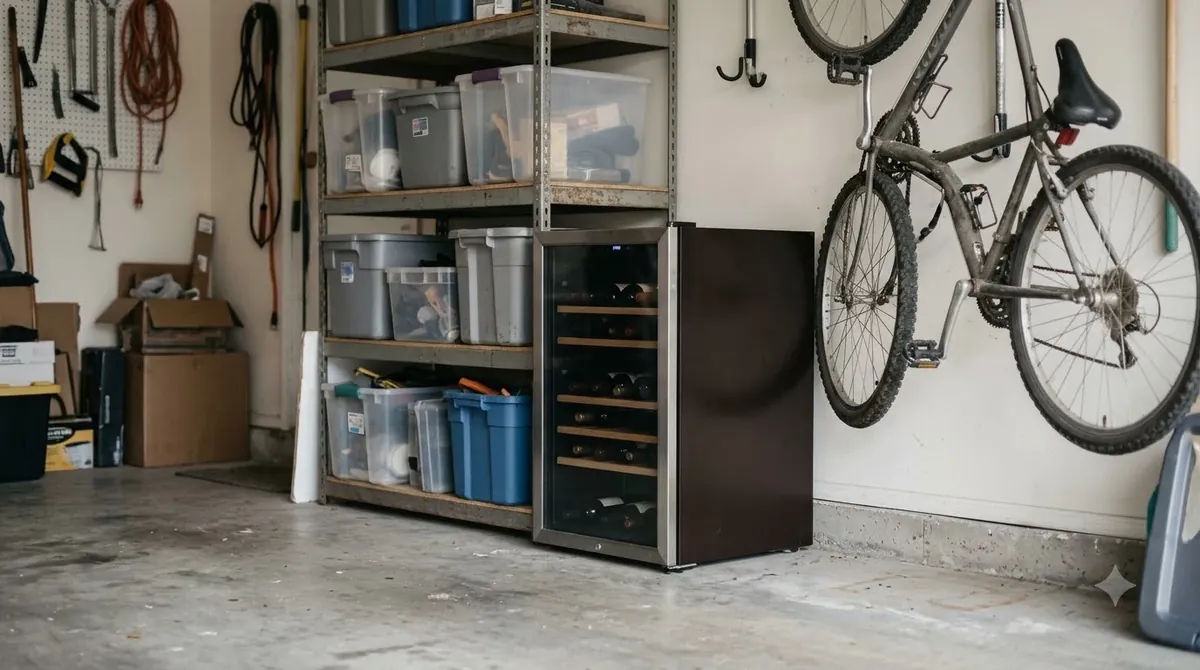
Some compressor wine refrigerators can operate in garages, but the appliance must be rated for the temperature range of that environment. An unheated garage can become very cold during winter, while a poorly insulated garage can become extremely hot during summer. Check the manufacturer’s specified ambient operating range before installation.
Does a wine refrigerator need to remain plugged in continuously?
Yes, a wine refrigerator intended for ongoing storage should generally remain powered so it can maintain its selected temperature. Switching it off for extended periods allows the interior temperature to follow the surrounding room. Frequent interruptions can also undermine the stable conditions that make dedicated wine storage useful.
How long can wine remain in a wine refrigerator?
There is no single storage deadline for all wines. Many everyday wines are intended to be consumed relatively young, while age-worthy wines such as certain Bordeaux, Barolo, and premium Riesling can develop over several years under appropriate conditions. The wine’s structure, vintage, producer, closure, and intended drinking window determine its aging potential.
Is a wine refrigerator suitable for Champagne and sparkling wine?
Yes. Champagne, Cava, and Prosecco can all be stored in a suitable wine refrigerator. Their larger bottle dimensions may require adjustable shelving or additional clearance. For serving, sparkling wines are generally best chilled to approximately 40-50°F, which is colder than the usual long-term storage target.
Choosing a wine refrigerator becomes easier when you focus on the conditions your bottles actually need rather than the number of features advertised on the door. Prioritize stable temperature, realistic capacity, suitable ventilation, and protection from light and vibration, then consider additional conveniences such as dual zones and adjustable shelving. A well-chosen refrigerator can make everyday wine storage simpler while giving your collection a more consistent environment for the years ahead.
More in Wine Buying Guides
 Cheap Red Blend: How to Find a Flavorful Bottle for LessUpdated Nov 20, 2026
 Pinot Grigio Gift: How to Choose a Bottle They’ll EnjoyUpdated Nov 20, 2026
 Best White Wine at Total Wine for Every MealUpdated Nov 20, 2026
 Wine Fridge Replacement Shelves: Find the Right FitUpdated Nov 20, 2026
 Best Sparkling Wine Under 20: Find Bubbles Worth BuyingUpdated Nov 20, 2026
 Best Wine For Birthday Celebrations With Perfect Party PairingsUpdated Nov 20, 2026