
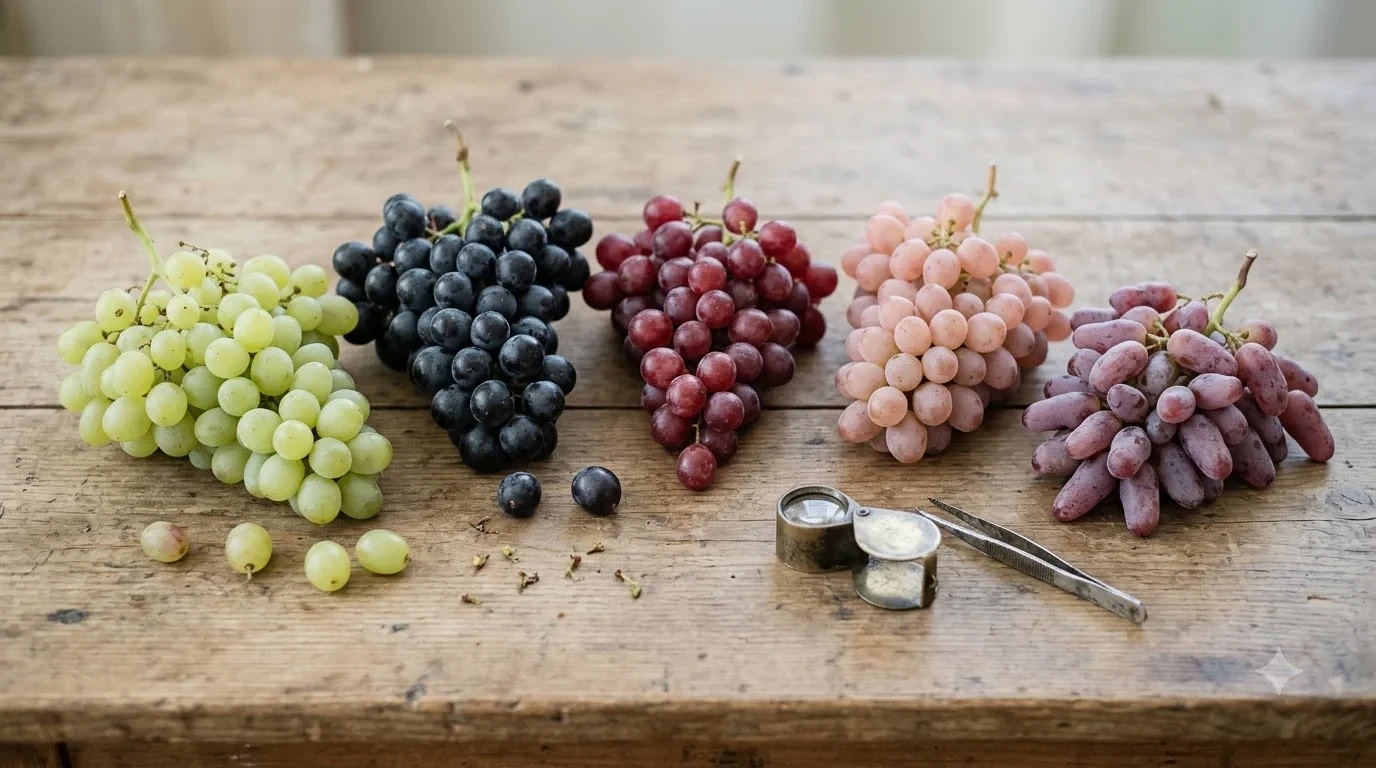

We may earn a commission when you buy through links on this page, at no extra cost to you. Learn more.
What is st croix? St. Croix is an American hybrid red wine grape developed by Elmer Swenson in Wisconsin, known for its cold tolerance, relatively low acidity, and soft-tannin wine style. It was bred for northern climates where many traditional European wine grapes struggle with severe winters and short growing seasons. Although primarily used for red wine, St. Croix grapes can also be eaten fresh and processed into juice.
St. Croix represents an important part of American cold-climate grape breeding. Its dark berries, vigorous vines, and ability to tolerate extremely low winter temperatures have made it a useful variety for growers in Minnesota, Wisconsin, and other northern wine regions. Its relatively gentle tannin structure also gives winemakers an alternative to the firm, highly structured reds commonly associated with Cabernet Sauvignon and Syrah. Understanding its origins, flavor, vineyard requirements, and food pairings helps explain why this lesser-known hybrid deserves attention.
What Is the St. Croix Grape and Where Did It Originate?
St. Croix is an American interspecific hybrid grape developed specifically for wine production in regions with challenging winter conditions. Its history is closely associated with Elmer Swenson, a Wisconsin grape breeder whose work helped expand the possibilities for viticulture in northern North America.

According to Foundation Plant Services at the University of California, Davis, St. Croix originated in the United States and was released in 1983. Swenson developed the variety in Osceola, Wisconsin, and it is also registered under the synonym E.S. 2-3-21. Its recorded pedigree traces to E.S. 283 crossed with E.S. (Minn. 78 x Seneca). This makes it an interspecific hybrid rather than a traditional European Vitis vinifera grape.
Its genetic background includes Vitis labrusca and Vitis riparia. These species are part of the wider North American grape family and contribute to the genetic diversity used in American grape breeding. Vitis riparia is particularly associated with northern growing conditions, while Vitis labrusca has a long history in American grape production. The combination helped breeders develop varieties suited to environments that are less favorable to many European wine grapes.
Swenson concentrated on varieties capable of surviving cold winters and producing fruit within relatively short growing seasons. This was important because many familiar international grapes need a longer period of warm weather to ripen properly. In northern states, winter injury and insufficient growing-season heat can make conventional grape varieties difficult to cultivate commercially.
St. Croix belongs to a broader group of American hybrid grapes that includes Marquette, Frontenac, and Maréchal Foch. These varieties differ in ancestry, flavor, acidity, and vineyard behavior, but they share an important role in expanding wine production into colder areas.
Its identity is also different from that of St. Laurent, another grape name that can cause confusion among wine enthusiasts. St. Croix is an American hybrid, while St. Laurent is a traditional European red grape. Knowing how to pronounce St. Laurent can help distinguish the two names when exploring unfamiliar wine lists.
St. Croix is therefore more than simply a grape that survives cold weather. It is a variety developed through deliberate breeding, with a specific combination of genetic ancestry, fruit characteristics, and growing-season requirements.
What Does St. Croix Wine Taste Like?
St. Croix generally produces a fruity red wine with relatively low acidity and little tannin. Its softer structure distinguishes it from fuller, more astringent red wines and can make it appealing to people who prefer approachable fruit-forward styles.
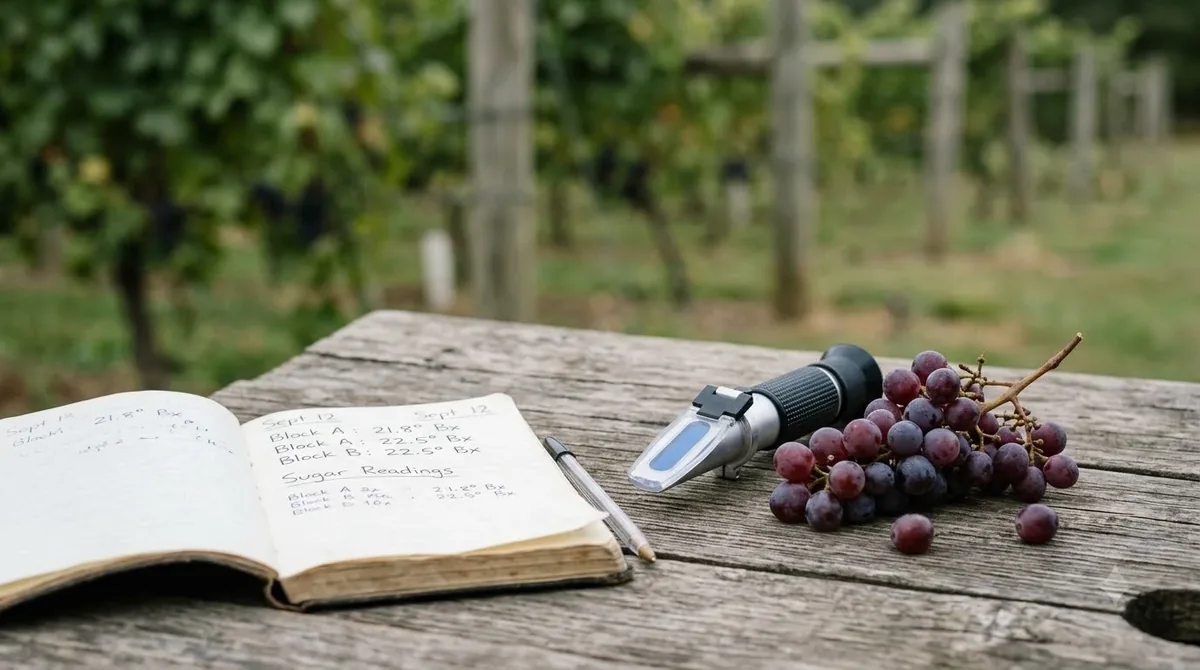
Fruit character depends on the vineyard, harvest maturity, fermentation method, and individual producer. Cherry, berry, and plum are useful tasting references when exploring St. Croix, although not every bottle will display the same aromas. Some examples may emphasize fresh fruit, while others can develop more savory or earthy impressions through fermentation and aging.
One of its most notable characteristics is its relatively gentle tannin structure. Tannin is responsible for the drying sensation that can be noticeable in red wines made from Cabernet Sauvignon or Syrah. Because St. Croix generally has little tannin, it can feel softer and less gripping on the palate.
Acidity is another important part of its identity. University of Wisconsin research describes St. Croix as a low-acid red wine grape. Acidity contributes freshness and gives wine a lively sensation. A naturally low-acid grape can therefore produce a softer impression, although winemakers still need to maintain balance during fermentation and blending.
Its fruit character should not be confused with sweetness. A fruity-smelling wine can be completely dry, with little residual sugar. The impression of ripe cherries or berries comes from aromatic compounds rather than necessarily indicating that sugar remains in the finished wine.
Winemaking can influence the final character considerably. A producer emphasizing fresh fruit may create a relatively light and approachable red, while different extraction and aging choices can provide more body and complexity. Some wines may also benefit from blending with grapes that contribute additional acidity or tannin.
St. Croix is not intended to imitate Cabernet Sauvignon or Pinot Noir. Its appeal comes from its own combination of fruit, softness, and northern American grape character. For drinkers who enjoy moderate tannin and a less aggressive red wine, it offers an interesting alternative.
Is St. Croix a Red or White Wine Grape?
St. Croix is primarily a red wine grape, although its freshly pressed juice can be pale rosé-colored. This distinction is important because the color of grape juice does not always predict the color of the finished wine.
UC Davis records the berry color as black and lists wine, juice, and table grapes among the variety’s uses. Its dark skins contain pigments that can contribute color during fermentation. In conventional red winemaking, crushed grapes remain in contact with their skins while fermentation takes place, allowing color and other compounds to transfer into the juice.
White winemaking usually separates the juice from the skins before fermentation. As a result, even dark-skinned grapes can sometimes produce pale wine when the skins are removed quickly. Rosé production involves controlled skin contact to achieve a lighter shade.
Iowa State University grape cultivar information describes an interesting characteristic of St. Croix: its juice can be pale rosé-colored even though the finished wines can be quite dark. This illustrates why skin pigmentation, juice appearance, and final wine color should be considered separately.
St. Croix is not generally classified as a white wine grape. Its principal wine use is red production, although its versatility makes other processing choices possible. A winemaker can experiment with skin contact, fermentation, and blending to create different expressions of the same variety.
The grapes can also be consumed fresh. University of Minnesota Extension identifies St. Croix as a wine grape that is suitable for fresh eating. This does not make it a conventional supermarket table grape, but it demonstrates that the fruit has uses beyond fermentation.
How Cold-Hardy Is St. Croix?
Cold tolerance is one of St. Croix’s defining characteristics. It was developed for northern American conditions, where extremely low winter temperatures can damage or kill grapevines that are not adapted to cold climates.
Foundation Plant Services at UC Davis reports that St. Croix is reportedly cold hardy to approximately -40 degrees Fahrenheit. This is an important indication of its northern growing potential, although it should not be treated as a universal guarantee of survival at that temperature. Vine age, growing conditions, previous crop load, winter acclimation, and snow cover can all affect winter injury.
University of Minnesota Extension lists St. Croix among the varieties that grow very well in USDA hardiness zone 4 and adequately in zone 3. Its Minnesota harvest period is generally late August to early September, making it relevant to vineyards with shorter growing seasons.
Harvest dates can vary according to location and weather. Iowa State University describes St. Croix as an early-to-midseason variety, generally maturing between late August and mid-September in Wisconsin and Iowa. A warmer site may produce earlier maturity, while a cooler location or difficult growing season can delay picking.
| Characteristic | St. Croix information |
|---|---|
| Country of origin | United States |
| Breeder | Elmer Swenson |
| Release year | 1983 |
| Registered synonym | E.S. 2-3-21 |
| Approximate reported cold hardiness | -40°F |
| Suitable USDA zones | Zone 4; adequately in zone 3 |
| Minnesota harvest period | Late August to early September |
| Wisconsin and Iowa maturity | Late August to mid-September |
| Typical acidity | Relatively low |
| Primary wine color | Red |
These figures provide a general reference rather than a guarantee of vineyard performance. The ability to tolerate cold does not mean that every vine will produce a successful crop after every winter. Growers must also consider local soil, drainage, exposure, disease pressure, and growing-season length.
For additional information about northern grape cultivation, the University of Minnesota Extension guide to growing grapes discusses suitable varieties, harvest periods, and practical vineyard care.
Tip: Do not evaluate St. Croix solely by its reported winter temperature tolerance. A productive northern vineyard also needs suitable sunlight, good drainage, effective pruning, and a growing season long enough for the fruit to mature.
How Is St. Croix Grown in Northern Vineyards?
St. Croix is a vigorous grapevine with a downward or trailing growth habit, so training and canopy management are important. Its growth characteristics can be useful in northern vineyards, but growers need to manage foliage and fruit production carefully.
Its vines require sufficient space and a suitable support structure. University of Minnesota Extension recommends full sun for grapevines because adequate sunlight supplies the heat needed to ripen fruit. The extension also recommends approximately six feet of space per vine as a general home-garden planting guideline.
Training and pruning help control the relationship between vegetative growth and fruit production. Excessive shoot growth can create a dense canopy, reducing sunlight penetration and airflow around the clusters. A well-managed canopy makes it easier to inspect fruit and foliage and can help reduce conditions favorable to fungal disease.
St. Croix also requires attention to its disease vulnerabilities. University of Wisconsin researchers found that it was highly susceptible to foliar downy mildew and Phomopsis cane and leaf spot or fruit rot. The same research described moderate susceptibility to powdery mildew and minimal susceptibility to black rot.
Downy mildew can damage foliage as the growing season progresses. In the Wisconsin research vineyards, symptoms were observed during July and August, with severity varying between locations and years. Severe leaf damage can reduce the healthy foliage available to support fruit development.
Phomopsis is another concern because it can affect canes, leaves, and fruit. Powdery mildew can also affect foliage and fruit, making regular inspections important. The fact that St. Croix tolerates cold does not mean it is resistant to all common vineyard diseases.
Annual pruning is an essential part of maintaining grapevine health and productivity. Minnesota Extension recommends pruning in spring before leaves emerge. Growers also need to inspect vines during the growing season, rather than waiting until harvest to identify problems.
For practical vineyard management, the main considerations include:
- Choosing a sunny site with suitable soil drainage.
- Providing adequate space and a support system for vigorous growth.
- Pruning annually before spring growth begins.
- Managing shoots and foliage to maintain airflow.
- Inspecting leaves, canes, and clusters for downy mildew and Phomopsis symptoms.
- Monitoring powdery mildew and other vineyard diseases throughout the season.
- Harvesting carefully to avoid unnecessary damage to the fruit.
These practices help explain why St. Croix can be useful in northern wine production without being a completely maintenance-free variety. Its cold tolerance is valuable, but vineyard management remains central to fruit quality and consistent production.
How Is St. Croix Wine Made?
St. Croix can produce different red wine styles depending on harvest maturity, fermentation conditions, skin contact, and aging choices. Its relatively low acidity and soft tannin make careful winemaking important for maintaining balance and retaining attractive fruit character.
Conventional red winemaking generally begins with crushing the grapes and fermenting the juice with the skins. During this process, pigments and flavor compounds move from the skins into the fermenting liquid. The length of skin contact and fermentation temperature influence the wine’s color, texture, and aromatic profile.
Because St. Croix naturally has relatively little tannin, aggressive extraction is not necessarily required. The winemaker’s objective is to obtain enough structure without losing the grape’s fruit character. Fermentation decisions can also influence whether the wine feels light and fresh or fuller and more concentrated.
Carbonic maceration
Carbonic maceration is one technique that can be used to emphasize fruit character. It involves placing intact grape clusters or berries in a carbon dioxide-rich environment, allowing intracellular fermentation to begin inside the berries before conventional fermentation completes the process.
This method is associated with fresh fruit aromas and a softer impression on the palate. It can be particularly interesting for varieties with naturally modest tannin levels because it emphasizes fruit rather than relying on heavy extraction.
Winemakers can also use partial carbonic maceration, treating only a portion of the grapes before combining that wine with a conventionally fermented batch. This gives the producer more control over the balance between fresh fruit character and traditional red wine structure.
Fermentation, blending, and aging
Harvest maturity is particularly important for St. Croix. Its relatively low acidity means that producers need to consider the relationship between sugar concentration, acidity, and fruit development when deciding when to pick. The goal is to obtain mature fruit while maintaining a balanced finished wine.
Fermentation vessels also influence the result. Stainless steel can preserve fresh fruit character, while oak aging may contribute additional aromas and texture. However, oak is not essential to producing a successful St. Croix wine.
Blending is another option. A winemaker may combine St. Croix with another variety to adjust acidity, tannin, color, or aromatic complexity. This can be particularly useful when the harvest produces wine with a softer structure than the producer wants.
Different producers may therefore create noticeably different wines from the same grape. One bottle might emphasize fresh cherry and berry character, while another may have more savory aromas or a fuller texture. The variety provides the foundation, but the final wine reflects the decisions made throughout production.
What Foods Pair Well With St. Croix Wine?
St. Croix’s fruity character, relatively low acidity, and restrained tannin make it suitable for a range of savory foods. Roasted poultry, grilled pork, mushroom dishes, and moderate-flavored cheeses are useful starting points for pairing this softer red wine.
Roasted chicken is a particularly practical match. Its mild flavor and tender texture work well with red wines that do not have excessive tannin. Add rosemary, thyme, garlic, or roasted vegetables to create additional savory flavors that complement the fruit in St. Croix.
Grilled pork is another good choice. Pork chops, tenderloin, and roasted pork shoulder can pair comfortably with a fruit-forward red wine, especially when prepared with herbs and moderate seasoning. The relatively soft tannin in St. Croix helps avoid an overly drying sensation.
Mushroom dishes provide another useful pairing. Mushroom risotto, grilled portobello mushrooms, and savory mushroom pasta offer earthy flavors that can complement the wine’s fruit character. Butter, olive oil, and moderate amounts of cheese contribute richness without requiring a highly structured red.
Cheese and vegetable pairings
For cheese, consider young cheddar, Gouda, and Monterey Jack. These varieties have enough flavor to accompany a red wine without overwhelming a softer grape. A cheese board with roasted nuts, mild cured meats, and fresh bread can also make a suitable casual pairing.
Roasted eggplant, grilled zucchini, and vegetable pasta can work well, particularly when prepared with herbs and olive oil. Tomato-based dishes require a little more attention because acidity in the sauce can make a low-acid wine seem flatter. A richer tomato preparation with roasted vegetables is generally easier to match than a sharply acidic sauce.
Barbecue can also be a good match, especially chicken or pork with a moderately sweet tomato-based sauce. Very sweet sauces can dominate the wine, while extremely spicy dishes can make alcohol and tannin seem more pronounced. Moderate seasoning usually gives the wine a better opportunity to show its fruit.
Serving temperature and glassware
Serving temperature influences how red wine smells and feels. For a lighter-bodied St. Croix, begin around 55 to 60 degrees Fahrenheit. A fuller-bodied example can be served closer to 60 to 65 degrees Fahrenheit.
A standard red wine glass provides enough space to swirl the wine and release its aromas. A 5-ounce pour is a practical serving size, and a 750-milliliter bottle provides approximately five glasses.
Decanting is not automatically necessary. Young, full-bodied reds can benefit from 30 to 60 minutes of aeration, but a lighter, fruit-forward St. Croix may be enjoyable immediately after opening. The best approach depends on the wine’s structure and the producer’s style.
How Does St. Croix Compare With Other Red Wine Grapes?
St. Croix differs from familiar international red grapes because it was developed for northern growing conditions and has a different combination of acidity and tannin. Comparing it with Cabernet Sauvignon, Merlot, Pinot Noir, and other American hybrids helps clarify its place in the wider wine landscape.
Cabernet Sauvignon is known for high tannin and substantial structure. It commonly produces wines with firm texture and considerable intensity. St. Croix generally offers much less tannin and a softer palate, so it is not a direct substitute for a powerful Cabernet Sauvignon.
Merlot provides another useful comparison. It generally has medium tannin and a softer structure than Cabernet Sauvignon. Both Merlot and St. Croix can produce approachable red wines, but their genetic backgrounds and growing requirements are different. Merlot is a traditional Vitis vinifera variety, while St. Croix is an American interspecific hybrid.
Pinot Noir typically has low-to-medium tannin and high acidity. Its wines are often associated with red fruit and a relatively delicate structure. St. Croix can also produce fruit-forward wines, but its naturally lower acidity creates a different balance.
Among cold-climate hybrids, Marquette is an especially useful comparison. Developed by the University of Minnesota, Marquette is a red wine grape associated with cherry, berry, and spice characteristics. It generally provides a different balance of acidity and structure from St. Croix.
Maréchal Foch is another northern red grape that can be found in cold-climate vineyards. It can produce deeply colored wines with different combinations of fruit, acidity, and tannin depending on the site and winemaking decisions.
These comparisons show that American hybrid grapes are not one uniform category. Their ancestry, vineyard behavior, and finished wine styles vary considerably. St. Croix stands out for its winter hardiness, relatively low acidity, and gentle tannin structure.
Wine enthusiasts interested in other varieties can also explore the St. Croix grape and learn about the Airén grape, which illustrate how grape varieties differ in origin, growing conditions, and winemaking uses.
St. Croix is best appreciated on its own terms: an American red wine grape developed for colder climates, with a softer structure and distinctive regional identity. Its value is not that it reproduces the characteristics of a famous European variety, but that it gives northern growers another practical option for making red wine.
Frequently Asked Questions
Is St. Croix wine always dry?
No. St. Croix can be made in different styles depending on fermentation and finishing decisions. A dry example has little residual sugar, while an off-dry version retains a noticeable amount of sweetness. The grape variety alone does not determine the sweetness of every finished bottle.
Can you eat St. Croix grapes fresh?
Yes. University of Minnesota Extension identifies St. Croix as suitable for fresh eating as well as winemaking. Its fruit is also listed for juice production by UC Davis. However, it is primarily recognized as a wine grape rather than a widely distributed commercial table grape.
Is St. Croix related to Cabernet Sauvignon?
No direct parentage connecting St. Croix to Cabernet Sauvignon appears in the recorded UC Davis pedigree. St. Croix is an American interspecific hybrid developed by Elmer Swenson, whereas Cabernet Sauvignon belongs to Vitis vinifera. Their different genetic backgrounds contribute to their distinct growing and wine characteristics.
Does St. Croix need winter protection?
St. Croix is considered highly cold-hardy, but actual protection requirements depend on the vineyard location and growing conditions. Young vines, exposed sites, and particularly severe winters may present additional risks. Growers should consider root survival as well as the hardiness of trunks and buds when evaluating winter protection.
Can St. Croix produce rosé wine?
Yes. Its dark-skinned berries can be used to produce rosé through controlled skin contact before the juice is separated. The final color depends on the duration of contact and the winemaking process. The pale rosé-colored juice reported in grape cultivar literature does not prevent the variety from producing darker red wines.
St. Croix is a distinctive American hybrid red wine grape that combines a history of northern grape breeding with substantial cold tolerance, relatively low acidity, and soft tannins. Its ability to produce wine while also serving as a fresh-eating and juice grape gives it several practical uses. For wine enthusiasts, discovering St. Croix offers an opportunity to explore a different side of American winemaking beyond familiar international varieties.
More in Wine Types & Grapes
 Zinfandel Sugar Content: Dry Red vs. White Zinfandel GramsUpdated Nov 21, 2026
 Best Zinfandel Substitute Options for Sipping and CookingUpdated Nov 21, 2026
 Zweigelt Food Pairing: Best Dishes, Cheeses, and Serving TipsUpdated Nov 21, 2026
 Zinfandel Tannins Explained: How Structure Shapes Every BottleUpdated Nov 21, 2026
 Zinfandel Sweetness Level: Dry Red vs. Sweet White Zin ExplainedUpdated Nov 21, 2026
 Xinomavro Food Pairing: Best Dishes, Styles, and Serving TipsUpdated Nov 21, 2026