

We may earn a commission when you buy through links on this page, at no extra cost to you. Learn more.
What is legs in wine? Wine legs are the droplets or streaks that form on the inside of a wine glass after swirling, as liquid slowly runs back down toward the wine. They are caused by alcohol evaporation and differences in surface tension, a physical phenomenon called the Gibbs-Marangoni effect. Prominent legs can suggest characteristics such as higher alcohol content, but they do not indicate whether a wine is good or bad.
If you have ever swirled a glass of Cabernet Sauvignon, watched droplets gather along its sides, and wondered what they meant, you have encountered one of wine’s most recognizable visual features. Wine legs attract attention at restaurants, tasting rooms, and dinner parties, where they are sometimes treated as a sign of expensive or particularly impressive wine. Understanding the science behind them makes it easier to separate useful observations from traditional wine myths. The important distinction is that legs reveal something about how wine behaves in a glass, not necessarily how enjoyable it will be to drink.
What Wine Legs Look Like in a Glass
Wine legs are the narrow streams of liquid that appear on the inside of a glass after wine has been swirled or poured. They develop as droplets collect along the glass and gradually descend toward the wine at the bottom.
When you swirl wine, a thin coating spreads across the interior surface of the glass. After the swirling stops, the wine begins to settle, but a small amount remains attached to the glass. Within a few seconds, you may notice a ridge or ring of liquid forming above the wine’s surface. Small droplets eventually develop along this ridge and move downward in individual trails.
These trails are called legs because they resemble narrow lines running down the sides of the glass. The term tears is also common, while cathedral arches is another descriptive expression used in wine discussions. The different names refer to the same basic phenomenon rather than separate wine characteristics.
The appearance varies considerably. Some glasses show several thin, widely spaced streams, while others develop broader droplets that move slowly. A wine might produce numerous short trails or just a few prominent ones. There is no universal pattern that every wine should display.
Wine legs can appear in red, white, rosé, and fortified wines. They are not exclusive to expensive bottles, particular grape varieties, or wines from specific countries. A modest everyday white wine can produce visible legs, while a prestigious red might show relatively little under different serving conditions.
It is also possible to observe legs without deliberately swirling. Pouring a full-bodied wine into a glass can leave enough liquid on the sides to start the process. Swirling simply makes the thin film easier to establish and observe.
For someone learning about wine, recognizing legs is a useful introduction to observing a wine’s appearance. However, they should be considered one visual feature among several rather than a tasting verdict. Color, clarity, intensity, aroma, acidity, and flavor provide much more meaningful information about the wine itself.
The Science Behind the Gibbs-Marangoni Effect
Wine legs form because alcohol evaporates more readily than water, changing the surface tension of the thin wine film against the glass. This creates liquid movement known as the Gibbs-Marangoni effect, which explains why droplets eventually form and run downward.
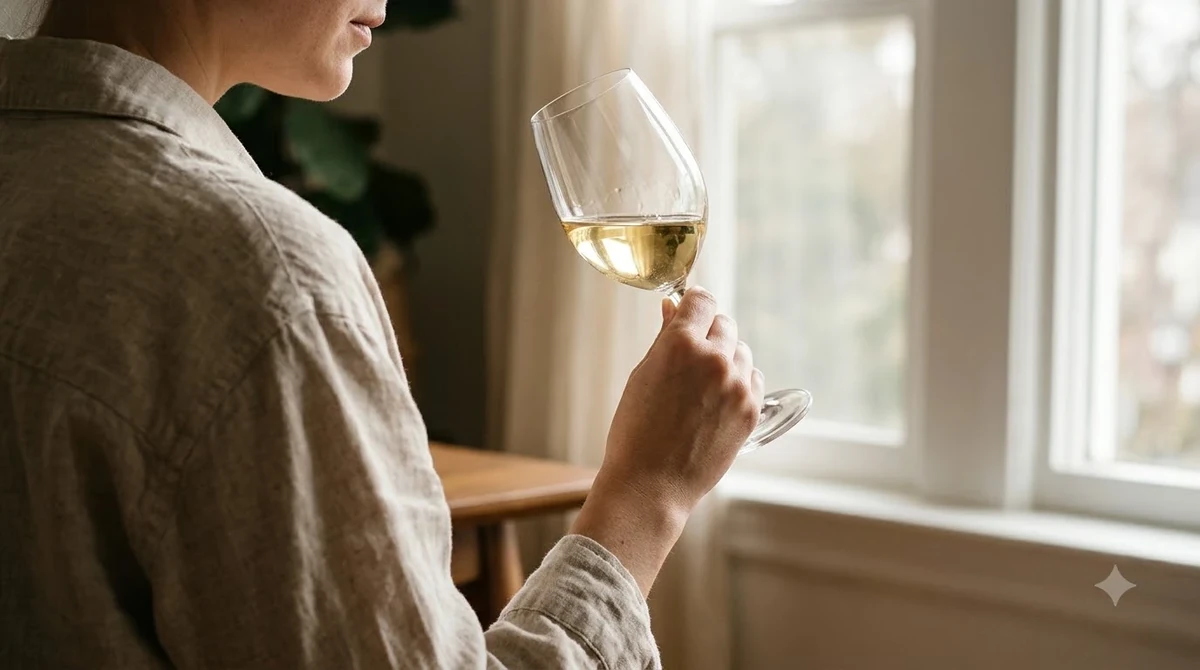
Wine contains water, ethanol, acids, sugars, tannins, and numerous other dissolved compounds. When you swirl it, some of the liquid spreads over the glass’s interior surface. This thin layer has a relatively large exposed surface area, allowing alcohol to evaporate more readily than it does from the main pool of wine.
As alcohol evaporates, the composition of the thin film changes. The remaining liquid has a different surface tension from the wine below it. Surface tension is the property that makes a liquid surface behave somewhat like a stretched elastic membrane.
The difference in surface tension creates movement along the glass. Liquid is drawn upward through the thin film toward the region with higher surface tension. A ridge gradually develops near the top of the film. Eventually, gravity overcomes the forces supporting the accumulated liquid, and droplets fall back toward the wine.
This repeating movement creates the recognizable streams called legs. The process involves several physical forces working together, including evaporation, surface tension, adhesion between wine and glass, and gravity.
Why alcohol matters
Ethanol has lower surface tension than water. As alcohol evaporates from the thin layer, the relative concentration of water increases, changing the forces acting across the liquid surface. This difference helps drive the upward movement that produces the ridge and subsequent droplets.
The phenomenon is not unique to wine. Other mixtures of alcohol and water can display related behavior, which is why similar liquid trails sometimes appear in spirits and fortified beverages.
Scientists have studied the effect for generations. Scottish physicist James Thomson described the behavior in 1855, and later researchers developed more detailed mathematical explanations. In 1982, geophysicist Herbert Huppert contributed a model of shock-wave behavior in flowing liquid solutions. These studies help explain why an ordinary wine glass can demonstrate such interesting fluid dynamics.
The important practical point is that wine legs are produced by physical properties of the liquid. They are not deliberately created by winemakers, nor do they require a particular grape variety or production technique.
What Alcohol Content Reveals About Wine Legs
Higher-alcohol wines generally develop more prominent legs, although the relationship is influenced by other ingredients and environmental conditions. Broad, slow-moving trails can therefore offer a rough visual clue about a wine’s composition, but they cannot provide an accurate alcohol measurement.
Alcohol content is commonly expressed as ABV, meaning alcohol by volume. It describes the percentage of a beverage’s total volume that consists of alcohol. For example, a wine labeled 13.5% ABV contains approximately 13.5% alcohol by volume.
When comparing wines, alcohol content can be one factor influencing the appearance of their legs. A wine at 15% ABV may show more pronounced trails than a wine at 11.5% ABV under similar conditions. However, this is not a guaranteed outcome because sugar, tannins, temperature, humidity, and glass characteristics also influence the result.
Consider these illustrative comparisons:
| Wine example | Illustrative ABV | Possible appearance |
|---|---|---|
| Light-bodied white wine | 11.5% | Relatively delicate legs |
| Dry Sauvignon Blanc | 12.5% | Moderate, variable trails |
| Cabernet Sauvignon | 14% | Potentially prominent legs |
| Richer Syrah | 15% | Potentially substantial trails |
| Fortified Port | 20% | Often prominent, persistent legs |
These figures are illustrative examples rather than scientific thresholds or guaranteed visual outcomes. A particular bottle can behave differently from another wine with the same ABV. The alcohol percentage on the label remains the dependable source for the wine’s stated alcohol content.
Fortified wines are especially interesting comparisons. Port commonly has an alcohol content around 19–22% ABV, while many conventional table wines fall around 11–15% ABV. The higher alcohol concentration helps explain why Port can produce conspicuous droplets.
However, even a visual comparison between two wines is imperfect. A sweet wine with relatively moderate alcohol may show slow-moving droplets, while a dry wine with higher alcohol may display a different pattern. Alcohol is an important contributor, but it is not the only variable.
For readers learning to understand alcohol levels, it is more useful to examine the ABV on the bottle and then consider how the wine’s alcohol integrates with its fruit, acidity, and other structural elements.
How Sugar, Tannins, and Wine Body Affect the Appearance
Alcohol is the principal driver of wine legs, but sugar and tannins can influence the size and movement of the droplets. This helps explain why some sweet wines and structured red wines display especially noticeable trails.
Residual sugar is the natural grape sugar that remains in wine after fermentation. During fermentation, yeast converts sugar into alcohol and carbon dioxide. When fermentation stops before all fermentable sugar has been consumed, the finished wine retains sweetness.
Sugar contributes to the physical characteristics of the liquid, including its viscosity. In general, a sweeter wine can produce slower-moving droplets because its composition differs from that of a completely dry wine.
Sweet wines provide useful examples. Sauternes from Bordeaux, German Riesling with noticeable residual sugar, and many late-harvest wines can develop visible legs. Port can be particularly interesting because it combines relatively high alcohol with residual sugar.
Tannins also influence the behavior of wine legs. These naturally occurring compounds are found in grape skins, seeds, and stems, as well as in oak used during aging. Tannins contribute to the drying, sometimes grippy sensation associated with red wines such as Cabernet Sauvignon and Syrah.
According to Decanter’s explanation of wine legs, heavier molecules such as sugar and tannins contribute to the formation and behavior of droplets. This is one reason that some structured red wines show prominent legs. Its article, Do wine legs mean a better wine?, also explains why these visual characteristics should not be confused with quality.
Wine body is not the same as wine legs
Body describes the overall weight and texture of wine in your mouth. A light-bodied Pinot Noir generally feels different from a full-bodied Cabernet Sauvignon, even when both wines have similar alcohol levels.
Alcohol can contribute to a fuller sensation, and residual sugar can also influence perceived weight. However, body is a combined impression involving alcohol, extract, acidity, sweetness, and other elements. Wine legs cannot reproduce that experience.
For example, a 14% ABV Cabernet Sauvignon might feel relatively full because of its alcohol, tannins, and overall structure. A sweet Riesling might also feel substantial, but its balance of acidity and residual sugar produces a different sensation.
These differences are better understood through tasting than by studying droplets on glass. A wine’s legs cannot tell you whether its tannins feel smooth, whether its acidity is refreshing, or whether its fruit flavors are balanced.
Tip: When comparing two wines, look at their legs if you find the visual interesting, but use the ABV and actual tasting experience to understand their alcohol, sweetness, and body. Thick droplets are not a shortcut to judging quality.
Why Wine Legs Do Not Indicate Wine Quality
Prominent wine legs do not mean that a wine is expensive, carefully made, complex, or particularly enjoyable. They are primarily a physical result of the wine’s composition and the conditions in which it is served.
The misconception that thicker legs indicate superior wine has been repeated in tasting rooms and restaurants for many years. It is easy to understand why the belief persists. A glass with substantial droplets looks dramatic, and the slower movement can create an impression of richness and concentration.
However, a visually impressive display does not establish whether the wine is balanced or well made. A wine can have prominent legs and still have harsh alcohol, excessive sweetness, unbalanced acidity, or unpleasant aromas.
Likewise, a wine with few visible legs can be excellent. A fresh, aromatic Riesling or a delicate Pinot Noir may offer remarkable complexity without producing especially dramatic trails.
Quality is better evaluated by considering several characteristics together:
- Aroma: Look for clean, recognizable aromas that reflect the grape variety, growing conditions, and winemaking.
- Flavor: Consider whether fruit, acidity, tannins, sweetness, and other characteristics work together.
- Balance: Alcohol should not overwhelm the other components of the wine.
- Texture: Notice whether the wine feels light, smooth, structured, creamy, or drying.
- Finish: Pay attention to the flavors and sensations that remain after swallowing or spitting.
- Complexity: Consider whether the wine offers several complementary aromas and flavors rather than a single dominant characteristic.
For a practical example, compare a Cabernet Sauvignon from Napa Valley with a Pinot Noir from Burgundy. The Cabernet may have stronger tannins and more visible legs, while the Pinot Noir may show brighter acidity, delicate red-fruit aromas, and a lighter structure.
Neither wine is automatically better. They are different expressions of grape variety, place, and winemaking decisions. Their suitability depends on the occasion, food pairing, and personal preference.
Even professional wine judges do not use legs as a standalone quality score. The more useful assessment comes from the wine’s overall sensory characteristics and how successfully its different components work together.
How Temperature, Humidity, and Glass Shape Change Wine Legs
The same wine can display different legs depending on serving temperature, room conditions, and glass design. These external influences change evaporation and the way liquid interacts with the glass, so comparing two wines requires reasonably consistent conditions.
Temperature is particularly important because it affects evaporation. A warmer environment can increase the rate at which alcohol evaporates from the thin wine film, changing how quickly the characteristic droplets develop.
Chilling wine can reduce the prominence of its legs. This does not mean the wine has lost alcohol or changed its quality. It simply means that the physical conditions responsible for producing visible trails have changed.
Humidity also plays a role. The amount of moisture in the surrounding air influences evaporation, so a wine may not display exactly the same pattern in a humid room as it does in a dry environment.
The importance of the wine glass
Glass shape and surface texture influence the amount of wine that remains attached to the sides after swirling. A wide-bowled glass offers a different interior surface from a narrow white wine glass, potentially changing the appearance of the liquid film.
Cleanliness matters as well. Residue from detergent, fingerprints, or other substances can alter how wine wets the glass surface. Even small differences in the condition of the glass can change the formation of droplets.
Glassware also affects how wine is experienced beyond its legs. A large bowl can provide room for swirling, while a narrower opening can concentrate aromas. These features matter more to the overall tasting experience than the visual appearance of the droplets.
For a simple comparison, try observing the same wine in two clean glasses with different shapes. Swirl the same amount in each glass and allow the liquid to settle. You may notice that the number, thickness, or speed of the legs differs despite the wine being identical.
For a fairer comparison, use glasses that are equally clean, pour similar amounts, and keep the wines at the same temperature. Even then, the resulting patterns should be treated as observations rather than precise measurements.
Serving temperature should generally be chosen to suit the style of wine rather than to produce dramatic legs. Sparkling wines are commonly served at 40–50°F, light whites at 45–50°F, and full-bodied reds at 60–65°F. These temperatures help preserve the intended balance and drinking experience.
The lesson is straightforward: wine legs are affected by the glass and surroundings as well as the wine itself. A difference in appearance does not necessarily mean a difference in alcohol content or quality.
How to Observe Wine Legs During a Tasting
Observing wine legs is a simple exercise that can help you become more familiar with wine’s appearance and physical behavior. A consistent approach makes comparisons more useful, although the exercise should not replace smelling and tasting the wine.
Start with a clean, transparent wine glass and a small pour. A standard tasting pour is approximately 2–3 ounces, which leaves enough room to swirl without spilling. A normal serving is generally around 5 ounces.
Follow these steps:
- Examine the wine before swirling. Look at its color, clarity, and intensity against a neutral background.
- Hold the glass by the stem. This helps keep fingerprints away from the bowl and reduces unnecessary warming from your hand.
- Swirl gently. Keep the base of the glass on a flat surface if you are not comfortable swirling it in the air. Move the glass in small circles.
- Stop and observe. Watch the liquid coating the sides and look for a ridge or droplets forming above the wine’s surface.
- Notice the movement. Observe whether the trails are thin, broad, numerous, or widely spaced.
- Compare the wine’s composition. Consider its stated alcohol percentage, sweetness, and style.
- Smell and taste. Evaluate the aromas, acidity, texture, tannins, and finish instead of making a quality judgment from the legs.
You can repeat this exercise with different styles. Compare a dry Sauvignon Blanc, a medium-bodied Merlot, a structured Cabernet Sauvignon, and a sweet dessert wine. Their appearances may vary because their alcohol levels and compositions differ.
Keep the observations simple. You might record that the Cabernet produced several broad trails, while the Sauvignon Blanc displayed fewer visible droplets. Such notes describe what happened without claiming that one wine is superior.
For people organizing a guided tasting, legs can serve as an introductory conversation topic before the group moves on to aroma and flavor. They offer an accessible way to discuss alcohol, surface tension, and the physical behavior of wine.
Wine quantities can also be useful when planning a tasting. A standard 750 ml bottle provides approximately five 5-ounce glasses, while larger gatherings may require different calculations. For event planning, see how many glasses in a magnum and our guide to how much wine for 100 guests.
As your wine vocabulary develops, you can also explore the Wine Glossary for explanations of terms such as acidity, tannin, body, finish, and residual sugar. These concepts provide a stronger foundation for understanding what you actually experience in the glass.
There is no need to swirl aggressively or wait for a particular number of droplets. A gentle movement and a few moments of observation are enough to see the phenomenon. The goal is to become more familiar with wine, not to turn the appearance of its legs into a complicated scoring system.
Frequently Asked Questions
Do wine legs have a special name in other countries?
Yes. In French, they are commonly called larmes de vin, meaning wine tears. The expression cathedral windows is also used in some wine discussions, describing the pattern of liquid trails on the glass. These terms refer to the same general phenomenon.
Can wine legs appear before you swirl the glass?
Yes. Pouring wine can leave a film on the interior glass surface that develops into droplets without deliberate swirling. This is particularly easy to observe with some full-bodied wines and fortified beverages. Swirling simply makes the process more noticeable.
Can wine legs disappear completely?
Yes. The phenomenon gradually diminishes as the alcohol in the thin film evaporates and the liquid movement loses its driving force. If the glass is left undisturbed, the visible trails eventually stop forming. This does not mean the wine has spoiled or become unsuitable to drink.
Were wine legs used in historical wine assessments?
Yes. Wine legs have long attracted attention from wine drinkers and observers, and their appearance has sometimes been associated with richness and quality. Scottish physicist James Thomson’s description in 1855 helped establish a scientific explanation for the phenomenon. Modern wine assessment, however, relies on a broader evaluation of sensory characteristics.
Can sparkling wine develop legs after its bubbles disappear?
Yes. Once sparkling wine loses much of its visible effervescence, its liquid can still produce legs through the same evaporation and surface-tension processes found in still wine. Carbon dioxide bubbles are not required for the phenomenon. The alcohol and other components of the liquid remain responsible for its characteristic behavior.
Wine legs are an interesting combination of science and visual appeal, revealing how alcohol evaporation and surface tension influence liquid inside a glass. They can offer a limited clue about wine composition, but they cannot tell you whether a bottle is worth drinking. For a better understanding of any wine, pay attention to its aromas, flavors, balance, and finish. Those are the characteristics that make a bottle memorable.
More in Wine Basics
 Which Rose Is Best for Your Taste, Budget, and Food PairingsUpdated Nov 21, 2026
 Is Cheap Wine Bad? How to Find Bottles Worth DrinkingUpdated Nov 21, 2026
 What To Write On A Wine Gift Tag: Thoughtful Messages For Every OccasionUpdated Nov 21, 2026
 Which Wine Is Best For Weight Loss? Compare Lower-Calorie ChoicesUpdated Nov 21, 2026
 What Is The Best Wine For Mimosas? Choose Bubbly That Balances Orange JuiceUpdated Nov 20, 2026
 Which Prosecco Is Best for Your Taste and OccasionUpdated Nov 20, 2026