

We may earn a commission when you buy through links on this page, at no extra cost to you. Learn more.
The answer to what does sangiovese taste like is usually tart cherry, red plum, dried herbs, and a savory edge, carried by lively acidity and firm tannins. Most examples are dry and medium-bodied, although lighter, juicy versions and deeply structured, age-worthy reds both exist. The exact balance depends on the vineyard, the regional style, and how the wine is made and matured.
Sangiovese is the signature red grape of Tuscany and the foundation of familiar Italian wines such as Chianti, Chianti Classico, and Brunello di Montalcino. Its appeal is the contrast between fresh red-fruit flavor and a distinctly savory frame: the wine can feel bright and mouthwatering while still leaving a firm, gently drying grip on the gums. Knowing which aromas to look for, how the main regional styles differ, and what food suits its acidity makes a bottle much easier to understand.
Cherry, Plum, Herbs, and Other Signature Flavors
Think sour cherry first, then red plum, cranberry, and a fresh or dried herbal note. Sangiovese’s fruit usually tastes more tart than jammy, with savory details such as tomato leaf, oregano, black tea, or a hint of earth giving the wine its recognizable Italian character.
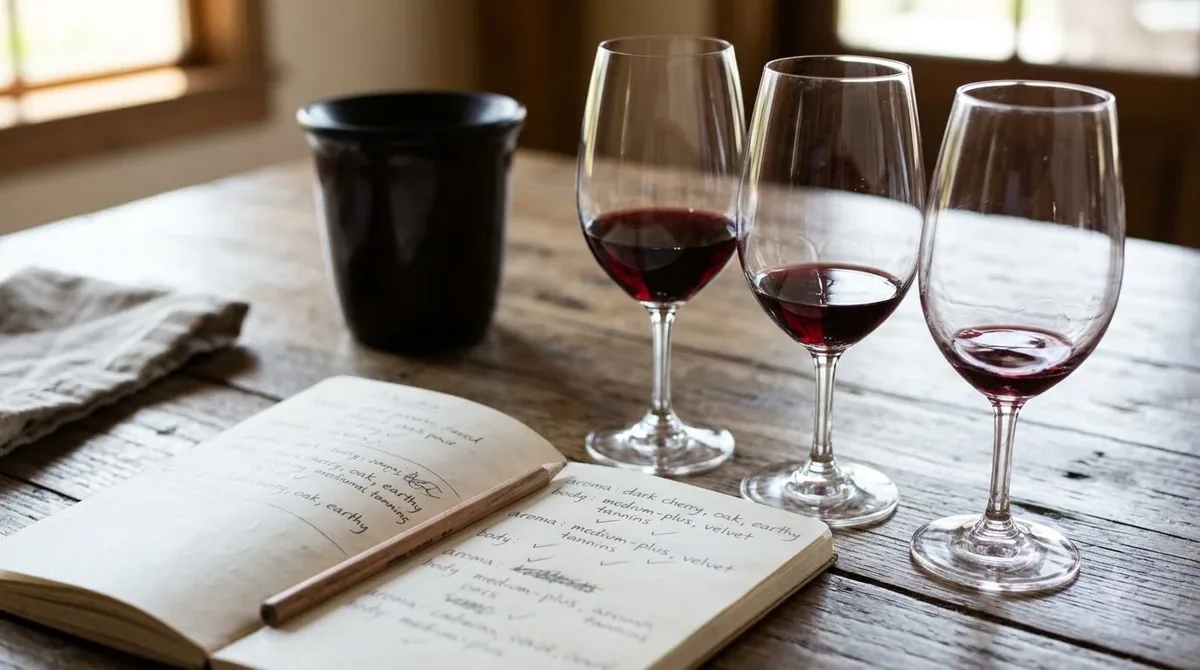
In a young, fruit-forward example, the first impression may be juicy cherry, red currant, and a floral lift reminiscent of violet. The fruit is typically on the red side rather than dominated by blueberry or blackberry. Some wines show darker cherry or plum, but the core profile remains fresh and savory rather than sweet. The wine itself is generally dry: ripe fruit aromas can suggest sweetness without meaning that sugar is left in the finished wine.
Herbal flavors are part of the grape’s identity, not necessarily a sign of green or underripe fruit. A glass may bring to mind crushed dried oregano, bay leaf, tea, or the leafy aroma of a tomato plant. In more complex bottles, the savory register can extend toward olive, leather, tobacco, or earthy spice. These accents often become easier to notice as the wine opens, especially when the initial cherry scent is strong.
Oak and bottle age can add another layer. A wine matured in wood may bring vanilla, clove, baking spice, or toast, while older bottles can develop dried cherry, leather, and tobacco. Those aromas do not replace the grape’s acidity; they sit alongside it. Smell for fresh cherry first, then return to the glass after several minutes to see whether the herbal, floral, or earthy notes have become clearer.
Acidity, Tannin, and Body: The Feel of the Wine
Sangiovese is known for high acidity and noticeable, often firm tannins, so its texture can feel brisk and grippy rather than plush. Most examples land around medium body, but lighter everyday styles and fuller, more structured bottlings are both part of the grape’s range.
Acidity is the feature that makes the wine feel mouthwatering. It gives sour cherry its tang, refreshes the palate after rich food, and helps the wine stay lively even when the fruit is ripe. In practical terms, a sip can make the mouth water along the sides of the tongue. This freshness is one reason Sangiovese works so naturally with tomato-based sauces, whose own acidity can make softer, lower-acid reds taste flat.
Tannin creates a different sensation. It is the drying, slightly rough feeling that gathers along the gums and inside the cheeks, rather than a flavor like cherry or herbs. In Sangiovese, tannin can range from fine and gently chalky to firm and persistent. Young, concentrated examples may feel quite grippy, while time in bottle can soften the impression and knit the tannins into the wine’s fruit and acidity.
Body describes weight rather than strength of flavor. A lighter Sangiovese may feel agile, with red fruit and a clean finish; a concentrated example can feel broader without losing freshness. Alcohol, extraction, ripeness, and oak all influence this impression. A pale ruby color does not guarantee a delicate palate: Sangiovese can carry substantial tannin and structure even when its color looks light.
| Style or classification | Minimum Sangiovese | Minimum aging | Minimum alcohol |
|---|---|---|---|
| Chianti Classico Annata | 80% | 12 months | 12% ABV |
| Chianti Classico Riserva | 80% | 24 months | 12.5% ABV |
| Chianti Classico Gran Selezione | 90% | 30 months | 13% ABV |
The figures are the minimums published by the Consorzio Vino Chianti Classico; the Riserva and Gran Selezione aging periods include at least three months of bottle refinement. These rules describe the denomination, not every Sangiovese wine. They help explain why a Riserva or Gran Selezione may show more integration and structure than an Annata, although the producer and vintage still shape the final taste.
Regional Styles: Chianti, Brunello, and Romagna
Tuscany is the central reference point, but Sangiovese does not taste exactly the same in every denomination. Chianti often emphasizes fresh cherry and herbs, Chianti Classico can combine that freshness with more structure, and Brunello di Montalcino is generally the more concentrated, age-worthy expression.

Chianti is a broad family of wines, so the style can range from uncomplicated and bright to serious and structured. In Chianti Classico, Sangiovese must make up at least 80% of Annata and Riserva, while the remaining portion may include permitted red grapes such as Canaiolo, Colorino, Merlot, or Cabernet Sauvignon. Expect red cherry, herbs, lively acidity, and tannin; oak and longer maturation can add spice and a firmer frame.
Brunello di Montalcino is a distinct Tuscan expression made entirely from Sangiovese. It is typically deeper in structure and built for longer aging than a simple, early-drinking red. Young Brunello can have concentrated cherry, firm tannin, and pronounced acidity; with development, savory notes such as tobacco, leather, dried herbs, and earthy spice become more prominent. A bottle’s age and producer’s approach matter, so not every Brunello will show the same degree of power or softness.
Vino Nobile di Montepulciano is another important Tuscan Sangiovese wine, where the grape is traditionally known locally as Prugnolo Gentile. Sangiovese also appears in Super Tuscan wines: some feature it prominently, while others focus on Cabernet Sauvignon, Merlot, or other international grapes. Outside Tuscany, Romagna in Emilia-Romagna offers a useful contrast; Wine Enthusiast describes its Sangiovese as rounder in tannin, less sharply acidic, and marked by chewy fruit than Tuscan examples.
Oak, Aging, and the Difference Between Young and Mature Bottles
Young Sangiovese tends to show vivid cherry, red berries, and floral or herbal freshness, while mature examples can develop dried fruit, tobacco, leather, and earthy spice. Oak can add baking-spice and vanilla notes, but the amount of wood influence varies widely by producer and style.
Approachable Chianti and Rosso di Montalcino are often intended to be enjoyed while their fruit is lively. Expect sour cherry, red currant, violet, and dried herbs, with acidity keeping the finish brisk and refreshing. More ambitious Sangiovese is made with concentration in mind: vineyard selection, lower yields, longer maceration, and maturation in wood can build additional structure that integrates with time.
Oak does not automatically make a wine better or more powerful. Large, neutral casks can allow maturation with little obvious vanilla, while smaller or newer barrels contribute toast and spice; stainless steel can preserve a direct impression of cherry and herbs. Give a young, firm red a little air if it seems closed, but treat older bottles gently. Decanter’s Sangiovese grape profile contrasts lively, cherry-driven young reds with concentrated, oak-matured wines.
Tip: To understand the effect of age, compare two Sangiovese wines from the same producer or denomination but from different stages of maturity. Note whether fresh cherry shifts toward dried cherry, whether the tannin feels less angular, and whether tobacco or leather becomes easier to detect.
For another Italian red-grape comparison, what does corvina taste like is a useful reference: Corvina-led Valpolicella wines often present a different balance of cherry fruit, acidity, and body from Sangiovese. Comparing the two can help separate familiar red-fruit aromas from the particular tannic and herbal character of each grape.
Food Pairings That Work With Sangiovese
Sangiovese is especially comfortable beside tomato, herbs, grilled meat, and aged cheese because its high acidity refreshes the palate and its tannins work well with savory, protein-rich dishes. Think spaghetti with tomato sauce, margherita pizza, grilled sausages, roast pork, or a piece of aged Pecorino Toscano.
Tomato is a natural match. Its acidity can make a low-acid wine seem dull, but Sangiovese has enough freshness to meet the sauce on equal terms. Pasta al pomodoro, lasagna with tomato and beef, or pizza with tomato, mozzarella, and basil can bring out the wine’s cherry and herbal notes. For richer sauces, a structured Chianti Classico can stand up to the extra weight.
Fat and protein help soften the perception of tannin, making Sangiovese a good partner for grilled steak, lamb chops, pork shoulder, meatballs, and sausages. Its acidity also balances olive oil, browned meat, and melted cheese. A firm Brunello can suit substantial beef, while a lighter Chianti may be more comfortable with roast chicken, mushroom pasta, or thin-crust pizza. Vegetarian options include roasted eggplant with tomato, grilled zucchini with herbs, mushroom risotto, or white beans with rosemary.
Be cautious with very hot chili dishes: alcohol and tannin can intensify the sensation of heat, so spicy arrabbiata or heavily chili-seasoned sausage may make the wine feel harsher. Reduce the chili or choose a softer red. Oily fish can also be awkward with firm tannins; grilled salmon or sardines may work better with a high-acid white or a lighter red with little tannin. For a classic dinner, pair medium-bodied Chianti Classico with tomato-braised meatballs, pasta, and grated hard cheese.
Serving Temperature, Glassware, and Buying Clues
Serve most Sangiovese slightly cool rather than warm: about 55–60°F works well for light to medium-bodied reds, while fuller, more structured bottles can be served closer to 60–65°F. A roomy red-wine glass gives the cherry, floral, and herbal aromas space to open without making the wine feel heavy.
A bottle served too warm can seem more alcoholic and less fresh, while one served too cold can hide aromas and make tannins feel more pronounced. Give it a short refrigerator chill if the room is warm, then let it open gradually in the glass. A medium-to-large bowl helps release aromas; a standard 5-ounce pour leaves room to swirl. If a young, concentrated red tastes tight, consider 30–60 minutes of decanting, but treat older bottles gently.
Read the label for region and classification, not only the grape. Chianti Classico Annata, Riserva, and Gran Selezione have different minimum aging periods and grape requirements, while Brunello di Montalcino is made entirely from Sangiovese. For a first bottle, choose youthful Chianti for crisp cherry and herbs, or Riserva and Brunello for more concentration and structure. A regional overview such as Wine by Type can place Sangiovese among other red styles; for a high-acid white comparison, see what does chenin blanc taste like.
Frequently Asked Questions
These quick answers cover details that can be useful when reading labels or exploring Sangiovese beyond its best-known Tuscan wines. Pronunciation, alternate names, and the grape’s less common wine styles offer extra clues about what may be in the bottle.
How do you pronounce Sangiovese?
Wine Enthusiast gives the pronunciation as “san-joe-VAY-zeh.” The emphasis falls on the third syllable, and the final sound is a soft “zeh.” Saying the name aloud can help when asking for the grape at a wine shop or restaurant.
Is Sangiovese known by other names in Italy?
Yes. Wine Enthusiast lists names including Sangiovese Grosso, Sangiovese Piccolo, Sangiovese di Romagna, and Sangioveto. In Montepulciano, the local name Prugnolo Gentile is associated with the Sangiovese family used for Vino Nobile di Montepulciano.
Can Sangiovese be made into rosé or sparkling wine?
Yes. Although dry red wine is by far its most familiar form, Sangiovese is also used for rosato and sparkling wines. These styles can emphasize fresh red-berry character and acidity rather than the firmer tannin associated with many red bottlings.
Does Sangiovese grow outside Italy?
It does. Decanter identifies established plantings in Argentina and California, and points to Australian examples from McLaren Vale, King Valley, and Barossa. The grape is strongly associated with central Italy, but those regions show that it can be grown in several other wine-producing countries.
How long must Brunello di Montalcino age before release?
Brunello must be aged at least five years after the harvest year before release, while Brunello Riserva is aged six years. Both styles must spend a minimum of two years in oak. Those requirements help explain why Brunello generally reaches the market later than many other Sangiovese wines.
Sangiovese is easiest to recognize by its tart cherry fruit, high acidity, firm tannin, and savory herbal character, but its range extends from fresh, easygoing reds to complex wines built for long aging. Start with a youthful Chianti for a direct introduction, then compare it with Chianti Classico Riserva or Brunello di Montalcino to see how place and maturation change the glass.
More in Wine Types & Grapes
 Zinfandel Sugar Content: Dry Red vs. White Zinfandel GramsUpdated Nov 21, 2026
 Best Zinfandel Substitute Options for Sipping and CookingUpdated Nov 21, 2026
 Zweigelt Food Pairing: Best Dishes, Cheeses, and Serving TipsUpdated Nov 21, 2026
 Zinfandel Tannins Explained: How Structure Shapes Every BottleUpdated Nov 21, 2026
 Zinfandel Sweetness Level: Dry Red vs. Sweet White Zin ExplainedUpdated Nov 21, 2026
 Xinomavro Food Pairing: Best Dishes, Styles, and Serving TipsUpdated Nov 21, 2026