


We may earn a commission when you buy through links on this page, at no extra cost to you. Learn more.
What does estate bottled mean? It means that 100 percent of a wine’s grapes come from vineyards owned or controlled by the winery within the labeled viticultural area, and the winery handles the entire production process on its premises. Under US federal regulations, the winery must grow, crush, ferment, finish, age, and bottle the wine without the wine leaving its premises during production. This is a legally defined labeling term, not simply a description suggesting that a wine comes from a picturesque vineyard estate.
Wine labels contain plenty of language that sounds impressive but can be difficult to interpret. Words such as estate, reserve, old vine, and vineyard designate can suggest particular production methods or qualities, yet their meanings differ considerably. Estate bottled is especially useful to understand because it describes a specific relationship between the vineyard, the winery, and the finished wine. Knowing what the designation requires can help you evaluate a bottle’s origin, understand how it was made, and distinguish meaningful production information from general marketing language.
The Legal Meaning of Estate Bottled Wine
Estate bottled is a regulated designation under US wine-labeling law. It tells you that the winery meets specific requirements for grape growing, geographic location, and production rather than simply purchasing finished wine or grapes from unrelated suppliers.
The governing regulation is 27 CFR 4.26. It establishes three central conditions. First, the bottling winery must be located within the viticultural area named on the wine label. Second, all the grapes used to produce the wine must come from land owned or controlled by that winery within the same area. Third, the winery must carry out the required winemaking and bottling operations on its premises in a continuous process.
The 100 percent requirement is particularly important. A winery cannot make a blend using 90 percent grapes from its own qualifying vineyard and 10 percent grapes purchased from an unrelated grower and still use the US estate-bottled designation. The entire wine must meet the applicable grape-source requirement.
The regulation also distinguishes between owning vineyard property and controlling it. A winery does not necessarily need to hold the deed to every vineyard parcel. It can qualify through an appropriate lease or similar agreement that gives it the legal right to perform and actually perform the agricultural activities associated with growing grapes.
The designation therefore describes a complete production relationship, not just the location where a wine is packaged. A winery that buys grapes from a neighboring vineyard, ferments them, and bottles the finished wine may truthfully identify itself as the producer or bottler, but those activities alone do not qualify the wine as estate bottled.
For consumers, this makes estate bottled more informative than a general statement such as produced and bottled by the winery. It establishes a defined connection between the vineyard land and the business responsible for making the wine.
Where the Grapes Must Be Grown
Geography is one of the most important parts of the estate-bottled definition. The vineyard and bottling winery must both be inside the boundaries of the same viticultural area identified on the label, and every grape used in the wine must come from qualifying land within that area.
In the United States, an American Viticultural Area, commonly called an AVA, is a federally recognized grape-growing region with defined boundaries and distinguishing geographical features. An AVA can be associated with characteristics such as climate, elevation, soil, and geography. Examples include Napa Valley, Sonoma Valley, Willamette Valley, and Columbia Valley.
These geographic names provide more specific information than broad designations such as California or Oregon. For example, a bottle labeled Napa Valley identifies a particular grape-growing region rather than simply naming the state where the grapes originated.
For an estate-bottled Napa Valley wine, the requirements are more demanding than simply sourcing grapes from somewhere within Napa Valley. The winery must also be located inside the Napa Valley AVA, and the qualifying vineyards must be within its boundaries and owned or controlled by the winery.
This geographic relationship matters because a winery can operate close to an AVA without actually being inside its legal boundary. Similarly, a vineyard might be only a short drive from the winery but fall outside the named viticultural area. Physical proximity does not replace the regulatory boundary requirements.
Why the AVA matters on the label
TTB rules require estate-bottled wine to carry a viticultural area appellation of origin. A state designation such as California alone is not sufficient for this particular claim. The AVA provides the geographic framework against which the vineyard and winery requirements can be evaluated.
According to the Alcohol and Tobacco Tax and Trade Bureau, an AVA is a defined grape-growing region with a name, distinguishing features, and established boundaries. Its labeling rules also explain why appellations communicate more than a general indication of where a wine was produced.
You can read the agency’s explanation of wine appellations of origin and estate-bottled requirements to understand how geographic claims appear on American wine labels.
Who Owns the Vineyard and What Control Means
Estate bottled does not necessarily mean the winery owns every acre of vineyard land. Federal regulations recognize both ownership and qualifying control, allowing wineries to produce estate-bottled wines from vineyards operated under qualifying long-term agreements.
This distinction is important because vineyard ownership and vineyard management are not always the same thing. A winery might purchase a property outright, lease an existing vineyard, or enter into a long-term agreement that gives it responsibility for the agricultural work needed to grow its grapes.
Under 27 CFR 4.26, control means that the winery has the legal right to perform and actually performs the acts common to viticulture under a lease or similar agreement lasting at least three years. This is more substantial than simply agreeing to purchase grapes from a grower each harvest.
For example, consider a winery located inside the Sonoma Valley AVA. It operates a vineyard on land it owns and also manages another qualifying vineyard under a four-year lease. If the winery performs the required viticultural activities on both properties and all other estate-bottling conditions are met, grapes from those vineyards can qualify for the designation.
Now consider a different arrangement. A winery buys Cabernet Sauvignon grapes annually from an independent grower who retains control of the vineyard and its agricultural operations. Even if the grower is located across the road, that purchase arrangement alone does not establish the control required by the estate-bottled regulation.
The distinction helps consumers understand why the phrase describes a closer production relationship than simply purchasing locally grown fruit.
Long-term leases and vineyard management
Qualifying control involves more than a financial arrangement. The winery must have legal authority to carry out the activities associated with viticulture and must actually perform those activities under the qualifying agreement.
Those activities can include managing vineyard rows, pruning vines, maintaining the canopy, managing irrigation, monitoring grape development, and deciding when to harvest. These responsibilities give the winery a meaningful role in the agricultural process.
A three-year qualifying lease is the regulatory minimum for the control provision. A shorter seasonal agreement or a simple grape-purchasing contract does not automatically provide the same status.
This is also why estate-bottled wines can come from wineries with relatively small landholdings. The regulation focuses on qualifying ownership or control, not on requiring a particular number of vineyard acres.
How the Wine Must Be Made and Bottled
Estate bottling covers more than the origin of the grapes. The winery must also handle the required stages of winemaking on its own premises, maintaining a continuous production process in which the wine does not leave the bottling winery.
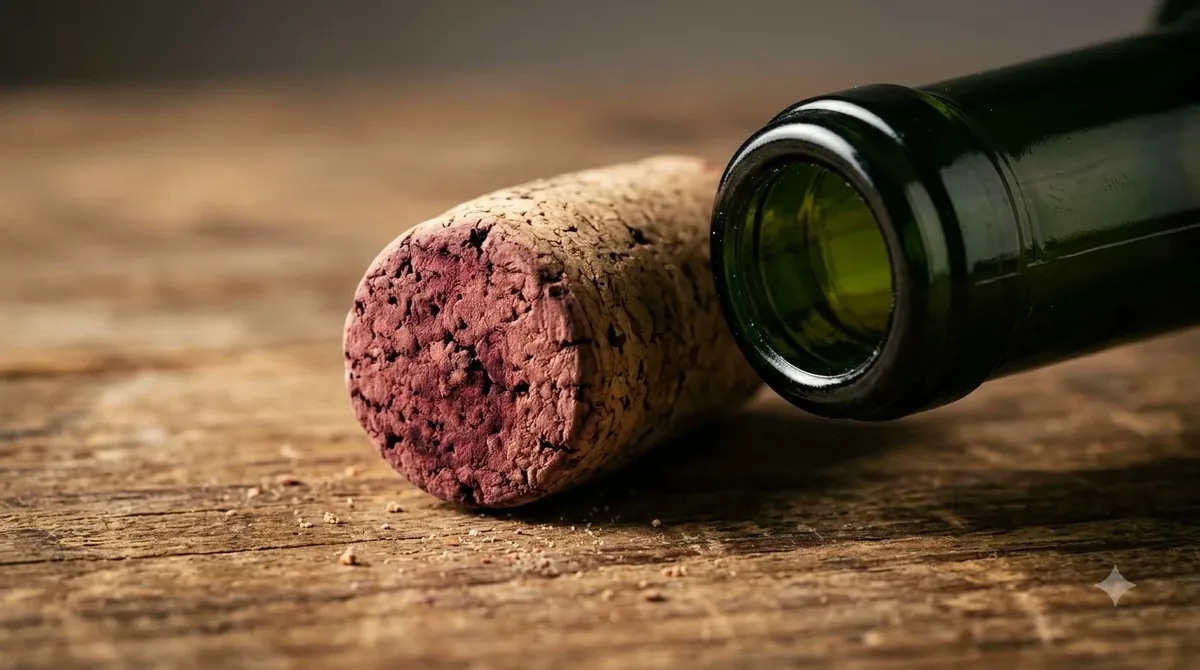
The required operations begin with crushing the grapes. After harvest, the winery processes the fruit to release the juice and pulp, which provide the material for fermentation. For red wines, grape skins commonly remain in contact with the fermenting juice to extract color, tannin, and flavor compounds.
Fermentation must also take place at the bottling winery. This is the stage in which yeast converts fermentable sugars into alcohol and carbon dioxide. Depending on the wine style, the winemaker may use stainless-steel tanks, concrete vessels, or oak barrels during different parts of production.
After fermentation, the wine must be finished, aged, and bottled on the winery’s premises as part of the continuous process. Finishing can involve operations such as clarification, filtration, stabilization, and preparation for bottling. Aging may take place in stainless steel, oak barrels, or other suitable vessels.
The requirement that the wine not leave the premises is a central distinction. A winery cannot simply make wine at one facility, transport it to an independent bottling plant, and claim the resulting wine is estate bottled under the US definition.
The distinction is about the production location, not necessarily the specific equipment used. A winery may employ different fermentation vessels, barrel types, or bottling machinery while remaining within the regulatory framework.
Understanding the continuous-process requirement
Imagine a winery that grows its own Chardonnay grapes inside the Russian River Valley AVA. It harvests and crushes the fruit at its winery, ferments the juice in stainless-steel tanks, ages the wine in oak barrels, and bottles it at the same facility. Assuming the vineyard-control and geographic conditions are satisfied, this production arrangement can meet the estate-bottled requirements.
Contrast that with a winery that grows qualifying grapes but sends the wine to an unrelated facility for bottling after fermentation and aging. The grapes may be entirely estate-grown, but the wine would not meet the required continuous on-premises production conditions.
This is an important difference between estate grown and estate bottled. The former can describe grape origin in a general sense, while the latter is a specific regulated claim involving both vineyard sourcing and the winery’s production operations.
Estate Bottled vs. Other Wine Label Terms
Estate bottled, vineyard designated, reserve, and old vine communicate different information. Understanding these distinctions helps prevent assumptions about vineyard ownership, grape age, production methods, and wine quality.
Estate bottled is the most specific of these terms regarding the relationship between vineyard management and winery operations under the US rules. Other expressions can describe a particular vineyard, a winemaking selection, or the age of grapevines without establishing the same complete set of requirements.
Estate bottled vs. estate grown
Estate grown is often used informally to describe grapes originating from vineyards associated with a winery. However, it should not automatically be treated as interchangeable with the federally regulated estate-bottled designation.
A wine might contain grapes grown on a winery’s property but be fermented or bottled elsewhere. Such a wine could accurately communicate an estate-grown connection without qualifying for the estate-bottled claim.
Estate bottled establishes both the qualifying grape source and the required production location. The distinction is especially useful when comparing wines from producers that operate their own vineyards but use outside facilities for certain production stages.
Estate bottled vs. vineyard designated
A vineyard-designated wine identifies a particular vineyard as the source of its grapes. That vineyard might be owned by the winery, leased, or operated by an independent grower.
A named vineyard can provide useful information about the fruit’s origin, but it does not independently establish that the winery owns or controls the vineyard or completes every production stage on its premises.
For example, a Pinot Noir labeled with the name of a vineyard in the Willamette Valley might come from a grower’s property that supplies several different wineries. The vineyard designation identifies the source, but it does not automatically qualify the wine as estate bottled.
Estate bottled vs. reserve
Reserve generally communicates a producer’s selected or specially designated wine, but the exact meaning depends on the country and applicable labeling regulations. In the United States, the word does not carry the same universal federal production requirements as estate bottled.
A winery could produce a reserve Cabernet Sauvignon using purchased grapes, provided its labeling and other applicable requirements are satisfied. Conversely, an estate-bottled wine does not need to be labeled reserve.
For more detail, see what does reserve mean on wine. The distinction is useful because one expression concerns a legally defined relationship between vineyard and winery, while the other generally communicates a producer’s selection or classification.
Estate bottled vs. old vine
Old vine describes grapevines that have been growing for a substantial period. However, there is no single universally accepted age threshold that applies to every wine labeled old vine in the United States.
A winery can purchase grapes from an independent grower whose vines are several decades old. The resulting wine might qualify as old vine wine without qualifying as estate bottled.
Likewise, an estate-bottled wine can come from relatively young vines. Estate bottling establishes vineyard control and production conditions, not the age of the plants.
For additional background, read what does old vine mean.
Tip: Treat estate bottled as evidence of a specific vineyard-to-winery production relationship, not as a guarantee that the wine is expensive, organic, aged in oak, or better tasting. Look at the grape variety, AVA, vintage, producer, and winemaking details to understand the actual style of the bottle.
What Estate Bottled Tells You About Wine Quality
Estate bottled provides meaningful information about production and traceability, but it does not guarantee a superior wine. Quality still depends on grape condition, vineyard management, harvest decisions, fermentation, aging, and the skill of the winemaking team.
One advantage is the closer connection between the winery and its grape supply. A producer that owns or controls its vineyards can make decisions about pruning, canopy management, irrigation, crop levels, and harvest timing with the intended wine style in mind.
For example, a winery producing Pinot Noir in the Russian River Valley might manage its vineyards to preserve freshness and balance. Another winery growing Cabernet Sauvignon in Napa Valley may focus on ripeness, structure, and tannin development. Both can produce estate-bottled wines, but their results will be quite different.
Estate production can also help wineries maintain greater consistency in vineyard management. Since the winery is responsible for qualifying vineyard operations, it has a direct role in decisions that influence grape development from season to season.
However, vineyard ownership alone does not guarantee careful farming. A poorly managed estate vineyard can produce mediocre fruit, just as an excellent independent grower can supply outstanding grapes to a winery that does not qualify for estate bottling.
What the designation does not guarantee
There are several characteristics that estate bottled does not establish:
- Organic certification: The designation does not require organic farming or certification.
- Sustainable farming: It does not automatically establish sustainable vineyard management.
- Specific grape varieties: Estate-bottled wine can be made from Chardonnay, Cabernet Sauvignon, Pinot Noir, Merlot, or other permitted grape varieties.
- Oak aging: The wine can be fermented or aged in stainless steel, concrete, oak, or a combination of vessels.
- Minimum aging: The regulation does not establish a universal minimum number of months or years for aging.
- Higher quality: The term does not establish a tasting score, quality grade, or guarantee of consumer preference.
- Small production: There is no general estate-bottled requirement limiting a winery to a particular number of bottles.
These distinctions are useful because wine labels frequently combine several different types of information. A bottle might say estate bottled, single vineyard, reserve, and sustainably farmed, but each expression communicates something different and must be evaluated on its own terms.
For example, a 2022 estate-bottled Chardonnay from an AVA does not necessarily have more oak influence than a Chardonnay made from purchased grapes. The production designation does not tell you whether the winemaker used stainless steel, French oak, malolactic fermentation, or extended lees aging.
For a more complete understanding of wine terminology, the what does DOC mean on wine explanation provides another useful comparison. Geographic wine classifications and estate-bottling rules address different aspects of origin and production.
How to Read an Estate Bottled Wine Label
The easiest way to interpret an estate-bottled wine is to read the designation alongside the appellation, producer name, grape variety, and vintage. Together, these details provide a more useful picture of where the grapes originated and how the wine was produced.
Start with the words Estate Bottled, which indicate that the producer is making a specific legal claim. Next, identify the named AVA. This is the geographic area within which both the winery and its qualifying vineyard land must be located.
Then look for the producer’s name and the grape variety. A bottle labeled estate-bottled Cabernet Sauvignon from Napa Valley provides three distinct pieces of information: the estate-bottling production claim, the named geographic origin, and the principal grape variety.
The vintage indicates the harvest year associated with the wine, while the producer information identifies the winery responsible for the product. These details do not replace the estate-bottling requirements, but they help you compare bottles from different wineries and regions.
Important numbers behind the designation
The following figures summarize several federal labeling requirements and help distinguish estate bottling from broader appellation rules.
| Requirement | Figure | What it means |
|---|---|---|
| Qualifying grape source | 100% | All grapes must come from land owned or controlled by the winery within the named AVA. |
| Minimum qualifying lease | 3 years | A lease or similar agreement used to establish control must last at least three years. |
| General AVA grape-origin threshold | 85% | The general minimum for using an American Viticultural Area appellation, subject to other requirements. |
| Appellation lettering for containers over 187 ml | 2 mm | Minimum lettering size specified by TTB. |
| Appellation lettering for containers of 187 ml or less | 1 mm | Minimum lettering size specified by TTB. |
These figures show why the estate-bottled designation is more demanding than a general AVA origin statement. A wine carrying a Napa Valley appellation generally needs at least 85 percent of its grapes to originate from that area, whereas an estate-bottled wine must meet the stricter 100 percent qualifying grape-source requirement.
The figures also illustrate why the lease arrangement matters. A winery that manages vineyard land through a qualifying four-year agreement may meet the duration requirement, provided it has the legal right to perform and actually performs the relevant viticultural activities.
Practical questions to ask before buying
If you are comparing two estate-bottled wines, begin with their geographic origins. A Sonoma Valley Chardonnay and a Willamette Valley Chardonnay may have very different growing conditions and resulting flavor profiles.
Next, consider the grape variety and vintage. A cool-climate Pinot Noir may show brighter acidity and more delicate fruit than a ripe Napa Valley Cabernet Sauvignon, which often has more body and firmer tannin.
Finally, look at the winemaking details. Fermentation vessel, oak use, aging duration, and blending choices can have a substantial influence on style. These details often tell you more about the drinking experience than the estate-bottled designation alone.
Estate bottled is a valuable piece of label information, but it works best as part of a broader assessment of origin, grape variety, producer, and winemaking decisions.
Frequently Asked Questions
Does estate bottled mean the wine was made entirely by one winery?
The US designation requires the qualifying production stages to take place at the bottling winery, but it does not mean that one individual performs every task. Vineyard workers, cellar staff, winemakers, and bottling employees can all contribute. The legal requirement concerns the winery’s responsibility and production location, not the number of people involved.
Can estate-bottled wine be produced by a cooperative?
Yes. Under 27 CFR 4.26, grapes grown by members of a qualifying cooperative bottling winery are considered grown by the bottling winery. This special provision recognizes cooperative production arrangements. The other applicable estate-bottling conditions still need to be satisfied.
Can estate-bottled wine be sold under a different brand name?
A winery may market wines under different brand names, provided the labeling accurately identifies the product and satisfies applicable federal requirements. The estate-bottled designation remains tied to the qualifying winery, vineyard source, production process, and viticultural area. A brand name by itself does not establish estate-bottling eligibility.
Does estate bottled apply to imported wine in exactly the same way?
Imported wines must conform to the applicable laws and regulations of their country of origin for their production and designation. European expressions such as château bottled and domaine bottled can communicate related estate-production concepts, but their legal requirements are not automatically identical to the American definition. The country of origin is important when interpreting these terms.
Can a winery use estate bottled on every wine it produces?
No. A winery can produce qualifying estate-bottled wines alongside other wines made from purchased grapes or fruit sourced outside its qualifying vineyard holdings. The designation applies to wines that satisfy the specific production and origin requirements, not automatically to the entire winery portfolio. A producer may therefore have some estate-bottled labels and other wines without that designation.
Estate bottled is one of the more informative terms on an American wine label because it establishes a legally defined connection between the grapes, vineyard management, winery location, and production process. It does not promise a particular flavor or quality level, but it gives you meaningful information about how a wine was sourced and made. The next time you see the phrase, look at the AVA and producer alongside it to better understand the bottle you are considering.
More in Wine Basics
 Which Rose Is Best for Your Taste, Budget, and Food PairingsUpdated Nov 21, 2026
 Is Cheap Wine Bad? How to Find Bottles Worth DrinkingUpdated Nov 21, 2026
 What To Write On A Wine Gift Tag: Thoughtful Messages For Every OccasionUpdated Nov 21, 2026
 Which Wine Is Best For Weight Loss? Compare Lower-Calorie ChoicesUpdated Nov 21, 2026
 What Is The Best Wine For Mimosas? Choose Bubbly That Balances Orange JuiceUpdated Nov 20, 2026
 Which Prosecco Is Best for Your Taste and OccasionUpdated Nov 20, 2026