

We may earn a commission when you buy through links on this page, at no extra cost to you. Learn more.
If you are wondering what does dry white wine taste like, expect a crisp, clean finish with zero sugary stickiness, dominated by bright acidity and flavors ranging from zesty citrus and green herbs to creamy, toasted oak. Winemakers achieve this style by letting yeast ferment almost all natural grape sugars into alcohol, leaving less than 4 grams of residual sugar per liter under standard European wine regulations. Instead of sweetness, your palate registers mouthwatering tartness, mineral tension, and textured fruit notes that refresh the mouth between bites of food.
Many shoppers confuse the term “dry” with bitterness or an overly sour bite, yet a well-made dry white wine is simply the absence of perceptible sugar. Depending on the grape variety, climate, and cellar aging, a bottle can feel as snappy as fresh-squeezed lemon juice or as plush as melted butter on warm toast. Understanding how acidity, aroma, and oak shape that sensation makes picking the right bottle effortless.
What It Is
A dry white wine is any still white wine in which yeast has converted virtually all the grape juice sugars into alcohol during fermentation. Because little to no residual sugar remains in the finished bottle, the wine finishes clean rather than coating your tongue with syrup.
In legal terms, European wine standards classify a still wine as dry when it holds up to 4 grams of residual sugar per liter, or up to 9 grams per liter when high natural acidity balances out the sugar. To put that into everyday perspective, a standard teaspoon of sugar weighs roughly 4 grams, meaning an entire liter bottle of dry white wine contains less than one teaspoon of sugar. That tiny fraction sits well below the human threshold for tasting overt sweetness, especially when lively citrus-like acids are present.
Confusion often arises because ripe fruit aromas trick the brain into expecting sugar. According to wine educators at Wine Folly, what your nose smells—such as ripe white peach, mango, or honeysuckle—can make a completely dry wine seem sweet on the first sniff, even though your tongue detects zero sugar on the finish. Meanwhile, tart acidity and subtle phenolic grip mask trace amounts of sugar, much like squeezing fresh lemon into sweetened water makes it taste sharper and less sugary.
Flavor and Styles
Dry white wines span three distinct stylistic categories—light and crisp, herbaceous and aromatic, and rich and full-bodied—each delivering a completely different sensory profile. While none of them are sweet, their textures and aromatics shift dramatically based on grape genetics and winemaking choices.
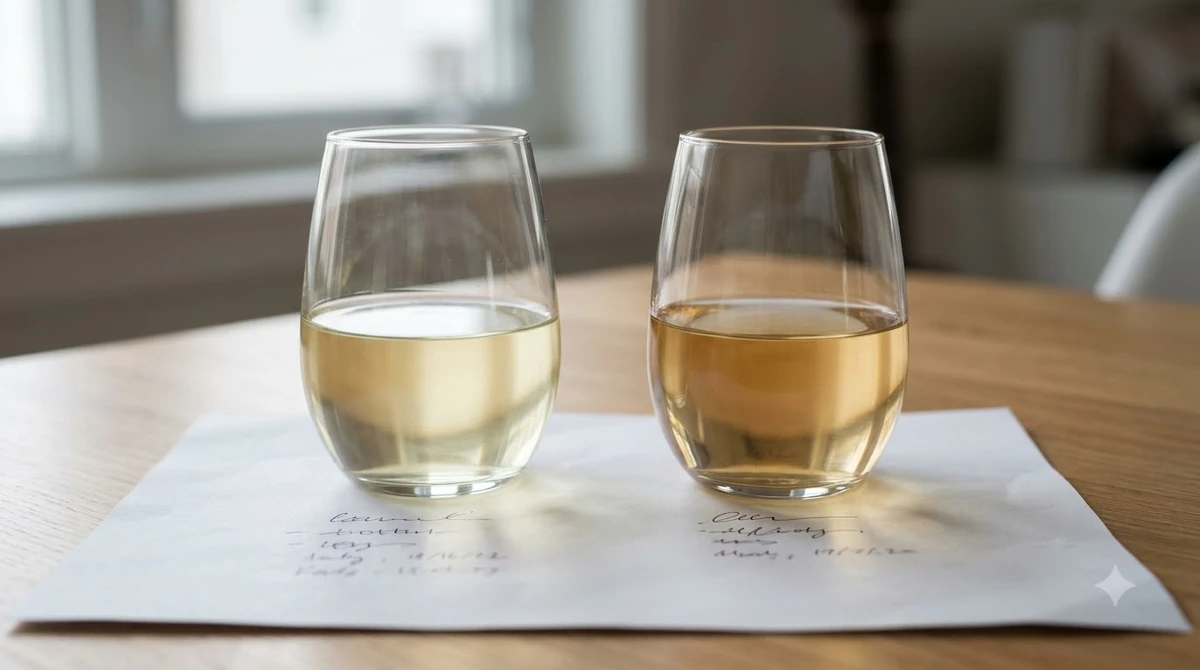
Light-bodied and crisp styles emphasize mouthwatering acidity, brisk citrus, and wet-stone minerality. Grapes like Pinot Grigio, Muscadet, Albariño, and Assyrtiko are typically fermented in stainless steel tanks to preserve their pure, snappy character. When you take a sip, you taste Meyer lemon, green apple, underripe pear, and a saline or chalky snap that leaves your palate feeling refreshed.
Herbaceous and aromatic styles burst with pungent green notes alongside zesty tropical fruit. Sauvignon Blanc is the benchmark here, often showing lime zest, grapefruit, fresh-cut grass, passion fruit, and green bell pepper. Dry Riesling and dry what does chenin blanc taste like also sit in this expressive camp, trading grassy notes for white blossom, lime leaf, quince, and razor-sharp acidity.
Full-bodied and creamy styles feel broader, heavier, and rounder across the mid-palate. Oaked Chardonnay, White Burgundy, and barrel-aged Viognier undergo two cellar techniques that build texture without adding sugar: malolactic fermentation, which converts sharp malic acid into softer lactic acid with buttery notes, and oak barrel aging, which imparts vanilla, toasted hazelnut, clove, and baking spice. If you are exploring Wine by Type, comparing an unoaked Chablis against a barrel-fermented Napa Chardonnay shows just how wide the dry white spectrum reaches.
| Dry White Style | Signature Grapes | Core Tasting Notes | Body and Texture |
|---|---|---|---|
| Crisp and Light | Pinot Grigio, Muscadet, Assyrtiko | Lemon zest, green apple, pear, wet stone, saline | Light-bodied, high acid, lean and snappy |
| Herbaceous and Zesty | Sauvignon Blanc, Grüner Veltliner | Lime, grapefruit, cut grass, passion fruit, white pepper | Light-to-medium, vibrant, crunchy freshness |
| Aromatic and Mineral | Dry Riesling, Dry Chenin Blanc | White peach, honeysuckle, lime peel, flint, beeswax | Medium-bodied, electric acidity, structured |
| Rich and Full-Bodied | Oaked Chardonnay, Viognier, Marsanne | Baked apple, vanilla, butter, toasted almond, brioche | Full-bodied, creamy, broad, rounded finish |
Where It Grows
Climate is the single strongest force shaping how dry a white wine tastes, because temperature controls how fast grapes build sugar and lose natural acidity on the vine. Cool regions produce leaner, sharper wines, whereas sunny, warm regions yield riper fruit flavors and higher alcohol.
In cool-climate appellations—such as France’s Loire Valley, Chablis, northern Italy’s Alto Adige, Germany’s Rheingau, and New Zealand’s Marlborough—grapes ripen slowly under moderate sunshine. Slow ripening locks in high levels of malic and tartaric acid while keeping sugar accumulation modest, producing wines with brisk citrus drive and herbal lift. Soil composition also plays a recognizable role: limestone, chalk, and volcanic soils frequently give wines like Chablis and Santorini Assyrtiko a savory, mouth-coating mineral edge.
Conversely, warm-climate regions like Napa Valley, coastal Australia, and southern Spain ripen grapes thoroughly, generating generous stone fruit and tropical aromatics alongside fuller alcohol levels. Even when fermented completely dry, a white wine reaching higher alcohol feels warmer and rounder on the finish, creating a plush impression that contrasts sharply with the razor-edged precision of a cool-climate bottle.
How to Serve
Serving temperature dramatically alters how you perceive acidity, aroma, and texture in a dry white wine. Pouring a bottle straight from a standard kitchen refrigerator—which typically sits near 38°F—numbs delicate fruit aromatics and makes crisp acidity taste overly sharp.
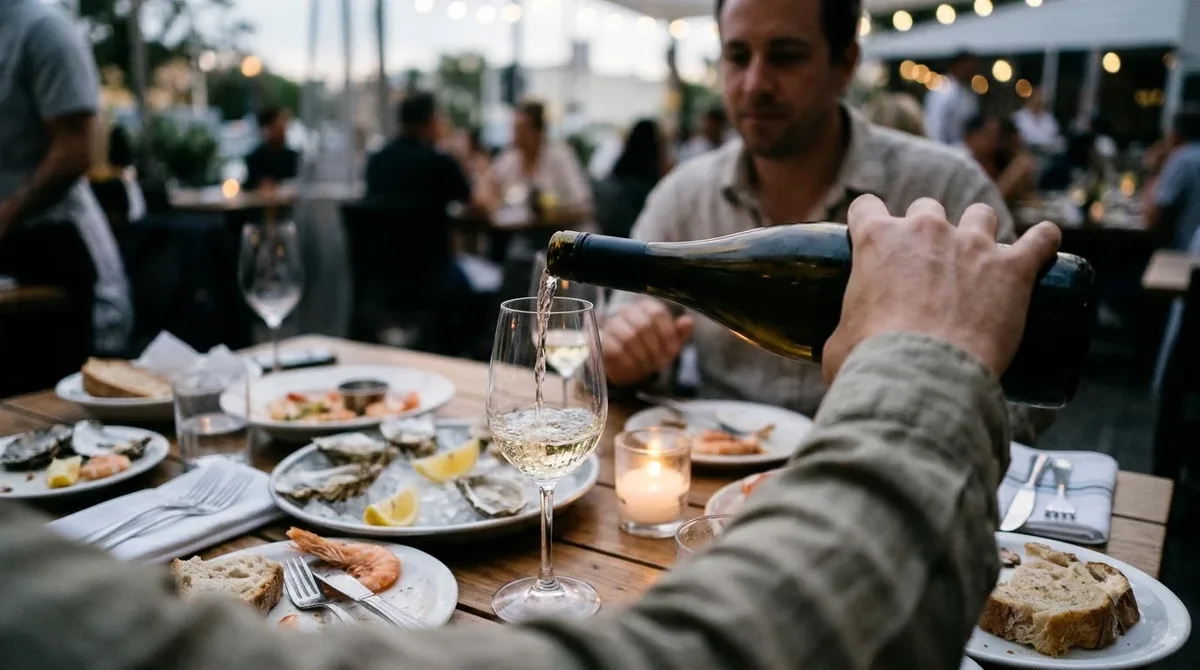
According to serving guidelines from Wine Enthusiast, light-bodied dry whites like Pinot Grigio, Muscadet, and Sauvignon Blanc shine best between 45°F and 50°F. Chilling a room-temperature bottle in the fridge for about 90 minutes to two hours brings it right into that sweet spot, keeping the citrus snap vibrant while letting floral and herbal scents open in the glass.
Fuller-bodied, barrel-aged dry whites need slightly warmer temperatures so their creamy, nutty layers are not locked away by cold. Serve oaked Chardonnay, White Burgundy, and rich Viognier between 50°F and 55°F—roughly one hour in the refrigerator from room temperature, or 15 to 20 minutes on the counter after pulling them from cold storage. Using a medium-sized tulip-shaped white wine glass directs aromas toward your nose while keeping your hands off the bowl so the wine warms gradually as you sip.
Tip: If a dry white wine tastes flat, overly sour, or mute right after pouring, let it sit in your glass for 10 minutes—warming up by just five degrees releases trapped fruit and floral aromas immediately.
Food Pairing
Dry white wine is one of the most versatile partners at the dinner table because its brisk acidity acts like a squeeze of fresh lemon over food. Rather than competing with savory flavors, high acid cuts through richness, cleanses salt and oil from your palate, and resets your taste buds for the next bite.
Match the weight and intensity of the wine to the weight of your dish. Zesty, light-bodied bottles like Muscadet, Pinot Grigio, and Albariño pair effortlessly with raw oysters, steamed clams, grilled white fish, goat cheese salads, and crisp vegetable dishes where heavy oak would overwhelm delicate ingredients. Herbaceous Sauvignon Blanc thrives alongside dishes loaded with fresh green herbs, asparagus, pesto, or tangy feta.
When dinner involves butter, cream sauces, roast chicken, pork tenderloin, or lobster, step up to a full-bodied oaked Chardonnay or white Rhône blend. The wine’s creamy texture mirrors rich sauces while its underlying acidity keeps the meal from feeling heavy. Much like understanding what does dry red wine taste like helps you pair hearty meats with tannin, matching white wine body to sauce weight ensures neither food nor drink overpowers the other.
How to Choose a Bottle
Reading a few key clues on the front and back label tells you exactly what style of dry white wine sits inside the bottle before you pull the cork. Because most commercial white wines are fermented dry, the real decision is choosing between crisp-and-lean or rich-and-creamy.
Start by checking the region and grape variety. Bottles labeled Chablis, Sancerre, Muscadet, Soave, or Alto Adige Pinot Grigio almost always deliver unoaked, high-acid freshness. By contrast, white wines from Napa Valley, Sonoma Coast, or Burgundy’s Côte de Beaune frequently spend time in French or American oak barrels, signaling notes of vanilla, toast, and rounded orchard fruit.
For aromatic grapes that are sometimes bottled sweet—most notably Riesling, Gewürztraminer, and Chenin Blanc—look for explicit dryness cues on the label. German and Austrian producers print the word Trocken on dry bottles, while Alsace labels increasingly include a sweetness scale on the back. Checking the alcohol by volume also helps: dry whites usually sit between 11.5 percent and 14 percent ABV, whereas noticeably sweet Rieslings often stop fermentation early at 7 to 9 percent ABV.
Frequently Asked Questions
Is dry white wine bitter or sour?
Dry white wine is neither bitter nor sour when well made, though its brisk acidity can feel tart if you are accustomed to sweet beverages. That tartness creates a mouthwatering, refreshing sensation similar to biting into a crisp Granny Smith apple or sipping water with lemon. Bitterness only appears as a faint, pleasant almond or grapefruit-pith note on the finish of specific grapes like Pinot Grigio or Vermentino.
Which white wine is the driest?
No single grape holds a monopoly on dryness, because winemakers can ferment nearly any white variety down to trace sugar levels. However, Muscadet from France’s Loire Valley, Santorini Assyrtiko from Greece, Chablis, and cool-climate Sauvignon Blanc taste the leanest and driest due to their soaring natural acidity and lack of oak aging.
Is Chardonnay a dry white wine?
Yes, virtually all Chardonnay is fermented completely dry with negligible residual sugar. When an oaked Chardonnay tastes creamy, buttery, or faintly sweet, those flavors come from malolactic fermentation and toasted oak barrels rather than leftover grape sugar.
Why do some dry white wines taste slightly sweet?
Ripe fruit aromas like mango, peach, and pineapple trigger memories of sweet foods in your brain even when no sugar is present in the glass. Higher alcohol levels and vanilla notes from oak barrels also add a soft, round impression on the finish that people often mistake for sweetness.
Once you recognize that “dry” simply means sugar-free rather than flavor-free, an entire world of expressive white wines opens up. Whether you reach for a snappy, citrus-driven Sauvignon Blanc on a warm afternoon or a creamy, barrel-aged Chardonnay alongside roasted poultry, paying attention to acidity, oak, and serving temperature will lead you straight to a bottle you love.
More in Wine Types & Grapes
 What Does Mourvèdre Taste Like? Flavor Profile, Regions, and PairingsUpdated Nov 20, 2026
 What Does Marsanne Taste Like? Flavors, Styles, and Food PairingsUpdated Nov 20, 2026
 What Does Malvasia Taste Like? Styles, Flavors, and Food PairingsUpdated Nov 20, 2026
 What Does Grenache Blanc Taste Like? Flavor Profile, Styles, and PairingsUpdated Nov 20, 2026
 What Does Garnacha Taste Like? Key Flavors, Styles, and Pairing TipsUpdated Nov 20, 2026
 What Does Fruit Wine Taste Like? A Complete Flavor and Style BreakdownUpdated Nov 20, 2026