

We may earn a commission when you buy through links on this page, at no extra cost to you. Learn more.
When figuring out what cheese goes with red wine, aged, firm, and semi-hard cheeses like aged cheddar, Gouda, Gruyère, Manchego, and Parmigiano-Reggiano are the most reliable matches. Their high fat, salt, and protein levels bind to the tannins in red wine, softening astringency while letting the wine’s fruit shine. Lighter-bodied reds with lower tannins, such as Pinot Noir or Gamay, also pair effortlessly with soft, earthy bloomy-rind cheeses like Brie and Camembert.
While red wine and cheese are a classic pairing on paper, pouring a bold Cabernet next to a delicate, fresh cheese can make both taste metallic or overly bitter. Getting the match right comes down to balancing the wine’s body and tannin grip against the cheese’s moisture, fat, and age.
Why Fat, Salt, and Tannins Make or Break a Pairing
Red wine contains polyphenolic compounds called tannins that create a drying, grippy sensation on your palate, and cheese provides the exact proteins and fats needed to smooth them out. Understanding this chemical interaction explains why certain cheeses turn a bold red silky while others make it taste harsh.
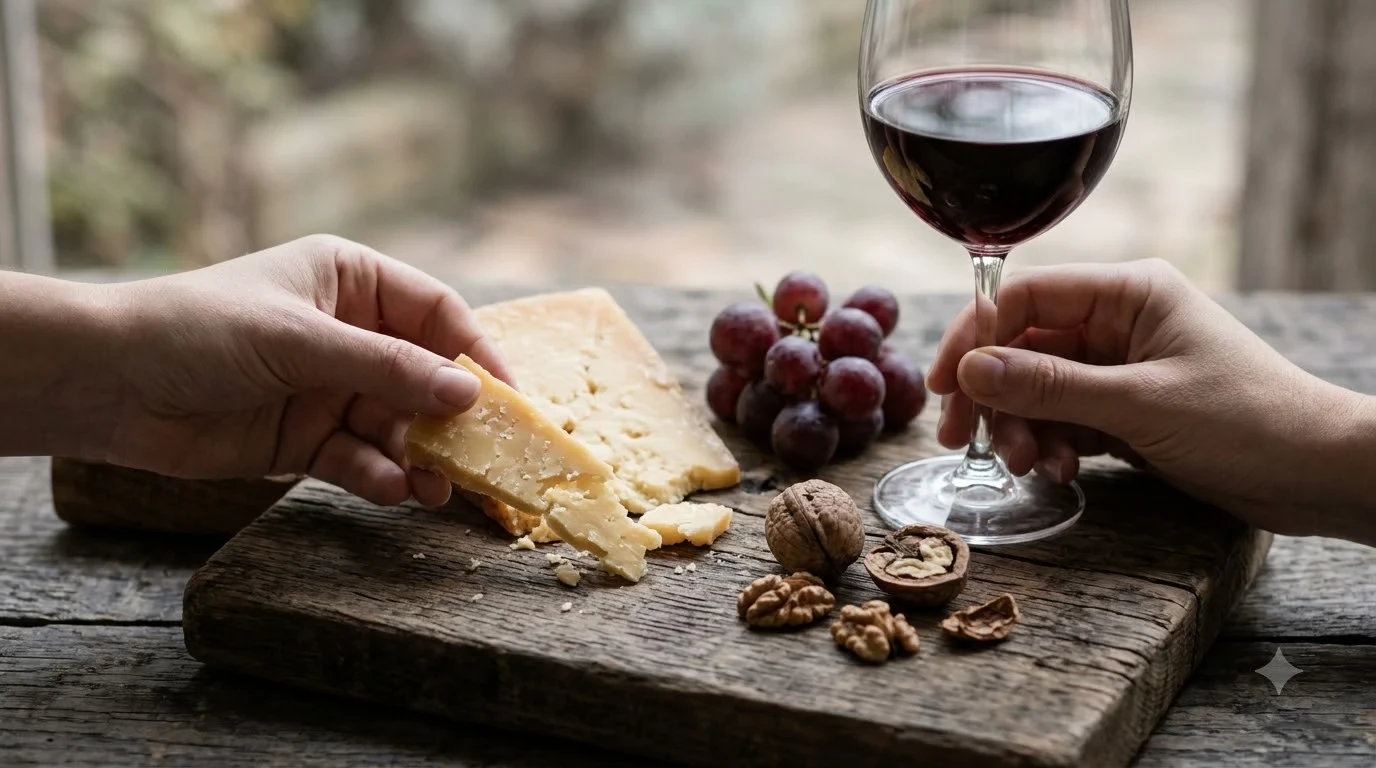
When you take a bite of cheese before sipping red wine, the fat coats your tongue and the proteins bind directly to the wine’s tannins. Instead of latching onto the proteins in your saliva—which is what causes that puckering, mouth-drying astringency—the tannins attach to the dairy. According to sensory science research and educators at Wine Folly, pairing wines over 14.5% ABV with intensely flavored, aged cheeses ensures neither element overwhelms the other.
Salt plays an equally vital role on the cheese board. Sodium suppresses bitterness and softens sharp tannic edges, allowing the subtle dark berry, cherry, or spice notes in your glass to step forward. Aged cheeses lose moisture over time, concentrating both their butterfat and their salt content while developing crunchy amino acid crystals (tyrosine) that add savory umami depth. Fresh, high-moisture cheeses lack that concentrated buffer, which is why they generally perform better with crisp whites or sparkling wines.
Best Cheeses by Red Wine Body
Matching the weight of your wine to the density and intensity of your cheese is the fastest way to build a balanced plate. Light reds demand delicate, supple cheeses, whereas full-bodied reds require firm, aged selections with enough structural heft to stand their ground.
| Red Wine Style | Common Examples | Best Cheese Matches | Why It Works |
|---|---|---|---|
| Light-Bodied Reds | Pinot Noir, Gamay (Beaujolais), Zweigelt | Brie, Camembert, Gruyère, Comté, Swiss | Low tannins preserve delicate creaminess while bright acidity cuts rich butterfat. |
| Medium-Bodied Reds | Merlot, Sangiovese (Chianti), Tempranillo, Grenache | Manchego, Pecorino Toscano, Provolone, Monterey Jack, Edam | Moderate tannins and savory acidity complement semi-firm textures and nutty, sheep’s-milk richness. |
| Full-Bodied Reds | Cabernet Sauvignon, Syrah, Malbec, Zinfandel, Barolo | Aged Cheddar, Aged Gouda, Parmigiano-Reggiano, Grana Padano, Smoked Gouda | High protein, salt, and fat tame heavy tannins while bold flavors match dark fruit and oak. |
| Sweet & Fortified Reds | Vintage Port, Tawny Port, Ruby Port, Lambrusco Dolce | Stilton, Roquefort, Gorgonzola, Aged Blue | Residual sugar counters aggressive blue-vein saltiness and pungent funk. |
Light-bodied reds under 12% to 13.5% ABV—such as Pinot Noir from Oregon or Burgundy and Beaujolais made from Gamay—carry bright red-fruit flavors and gentle tannins. Because they do not overwhelm the palate with astringency, they are among the few red wines that harmonize with soft-ripened, bloomy-rind cheeses. Reviewers at VinePair note that Pinot Noir’s light-to-medium body complements the soft, mushroomy richness of Brie, while Gamay’s lively cherry notes balance mild, nutty Swiss or salty, brined Feta.
Medium-bodied reds bridge the gap between fruitiness and structure. Merlot’s soft, plummy profile pairs cleanly with semi-firm cow’s-milk cheeses like Monterey Jack or young Gouda. Meanwhile, savory Italian and Spanish reds like Chianti Classico (Sangiovese) and Rioja (Tempranillo) thrive alongside regional sheep’s-milk classics such as Pecorino Toscano and aged Manchego, where the wine’s natural acidity refreshes the palate between rich bites.
When pouring full-bodied reds like Cabernet Sauvignon, Syrah, or Malbec, reach for cheeses aged at least 12 months. Bandage-wrapped aged cheddar, crumbly Parmigiano-Reggiano, and butterscotch-toned aged Gouda possess the dense protein matrix and sharp salinity required to absorb heavy oak and grippy tannins. If your red wine has smoky or peppery notes—such as an Australian Shiraz or a bold Zinfandel—a lightly smoked Gouda or aged cheddar echoes those savory spices effortlessly.
Regional Pairings That Always Work
One of the oldest rules in wine service is that what grows together goes together, and regional traditions offer foolproof shortcuts for pairing red wine with cheese. Centuries of local winemaking and cheesemaking evolved side by side to suit the exact flavors of their shared climate and soil.
In central Spain, tempranillo-based Rioja and Ribera del Duero are natural companions for Manchego made from the milk of Manchega sheep. A four-to-twelve-month aged Manchego offers a firm, slightly granular texture and lanolin-rich nuttiness that mirrors the dried cherry, leather, and vanilla notes of oak-aged Spanish reds. Similarly, Italian Sangiovese from Tuscany pairs smoothly with local Pecorino Toscano or Grana Padano, as the wine’s herbal, tomato-leaf nuances accentuate the savory grassiness of the cheese.
France provides equally reliable regional blueprints. Earthy red Burgundy (Pinot Noir) shares a home with soft, velvety cow’s-milk cheeses like Brillat-Savarin and mild Brie de Meaux, where the wine’s forest-floor aroma echoes the cheese’s bloomy rind. Exploring how local soil and climate shape both grapes and pastures is easier once you understand what terroir means in wine, as the same limestone hillsides often nourish both the vines and the grazing herds.
Cheeses to Approach With Caution
Not every cheese belongs next to a glass of dry red wine, and a few popular styles frequently clash with red wine tannins. Knowing which cheeses to reserve for white, sparkling, or dessert wines will save you from jarring flavor collisions.
Fresh, unaged cheeses—such as fresh chèvre (goat cheese), ricotta, burrata, and fresh mozzarella—contain high water content and bright lactic acidity. When paired with a tannic red wine, that sharp acidity can amplify the wine’s astringency, leaving a metallic, sour aftertaste. Crisp white wines like Sauvignon Blanc or Pinot Grigio handle these delicate, milky textures far better.
Pungent blue cheeses and washed-rind cheeses also require careful handling. While a dry, full-bodied Cabernet Sauvignon can taste bitter and stripped of fruit next to intensely salty Roquefort or Gorgonzola, sweet fortified reds transform them. Vintage Port or aged Tawny Port brings rich residual sugar and dried-fig sweetness that tames the sharp blue veins and turns the cheese’s texture noticeably creamier.
How to Serve Red Wine and Cheese Together
Even a textbook wine and cheese pairing will fall flat if either item is served at the wrong temperature. Cold temperatures mute aromatics and lock up fats, while overly warm red wine tastes hot and alcoholic.
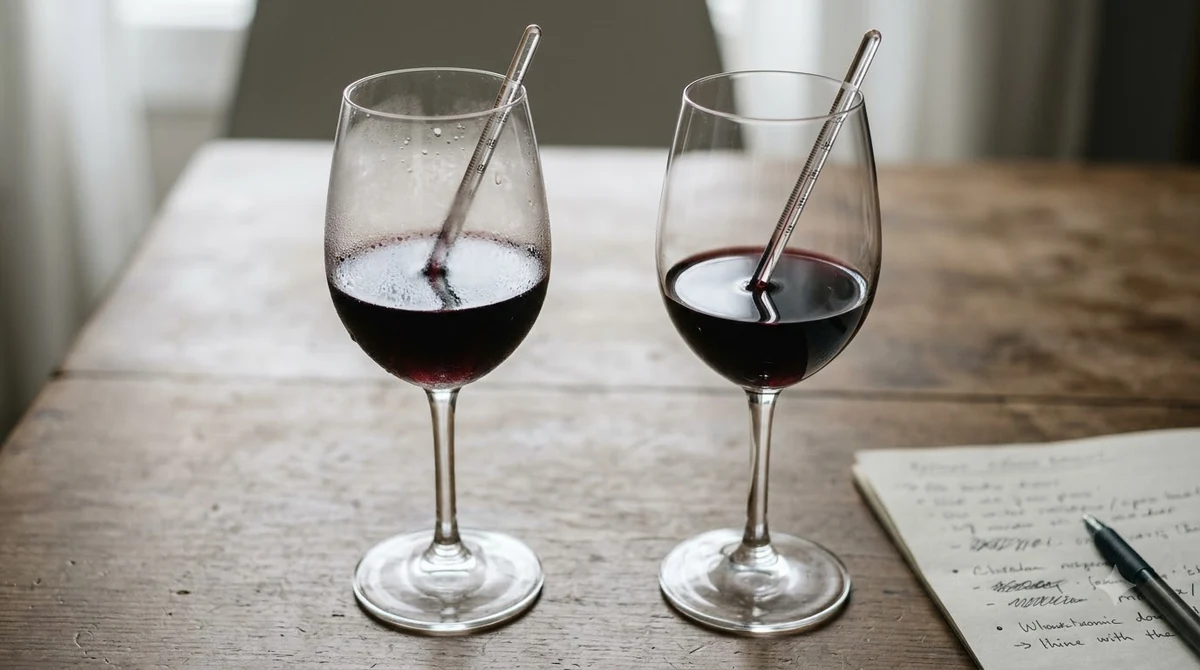
Remove your cheeses from the refrigerator 30 to 45 minutes before guests arrive so they can reach room temperature (around 65°F to 70°F). At room temperature, butterfats soften and volatile aroma compounds open up, allowing the cheese’s full flavor profile to interact properly with the wine. Keep soft cheeses covered until serving so their rinds do not dry out.
Pay equal attention to your wine temperature. Standard American room temperature is often too warm for red wine; aim to serve light reds like Pinot Noir slightly chilled around 55°F to 60°F, and full-bodied reds like Cabernet Sauvignon at cellar temperature between 60°F and 65°F. If you are hosting a casual tasting flight, pouring smaller two-to-three-ounce tastes lets everyone sample multiple combinations while keeping track of how many glasses of wine is right for an evening.
Tip: When building a mixed cheese board for a crowd that prefers red wine, choose a firm, nutty cheese like Gruyère, Comté, or aged Gouda—they carry enough fat to soften tannins without overpowering lighter bottles.
Accompaniments That Bridge the Gap
Simple board accompaniments do more than fill empty space on a wooden platter; they act as flavor bridges between dry red wine and savory cheese. Choosing the right breads, fruits, and spreads keeps your palate refreshed throughout a tasting.
Plain, crusty baguette slices and neutral water crackers provide crunch and texture without introducing competing herbs, garlic, or heavy salt. Fresh sliced pears, crisp apples, and red grapes add natural juiciness and gentle acidity that cleanse the palate between dense bites of aged cheddar or Manchego.
Roasted nuts like Marcona almonds or walnuts echo the toasted oak and nutty notes found in aged cheeses and barrel-matured reds. Small dabs of fig jam, sour cherry spread, or honeycomb also work wonders alongside salty cheeses and tannic reds, offering a touch of fruit sweetness that rounds out firm tannins. For more foundational advice on tasting, storage, and service, browse our wine basics Q&A hub.
Frequently Asked Questions
What is the single safest cheese to serve with any red wine?
A firm, nutty aged cheese such as Gruyère, Comté, or a 12-month aged Gouda is the most versatile choice across red wine styles. These cheeses contain enough butterfat and protein to soften grippy tannins in bold reds while remaining balanced enough not to overwhelm lighter bottles like Pinot Noir.
Does Brie go well with red wine?
Yes, provided you pair it with a light-bodied, low-tannin red wine such as Pinot Noir or Beaujolais (Gamay). The bright red-berry fruit and gentle structure of these wines complement Brie’s creamy, earthy texture, whereas heavy, tannic reds like Cabernet Sauvignon can clash with its high butterfat and soft rind.
Why does red wine sometimes taste bitter or metallic with cheese?
That harsh sensation happens when high-tannin red wines meet fresh, high-acid, or very watery cheeses like fresh goat cheese or ricotta. Without sufficient concentrated fat, protein, and salt to bind to the wine’s tannins, the astringency feels sharper and strips away the wine’s fruit flavors.
Can you pair blue cheese with red wine?
Dry red wines usually struggle against the intense saltiness and pungent mold of blue cheeses like Roquefort or Gorgonzola, often tasting flat or bitter. Instead, reach for a sweet fortified red wine like Vintage Port or Tawny Port, whose rich residual sugar balances the cheese’s sharpness and makes it taste creamier.
Finding the right cheese for your favorite red bottle does not require memorizing complex charts—just match the weight of the wine to the firmness and age of the cheese. Keep light, fruity reds alongside supple bloomy rinds and nutty alpine cheeses, and save your boldest, most tannic bottles for salty, aged classics. Once you understand how fat and salt tame tannins, building an effortless red wine and cheese board becomes second nature.
More in Wine Basics
 Which Rose Is Best for Your Taste, Budget, and Food PairingsUpdated Nov 21, 2026
 Is Cheap Wine Bad? How to Find Bottles Worth DrinkingUpdated Nov 21, 2026
 What To Write On A Wine Gift Tag: Thoughtful Messages For Every OccasionUpdated Nov 21, 2026
 Which Wine Is Best For Weight Loss? Compare Lower-Calorie ChoicesUpdated Nov 21, 2026
 What Is The Best Wine For Mimosas? Choose Bubbly That Balances Orange JuiceUpdated Nov 20, 2026
 Which Prosecco Is Best for Your Taste and OccasionUpdated Nov 20, 2026