

We may earn a commission when you buy through links on this page, at no extra cost to you. Learn more.
A Vintec built in wine fridge is a premium wine storage option for homeowners who want controlled temperatures, attractive glass-fronted cabinetry, and convenient access to a wine collection. Its strongest features include wooden shelving, UV-resistant glass, vibration-conscious cooling, and models designed for under-counter or freestanding installation. However, the right choice depends on bottle capacity, installation clearances, temperature-zone requirements, and the availability of local service.
Vintec offers several wine cabinet configurations rather than one universal built-in refrigerator. Compact single-zone units suit smaller collections, while larger cabinets provide more room for long-term storage and entertaining. This review examines the manufacturer’s documented features, representative models, installation requirements, owner feedback, and practical considerations for American households. It also explains where Vintec’s premium approach makes sense and where a simpler wine refrigerator may be a better fit.
Specs and Key Features
Vintec’s main appeal is its emphasis on wine preservation rather than simply cooling bottles. The brand combines controlled temperatures, wooden shelving, UV-resistant glass, and vibration management in cabinets designed to keep wine organized and protected.
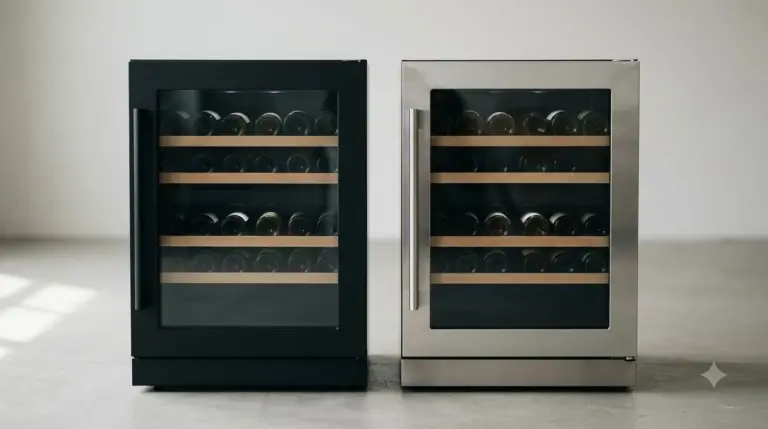
The manufacturer’s product range includes compact single-zone cabinets and larger storage options. Two representative models illustrate the differences in dimensions and capacity. The VWS020SBA-X is a narrow cabinet with an easy capacity of 18 bottles and a maximum capacity of 20, while the VWS820SCB-X accommodates 41 standard Bordeaux-shaped bottles.
| Specification | VWS020SBA-X | VWS820SCB-X |
|---|---|---|
| Cabinet type | Single-zone | Single-zone |
| Easy bottle capacity | 18 bottles | 41 bottles |
| Maximum bottle capacity | 20 bottles | 41 bottles |
| Temperature range | 6–18°C | 6–18°C |
| Width | 295 mm | 595 mm |
| Height | 820 mm | 820 mm |
| Depth | 561 mm | 564 mm |
| Installation | Slot-in or freestanding | Built-in or freestanding |
| Door | UV-treated glass | Double-glazed UV-treated glass |
| Shelving | Natural wood | Five full telescopic beechwood shelves |
| Door hinge | Reversible | Reversible |
These figures come from Vintec’s published specifications for the individual models. Bottle capacities are based on standard bottle shapes, so collections containing wide Burgundy bottles, Champagne bottles, or unusually shaped bottles may have lower practical capacity.
The VWS020SBA-X is particularly interesting for narrow cabinetry. At 295 mm wide, it can fit spaces where a conventional 24-inch wine refrigerator would be too large. Its 18-bottle easy capacity is a more realistic planning figure than its 20-bottle maximum if the collection contains different bottle shapes.
The larger VWS820SCB-X offers a more substantial storage arrangement. Its five full telescopic shelves provide access to bottles without requiring the owner to remove everything in front of them. The manufacturer’s specifications also list dimmable lighting, a lock, an audio and visual alarm, and a recessed handle.
Temperature control and storage environment
Both representative models have a single temperature zone with a stated operating range of 6–18°C. That flexibility allows owners to use the cabinet for either cellaring or keeping wine at a selected serving temperature. However, a single-zone cabinet cannot maintain separate red and white serving temperatures simultaneously.
Vintec also emphasizes humidity, UV protection, airflow, and vibration management. Its product information describes wooden shelves and cooling systems designed to minimize vibration. These features are useful because wine storage involves more than reaching a particular temperature on the display.
For additional product information, the manufacturer’s Vintec VWS820SCB-X product specifications provide a useful example of the construction and features available in its cabinet range. Availability and specifications can differ between regional markets, so American buyers should verify the exact model offered locally.
What Owners Like
Vintec’s most attractive qualities are its presentation, thoughtful shelving, and wine-focused storage design. These features appeal to collectors who want their wine cabinet to function as both an appliance and a visible part of the kitchen or dining area.
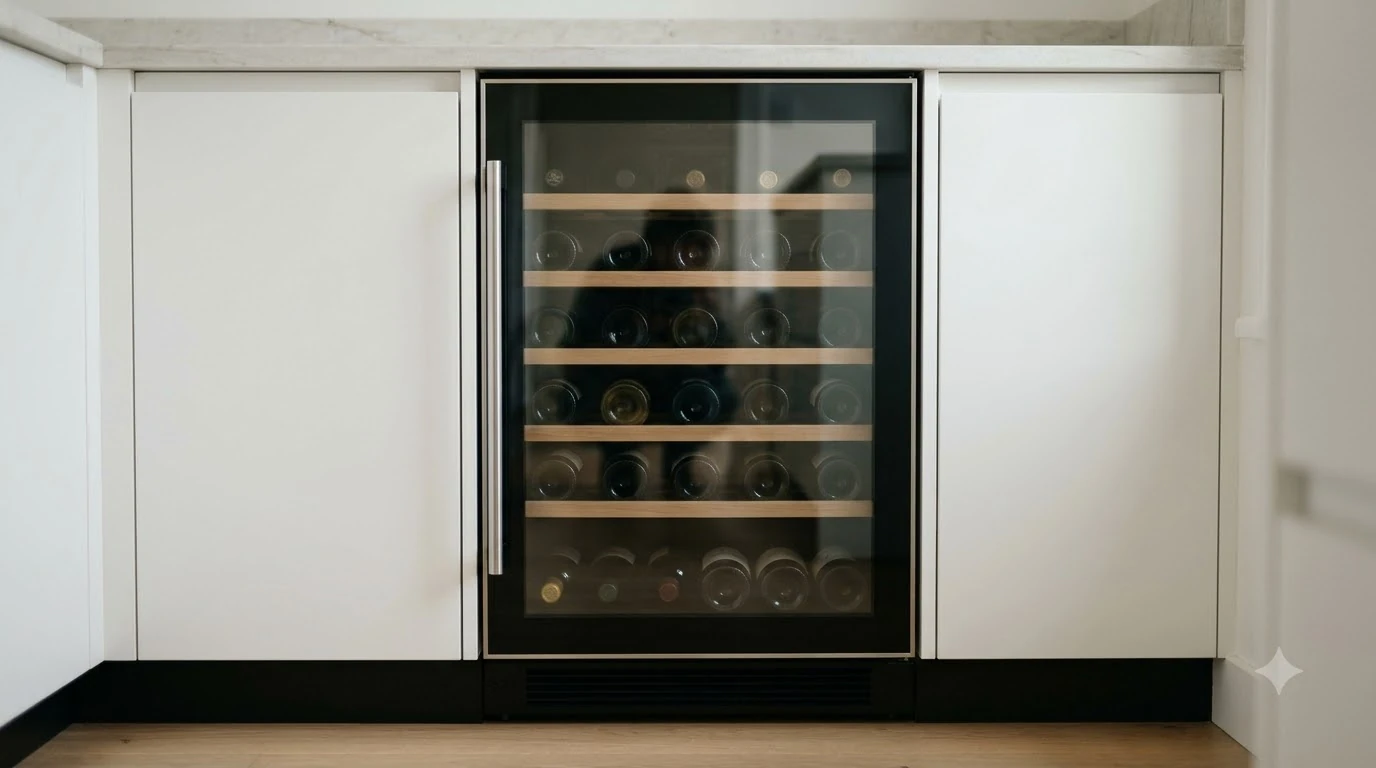
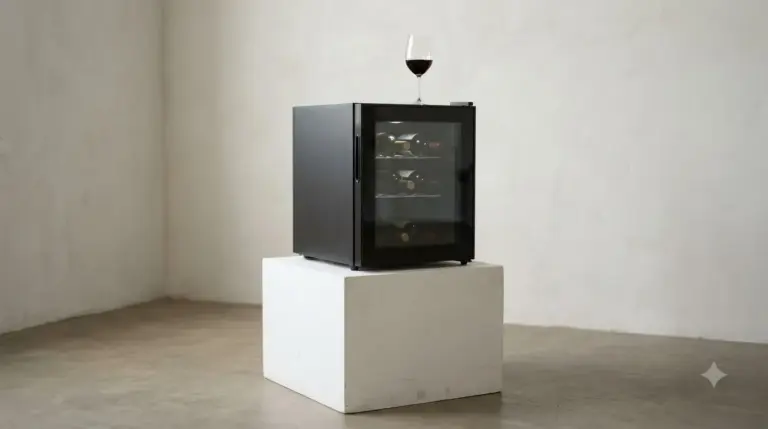
The glass-fronted appearance is one of the first things buyers notice. Models such as the VWS820SCB-X use a borderless black-glass finish without a protruding conventional handle. The result is a relatively understated appearance that works with contemporary kitchen cabinetry, dark countertops, and modern entertainment spaces.
Wooden shelves and bottle access
Natural wood shelving is another positive feature. Vintec uses beechwood shelves in several models, including the VWS820SCB-X. Wood provides a traditional wine-cellar appearance and supports horizontal bottle storage, keeping cork-finished bottles positioned on their sides.
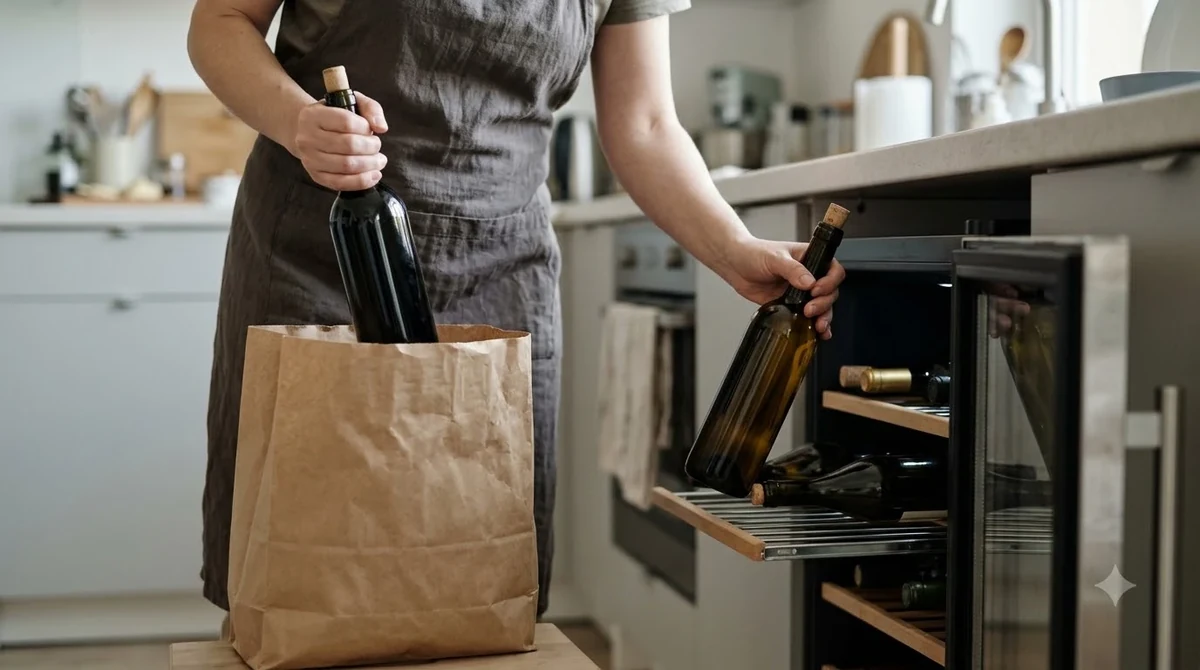
The larger cabinet’s full telescopic shelves are particularly useful for people who regularly access different parts of their collection. Instead of reaching into the back of a crowded compartment, an owner can pull a shelf outward and inspect the labels. This makes organization easier when a collection includes several producers, vintages, or wine styles.
The narrower VWS020SBA-X takes a slightly different approach. Its natural wooden shelves support horizontal bottle placement, and the cabinet’s small footprint makes it suitable for a compact kitchen or dedicated drinks area.
Vibration-conscious cooling
Vintec also pays attention to vibration management. Its general product information describes slow-cycling compressors housed independently from the main cabinet body and mounted on rubber shock absorbers. The company also identifies wooden shelving as a way to limit vibration transmission.
This design philosophy is relevant to people who intend to keep bottles for extended periods. A wine cabinet should provide a stable environment rather than constantly disturbing bottles through unnecessary movement. Although these construction features cannot guarantee perfect aging conditions, they are sensible priorities in a dedicated wine storage appliance.
Lighting and visibility
Lighting is another practical advantage. The VWS820SCB-X includes three dimmable LED lighting settings described as warm, neutral, and cold. This gives owners some control over how their collection appears when the door is opened.
Its UV-treated glass is also intended to reduce exposure to damaging light. This is useful for cabinets installed in kitchens or living areas where bottles may otherwise be exposed to room lighting throughout the day.
The combination of glass, lighting, and visible shelving makes the cabinet especially appealing to collectors who want to display selected bottles. It can also help owners identify wines quickly without repeatedly removing bottles from the shelves.
Flexible installation options
Several Vintec cabinets are designed for built-in or freestanding use. That flexibility is useful when a kitchen renovation changes direction or when a homeowner eventually relocates the appliance to another room.
However, installation flexibility does not mean every model can be enclosed in any available space. Ventilation requirements remain important, and a built-in model should never be treated like an ordinary kitchen cupboard. The manufacturer’s specific installation instructions must be followed before cabinetry is constructed.
Common Complaints
Vintec’s premium features do not remove the practical limitations of wine refrigeration. Installation restrictions, bottle-capacity differences, temperature expectations, and door access deserve careful consideration before purchasing.
One published owner review of a Vintec 126-bottle storage cabinet highlights two concerns. The reviewer reported that the door needed to swing beyond 180 degrees for the shelves to pull out comfortably. The same owner questioned temperature consistency after changing between storage and dual-zone settings. These are individual observations rather than proof that every Vintec cabinet has the same problems, but they identify useful points to investigate.
Door clearance can be inconvenient
Door movement is an important consideration for an under-counter appliance. A cabinet may fit neatly inside its opening while still being difficult to use because the nearby kitchen island, wall, or adjacent cabinet restricts the door swing.
Pull-out shelves add convenience, but they also need sufficient room to extend. Buyers should measure the available space in front of the appliance and examine the door hinge position before finalizing the kitchen layout.
A reversible door can help with some layouts. The VWS020SBA-X and VWS820SCB-X specifications identify reversible doors, which gives installers additional flexibility. Nevertheless, the actual clearance needed for opening and shelf removal should be considered separately from the cabinet’s width and depth.
Temperature readings require realistic expectations
Some buyers expect the displayed temperature to remain perfectly unchanged at all times. Refrigerators operate through cooling cycles, so the air temperature can fluctuate as the compressor starts and stops.
Vintec explains in its support information that a small air-temperature variation does not necessarily represent an equivalent change in the temperature of the wine itself. Bottles have considerable thermal mass, which helps moderate short-term changes in cabinet air temperature.
That distinction is important when evaluating a wine refrigerator. A brief display fluctuation should not automatically be interpreted as a storage failure. Persistent temperature instability, however, deserves attention, particularly when a collection contains bottles intended for extended aging.
Capacity claims can be optimistic
Published bottle capacities generally use a standard Bordeaux bottle as the reference. Real collections are rarely that uniform. Burgundy bottles often have wider bodies, while sparkling wines can require additional space because of their shape.
For example, the VWS020SBA-X lists 18 bottles as its easy capacity and 20 as its maximum. A buyer with a collection containing several Champagne bottles should plan around the lower figure or even less, depending on the actual shelf arrangement.
Another limitation is the single-zone configuration. Although a single-zone cabinet can be adjusted between different temperatures, it cannot provide independent serving conditions for red and white wine at the same time. Buyers who regularly entertain guests with different preferences may find this restrictive.
Installation mistakes can become expensive
Ventilation is one of the most important potential sources of dissatisfaction. A front-venting wine refrigerator still requires the specific airflow arrangement described by its manufacturer. Covering ventilation openings with a decorative kitchen panel can interfere with cooling performance.
Some Vintec models are suitable for built-in installation, while others are freestanding only. The Vintec quick-start documentation specifically identifies the V30 series as freestanding-only. This is a useful reminder that a similar-looking cabinet from the same brand does not automatically share identical installation permissions.
Who Should Buy and Who Should Skip
A Vintec built-in wine fridge makes the most sense for homeowners who value wine preservation, attractive presentation, and dedicated storage. It is less suitable for buyers who only need a basic beverage refrigerator or who cannot provide the required ventilation and door clearance.
Who should consider Vintec?
Wine collectors with growing inventories: The larger 41-bottle VWS820SCB-X offers more organized storage than a small countertop wine cooler. Its wooden shelves and controlled environment are useful for keeping everyday bottles and special-occasion wines together.
Homeowners renovating a kitchen: A built-in-compatible cabinet can create a cleaner appearance than a freestanding appliance placed against a wall. The glass-fronted design also works well in a kitchen island or dedicated entertainment area when the required ventilation is properly incorporated.
People who store different wine styles: A single-zone cabinet can keep Cabernet Sauvignon, Pinot Noir, Chardonnay, Sauvignon Blanc, rosé, and sparkling wine at a shared cellaring temperature. Vintec recommends approximately 12–14°C for this purpose.
Design-conscious buyers: The black-glass appearance, recessed handles, wooden shelving, and adjustable lighting give certain Vintec models a more furniture-like presentation than basic wine refrigerators.
Regular entertainers: A cabinet with accessible shelves makes it easier to organize bottles before dinner parties. Owners can arrange sparkling wine, whites, and reds according to the occasions for which they are intended.
Who should skip it?
Buyers with limited installation space: If the available opening cannot accommodate the specified dimensions and airflow requirements, choosing a smaller freestanding appliance may be more practical.
People who need two serving temperatures: A single-zone Vintec cabinet cannot simultaneously maintain one compartment at a red-wine serving temperature and another at a white-wine serving temperature. A dual-zone alternative is a better match for that requirement.
Budget-focused shoppers: The emphasis on presentation and wine-specific storage may be unnecessary for someone who keeps only a few inexpensive bottles for occasional use. A simpler wine cooler can meet basic cooling needs without the same design priorities.
Owners of unusually shaped bottles: Buyers with many Champagne, Burgundy, or large-format bottles should verify shelf spacing and usable capacity before committing to a particular cabinet.
People without reliable local service: Wine refrigerators are mechanical appliances that may eventually require maintenance or replacement parts. American buyers should establish that the specific model has suitable domestic support before making a purchase.
How It Compares to Alternatives
Vintec’s main distinction is its wine-storage-oriented approach, but the most useful comparison is between different cabinet configurations rather than assuming every premium wine refrigerator performs identically. Capacity, temperature zones, installation type, and accessibility should determine which configuration deserves consideration.
Vintec single-zone versus dual-zone cabinets
A single-zone cabinet is generally the more appropriate choice for long-term storage. Vintec recommends 12–14°C for cellaring all wine styles, including reds, whites, rosé, and Champagne. This shared temperature makes a single-zone design practical for collectors who prioritize storage stability.
A dual-zone cabinet is more useful for people who want bottles ready for immediate consumption at different temperatures. Most white wines are commonly served around 45–50°F, while fuller-bodied reds are generally served warmer. Separate compartments make it easier to maintain different settings without repeatedly adjusting the whole cabinet.
There is an important trade-off. Vintec’s guidance explains that its multi-temperature cabinets are primarily designed for serving and regular wine turnover. The company recommends single-zone storage for long-term cellaring, particularly when bottles use natural cork closures.
Vintec compact cabinets versus larger models
The VWS020SBA-X illustrates the compact approach. Its 295 mm width is particularly attractive for narrow spaces, and its 18-bottle easy capacity is sufficient for a modest collection.
The VWS820SCB-X takes up more room but provides a 41-bottle capacity and a wider arrangement of full telescopic shelves. It is more suitable for households that regularly purchase wine by the case or maintain several different styles.
The right choice is not necessarily the largest model available. A smaller cabinet with sufficient usable space can be more convenient than a large appliance that consumes valuable kitchen storage and remains only partly filled.
Vintec versus a conventional beverage refrigerator
A beverage refrigerator is designed primarily for drinks that are consumed relatively quickly. Its shelves and compartments may accommodate cans, bottles, and mixed beverages rather than providing the horizontal bottle organization associated with wine cellars.
A dedicated wine cabinet offers a more appropriate layout for bottle storage. Features such as wooden shelves, UV-treated doors, humidity management, and vibration-conscious cooling are particularly relevant for people who want to retain bottles for longer periods.
However, a wine refrigerator should not automatically be treated as a substitute for a beverage center. Vintec explicitly states that its wine cabinets are not suitable for food storage. Buyers who want to refrigerate groceries, snacks, and drinks together should choose an appliance designed for those purposes.
Matching wine storage to the collection
Wine style also influences the ideal configuration. A collection dominated by Bordeaux reds, including Cabernet Sauvignon and Merlot, may be stored together at a consistent cellaring temperature. The same applies to lighter Pinot Noir and aromatic whites such as Riesling.
People who regularly serve sparkling wine may prefer a separate chilled section or another refrigerator for bottles that need to be ready at a lower serving temperature. Sparkling wine is generally best served around 40–50°F, while light whites and rosé are commonly served around 45–50°F.
For dinner planning, a well-organized wine cabinet makes it easier to select bottles for different dishes. A medium-bodied red can complement a chicken Marsala recipe, while sparkling wine or a refreshing cocktail can suit lighter gatherings. Those who want a simple aperitif option can also consult an Aperol Spritz recipe.
Installation, Warranty, and Ownership Considerations
Installation deserves as much attention as the cabinet itself. A wine refrigerator can have excellent internal features but still perform poorly if the surrounding cabinetry restricts airflow, the door cannot open fully, or the appliance is not leveled correctly.
Vintec publishes model-specific installation information, and its documentation warns buyers not to assume that all cabinets use identical clearance requirements. For the VWS820SCB-X, the manufacturer specifies 10 mm of side clearance, 30 mm above, and a 30 mm rear spacer.
Measure the cabinet opening first
The VWS820SCB-X has a stated cabinet width of 595 mm and height of 820 mm. Its published minimum joinery cutout dimensions are 615 mm wide and 850 mm high. Those figures demonstrate why measuring only the appliance itself is not enough.
Buyers should also consider the depth of the cabinet opening, the position of electrical outlets, the surrounding door panels, and the available space in front of the appliance. A wine refrigerator may fit inside a cabinet opening but remain inconvenient if the door or pull-out shelves collide with nearby furniture.
The manufacturer’s documentation identifies front ventilation as an important part of built-in operation. The ventilation arrangement must remain unobstructed. If a decorative kickboard is being used, the applicable model documentation should determine the necessary airflow opening.
Prepare the appliance before switching it on
Vintec’s quick-start guide provides several useful setup instructions. It advises leaving the cabinet switched off for at least 24 hours after transport so refrigerant gases can settle. It also recommends using a surge protector and leveling the appliance before loading bottles.
Leveling matters because an uneven refrigerator may become noisy or have difficulty sealing its door correctly. These problems can affect day-to-day use even when the cabinet itself is operating normally.
The manufacturer also recommends distributing bottles evenly when the cabinet is not full. This helps avoid concentrating the entire collection in one area and provides a more balanced arrangement inside the refrigerator.
Tip: Measure the full installation opening, not just the refrigerator dimensions. Include side clearance, overhead space, rear ventilation, door swing, and shelf-extension room before ordering custom kitchen cabinetry.
Understanding the American warranty
Vintec’s U.S. warranty information identifies Vintec North America, a division of Electrolux Home Products, Inc., as the company responsible for appliance warranty obligations in the United States.
The published U.S. warranty provides one year of limited coverage. Vintec also offers a no-cost extension to two years when the appliance is registered and the owner joins the Vintec Club within 60 days of purchase.
This registration requirement is important because buyers should not assume that the extended coverage applies automatically. Keeping the purchase receipt and delivery documentation also helps establish the warranty period if service becomes necessary.
Vintec directs American customers to contact its support team or an authorized service company for warranty-related repairs. The published U.S. customer-care telephone number is 1-800-325-1371.
Long-term ownership and maintenance
Routine ownership involves keeping the appliance level, maintaining the door seal, protecting ventilation openings, and avoiding unnecessary temperature changes. Owners should also keep bottles away from the rear panel where condensation may form.
Vintec explains that its cabinets collect condensation and redistribute moisture through a humidity-management process. This helps maintain the storage environment, although the exact humidity arrangement varies between models.
Another useful consideration is the surrounding room temperature. The quick-start documentation warns against direct sunlight, moisture exposure, and placing the cabinet near heat sources such as ovens. These environmental factors can make it harder for a refrigerator to maintain its intended internal conditions.
When the appliance is moved, the manufacturer’s transport instructions should be followed again. After the required settling period, the cabinet should be checked for level positioning, proper ventilation, and a secure door seal before the collection is loaded.
Frequently Asked Questions
Can a Vintec wine fridge be installed inside a kitchen island?
Yes, selected Vintec models are designed for slot-in or built-in installation, making a kitchen island a possible location. The island must accommodate the specific ventilation arrangement, electrical connection, and door movement requirements. The VWS020SBA-X is one example of a model listed for slot-in installation.
Does Vintec offer a smartphone app for managing wine collections?
Vintec promotes OENO, a virtual cellar management application powered by Vivino. Its published description includes wine collection tracking, label recognition, and access to wine information. App availability and compatibility should be confirmed for the buyer’s country and device before relying on it.
Can a Vintec cabinet maintain humidity automatically?
Vintec describes a humidity-management system that uses condensation collected inside the cabinet and redistributes moisture through the storage environment. Its single-zone cabinets are designed to maintain humidity above 50% when operated at the recommended 12–14°C cellaring temperature. The system is not the same as a user-adjustable digital humidity control.
Does Vintec manufacture cabinets with reversible doors?
Yes, the published specifications for the VWS020SBA-X and VWS820SCB-X identify reversible doors. This can help accommodate different kitchen layouts and installation positions. Door reversal should be arranged according to the relevant model instructions rather than assumed to be a simple adjustment on every cabinet.
What happens to a Vintec wine fridge during a power outage?
Vintec states that its insulated cabinets and the thermal mass of stored wine can help maintain wine temperature for several hours during an outage. The company recommends keeping the door closed while power is unavailable. Electronic models may return to a factory setting of approximately 12°C after power is restored, so owners should verify their preferred setting afterward.
A Vintec built-in wine fridge is a compelling choice for collectors who want attractive cabinetry, dedicated wine storage, and practical bottle organization. Its strongest advantages are the wine-focused design details, but installation requirements, usable capacity, temperature-zone configuration, and American warranty coverage should all be checked before buying. Compare the exact model specifications with your kitchen measurements and collection size to determine whether Vintec is the right long-term addition to your home.
More in Model Reviews
 Marvel Wine and Beverage Center Review: A Flexible 24-Inch PickUpdated Nov 21, 2026
 Cuisinart Evolutionx Wine Opener Review for Easier Cork RemovalUpdated Nov 21, 2026
 Wine Enthusiast Wine Fridge Parts: Find the Right ReplacementUpdated Nov 21, 2026
 Crenova Electric Wine Opener Review: Features, Performance, and ValueUpdated Nov 21, 2026
 Wine Enthusiast Countertop Wine Cooler Review for Small CollectionsUpdated Nov 21, 2026
 Cuisinart Private Reserve 8 Bottle Review: Compact Wine Storage for Small CollectionsUpdated Nov 21, 2026