

We may earn a commission when you buy through links on this page, at no extra cost to you. Learn more.
Wine enthusiast wine fridge parts include replacement shelves, door seals, hinges, fans, drip trays and other components, but compatibility depends on the exact cooler model. The most reliable starting point is the model and serial number on the appliance’s rear identification label. Wine Enthusiast manuals identify individual components, although a part appearing in a manual does not guarantee that it is available for separate purchase. Before ordering anything, confirm the part number, dimensions and installation requirements with the manufacturer.
A broken shelf, damaged door gasket or malfunctioning fan does not automatically mean an entire wine refrigerator needs replacing. However, sourcing the correct component can require some investigation, particularly when different Wine Enthusiast coolers use similar-looking parts. This review explains the available part categories, compatibility considerations, owner-reported support experiences and the practical differences between replacing a component and replacing the appliance.
Specs and Key Features of Wine Enthusiast Wine Fridge Parts
Wine Enthusiast wine coolers contain several identifiable replacement-part categories, including removable storage components, door hardware and cooling-system components. The manufacturer’s 12-Bottle Wine Cooler manual and 18-Bottle Dual Zone manual provide useful diagrams for identifying these pieces, although their configurations are not interchangeable.
The 12-Bottle manual identifies 13 numbered components. These include three shelves, four feet, a door seal, upper and lower hinges, a fan cover, an interior light, a drip tray, a recessed handle and a control panel. The 18-Bottle Dual Zone manual identifies a different arrangement with chrome wire shelves, two fan covers and a zone separator.
These diagrams are useful because they establish the manufacturer’s terminology. Someone requesting a fan cover, for example, is asking for a different component from someone requesting the cooling fan itself. Likewise, a shelf guide or support rail is not necessarily the same item as a complete shelf assembly.
| Part category | Documented specification | What to verify |
|---|---|---|
| 12-Bottle shelves | 3 shelves | Width, depth and mounting points |
| 12-Bottle feet | 4 feet | Thread and attachment dimensions |
| Door hinges | Upper and lower hinges | Hinge position and model compatibility |
| Door seal | 1 identified seal | Gasket profile and door dimensions |
| 18-Bottle fan covers | 2 fan covers | Position and mounting arrangement |
| 18-Bottle shelves | Chrome wire shelves | Rail spacing and shelf dimensions |
| Drip tray | 1 identified tray in each manual | Shape and drainage position |
| Interior lighting | Light or LED light cover | Electrical connection and assembly |
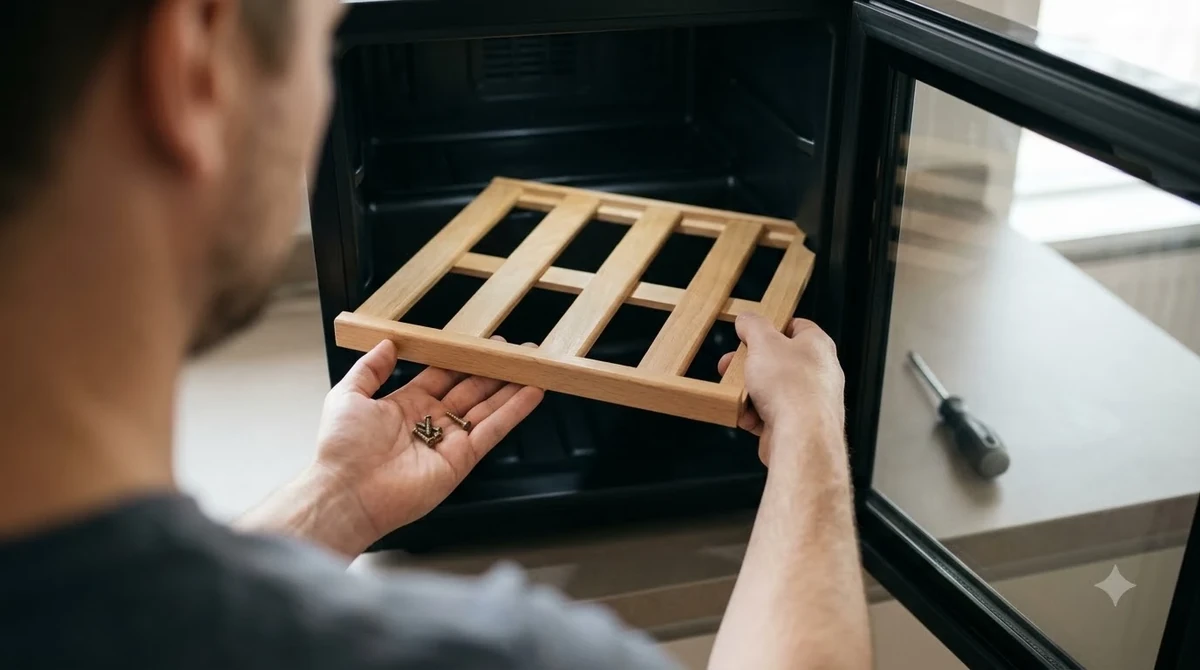
One important distinction is the difference between a component identified in a manufacturer’s diagram and a component that can actually be purchased separately. The manual confirms that a particular piece belongs to the appliance, but it does not establish current inventory, replacement pricing or availability. For that reason, a diagram should be treated as an identification reference rather than a parts catalog.
The manufacturer’s 12-Bottle Wine Cooler user manual is particularly helpful for owners of that model. It provides numbered illustrations and identifies the model number, which helps distinguish a replacement request from a general description such as a small black shelf or rubber door strip.
What Owners Like About Replacement Options
The main advantage of replacing an individual component is that owners may be able to keep a functioning wine refrigerator rather than discard the entire appliance. Shelves, feet, hinges and door seals are distinct physical components in the manufacturer’s diagrams, making it possible to identify the source of some common problems without immediately assuming that the cooling system has failed.
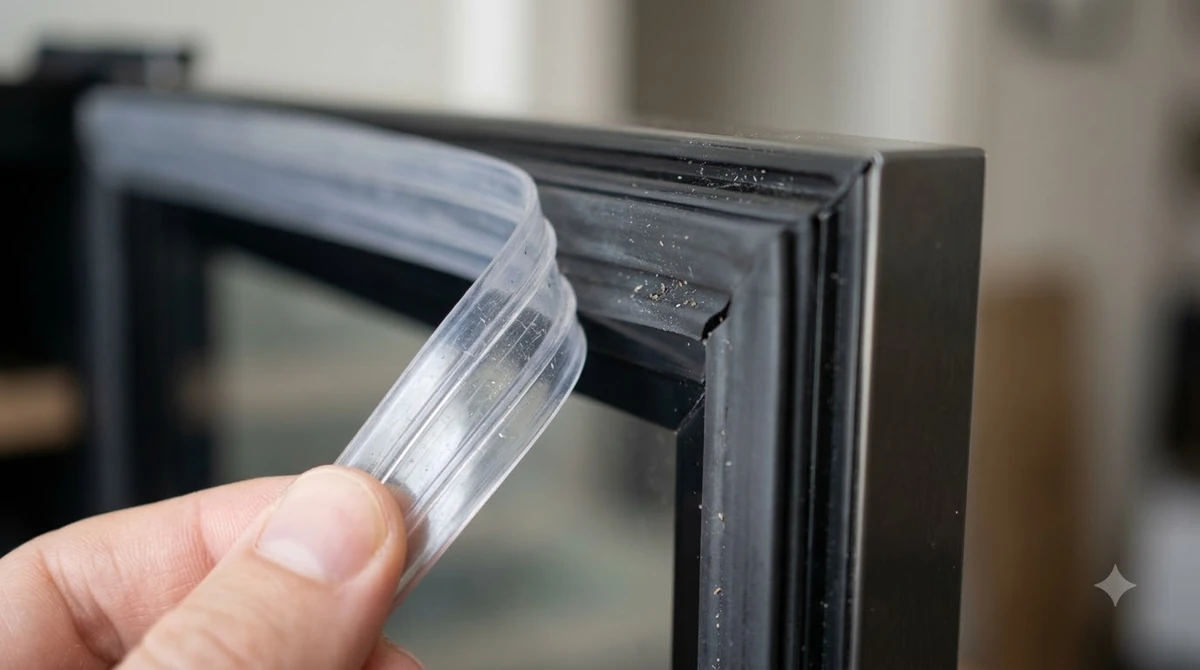
Replacement shelves are especially useful because they affect everyday storage. A damaged shelf can make it difficult to support bottles securely, while a missing shelf reduces the practical organization of the cabinet. A correctly matched replacement restores the intended arrangement without requiring the owner to change the entire refrigerator.
Door hardware offers another potential repair opportunity. A loose hinge, damaged handle or poorly fitting gasket can interfere with normal operation. If the cooling system remains functional, correcting a mechanical door problem may be more practical than purchasing another appliance.
Model diagrams make identification easier
Wine Enthusiast’s manuals offer a useful starting point for identifying components. The 12-Bottle manual separates the upper hinge, bottom hinge, door seal and recessed handle into individual numbered items. The 18-Bottle manual separately identifies its fan covers, door gasket, chrome wire shelves and zone separator.
This level of detail helps owners communicate more accurately with customer support. Instead of describing a problem as a broken interior piece, an owner can identify the component’s position and use the terminology from the manual.
That distinction matters when several components occupy the same area. A damaged shelf rail may look like a shelf problem, but ordering a complete replacement shelf might not solve it. Similarly, a fan cover can become loose without the actual cooling fan being defective.
Some replacement issues can be resolved
Owner reports show that replacement-part requests do sometimes reach a satisfactory outcome. A Better Business Bureau complaint involving a replacement shelf and guide rails describes a customer who eventually received the components and successfully installed the shelf. The company had initially explained that it was waiting for the part from its manufacturer.
This example illustrates both sides of the replacement process. Individual components can sometimes be supplied and fitted successfully, but obtaining them may take longer than expected. Owners who need a refrigerator for a large collection should account for the possibility of delays rather than assume that every component is immediately available.
The practical benefit is greatest when the required part is straightforward, the model is identifiable and the rest of the refrigerator is working properly. A replacement shelf or hinge can be a sensible repair candidate, whereas an uncertain cooling-system failure requires a more careful assessment.
Common Complaints About Wine Fridge Parts
The main difficulty with Wine Enthusiast replacement parts is not simply identifying a broken component; it is confirming compatibility and obtaining the correct item within a reasonable time. Customer feedback includes complaints about delayed parts, communication problems and components that do not fit or seal as expected.
These reports should be considered individual customer experiences rather than proof that every replacement order will have problems. Nevertheless, they highlight several practical issues that prospective buyers should investigate before relying on a repair.
Long waits for replacement components
One recurring complaint involves customers being told that a replacement shelf, rail or support component will be sent, followed by extended waiting periods. The BBB complaint involving shelf and guide-rail replacements describes repeated follow-ups before the company reported that the shipment had arrived and the customer confirmed successful installation.
Another BBB customer review describes an M90 cooler with a failed shelf support. The customer reported being promised a repair component but experiencing a lengthy wait and difficulty obtaining updates. These accounts suggest that parts availability and fulfillment can be less predictable than the initial repair conversation implies.
For owners, the important lesson is to request a clear written record of the part being supplied, its expected shipping date and whether the order is waiting on manufacturer inventory. A verbal assurance is less useful than a documented order reference and a specific description of the component.
Compatibility and sealing problems
Even a replacement component that looks correct may not perform properly if its dimensions or attachment points differ. Door gaskets are a particularly important example. A seal that does not sit evenly around the opening can leave gaps, reducing the cabinet’s ability to maintain a stable interior temperature.
Trustpilot includes an owner report about a replacement door for a EuroCave Pure cooler supplied through Wine Enthusiast. The customer described an uneven sealing surface that did not make uniform contact. This is a useful example of why replacement-part inspection should include fit and function, not merely appearance.
Other components also require careful matching. A shelf that is slightly too wide may not slide properly, while an incorrectly positioned hinge can affect the door’s alignment. A fan cover with incompatible mounting points may be impossible to secure without modifying the cabinet.
Cooling problems are more complicated
Some owners report refrigerators that stop cooling even though other electrical functions remain operational. This is a different category of problem from a broken shelf or loose door handle. A cooling failure may involve the fan, temperature controls or a sealed refrigeration component, and the visible symptoms do not always identify the faulty part.
BBB customer reports include examples of Wine Enthusiast coolers that stopped cooling after several years. The reported outcomes vary, including recommendations to replace the appliance and cases involving further support or replacement arrangements. These accounts do not establish that every cooling failure is unrepairable.
Owners should avoid assuming that a replacement fan or thermostat will solve a temperature problem without a proper diagnosis. Refrigeration-system work should be handled by a qualified technician, particularly when electrical components or sealed-system components are involved.
Who Should Buy and Who Should Skip
Wine Enthusiast replacement components are most appropriate for owners who have identified a specific damaged part and confirmed that a compatible replacement exists. They are less suitable for owners who are trying to solve an unexplained cooling failure by ordering components based only on appearance.
The first question is whether the appliance still performs its main function. If it maintains the intended storage temperature and the problem is limited to a shelf, hinge, handle or drip tray, investigating an individual replacement makes sense. If the temperature is unstable or the compressor repeatedly stops operating, diagnosis should come before ordering parts.
Good candidates for individual replacement parts
Owners with a cracked shelf or missing shelf support are among the strongest candidates. The same applies to people with damaged leveling feet, loose hinge hardware or a worn door gasket. These are identifiable mechanical components, and a correct replacement may restore normal use without requiring a new cooler.
Owners of the documented 12-Bottle and 18-Bottle models have an additional advantage because their manuals provide named component diagrams. This makes it easier to describe what has failed and compare the existing component with a replacement offered by customer support.
People who are comfortable performing simple, non-electrical maintenance may also find certain replacement tasks manageable. A removable shelf, for example, is generally easier to handle than a fan assembly or temperature-control board. The exact installation method still depends on the model instructions.
When to skip a parts-only approach
A parts-only purchase is a poor choice when the underlying fault has not been identified. If the cooler is no longer maintaining temperature, repeatedly shuts down or produces unusual mechanical noises, replacing an apparently related component may waste time without correcting the problem.
Owners should also be cautious when the appliance is old and multiple components are failing. Replacing one shelf or seal may be worthwhile, but a refrigerator with simultaneous door, control and cooling problems deserves a broader repair-versus-replacement assessment.
Another reason to pause is uncertain compatibility. If the seller cannot confirm the model fit, mounting arrangement or component dimensions, a visually similar part is not a reliable substitute. Avoid modifying a shelf, hinge or electrical connection simply to make an incompatible component fit.
Tip: Before requesting a replacement, photograph the entire refrigerator, the identification label, the damaged component and its mounting location. Keep the original part if possible. These four records make it easier to distinguish between a complete assembly, an individual support and a model-specific replacement.
How Wine Enthusiast Parts Compare to Alternatives
Owners generally have three routes to consider: obtaining a genuine model-specific component, sourcing a compatible aftermarket component or replacing the entire wine refrigerator. Each option has different advantages, and the right choice depends on the part, appliance condition and certainty of compatibility.
A genuine replacement is the most straightforward option when the manufacturer can confirm the exact component. An aftermarket alternative may be worth investigating for simple mechanical items, but a generic part should never be assumed compatible with a model-specific electrical or refrigeration assembly.
Genuine manufacturer replacement parts
The main advantage of a genuine replacement is that it is intended for the appliance’s original design. A correctly identified shelf, gasket or hinge should match the relevant mounting points and intended arrangement. Manufacturer confirmation is particularly valuable for parts that affect door alignment or cooling performance.
The limitation is availability. The manufacturer’s manuals identify components, but they do not function as live inventories. A particular shelf or fan assembly may require a special order, and the customer may need to wait for manufacturer stock.
For this reason, a genuine part should be considered the preferred first option rather than a guaranteed immediate solution. Ask whether the item is currently available, whether it is a complete assembly and whether the supplied component includes necessary mounting hardware.
Compatible aftermarket components
Aftermarket parts can be considered for relatively simple items such as certain shelves, feet or generic accessories. However, compatibility needs to be established through measurements and attachment details rather than a product photograph alone.
For a shelf, compare its width, depth, rail position and support design. For a door seal, compare the complete gasket profile and how it attaches to the door. For a hinge, confirm the mounting-hole pattern and opening direction.
Electrical controls, fans and refrigeration components require considerably more caution. A component with similar dimensions may have different electrical ratings, connectors or operating characteristics. A qualified technician should verify these details before installation.
Replacing the complete refrigerator
Replacing the appliance becomes more attractive when a major cooling-system fault is confirmed, several components are damaged or the correct replacement is no longer obtainable. It can also be a practical option when repair labor and repeated part orders approach the value of a suitable replacement refrigerator.
However, a functioning cooler with one broken shelf does not automatically justify complete replacement. The decision should account for the age and condition of the cabinet, the cost of diagnosis, the availability of the component and the likelihood of further repairs.
Owners comparing replacement appliances can also consult the wine cooler model reviews for additional information about different refrigerator designs and features. This is particularly useful when a discontinued part or major mechanical fault makes repairing the existing cooler less practical.
For a valuable wine collection, reliability should be part of the decision. A cooler that cannot maintain a consistent temperature may need immediate attention even if its shelves, lights and display panel still appear normal.
How to Identify and Order the Correct Replacement
The safest way to order Wine Enthusiast wine fridge parts is to identify the exact model first, document the failed component and obtain confirmation before making a purchase. This process reduces the risk of ordering a visually similar item that cannot be installed correctly.
Wine Enthusiast’s manuals instruct owners to record the model and serial numbers from the label on the back of the wine cooler. The 12-Bottle manual also advises retaining the purchase receipt because it may be needed for warranty service.
Step 1: Find the model and serial number
Locate the identification label on the rear of the appliance. Record both the model number and serial number exactly as printed. Do not rely on the advertised bottle capacity alone because different models can share a similar appearance while using different internal components.
If the label is difficult to access, consult the original purchase paperwork or product documentation. A manual for a visually similar cooler should not be treated as proof that its parts will fit your refrigerator.
Step 2: Identify the failed component
Use the manual’s parts illustration to establish the correct name. Determine whether the problem involves the complete shelf, a shelf guide, the door seal, a hinge or a fan cover. Photograph the component from several angles, including its mounting points.
If the component has a printed identification number or marking, include that information in your request. Do not assume that a numbered callout in the manual is the same as a replacement-part SKU.
Step 3: Contact support with specific information
Provide the model number, serial number, purchase date and a concise description of the failure. Include photographs and ask whether the required part is available separately or must be ordered as part of a larger assembly.
Also ask whether the component is covered by the original warranty. The warranty terms can differ by product and component, so an owner should not assume that the same coverage applies to a shelf, electronic control and sealed refrigeration system.
Step 4: Confirm the replacement before paying
Request written confirmation of the part’s compatibility. For a shelf, ask about the measurements and support arrangement. For a gasket, confirm the door dimensions and attachment method. For an electrical component, request confirmation of the exact model-specific part rather than relying on a general description.
Ask for an estimated dispatch date and whether the component is in stock. If it is on backorder, request an estimated arrival window and a written order reference. Keep copies of all correspondence, particularly if the request relates to a warranty claim.
Step 5: Inspect the replacement after delivery
Compare the replacement with the original before installation. Check its shape, mounting holes, connectors and visible finish. If the item is damaged or differs from the confirmed specification, document the discrepancy before attempting installation.
Follow the manufacturer’s instructions and disconnect the appliance before permitted maintenance or repair work. The 12-Bottle manual recommends certified technician service when the appliance requires repairs. Electrical and refrigeration-system work should not be treated as an ordinary shelf-replacement project.
Once the cooler is functioning correctly, maintaining the right storage temperature helps protect the collection. For entertaining, a properly chilled bottle of sparkling wine can also be used in a refreshing Aperol Spritz recipe, making a working wine refrigerator useful beyond long-term bottle storage.
Frequently Asked Questions
Where can I find the model number on a Wine Enthusiast wine fridge?
The manufacturer’s 12-Bottle and 18-Bottle manuals place the model and serial number information on the identification label at the back of the refrigerator. The model number can also appear in the original purchase documentation. Record both numbers before requesting a component because similar-looking coolers can use different replacement assemblies.
Can I use a universal wine fridge shelf in a Wine Enthusiast cooler?
Some generic shelves may fit certain cabinets, but universal compatibility should never be assumed. Shelf depth, rail spacing, bottle clearance and support design all affect whether the replacement is secure. A shelf that fits loosely can shift under the weight of stored bottles.
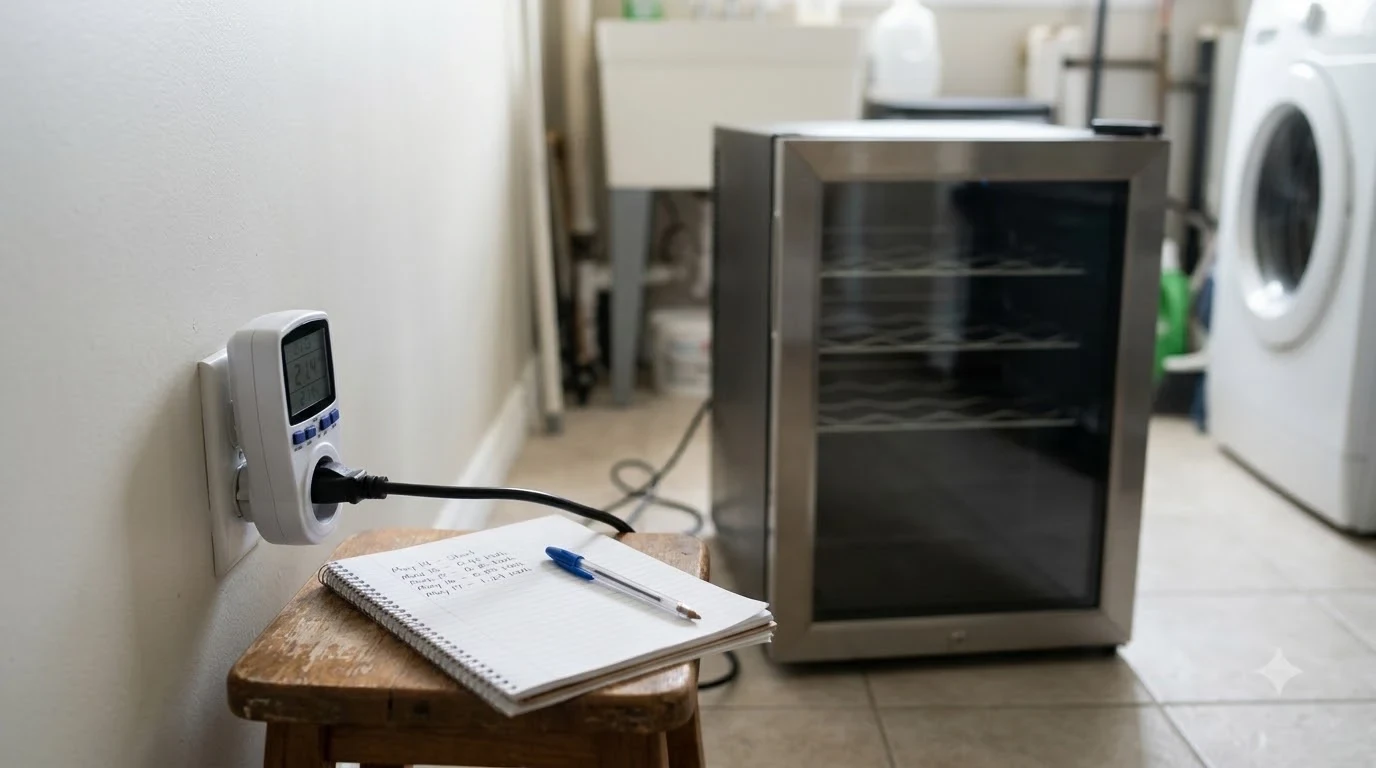
Can a damaged door gasket increase electricity consumption?
A poorly sealing refrigerator door can allow conditioned air to escape and warm air to enter. The cooling system may then need to operate more frequently to maintain its temperature setting. The actual energy impact depends on the size of the gap, room conditions and the refrigerator’s operating characteristics.
Does Wine Enthusiast sell every component shown in its manuals?
No manual diagram establishes that every illustrated component is independently available for purchase. Some items may only be supplied as part of a larger assembly, while others may be discontinued or require a special order. Ask support for the current availability and ordering reference for the exact model.
Should I keep wine in a refrigerator that has stopped cooling?
A cooler that cannot maintain its intended storage temperature should not be relied upon for long-term wine storage. Move valuable bottles to a suitable temperature-controlled location while the fault is investigated. An independent thermometer can help establish whether the cabinet is maintaining a stable temperature, but it does not diagnose the mechanical failure.
Wine Enthusiast wine fridge parts can offer a practical route to extending the useful life of a refrigerator, particularly when the problem involves a shelf, hinge, door seal or other identifiable component. The best approach is to confirm the exact model, obtain written compatibility information and establish availability before ordering. For cooling failures or electrical problems, professional diagnosis is a better starting point than purchasing replacement components at random.
More in Model Reviews
 Magic Chef 44 Bottle Wine Cooler Review for Flexible StorageUpdated Nov 21, 2026
 Whynter 164 Bottle Wine Cooler Review: Capacity, Features, and FitUpdated Nov 21, 2026
 Insignia NS WC16BK6 Review: Compact 16-Bottle Wine StorageUpdated Nov 21, 2026
 Wine Enthusiast Electric Blue Omega Review: Opening, Pouring, and Preserving Made EasierUpdated Nov 21, 2026
 Koolatron 20 Bottle Wine Cooler Review: Features, Fit, and PerformanceUpdated Nov 21, 2026
 NewAir AWC 330E Review for Home Wine StorageUpdated Nov 21, 2026