

We may earn a commission when you buy through links on this page, at no extra cost to you. Learn more.
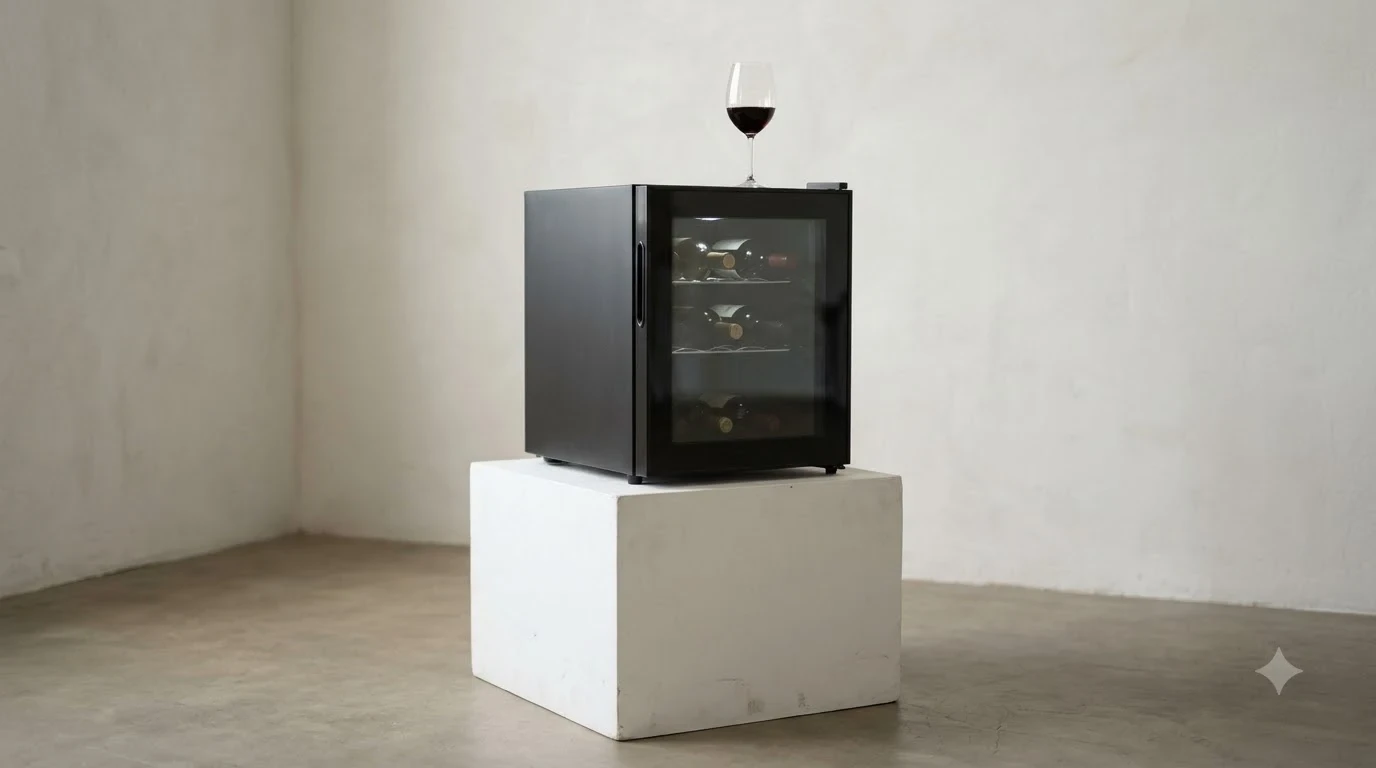
The Cuisinart private reserve 8 bottle wine cellar is a compact thermoelectric cooler designed for storing up to eight bottles with adjustable temperatures from 39°F to 68°F. Its touchscreen controls, triple-pane viewing window, chrome racks, and relatively small footprint make it appealing for apartments and modest wine collections. However, its cooling performance depends heavily on room temperature, so it is not the right choice for every kitchen or wine-storage environment. The CWC-800CEN makes the most sense for casual wine drinkers who want a dedicated space for a handful of bottles rather than a large, independently controlled cellar.
Countertop wine storage can be a practical alternative to filling a refrigerator shelf with bottles, particularly when a household regularly keeps several reds, whites, and sparkling wines ready to serve. Cuisinart’s Private Reserve range takes that idea in a compact direction, combining a small cabinet with digital controls and a glass-fronted display. The important question is not simply whether eight bottles fit inside. Buyers should also understand the difference between the advertised temperature range and the temperatures the cooler can actually achieve in a warm room.
Specs and Key Features
The Cuisinart Private Reserve CWC-800CEN is an eight-bottle, freestanding wine cellar with thermoelectric cooling and electronic temperature adjustment. Its strongest selling points are its small footprint, straightforward controls, and attractive glass-fronted design, although its limited capacity and dependence on ambient temperature deserve careful consideration.
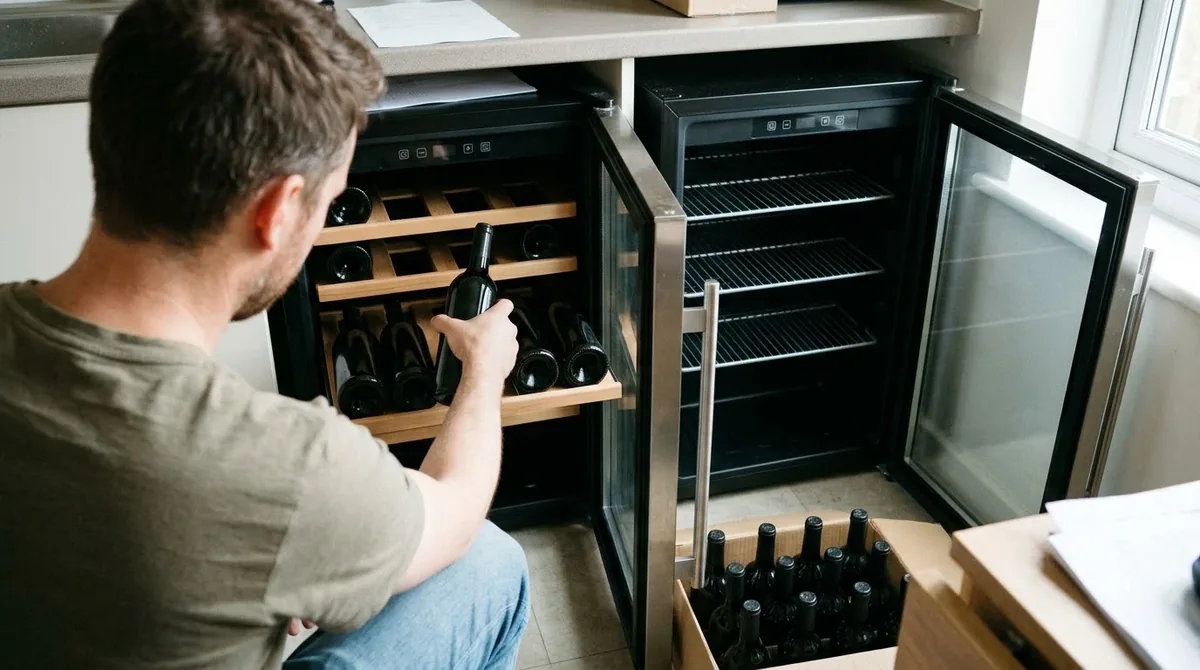
The appliance has a black exterior with stainless-steel detailing, a triple-pane viewing window, and soft interior lighting. Three contoured chrome racks organize the bottles, while an LED display provides a convenient way to monitor the selected temperature. The controls also let users adjust the interior lighting without opening the door, which is useful when the cooler is positioned in a living area or entertaining space. Cuisinart’s official CWC-800CEN product specifications provide the manufacturer’s complete feature and dimension listing.
Cuisinart specifies a temperature adjustment range of 39°F to 68°F. That is a broad range on paper, covering many commonly served white wines, rosés, sparkling wines, and lighter reds. However, the manufacturer’s operating information makes an important distinction: a selected temperature is not necessarily the temperature the appliance can maintain under every environmental condition.
| Specification | Cuisinart CWC-800CEN |
|---|---|
| Manufacturer | Cuisinart |
| Product line | Private Reserve |
| Model number | CWC-800CEN |
| Capacity | 8 bottles |
| Cooling technology | Thermoelectric |
| Temperature adjustment | 39°F–68°F |
| Exterior dimensions | 10.5 × 17.5 × 17.25 inches |
| Listed weight | 24 pounds |
| Storage racks | 3 contoured chrome racks |
| Compatible bottle sizes | 750 ml and 1,500 ml, as specified by Cuisinart |
| Door | Triple-pane viewing window |
| Controls | Touchscreen with LED temperature display |
| Lighting | Soft interior lighting |
| Leveling | Adjustable feet |
| Warranty | Limited 3-year warranty |
The measurements make the appliance relatively easy to accommodate on a suitable countertop or freestanding surface. Nevertheless, the listed dimensions describe the cabinet itself, not the total space required for ventilation and door movement. Installation planning should account for the additional clearance specified in the operating instructions.
One detail deserves particular attention: Cuisinart advertises racks designed for 750 ml and 1,500 ml bottles. This does not mean every oversized or unusually shaped bottle will fit comfortably. Wider Champagne bottles, heavily shouldered bottles, and unusual formats can occupy more room than standard Bordeaux-style bottles.
The manufacturer also lists a limited three-year warranty. That provides a defined warranty period for eligible household purchases, although buyers should review the applicable terms and retain their original proof of purchase.
What Owners Like
The most appealing aspects of the CWC-800CEN are its compact dimensions, simple temperature interface, and display-friendly construction. Retailer feedback and product descriptions emphasize convenience and digital temperature control, making these features particularly relevant for households that want wine accessible without dedicating an entire cabinet to storage.
Compact capacity for everyday drinking. Eight bottles are enough for a small rotation of frequently enjoyed wines. A household might keep two Sauvignon Blanc bottles, two Chardonnay bottles, two Pinot Noir bottles, and two sparkling wines available without turning a kitchen into a wine-storage room. The arrangement also makes it easier to maintain a small selection for different meals and occasions.
The dimensions of 10.5 inches long, 17.5 inches wide, and 17.25 inches high are another attraction. A dedicated appliance of this size can fit into spaces where a larger freestanding wine refrigerator would be inconvenient. Its 24-pound listed weight also makes it less cumbersome to position than many larger wine cabinets, although the bottles should always be removed before moving it.
Convenient digital controls. The touchscreen makes temperature adjustments straightforward. Instead of relying on a mechanical dial with an imprecise position, owners can select a numerical temperature and see the chosen setting on the LED display. The separate lighting control adds convenience when checking the collection.
This feature is useful for households that regularly switch between wine styles. A dry Riesling may be preferred considerably colder than a light red such as Pinot Noir. Having an adjustable temperature range makes it easier to accommodate changing preferences rather than committing the entire cabinet to one serving temperature.
Compressor-free operation. Thermoelectric cooling is attractive to buyers who prefer an appliance without a conventional compressor. Cuisinart describes this cooling system as an efficient, quieter alternative. The design is especially appealing in a small apartment, where a wine cooler may sit near a dining table or living-room seating area.
It is important not to interpret compressor-free as completely silent. The cooling system still relies on airflow and a fan, so operating sounds can occur. The more useful comparison is that this model avoids the conventional compressor mechanism, rather than promising an absence of all noise.
Presentation and visibility. The triple-pane viewing window, black housing, stainless-steel trim, and chrome racks give the cooler a more finished appearance than basic storage cabinets. Soft interior lighting provides an attractive display when entertaining.
The presentation is particularly useful for a household that keeps wine bottles in a visible kitchen or dining area. Rather than opening a refrigerator every time someone wants to check the available selection, the collection remains visible through the front window.
Retailer feedback summarized by Best Buy also identifies the convenient size and digital temperature controls as positive points. These comments reinforce the practical appeal of the design, although individual experiences can differ depending on room conditions, bottle selection, and expectations.
Common Complaints and Cooling Limitations
The biggest concern with the Cuisinart Private Reserve is not its touchscreen or bottle capacity. It is the relationship between thermoelectric cooling and room temperature, which can make the advertised minimum temperature difficult to achieve in a warm environment.
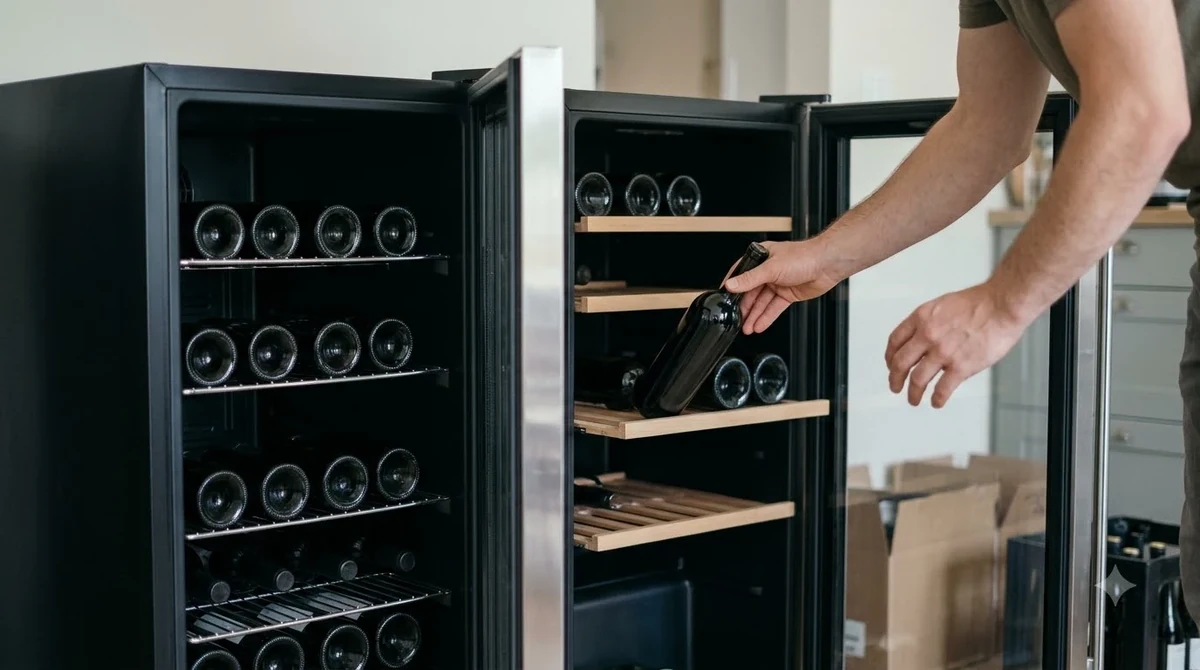
Thermoelectric cooling works differently from a conventional compressor system. Its cooling capacity is affected by the temperature surrounding the cabinet, so the temperature selected on the display should not be treated as an unconditional guarantee of the actual interior temperature.
The operating manual provides a particularly useful example. At an ambient temperature of 77°F, the unit may only be capable of reaching approximately 50°F to 52°F at its coldest setting. At an ambient temperature of 66°F, it may reach approximately 39°F to 41°F.
That difference matters considerably for people who primarily drink sparkling wine or crisp white wines. A user expecting the cooler to maintain 39°F in a warm kitchen could be disappointed if the surrounding temperature prevents the appliance from reaching that setting.
The manual recommends an ambient operating temperature below 70°F for efficient thermoelectric performance. It also warns that temperatures around 80°F or higher can make adequate cooling difficult, particularly when using colder white-wine settings. The Cuisinart operating manual hosted by Williams Sonoma explains these environmental limitations and the recommended installation conditions.
Eight bottles can also feel restrictive. The stated capacity is useful for a small collection, but it leaves little room for expansion. Consider someone who wants to maintain four whites, four reds, two rosés, and two bottles of sparkling wine. That is already 12 bottles, meaning a cooler with eight-bottle capacity cannot accommodate the entire selection simultaneously.
Actual capacity can also depend on the shape of the bottles. Although Cuisinart specifies compatibility with 750 ml and 1,500 ml formats, individual bottle dimensions can affect how comfortably they sit on the contoured racks. Buyers who regularly purchase wide Champagne bottles or unconventional shapes should be especially careful.
Ventilation is another consideration. The appliance is not designed to be installed as a fully recessed built-in cooler. Its cooling system needs sufficient airflow, and placing it inside a tightly enclosed cabinet can interfere with heat dissipation.
The operating manual specifies two inches of clearance on both sides and behind the unit. It also requires enough space in front for the door to open approximately 120 degrees. These requirements can make some apparently suitable countertop locations impractical.
Finally, the LED display should not be mistaken for a separate measurement of every bottle’s temperature. A cabinet needs time to stabilize, and recently added bottles need additional time to approach the selected temperature. Frequent door opening can also interfere with temperature stability.
Tip: Before purchasing this wine cellar, consider the temperature of the room where it will operate. A consistently cool room is much better suited to this thermoelectric model than a sunny kitchen, an enclosed cabinet, or a warm entertainment area. If your main priority is maintaining very cold white-wine temperatures in a hot room, compare compressor-based alternatives before deciding.
Who Should Buy and Who Should Skip
The CWC-800CEN is best suited to casual wine drinkers with a small collection and a reasonably cool place to position the appliance. Its combination of eight-bottle capacity, digital controls, and attractive exterior is practical for everyday use, but serious collectors and people living in consistently hot environments should consider other storage options.
Who should buy it?
Apartment residents with limited space. Someone living in a small apartment may appreciate having eight bottles in a dedicated cooler instead of using valuable refrigerator space. The compact exterior is easier to accommodate than a larger wine cabinet, provided the required ventilation clearance is available.
Casual drinkers with a rotating selection. The appliance makes sense for people who purchase wine regularly but do not maintain a large inventory. Keeping a few bottles of Sauvignon Blanc, Chardonnay, Merlot, and Pinot Noir ready for different occasions is a realistic use case.
Households that entertain occasionally. A small collection of chilled bottles can be convenient when hosting friends for dinner. The display window and interior lighting also make the appliance attractive in a dining area or kitchen.
For example, someone planning a meal featuring chicken in a creamy mushroom sauce could keep a Chardonnay or Pinot Noir ready for the occasion. A chicken Marsala recipe provides another opportunity to plan a bottle around a savory dinner rather than choosing wine at the last minute.
Who should skip it?
Collectors with larger inventories. Eight bottles are insufficient for anyone who wants to maintain multiple vintages, regional selections, and bottles intended for longer-term aging. A larger wine cabinet offers more flexibility and reduces the need to move bottles between storage locations.
People who need dependable cold temperatures in warm rooms. This is perhaps the most important group to reconsider the purchase. If the appliance will operate in a room that regularly reaches 77°F or above, the manufacturer’s own temperature guidance indicates that the coldest settings may not be achievable.
Buyers seeking built-in installation. The manufacturer identifies this appliance as freestanding. Anyone planning a kitchen renovation with an integrated wine-storage compartment should choose a model specifically designed and rated for built-in installation.
People storing expensive bottles for extended aging. An eight-bottle serving-oriented appliance is not necessarily the right choice for a dedicated aging collection. Long-term storage requires attention to stable temperatures, humidity, light exposure, and vibration. A more specialized cellar may be a better fit.
How It Compares to Alternatives
The Cuisinart Private Reserve occupies a specific position in the wine-cooler market: compact capacity, thermoelectric cooling, and straightforward temperature adjustment. Its most relevant comparison is not simply another small cooler, but the difference between an eight-bottle countertop-style appliance and a larger or differently engineered wine refrigerator.
Compared with the discontinued Cuisinart CWC-800: Cuisinart’s product documentation identifies the earlier CWC-800 as a discontinued eight-bottle Private Reserve model. Its listed features include thermoelectric cooling, electronic touchpad controls, a blue LED display, four contoured chrome racks, and a double-pane viewing window. The CWC-800CEN is a separate model designation with three contoured racks and a triple-pane window.
These differences make the CWC-800CEN identifiable as a distinct product configuration rather than simply assuming that every Private Reserve eight-bottle cooler has identical components. Buyers shopping for an older CWC-800 should avoid assuming that its parts, rack arrangement, or specifications automatically match those of the CWC-800CEN.
Compared with a larger compressor-based cooler: A larger appliance generally makes more sense for households that regularly store more than eight bottles. Compressor-based cooling is also worth considering when the appliance must operate in a warmer room or maintain lower temperatures more consistently.
The trade-off is physical size and potentially greater operating noise. A larger cabinet requires more floor or counter space, while the Cuisinart is easier to accommodate in a modest kitchen. The right decision depends on whether compactness or storage capacity matters more.
Compared with a regular kitchen refrigerator: A kitchen refrigerator can chill bottles, but it is not necessarily the most convenient dedicated wine-storage arrangement. Bottles compete with food and other beverages for space, and the temperature may be colder than necessary for some reds.
The Cuisinart provides a separate adjustable environment for wine and keeps the collection organized. However, it should not automatically replace a properly designed wine cellar for bottles intended for extended aging.
For shoppers considering several appliances before making a decision, the model reviews section offers a useful starting point for comparing different product categories and storage arrangements.
There is also a practical difference between storage temperature and serving temperature. A bottle does not have to remain at its final serving temperature throughout storage. For example, many full-bodied reds are best served around 60°F to 65°F, while sparkling wines are commonly served around 40°F to 50°F. The cooler’s adjustable range makes it possible to accommodate a range of preferences, subject to its actual cooling performance.
Frequently Asked Questions
Does the Cuisinart CWC-800CEN need a special electrical outlet?
The related Cuisinart operating manual specifies a properly grounded 120-volt, 15-amp household outlet for the appliance. It also warns against removing the grounding prong or using an improperly grounded adapter. Buyers should confirm the electrical requirements in the documentation supplied with their exact model before installation.
Can the Cuisinart eight-bottle cooler be transported on its side?
No. The operating manual instructs owners to keep the appliance upright during transportation. It also says to remove all bottles before moving the wine cellar. Following these instructions helps protect the appliance during relocation.
Does the Cuisinart Private Reserve have a removable air filter?
The CWC-800CE operating manual describes a removable air filter that helps protect the fan and motor from dust and dirt. That manual recommends cleaning the filter every three months using warm, soapy water and allowing it to dry completely before reinstalling it. Confirm that the instructions supplied with the particular CWC-800CEN unit include the same filter arrangement.
Can the Cuisinart Private Reserve store wine during a power outage?
The cooler does not provide active temperature control without electrical power. The operating manual instructs owners to disconnect the appliance during a power interruption and reconnect it after power returns. How quickly the cabinet temperature changes depends on the surrounding conditions and how frequently the door is opened.
Does the Cuisinart wine cooler have a humidity control setting?
The manufacturer’s listed CWC-800CEN controls focus on temperature and interior lighting rather than a dedicated humidity adjustment. Buyers who require active humidity management for a collection of aging cork-sealed bottles should investigate wine-storage systems designed specifically for that purpose. This distinction is particularly relevant for collectors keeping bottles for several years.
The Cuisinart Private Reserve 8-Bottle Wine Cellar is a sensible compact option for casual drinkers who value convenient controls, attractive presentation, and dedicated wine storage. Its most important limitation is thermoelectric cooling performance in warm rooms, so installation conditions deserve as much attention as capacity and appearance. If eight bottles meet your needs and the operating environment stays reasonably cool, the CWC-800CEN is a practical appliance to consider; if you need larger capacity or more dependable low-temperature performance, a different wine refrigerator may be a better investment.
More in Model Reviews
 Magic Chef 44 Bottle Wine Cooler Review for Flexible StorageUpdated Nov 21, 2026
 Whynter 164 Bottle Wine Cooler Review: Capacity, Features, and FitUpdated Nov 21, 2026
 Insignia NS WC16BK6 Review: Compact 16-Bottle Wine StorageUpdated Nov 21, 2026
 Wine Enthusiast Electric Blue Omega Review: Opening, Pouring, and Preserving Made EasierUpdated Nov 21, 2026
 Koolatron 20 Bottle Wine Cooler Review: Features, Fit, and PerformanceUpdated Nov 21, 2026
 NewAir AWC 330E Review for Home Wine StorageUpdated Nov 21, 2026