

We may earn a commission when you buy through links on this page, at no extra cost to you. Learn more.
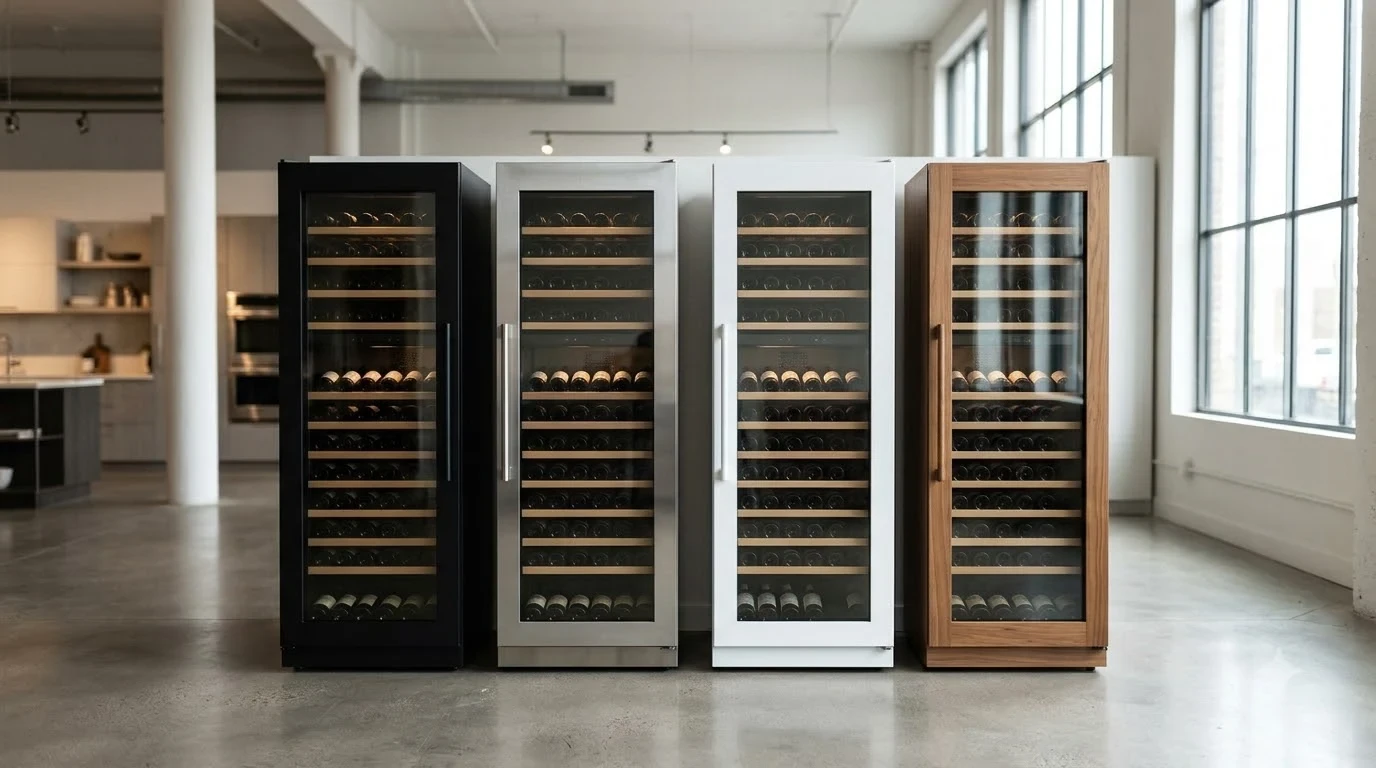
A vinotemp under counter wine fridge is a practical choice for homeowners who want dedicated wine storage integrated into their kitchen cabinetry, particularly when choosing a front-venting model such as the VT-24PR46. This 24-inch dual-zone refrigerator accommodates approximately 46 standard wine bottles and offers five sliding shelves, digital temperature controls, and blue LED lighting. Its built-in design is convenient, but cabinet measurements, ventilation, bottle capacity, and long-term service considerations deserve attention before purchasing.
Vinotemp offers several wine and beverage refrigerators intended for different household needs, from compact beverage centers to larger dual-zone wine cabinets. The distinction matters because not every refrigerator carrying the Vinotemp name is suitable for installation beneath a kitchen counter. This review examines the Private Reserve VT-24PR46 as the primary model, compares its features with other documented Vinotemp options, and explains what buyers should consider before committing to an integrated installation.
Specs and Key Features of the Vinotemp VT-24PR46
The Vinotemp Private Reserve VT-24PR46 is a 24-inch dual-zone wine refrigerator designed specifically for built-in installation. Its combination of two temperature zones, sliding shelves, and front ventilation makes it a more appropriate candidate for permanent kitchen cabinetry than an ordinary freestanding wine cooler.

According to Vinotemp’s product specifications, the cabinet accommodates approximately 46 standard 750 ml bottles. Five sliding shelves provide access to the collection, while wooden shelf lips help keep bottles positioned securely. The touchscreen control panel has a blue LED display, and blue lighting along the cabinet sides makes it easier to identify bottles without relying on bright overhead kitchen lighting.
The temperature range is another important feature. Vinotemp lists an adjustment range of 41°F to 72°F, giving owners flexibility when storing different wine styles. The dual-zone arrangement allows separate settings for wines with different serving or storage requirements. For example, a household that regularly drinks Chardonnay and Cabernet Sauvignon can maintain separate environments rather than forcing both styles into one temperature setting.
| Specification | Vinotemp VT-24PR46 |
|---|---|
| Model | VT-24PR46 |
| Series | Private Reserve |
| Installation | Built-in |
| Nominal width | 24 inches |
| Actual width | 23.5 inches |
| Depth | 23.375 inches |
| Height | 34 inches |
| Approximate capacity | 46 standard 750 ml bottles |
| Temperature zones | 2 |
| Temperature range | 41°F–72°F |
| Number of shelves | 5 sliding shelves |
| Noise specification | 43 dB(A) |
| Display | Blue LED touchscreen |
| Interior lighting | Blue LED side lighting |
These specifications make the VT-24PR46 particularly interesting for households that want a dedicated wine appliance rather than a combination beverage refrigerator. Its approximate 46-bottle capacity is substantial enough for a developing collection without requiring the floor space of a large freestanding wine cabinet.
One detail deserves attention: advertised bottle capacity is not necessarily the capacity a mixed collection will achieve. The standard Bordeaux bottle is relatively narrow compared with many Burgundy, Champagne, and sparkling wine bottles. Wider bottles can occupy additional shelf space, so buyers with a varied collection should plan for a lower practical capacity.
The unit is also panel-ready, which gives kitchen designers an opportunity to coordinate its appearance with surrounding cabinetry. This can produce a more integrated finish than a conventional stainless-steel appliance, although the final appearance depends on the installation and compatible panel specifications.
For the complete manufacturer specifications and installation resources, consult the Vinotemp Private Reserve product information. The product page provides access to the owner’s manual, installation sheet, and bottle-capacity documentation.
What Owners Like About Vinotemp Wine Refrigerators
Vinotemp’s strongest appeal is its range of dedicated wine-storage configurations, particularly models with front ventilation, dual temperature zones, and cabinetry-friendly dimensions. The VT-24PR46 combines these features in a relatively compact appliance intended for permanent kitchen integration.
One advantage is the ability to organize wine according to style and intended use. A dual-zone refrigerator is particularly useful for households that regularly serve both reds and whites. A typical arrangement might place Sauvignon Blanc and Chardonnay in one zone while keeping Pinot Noir and Cabernet Sauvignon in the other. The ability to make separate adjustments provides more flexibility than a single-temperature wine cabinet.
The sliding shelf arrangement is another practical benefit. Bottles stored toward the rear of a deep cabinet can be inconvenient to retrieve, particularly when the collection becomes crowded. Sliding shelves make access easier and allow owners to inspect labels without removing several bottles first. Wooden shelf lips also provide a more finished appearance than basic wire-only storage.
Interior presentation is another positive feature. The blue LED lighting and glass-front cabinet make the refrigerator suitable for a visible kitchen installation, where wine storage can form part of the room’s design. The touchscreen controls also make temperature adjustments more convenient than systems that depend on difficult-to-access mechanical controls.
These characteristics are particularly relevant to homeowners who entertain regularly. A wine refrigerator beneath a counter can keep bottles organized near the dining area, allowing guests and hosts to access the collection without repeatedly opening the main kitchen refrigerator.
There are also practical advantages to using a dedicated wine appliance. Ordinary food refrigerators generally operate colder than the temperatures recommended for wine storage. Vinotemp’s wine refrigerator buying guidance identifies approximately 55°F as a useful long-term storage target, while its cooler range provides more flexibility for serving temperatures.
A well-organized wine refrigerator can also make meal planning easier. A household preparing a chicken Marsala recipe, for example, can reserve a suitable Pinot Noir or Merlot in advance rather than searching through a crowded kitchen refrigerator. A dedicated cabinet helps keep frequently served bottles accessible and reduces unnecessary handling of the rest of the collection.
Common Complaints and Potential Drawbacks
The main concerns surrounding Vinotemp purchases involve long-term reliability, repair support, installation requirements, and the limitations of advertised bottle capacity. These considerations do not establish that every Vinotemp refrigerator will experience problems, but they deserve attention before purchasing a built-in appliance.
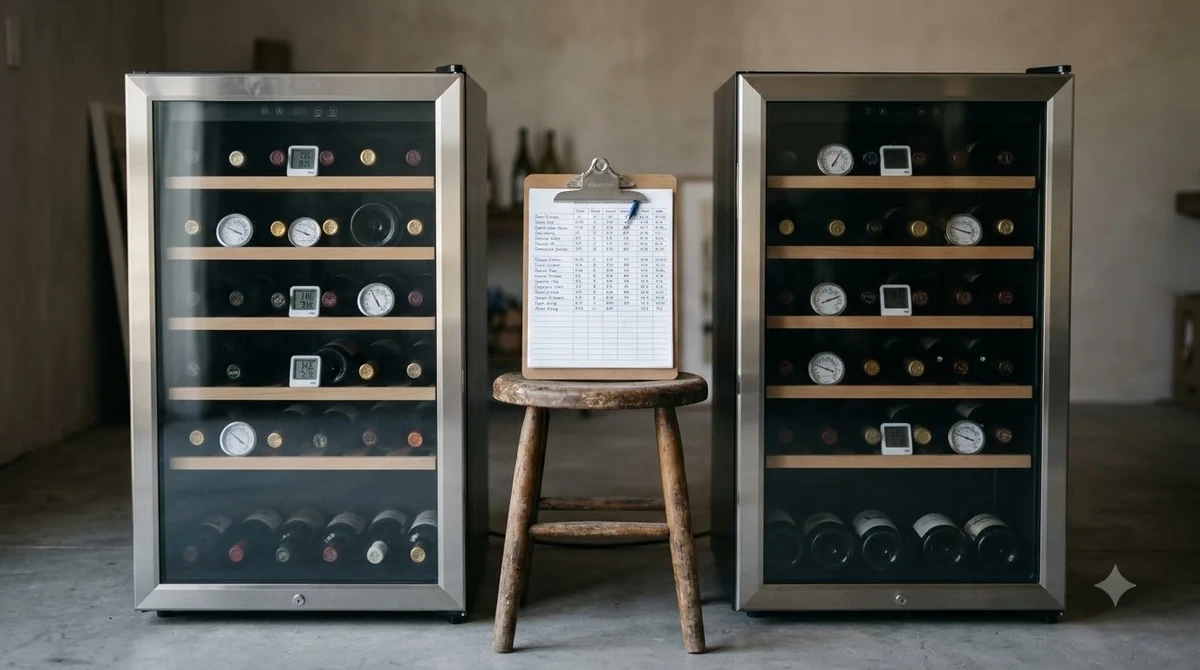
Customer feedback on Trustpilot includes reports of temperature-control problems, appliance failures, and difficulties arranging repairs or obtaining replacement components. Some reviewers describe refrigerators that stopped working after several years, while others discuss challenges communicating with customer support.
These complaints should be interpreted carefully. The published reviews cover multiple Vinotemp products, not exclusively the VT-24PR46. They therefore cannot establish a failure rate for the Private Reserve model. Trustpilot also indicates that the company has not recently invited customers to submit reviews, which can affect how representative the published feedback is.
Nevertheless, the reports identify an ownership issue that potential buyers should investigate: what happens if a temperature sensor, control board, compressor, or other component fails after the appliance is installed inside custom cabinetry?
Service access matters more with a built-in refrigerator than with a small freestanding model. Removing an appliance from a finished kitchen opening can require additional labor, and a replacement unit may not match the original dimensions. Before ordering, buyers should ask about parts availability, authorized repair technicians, warranty coverage, and the process for obtaining service in their area.
Installation is another possible source of dissatisfaction. A refrigerator designed for under-counter use still requires the correct ventilation arrangement. A front-venting appliance can discharge warm air through its front grille, but blocking that grille with decorative trim, flooring, or other kitchen materials can interfere with cooling.
There is also a capacity limitation to consider. Although Vinotemp advertises approximately 46 bottles for the VT-24PR46, larger Champagne bottles and broad Burgundy formats can reduce the usable count. Owners who frequently purchase sparkling wine, magnums, or unusual bottle shapes should not assume that every shelf will hold the advertised standard-bottle quantity.
Noise can be another consideration. Vinotemp lists the VT-24PR46 at 43 dB(A), but the sound perceived in a home depends on cabinet construction, flooring, room acoustics, and the refrigerator’s operating cycle. A kitchen connected directly to an open living room may make compressor and fan sounds more noticeable than a separate utility area.
Finally, a built-in refrigerator is not necessarily easy to replace. Even if a future model has a similar nominal width, differences in height, depth, ventilation, and door dimensions can complicate a kitchen renovation. Maintaining the original documentation and installation measurements is therefore useful throughout ownership.
Who Should Buy and Who Should Skip This Refrigerator?
The VT-24PR46 is best suited to homeowners who have a suitable 24-inch kitchen opening, want dedicated wine storage, and regularly keep different wine styles available. It is less appropriate for buyers who need inexpensive temporary storage, maximum beverage capacity, or an appliance that can be placed anywhere without installation planning.
Who should consider buying it?
Wine enthusiasts with growing collections: Approximately 46 standard bottles offer meaningful storage capacity for households that purchase wine regularly. The appliance can accommodate everyday bottles alongside selections reserved for special occasions.
Households that drink reds and whites: The two independent temperature zones provide a convenient way to separate wines. A household might maintain one zone for lighter whites and sparkling wines and another for reds intended for serving or short-term storage.
Kitchen renovation projects: The front-venting, built-in design makes this model a logical candidate for a planned cabinetry installation. Its panel-ready construction also provides opportunities to coordinate the appliance with a kitchen’s visual design.
Frequent entertainers: A dedicated wine refrigerator near the dining area can simplify serving and reduce the need to retrieve bottles from another room. It is particularly useful for households that serve several wine styles during gatherings.
Who should skip it?
Buyers with very small collections: A 46-bottle cabinet may occupy more space than necessary for someone who usually keeps six to twelve bottles available. A compact freestanding cooler may be a better match.
People who need mixed wine and beverage storage: The VT-24PR46 is primarily a wine refrigerator. Buyers who want substantial space for soda, sparkling water, and canned drinks should examine Vinotemp’s combination wine and beverage products instead.
Renters and frequent movers: A built-in refrigerator makes more sense in a permanent kitchen than in a temporary living arrangement. A freestanding appliance is generally easier to relocate.
Buyers who cannot verify local service: If suitable repair assistance and replacement components are difficult to obtain, a built-in wine refrigerator may introduce unnecessary long-term risk. Confirming support arrangements before purchase is sensible.
Households with a particular interest in sparkling cocktails should also consider whether a wine-only refrigerator meets their entertaining needs. For example, an Aperol Spritz recipe combines sparkling wine with Aperol and soda water, so a separate beverage compartment may be useful for keeping mixers and cans organized alongside the wine collection.
How It Compares to Other Vinotemp Models
The VT-24PR46 is not the only Vinotemp refrigerator designed for kitchen integration. The manufacturer also offers combination wine and beverage appliances, while its older Designer Series includes a dual-zone wine refrigerator with a similar advertised bottle capacity.
The most important difference is the intended use. A dedicated wine refrigerator prioritizes bottle storage and temperature separation, while a combination appliance allocates interior space to both wine and canned beverages. Buyers should decide which arrangement best reflects their actual household habits.
Vinotemp EL-24THWB: Wine and beverage storage
The EL-24THWB is a 24-inch single-zone wine and beverage refrigerator with a stated capacity of approximately 16 wine bottles and 106 standard 12-ounce cans. It has front exhaust and can be installed as a built-in or freestanding appliance.
Its listed temperature range is 39°F to 64°F, and its dimensions are 23 5/8 inches wide, 23 1/16 inches deep, and 34 1/4 inches high. The interior includes two metal wine shelves with wooden lips and two tempered-glass shelves for beverages.
Compared with the VT-24PR46, the EL-24THWB provides substantially less dedicated wine capacity. Its single-zone configuration also offers less flexibility for keeping two wine styles at separate temperatures. However, its beverage capacity makes it more suitable for a kitchen where wine and canned drinks share storage duties.
Vinotemp VT-DS24WC: Older Designer Series wine cooler
The VT-DS24WC is another 46-bottle dual-zone wine refrigerator documented in Vinotemp’s Designer Series specification sheet. Its specifications include five sliding metal shelves with wood trim, a digital temperature display, front exhaust, and a listed temperature range of 39°F to 64°F.
Its documented dimensions are 23 13/16 inches wide, 23 5/16 inches deep, and 34 7/16 inches high. The specification sheet also identifies a right-hinge version and a left-hinge version.
The older VT-DS24WC and newer VT-24PR46 share several important characteristics, including front ventilation, two temperature zones, and an approximate 46-bottle capacity. However, their listed temperature ranges and dimensions differ. Buyers considering a used or previously owned VT-DS24WC should obtain the exact model documentation before assuming it will fit an existing opening.
The following comparison summarizes the manufacturer-documented specifications:
| Feature | VT-24PR46 | EL-24THWB | VT-DS24WC |
|---|---|---|---|
| Product type | Wine refrigerator | Wine and beverage cooler | Wine refrigerator |
| Wine capacity | 46 bottles | 16 bottles | 46 bottles |
| Beverage capacity | Not specified | 106 cans | Not specified |
| Temperature zones | 2 | 1 | 2 |
| Temperature range | 41°F–72°F | 39°F–64°F | 39°F–64°F |
| Number of shelves | 5 | 4 | 5 |
| Ventilation | Front | Front | Front |
| Width | 23.5 inches | 23.625 inches | 23.8125 inches |
| Height | 34 inches | 34.25 inches | 34.4375 inches |
These comparisons show why model identification is important. A buyer looking for a 24-inch under-counter refrigerator cannot rely on the brand name or nominal cabinet width alone. Even models with similar bottle capacities can have different dimensions, temperature ranges, and interior arrangements.
For buyers who mainly want wine storage, the VT-24PR46 is the more directly focused option. For households that want to store canned drinks alongside wine, the EL-24THWB offers a different type of flexibility. The older VT-DS24WC may interest people evaluating an existing installation or a secondhand appliance, but its availability and service situation require separate investigation.
Installation, Temperature Settings, and Long-Term Ownership
Correct installation is essential for any built-in wine refrigerator. A suitable cabinet opening, unobstructed front ventilation, appropriate electrical access, and a level supporting surface all contribute to reliable operation.
The first measurement should be the complete opening rather than the nominal appliance size. Measure the available width at the top, middle, and bottom, and check the height at both sides. Cabinet openings are not always perfectly square, particularly in older kitchens or installations that have been modified during remodeling.
Next, measure the available depth, including any obstruction from the back wall, electrical outlet, plumbing, and adjacent cabinetry. The VT-24PR46 is listed at 23 3/8 inches deep. Its installation sheet and owner’s manual should be consulted for the actual required opening and clearance specifications rather than treating the product dimensions as a complete cutout guide.
Door movement is another important consideration. A refrigerator may fit into an opening but still be difficult to use if its handle strikes an adjacent cabinet or if the door cannot open sufficiently to remove sliding shelves. Check the hinge position and the surrounding countertop before finalizing the installation.
Tip: Never install a freestanding Vinotemp wine cooler inside a restricted cabinet simply because its dimensions appear suitable. Confirm that the exact model has front exhaust and is approved for the intended installation. The ventilation grille must remain unobstructed.
Understand ventilation requirements
Vinotemp’s placement guidance explains that only front-exhaust models should be used for under-counter or built-in installations. Rear-exhaust models are intended for freestanding placement, where the heat released by the cooling system can dissipate into the surrounding room.
This distinction is particularly important because a built-in refrigerator operates within a more restricted space than a freestanding appliance. The front grille provides the route for releasing heat. If cabinetry, floor trim, or another obstruction blocks this area, the cooling system may struggle to maintain its intended temperature.
Vinotemp also recommends a solid, level supporting surface and unobstructed ventilation openings. Its general placement guidance discusses different clearance requirements for different product categories, so the installation instructions for the exact refrigerator should take priority over generic recommendations.
Choose sensible wine temperatures
Approximately 55°F is a useful target for long-term wine storage. The two-zone arrangement of the VT-24PR46 allows owners to separate wines that benefit from different temperature settings, but the appliance should not be treated as a substitute for understanding the serving temperatures of individual styles.
For serving, sparkling wines are generally best around 40°F to 50°F, light whites and rosé around 45°F to 50°F, and fuller-bodied whites around 50°F to 55°F. Light reds are commonly served around 55°F to 60°F, while fuller-bodied reds are generally served around 60°F to 65°F.
These ranges are useful when planning which bottles should be ready for a meal. A Sauvignon Blanc intended for immediate serving may benefit from a cooler serving temperature than a Chardonnay, while Cabernet Sauvignon is generally more enjoyable slightly warmer than refrigerator-cold.
Allow the appliance to settle after delivery
Vinotemp’s wine cooler FAQ advises that newly delivered coolers should stand upright for 24 hours before being plugged in. This allows the refrigerant system to settle following transportation.
Once the appliance is operating, allow sufficient time for its interior temperature to stabilize before loading a full collection. Adding a large quantity of room-temperature bottles at once creates an additional cooling demand, so gradual loading can make initial temperature management easier.
Wine storage habits matter after installation as well. Bottles intended for longer-term storage are generally kept on their sides, particularly when sealed with natural corks. This helps maintain contact between the wine and the cork. Avoid unnecessary movement, direct sunlight, and repeated temperature changes.
Opened still wines should generally be resealed and refrigerated, with many remaining enjoyable for approximately three to five days. Sparkling wine usually has a shorter opened life of around one to three days, depending on the closure and storage conditions.
Maintenance should include keeping the ventilation grille clean, checking the door seal, and ensuring that the appliance remains level. If the cabinet develops unusual noise, frost buildup, or persistent temperature fluctuations, consult the model-specific troubleshooting instructions rather than repeatedly changing the temperature setting.
Finally, retain the purchase documentation, serial number, owner’s manual, and installation paperwork. These records can make warranty inquiries and repair requests considerably easier if the refrigerator develops a problem later.
Frequently Asked Questions
Can the Vinotemp VT-24PR46 be installed beneath a standard kitchen countertop?
The VT-24PR46 is designed for built-in installation, but a nominal 24-inch cabinet opening does not automatically guarantee compatibility. Its specified height is 34 inches, so countertop height, leveling arrangements, and the manufacturer’s installation requirements must also be considered.
Can a Vinotemp wine refrigerator be installed next to a dishwasher?
Placement next to a heat-producing appliance deserves particular attention because additional heat can affect cooling performance. The dishwasher’s insulation, heat-release arrangement, and the wine refrigerator’s specified ambient operating conditions should be evaluated before installation.
Does the VT-24PR46 accommodate Champagne bottles?
Vinotemp advertises approximately 46 standard 750 ml bottles, not a guaranteed count of larger-format bottles. Champagne and other sparkling wine bottles can have wider bodies than standard Bordeaux bottles, so the practical capacity will depend on the bottle arrangement and available shelf space.
Does a dual-zone wine refrigerator eliminate the need for a separate serving refrigerator?
Not necessarily. Dual-zone storage helps separate wine styles, but it does not provide dedicated space for mixers, soda, and other food items. Households that frequently prepare cocktails or serve many canned drinks may find a combination beverage refrigerator more convenient.
What information should be recorded before requesting Vinotemp service?
Keep the model number, serial number, purchase date, and proof of purchase available when contacting support. It is also useful to record the displayed temperature, actual measured cabinet temperature, error messages, and a description of any unusual operating sounds before requesting troubleshooting assistance.
The Vinotemp VT-24PR46 is a compelling option for homeowners seeking a built-in dual-zone wine refrigerator with approximately 46-bottle capacity, sliding shelves, and a panel-ready appearance. Its strongest advantages are its dedicated wine-storage design and front ventilation, while installation accuracy, service access, and real-world bottle capacity deserve careful consideration. Buyers who verify the cabinet measurements and support arrangements before purchasing will be better positioned to enjoy a convenient, organized wine-storage setup.
More in Model Reviews
 Magic Chef 44 Bottle Wine Cooler Review for Flexible StorageUpdated Nov 21, 2026
 Whynter 164 Bottle Wine Cooler Review: Capacity, Features, and FitUpdated Nov 21, 2026
 Insignia NS WC16BK6 Review: Compact 16-Bottle Wine StorageUpdated Nov 21, 2026
 Wine Enthusiast Electric Blue Omega Review: Opening, Pouring, and Preserving Made EasierUpdated Nov 21, 2026
 Koolatron 20 Bottle Wine Cooler Review: Features, Fit, and PerformanceUpdated Nov 21, 2026
 NewAir AWC 330E Review for Home Wine StorageUpdated Nov 21, 2026