

We may earn a commission when you buy through links on this page, at no extra cost to you. Learn more.
The Vinglacé wine chiller is a portable, vacuum-insulated stainless steel bottle holder that keeps pre-chilled wine cold for approximately 3–4 hours without ice. Its adjustable screw-on top accommodates many standard wine and Champagne bottles, while the insulated exterior helps prevent condensation. It is particularly useful for patio dinners, picnics, and outdoor entertaining, but it cannot cool a warm bottle and does not fit every unusual bottle shape.
A good bottle of wine deserves to stay at its intended serving temperature throughout dinner. Traditional ice buckets can be inconvenient, particularly outdoors, while simple decorative wine sleeves offer limited insulation. Vinglacé takes a different approach: it surrounds the original wine bottle with a double-wall insulated stainless steel shell, allowing you to pour directly from the bottle without transferring the wine. This review examines its construction, practical performance, owner feedback, limitations, and the situations in which another type of wine chiller might make more sense.
Specs and Key Features
The Vinglacé Wine Chiller combines a stainless steel exterior, double-wall vacuum insulation, and an adjustable top to create a portable holder for one wine bottle. Its main advantage is maintaining an existing serving temperature rather than actively cooling the wine.
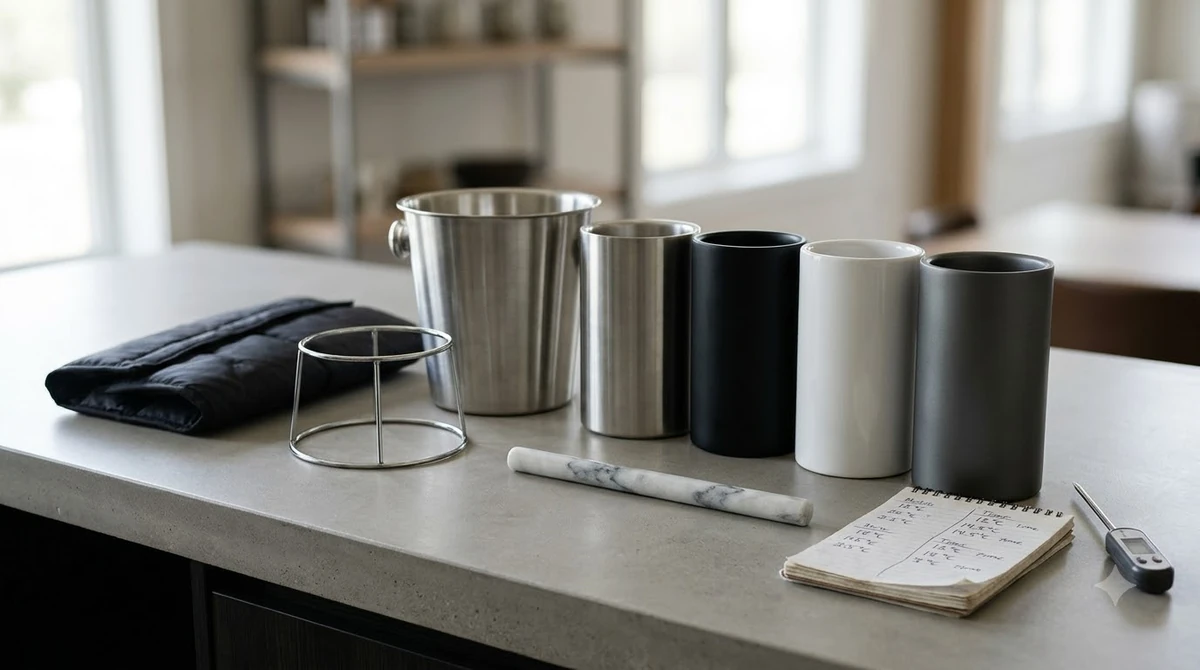
According to the manufacturer’s product specifications, the standard model measures 4.5 inches in diameter and 12 inches tall, weighs 1.2 pounds, and uses food-grade 18/8 stainless steel. The insulated construction surrounds the bottle without requiring ice, freezer packs, or an electrical connection. The bottle remains in its original glass container, so the wine never needs to touch the stainless steel housing.
The adjustable top is an important part of the design. It screws onto the main body and can expand or contract around different bottle necks. This gives the holder more flexibility than a fixed-diameter sleeve, although it does not guarantee compatibility with every bottle shape or height. The manufacturer identifies standard 750 ml wine bottles, Champagne, and Prosecco among the intended formats.
| Specification | Vinglacé Wine Chiller |
|---|---|
| Primary material | 18/8 food-grade stainless steel |
| Insulation | Double-wall vacuum insulation |
| Manufacturer-listed dimensions | 4.5 inches diameter × 12 inches height |
| Manufacturer-listed weight | 1.2 pounds |
| Intended bottle capacity | One bottle |
| Standard bottle format | 750 ml |
| Temperature retention claim | Approximately 3–4 hours |
| Cooling method | Passive vacuum insulation |
| Adjustable top | Screw-on, expandable design |
| Exterior condensation | Designed to resist condensation |
| Cleaning | Hand wash with mild soap |
| Packaging | Gift box included |
| Available finishes | Multiple colors and metallic finishes |
There is one measurement detail worth understanding before ordering. Nordstrom’s listing for the same Vinglacé Wine and Champagne Chiller describes its dimensions as approximately 4 inches by 10 inches, rather than the manufacturer’s published 4.5-by-12-inch specifications. Retailer listings can use different measurement conventions or refer to different product presentations. The manufacturer’s specification is the more appropriate reference for the product’s published dimensions, but buyers with limited cabinet or storage space should confirm the measurements of the particular version being purchased.
The exterior finish is another distinguishing feature. The product has been offered in colors including White, Black, Navy, Evergreen, Graphite, Copper, Rose Gold, and Stainless Steel. This gives buyers more choice than the typical brushed-metal wine bucket. Some finishes also lend themselves to personalization, making the chiller an option for wedding, birthday, and housewarming gifts.
For additional options across different styles of wine accessories, the Accessory Brands category provides a useful starting point.
What Owners Like
The strongest positive feedback centers on convenience, temperature retention, and the ability to serve wine directly from its original bottle. Owners also appreciate the clean exterior and attractive appearance, especially when using the chiller for outdoor meals or entertaining.
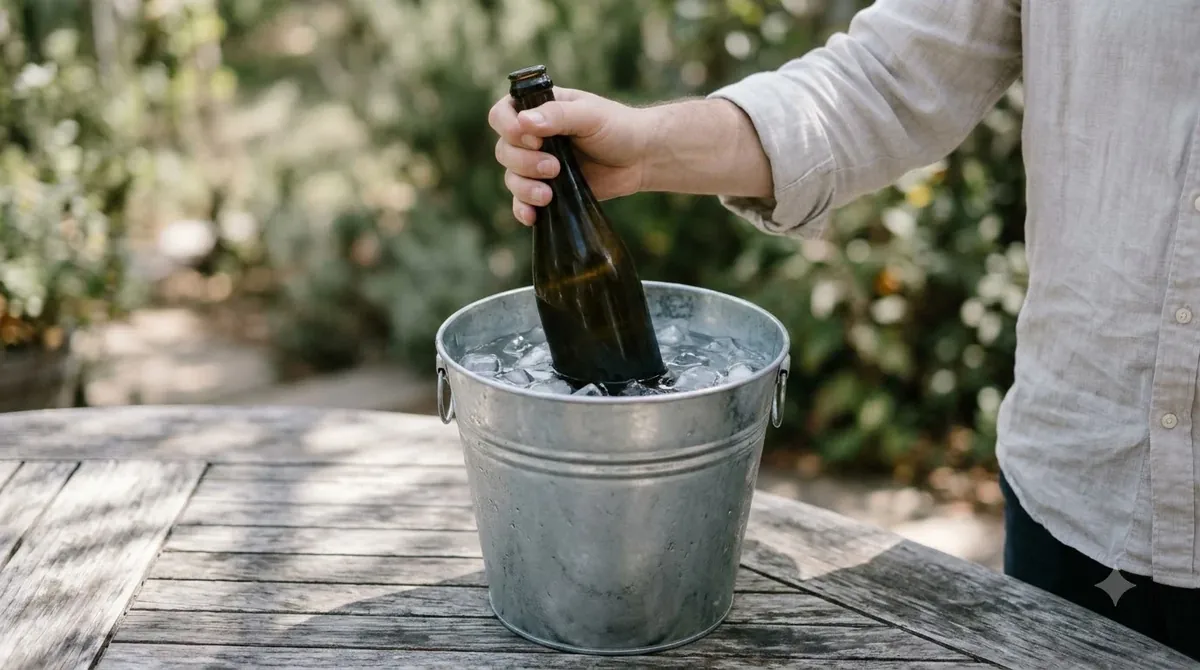
One of the most useful aspects is the absence of an ice bucket. A conventional bucket requires ice, water, and enough space to accommodate the bottle. As the ice melts, the bucket can become wet and awkward to move. Vinglacé eliminates those requirements once the wine has been properly chilled. The bottle simply slides into the insulated body, the top is adjusted, and the wine is ready to serve.
Owner feedback published by Nordstrom includes a positive report from a customer who used the product at Thanksgiving. The reviewer said the bottle remained cold for several hours and appreciated the appearance of the Copper finish. The same customer purchased another unit as a gift. This illustrates the product’s appeal as both a practical serving accessory and a decorative addition to a dining table.
Another useful source is the Common Grape product review, which discusses the screw-on top and bottle compatibility in detail. The reviewer found that the lid was straightforward to remove and replace, even with a bottle inside. Standard red, white, and Champagne bottles fitted successfully, and the rubber opening accommodated different neck sizes.
The adjustable construction also provides some flexibility with taller bottles. Rather than requiring the lid to close completely, it can sometimes be screwed down partway while still holding the bottle securely. This is useful because wine bottles do not all have identical heights, neck lengths, or shoulder profiles.
Why the original bottle stays inside
Unlike a traditional stainless steel wine bucket, the Vinglacé does not require the wine to come into contact with the accessory. The glass bottle remains the wine’s container throughout serving. This means there is no need to pour the wine into another vessel simply to keep it cool.
That arrangement is particularly convenient for sparkling wine. Champagne and Prosecco can remain in their original bottles, and the host can open and pour them without removing the bottle from the holder each time. It also avoids having a separate metal vessel occupy the center of the table.
For outdoor use, the condensation-resistant exterior is another practical benefit. A cold bottle placed directly on a warm table can collect moisture, leaving water rings or requiring a coaster. The insulated exterior is designed to reduce that problem, keeping the serving area neater.
These advantages make the product especially appealing for people who regularly serve chilled wine outside. A bottle of Sauvignon Blanc at a patio dinner, rosé at a picnic, or sparkling wine at a celebration can remain conveniently accessible without the repeated attention required by an ice bucket.
Appearance and gifting
The Vinglacé design is more polished than many basic wine sleeves. Its smooth stainless steel body and selection of finishes allow it to coordinate with different table settings. Copper and Rose Gold suit warmer decorative schemes, while Black, Navy, and Stainless Steel offer more understated alternatives.
The included gift box also makes presentation easier. Rather than purchasing a separate container, buyers can give the chiller as a standalone present. Personalization options provide another reason to consider it for weddings, anniversaries, and housewarming occasions.
Appearance is subjective, but the combination of a reusable accessory, gift-ready packaging, and direct-pour functionality gives the product a clear purpose beyond simply holding a bottle upright.
Common Complaints
The main limitations are bottle compatibility, the absence of active cooling, and the fact that insulation performance depends on the temperature of the wine before insertion. The Vinglacé is a useful temperature-maintenance accessory, but it should not be mistaken for a refrigerator.
The most important purchasing consideration is bottle shape. Although the adjustable top is designed for a wide selection of bottles, wine packaging varies considerably between producers and regions. Some bottles have longer necks, wider shoulders, unusually thick glass, or rounded bodies that make them difficult to accommodate.
Common Grape reports that a standard selection of red, white, and Champagne bottles fitted its review unit, but an unusually squat and nearly round Miraval rosé bottle did not. This is a meaningful limitation for anyone who regularly purchases wines in distinctive packaging.
Nordstrom owner feedback provides another example. One reviewer reported that a rosé bottle did not fit because its neck was too tall for the lid to screw on properly. Another reviewer found that a taller bottle could be accommodated by partially closing the adjustable top.
These experiences suggest that compatibility is not simply a matter of bottle volume. Two bottles can both hold 750 ml and still have very different dimensions. A bottle with a broad body or unusually long neck may present a problem even though its capacity is standard.
It cannot chill warm wine
This is the second major limitation. The Vinglacé uses passive insulation, meaning it slows the transfer of heat rather than removing heat from the bottle. If a bottle starts at room temperature, placing it inside the chiller will not bring it down to the appropriate serving temperature.
The manufacturer’s instructions specifically recommend refrigerating the bottle before inserting it. This distinction matters most during summer entertaining. A white wine left in a warm kitchen will not become properly chilled simply because it is placed inside an insulated holder.
For example, a Sauvignon Blanc intended to be served at approximately 45–50°F should reach that temperature in the refrigerator first. The Vinglacé then helps preserve the chilled condition while the wine is being served. The same principle applies to rosé and sparkling wine.
It is also important to have realistic expectations in very hot environments. Eat Something Sexy reports that its reviewer observed shorter temperature retention during a beach day in a heatwave than under more typical outdoor conditions. Direct sunlight and high ambient temperatures can affect how long a chilled bottle remains pleasantly cool. Its long-term Vinglacé review provides additional context about performance, bottle compatibility, and practical limitations.
The lid can feel restrictive
The adjustable top is a useful feature, but it introduces another potential inconvenience. If a bottle fits very tightly, removing the top may require additional effort. Eat Something Sexy reports occasional difficulty removing the lid after using it with a snug-fitting Champagne bottle.
This does not make the design impractical for every sparkling wine, but it reinforces the importance of testing bottle compatibility before relying on the accessory for a special occasion. A tight fit can become particularly inconvenient when guests are waiting for another pour.
Some buyers may also find the full setup relatively bulky compared with a simple wine sleeve. The manufacturer’s listed empty weight is 1.2 pounds, and the bottle adds considerably more weight. Carrying it to a picnic is manageable, but it is not as compact as a fabric wine carrier.
Finally, the exterior requires hand washing rather than being treated as an ordinary dishwasher-safe kitchen container. Buyers who prefer accessories that can be cleaned entirely in a dishwasher should consider this before purchasing.
Who Should Buy and Who Should Skip
The Vinglacé makes the most sense for people who frequently serve pre-chilled wine away from a refrigerator. It is less appropriate for anyone expecting an accessory that actively lowers wine temperature or accommodates every possible bottle design.
Who should buy it
Outdoor entertainers are among the strongest candidates. A host serving dinner on a patio can place a chilled bottle inside the holder and leave it on the table. There is no need to prepare an ice bucket or keep returning to the kitchen to replace melting ice.
Picnic and beach enthusiasts may also appreciate its portability. The insulated body is designed to maintain the bottle’s existing temperature for several hours, making it more practical than carrying a conventional ice bucket to an outdoor location. It works particularly well when the wine is transported in a cooler before being placed inside the chiller.
Rosé and white wine drinkers have a particularly good reason to consider it. These wines are generally served cool, and their temperature can rise noticeably during a long meal in warm surroundings. A bottle of Chardonnay, Riesling, or Sauvignon Blanc can remain in its holder between pours rather than sitting exposed on the table.
Sparkling wine enthusiasts may also find it useful. Champagne and Prosecco are intended to be served chilled, and the Vinglacé can help maintain that condition without requiring an ice bucket. The important qualification is that the particular bottle must fit the adjustable opening comfortably.
Gift shoppers have another reason to consider the product. The gift packaging, range of finishes, and personalization options make it suitable for people who enjoy wine and already have basic glassware and serving equipment.
Who should skip it
People who want to cool room-temperature wine should choose a different solution. The Vinglacé does not contain a refrigeration element, cooling plate, or active temperature-control system. Its purpose is to preserve a temperature that has already been reached.
Buyers who regularly purchase oversized Burgundy, unusually shaped rosé, or large-format sparkling bottles should also be cautious. The adjustable top improves flexibility, but it cannot overcome every dimensional restriction.
It may also be unnecessary for people who usually finish a chilled bottle quickly at an indoor dinner. If a bottle spends only a short time on the table, a standard wine bucket or an ordinary countertop wine holder may provide sufficient convenience.
Those who want to chill several bottles simultaneously will need another arrangement. The Vinglacé is designed around one bottle, so a larger ice bucket or a dedicated wine refrigerator may be more practical for group entertaining.
For a more permanent countertop solution, compare the electric wine chiller category. Active cooling equipment serves a different purpose from passive insulated holders and may be a better fit when temperature reduction is the priority.
How It Compares to Alternatives
The Vinglacé occupies a particular position among wine accessories: it is a portable, insulated bottle holder rather than a conventional bucket or an active cooling appliance. The right alternative depends on whether the priority is temperature retention, cooling speed, appearance, portability, or serving capacity.
One useful comparison is the traditional ice bucket. Ice buckets can cool bottles and help maintain a low temperature, provided they contain enough ice and water. They are also suitable for different bottle shapes and can accommodate many sparkling wine bottles. However, they require preparation, take up table space, and can leave water on surrounding surfaces.
The Vinglacé avoids those inconveniences but does not offer the same cooling capability. A warm bottle placed inside an insulated holder stays warm. A warm bottle placed in an appropriately prepared ice bucket can become cooler. The distinction is more important than any difference in exterior appearance.
Vinglacé versus the Huski Wine Cooler and Swig Wine Insulator
Common Grape identifies the Huski Wine Cooler and Swig Wine Insulator as comparable alternatives in the insulated wine-accessory category. Its review describes these products as competing options with lower pricing at the time of that review, while noting a preference for the Vinglacé’s appearance.
That comparison is useful because it shows that the Vinglacé is not the only way to keep a chilled bottle insulated. Buyers should compare the physical bottle-holding design, dimensions, materials, appearance, and cleaning instructions rather than assuming that every insulated wine accessory performs identically.
The Vinglacé’s adjustable top and direct-pour arrangement are particularly relevant. A product with a fixed opening may be less accommodating to different bottle necks, while a different style of wine insulator may prioritize compact storage or another form of construction.
Vinglacé versus a marble wine chiller
A marble wine chiller provides a different kind of serving accessory. Marble has substantial thermal mass and can help keep a previously chilled bottle cool for a limited period. It also has a distinctive natural appearance that suits traditional dining rooms and decorative tables.
However, marble chillers generally do not provide the same double-wall vacuum insulation or adjustable screw-on arrangement. They can also be heavy and are less convenient for outdoor transport. The Vinglacé is a more portable choice for people who want to carry a bottle from the kitchen to a patio or picnic table.
The choice is largely between a decorative, relatively simple bottle holder and a purpose-built insulated carrier. Neither option actively refrigerates wine, so the bottle should still be chilled before use.
Vinglacé versus an instant wine chiller
An instant wine chiller is aimed at a different problem: bringing wine closer to serving temperature without waiting for a full refrigerator cycle. Depending on its design, an instant cooling product may use chilled components, frozen inserts, or another cooling method.
Vinglacé instead focuses on preserving the temperature of a bottle that is already cold. It requires less preparation during serving, but it cannot replace an actual cooling method when the bottle begins warm. A household that frequently forgets to refrigerate white wine ahead of dinner may benefit more from an active or rapid-cooling option.
For people who routinely prepare wine in advance, however, the Vinglacé offers a simpler serving arrangement. There is no need to chill a separate container, replenish ice, or connect an appliance. The bottle is simply inserted after refrigeration.
Tip: Choose the chiller according to the job it needs to perform. For maintaining the temperature of one pre-chilled bottle during a meal, the Vinglacé is a practical option. For cooling warm wine, chilling several bottles, or serving unusually shaped bottles, a different solution may be more suitable.
Care and Everyday Use
Getting good results from the Vinglacé starts before the bottle enters the holder. Refrigerate the wine to its intended serving temperature, insert it carefully, and adjust the top without forcing the threads. A few simple habits can help preserve both temperature performance and the appearance of the stainless steel exterior.
Step 1: Chill the wine first
The most important preparation step is to bring the wine to its intended serving temperature before using the chiller. The holder maintains the existing temperature rather than cooling the bottle itself.
For reference, sparkling wines are generally served at approximately 40–50°F. Light whites and rosé are commonly served at 45–50°F, while fuller-bodied whites such as Chardonnay are often served at 50–55°F. These ranges provide a useful starting point for choosing the refrigerator temperature and deciding which bottle to insert.
Serving temperature affects how wine presents its aromas, acidity, and texture. A very cold Chardonnay may seem less expressive, while an overly warm sparkling wine can lose some of the refreshing character expected from the style.
Step 2: Check the bottle dimensions
Before using the chiller for an important occasion, test the bottle you intend to serve. Pay particular attention to the body width, neck length, and shoulder shape. A standard 750 ml capacity does not guarantee that every bottle will fit.
Place the bottle into the main body without forcing it downward. Position the adjustable top and turn it carefully until it fits securely. If the top resists movement, remove it and check the alignment rather than applying additional force.
Step 3: Adjust the opening
The screw-on mechanism should be adjusted to provide a stable fit around the bottle. The rubber opening accommodates different neck sizes, and the top can sometimes remain partially closed around taller bottles.
Do not assume that a partially closed top will work equally well with every bottle. The bottle should remain secure enough for ordinary serving, without excessive pressure on the neck or an awkward fit that makes pouring difficult.
Step 4: Pour directly from the bottle
Once the bottle is positioned, open the top sufficiently to pour. The wine remains inside the original glass bottle, so there is no need to transfer it into the stainless steel housing.
For a standard 750 ml bottle, a typical wine pour is 5 ounces, yielding approximately five glasses. Keeping the bottle inside the chiller between pours helps limit unnecessary exposure to warmer surroundings.
Step 5: Clean and store the chiller
The manufacturer’s care instructions recommend hand washing the exterior with mild soap. Use a soft cloth or sponge, then dry the surface thoroughly before storing the accessory.
Avoid assuming that the insulated construction makes the entire product dishwasher-safe. Hand washing is the stated care method, and following the manufacturer’s instructions is the safer approach for preserving the finish and adjustable components.
Store the chiller in a dry location where the top will not be subjected to unnecessary pressure. Keeping it in its original packaging between occasional uses can also help protect the exterior finish from scratches.
It is useful to keep the holder with other serving accessories rather than treating it as a permanent refrigerator container. Its intended role is to maintain a chilled bottle during service, not to replace proper wine storage.
Using it with different wine styles
Although white wine and sparkling wine are natural applications, the Vinglacé can also be used with red wine. The insulation maintains the temperature of the bottle regardless of the wine style.
For example, a light-bodied Pinot Noir can be served slightly cool at approximately 55–60°F. A fuller-bodied red such as Cabernet Sauvignon is generally served around 60–65°F. The chiller can help maintain those temperatures during a meal, provided the wine starts at the desired temperature.
There is no reason to use ice simply because a bottle contains red wine. The important factor is selecting the appropriate serving temperature and allowing the insulation to maintain it.
For longer-term storage, however, a wine chiller is not a substitute for a suitable storage environment. Unopened bottles should be kept away from excessive heat and temperature fluctuations. The Vinglacé is designed for serving convenience, not cellar storage.
Frequently Asked Questions
Does the Vinglacé Wine Chiller work with screw-cap bottles?
Yes, a screw-cap closure does not inherently prevent a bottle from being used in the holder. Compatibility depends primarily on the bottle’s dimensions and neck shape rather than whether it has a screw cap or cork. Make sure the adjustable opening can accommodate the neck without placing pressure on the closure.
Can the Vinglacé Wine Chiller be used for non-alcoholic sparkling wine?
Yes. The insulation works with the temperature of the bottle rather than its contents. Chilled non-alcoholic sparkling wine, sparkling grape juice, and other suitable bottled beverages can be used if their bottle dimensions fit the holder.
Can the Vinglacé Wine Chiller hold a half bottle?
A half bottle is typically 375 ml, so its shorter height may create a different fit from a standard 750 ml bottle. The adjustable top is designed to accommodate different bottle heights, but a secure fit should be confirmed before serving. A shorter bottle may also sit differently inside the main housing.
Does the Vinglacé Wine Chiller need to be frozen before use?
No. Unlike products that rely on frozen inserts or a pre-frozen container, the Vinglacé uses vacuum insulation. Its preparation requirement is to refrigerate the wine bottle first. There is no separate freezing step for the stainless steel holder.
Can the Vinglacé Wine Chiller be personalized?
The manufacturer offers customization options for its wine chiller, including engraving. Personalization can be useful for wedding gifts, corporate presents, and special occasions. Customized orders may require additional processing time, so buyers should allow for that when planning a gift.
The Vinglacé Wine Chiller is a well-designed option for anyone who wants to keep one pre-chilled bottle ready to serve without the inconvenience of an ice bucket. Its vacuum insulation, adjustable top, attractive finishes, and direct-pour design make it particularly useful for outdoor entertaining and relaxed dinners. Its limitations are equally important: bottle compatibility varies, and insulation cannot replace refrigeration. If those conditions suit the way wine is served at home, the Vinglacé is a practical and attractive accessory to consider.
More in Wine Accessories
 Coravin Vs Vacu Vin: Choose the Right Wine Saver for Your BottlesUpdated Nov 21, 2026
 Zwilling Wine Stopper Review: Preserve Open Bottles LongerUpdated Nov 21, 2026
 Wine Enthusiast Wine Preserver Review: Features, Benefits and LimitationsUpdated Nov 21, 2026
 Wine Enthusiast Wine Stopper: An Easier Way to Reseal Open BottlesUpdated Nov 21, 2026
 Vintorio Wine Opener: Two-Step Cork RemovalUpdated Nov 21, 2026
 Zwilling Wine Aerator Review: Aerate, Pour, and Seal With One ToolUpdated Nov 21, 2026