

We may earn a commission when you buy through links on this page, at no extra cost to you. Learn more.
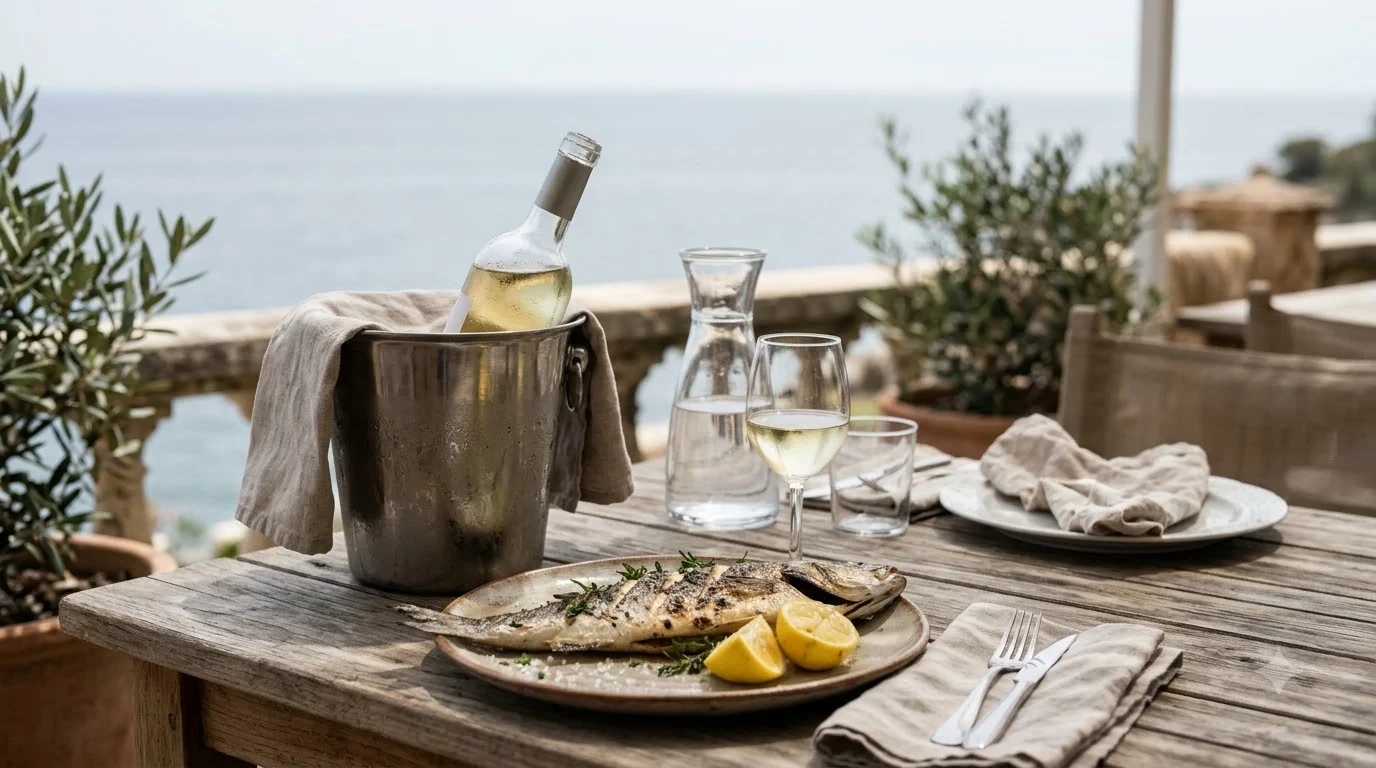
The best vidal blanc food pairing matches the wine’s sweetness level and bright acidity to the weight, spice, and richness of your dish. Dry and sparkling styles cut through lemon-butter seafood, grilled chicken, and citrus salads, while off-dry bottles tame spicy Thai or Mexican dishes and rich pork. Dessert-grade Vidal Blanc ice wines balance salty blue cheeses like Roquefort and caramelized fruit tarts.
Because winemakers craft this winter-hardy grape in everything from bone-dry table bottles to syrupy ice wines, treating every bottle the same at the dinner table leads to flat matches. Matching the bottle’s residual sugar and body to the plate lets the grape’s natural citrus, green apple, and stone fruit character shine.
What Vidal Blanc Is
Vidal Blanc is a cold-hardy French-American hybrid white grape bred in the 1930s by French viticulturist Jean-Louis Vidal. It combines Ugni Blanc with Rayon d’Or to produce thick-skinned berries capable of surviving harsh winters while keeping bright natural acidity.
Jean-Louis Vidal originally developed the crossing in western France’s Charente-Maritime region to create a resilient grape for Cognac distillation. Although the variety largely disappeared from commercial French vineyards, Canadian enologist Adhemar de Chaunac introduced it to Ontario in the late 1940s, where it adapted quickly to North American growing conditions.
Because Vidal Blanc carries tough outer skins and ripens late in the season, growers can leave clusters hanging on the vine well into autumn and winter without severe rot. This durability makes it equally suited to early-fall harvesting for crisp table wines and sub-freezing winter picking for concentrated ice wines, placing it alongside other versatile white varieties you can explore in our guide to Wine by Type.
Flavor Profile and Winemaking Styles
In the glass, Vidal Blanc delivers bright aromas of honeysuckle, citrus blossom, pear, and golden apple alongside flavors of grapefruit, pineapple, and apricot. Winemakers produce the grape across four distinct styles: bone-dry still, sparkling, off-dry, and sweet late-harvest or ice wine.
According to Stone Hill Winery, dry expressions emphasize crisp citrus rind, green apple, and white floral notes supported by a light-to-medium body and refreshing acidity. When fermented in stainless steel, these dry bottles taste clean and zesty, resembling a cross between Sauvignon Blanc and dry Riesling; a brief touch of oak adds rounder orchard fruit texture.
Off-dry and semi-sweet versions retain noticeable residual sugar that highlights ripe melon, peach, and tropical pineapple flavors while relying on high natural acidity to keep the finish snappy rather than cloying. At the sweetest end of the spectrum, ice wines pressed from frozen grapes concentrate those sugars into rich layers of dried apricot, honey, caramel, and marmalade.
Where Vidal Blanc Grows
Vidal Blanc thrives across cool and continental wine regions of North America, led by Ontario’s Niagara Peninsula in Canada and key eastern and midwestern US appellations. Major American plantings span New York’s Finger Lakes and Hudson River Region, Missouri, Maryland, Ohio, Michigan, and Vermont.
In Ontario, freezing winter temperatures make Vidal Blanc the backbone of Canada’s internationally recognized ice wine industry, where producers like Inniskillin and Peller Estates harvest frozen clusters at frigid temperatures to concentrate sugars. South of the border in the Finger Lakes and Southwest Michigan, cool lake-effect breezes preserve the grape’s racy acidity for both crisp dry whites and late-harvest dessert bottles.
Further south and west in Missouri and Maryland, warmer summer growing seasons allow Vidal Blanc to ripen fully for approachable dry, off-dry, and traditional-method sparkling table wines. Missouri Wine notes that the grape is hardy enough to handle cold Midwest winters while retaining fresh acidity through warm summer months.
How to Serve Vidal Blanc
Serve dry and off-dry Vidal Blanc chilled between 44°F and 55°F in a standard white wine glass to preserve its crisp acidity and aromatic lift. Ice wine expressions perform best slightly colder, around 46°F to 50°F, poured into small dessert glasses.
Over-chilling a bottle straight from the back of a refrigerator can mute the delicate honeysuckle, pear, and white peach aromas that give Vidal Blanc its charm. Pulling dry or off-dry bottles out of the fridge about fifteen minutes before pouring lets the floral and tropical notes open up cleanly.
Most dry and off-dry Vidal Blanc table wines are crafted for immediate freshness and drink best within three to five years of the vintage date. Concentrated ice wines, protected by high natural acidity and dense residual sugar, can develop deeper honeyed and butterscotch nuances over five to ten years in a cool cellar.
Vidal Blanc Food Pairing Guide
Successful pairings depend on aligning the wine’s sweetness tier with the intensity, salt, and spice on the plate. Dry bottles refresh light seafood and herb-driven dishes, off-dry styles cushion heat and savory fats, and ice wines contrast salty cheeses or match fruit desserts.
For dry still and sparkling Vidal Blanc, lean into dishes brightened with lemon, fresh herbs, or briny coastal flavors. Reviewers and regional wine guides frequently highlight grilled chicken, pan-seared scallops, oysters, flounder, and shrimp scampi with garlic and butter. Crisp salads tossed with citrus vinaigrette, pesto pasta, and sushi rolls also work smoothly because the wine’s high acidity cuts through oily fish and rich sauces without overwhelming delicate seaweed or herbs.
When pouring an off-dry or semi-sweet Vidal Blanc, use that touch of residual sugar to balance spicy seasonings and rich, salty meats. Thai curries, mildly spiced Mexican dishes, pulled pork, and glazed ham benefit from the cooling fruitiness of peach and pineapple notes. Off-dry bottles also bridge the gap with creamy dishes like chicken in white wine cream sauce, smoked salmon, and mild cheeses such as fresh mozzarella, chèvre, and Brie.
Ice wine and late-harvest Vidal Blanc call for either sharp salt contrast or mirrored fruit sweetness. Pungent blue cheeses like Roquefort and Gorgonzola create a classic sweet-and-salty pairing as the wine’s honeyed apricot richness softens their creamy bite. For dessert, serve ice wine alongside lemon cheesecake, apple pie puff pastries, caramelized fruit tarts, or crêpes with caramel cream, keeping the wine slightly sweeter than the dish itself.
| Vidal Blanc Style | Key Flavor Notes | Best Food Pairings | Why It Works |
|---|---|---|---|
| Dry Still | Citrus rind, green apple, white flowers, pear | Grilled chicken, oysters, scallops, citrus salads, pesto pasta | High acidity cleanses light oils, lemon, and fresh herbs |
| Dry Sparkling | Crisp apple, lime zest, blossom, clean minerality | Sushi, smoked salmon, fried appetizers, mildly spicy dishes | Effervescence and sharp acid scrub the palate between bites |
| Off-Dry / Semi-Sweet | White peach, melon, pineapple, honey | Thai curry, pulled pork, creamy pasta, Brie, goat cheese | Subtle residual sugar tames chili heat and balances rich pork |
| Ice Wine / Late Harvest | Dried apricot, caramel, butterscotch, orange marmalade | Roquefort, Gorgonzola, lemon cheesecake, caramelized fruit tarts | Concentrated sweetness contrasts sharp salt and matches fruit |
Tip: Check the alcohol by volume on the label when choosing a bottle for dinner—table wines around 10% to 12% ABV often carry a touch of residual sugar that handles spicy takeout, while drier bottles sit closer to 12% ABV.
How to Choose a Bottle
Start by checking the front and back labels for sweetness indicators such as dry, off-dry, semi-sweet, late harvest, or ice wine, since producers make Vidal Blanc across the entire sweetness spectrum. Choosing the right style before you shop prevents bringing a sweet dessert bottle to a savory seafood dinner.
Region and vintage offer helpful clues when sweetness terms are missing from the label. Bottles from Missouri, Maryland, and New York’s Finger Lakes frequently highlight crisp, dry or lightly off-dry table styles suited to everyday meals, while slender half-bottles from Ontario’s Niagara Peninsula almost always signal rich ice wines meant for cheese boards and desserts.
If you enjoy the versatile food-matching range of Vidal Blanc, you can compare how other crisp, aromatic whites handle similar menus in our guides to seyval blanc food pairing, pinot blanc food pairing, and grenache blanc food pairing.
Frequently Asked Questions
Is Vidal Blanc usually a sweet or dry wine?
Vidal Blanc is made in both dry and sweet styles, though it is most famous worldwide for sweet ice wine. Many wineries in the United States also ferment it into crisp, bone-dry table wines and refreshing sparkling wines.
What foods pair best with dry Vidal Blanc?
Dry Vidal Blanc pairs best with light, fresh dishes such as grilled chicken, pan-seared scallops, oysters, sushi, and salads dressed with citrus vinaigrette. Its bright natural acidity cuts through lemon-butter sauces and fresh herbs like basil pesto without overpowering delicate flavors.
What should you serve with Vidal Blanc ice wine?
Vidal Blanc ice wine pairs exceptionally well with pungent, salty blue cheeses like Roquefort and Gorgonzola, which balance the wine’s intense honey and apricot sweetness. It also complements fruit-driven desserts such as caramelized apple tarts, lemon cheesecake, and peach cobbler.
How does Vidal Blanc compare to Sauvignon Blanc or Riesling at the table?
Dry Vidal Blanc shares the zesty citrus and green apple lift of Sauvignon Blanc, making it an easy swap for seafood and salads, though it typically lacks aggressive grassy notes. Off-dry versions behave much like a German Kabinett Riesling, using a touch of sweetness and high acidity to tame spicy Asian and Mexican cuisine.
Whether you uncork a zesty dry bottle for weeknight grilled seafood or pour a chilled glass of ice wine alongside blue cheese, matching the wine’s sweetness level to the plate is the key to a memorable meal. Keep the serving temperature crisp and let Vidal Blanc’s natural fruit and acidity do the heavy lifting at the table.
More in Wine Types & Grapes
 What Does Mourvèdre Taste Like? Flavor Profile, Regions, and PairingsUpdated Nov 20, 2026
 What Does Marsanne Taste Like? Flavors, Styles, and Food PairingsUpdated Nov 20, 2026
 What Does Malvasia Taste Like? Styles, Flavors, and Food PairingsUpdated Nov 20, 2026
 What Does Grenache Blanc Taste Like? Flavor Profile, Styles, and PairingsUpdated Nov 20, 2026
 What Does Garnacha Taste Like? Key Flavors, Styles, and Pairing TipsUpdated Nov 20, 2026
 What Does Fruit Wine Taste Like? A Complete Flavor and Style BreakdownUpdated Nov 20, 2026