

We may earn a commission when you buy through links on this page, at no extra cost to you. Learn more.
Learning how to serve ice wine comes down to three steps: chill it to about 45 to 55°F (7 to 12°C), pour a small amount into a dessert glass, and skip decanting. Ice wine is very sweet and concentrated, so a small pour goes a long way. Serving it cool keeps the sugar in balance with its acidity, and the wine tastes brighter than it does when it is too warm or too cold.
This guide explains how to serve ice wine at the right temperature, which glass to use, how much to pour, what foods go well with it, and how to store it before and after you open a bottle.
What Makes Ice Wine Different
Ice wine is a dessert wine made from grapes that freeze naturally on the vine. Winemakers leave the fruit hanging until the weather turns cold enough, then harvest the grapes while they are still frozen. Wine Folly’s ice wine guide gives a minimum harvest temperature of -8°C (17.6°F) for the grapes.
When the frozen grapes are pressed, most of the water stays in the ice. What runs off is a small volume of juice packed with sugar and acid. That concentration is why ice wine tastes so sweet and why the bottles are often smaller than those of everyday table wine. Riesling, Vidal, and Cabernet Franc are among the grapes most often used. Riesling versions tend to show citrus and stone fruit, while Vidal often shows bright tropical notes and a crisp finish.
The Right Serving Temperature
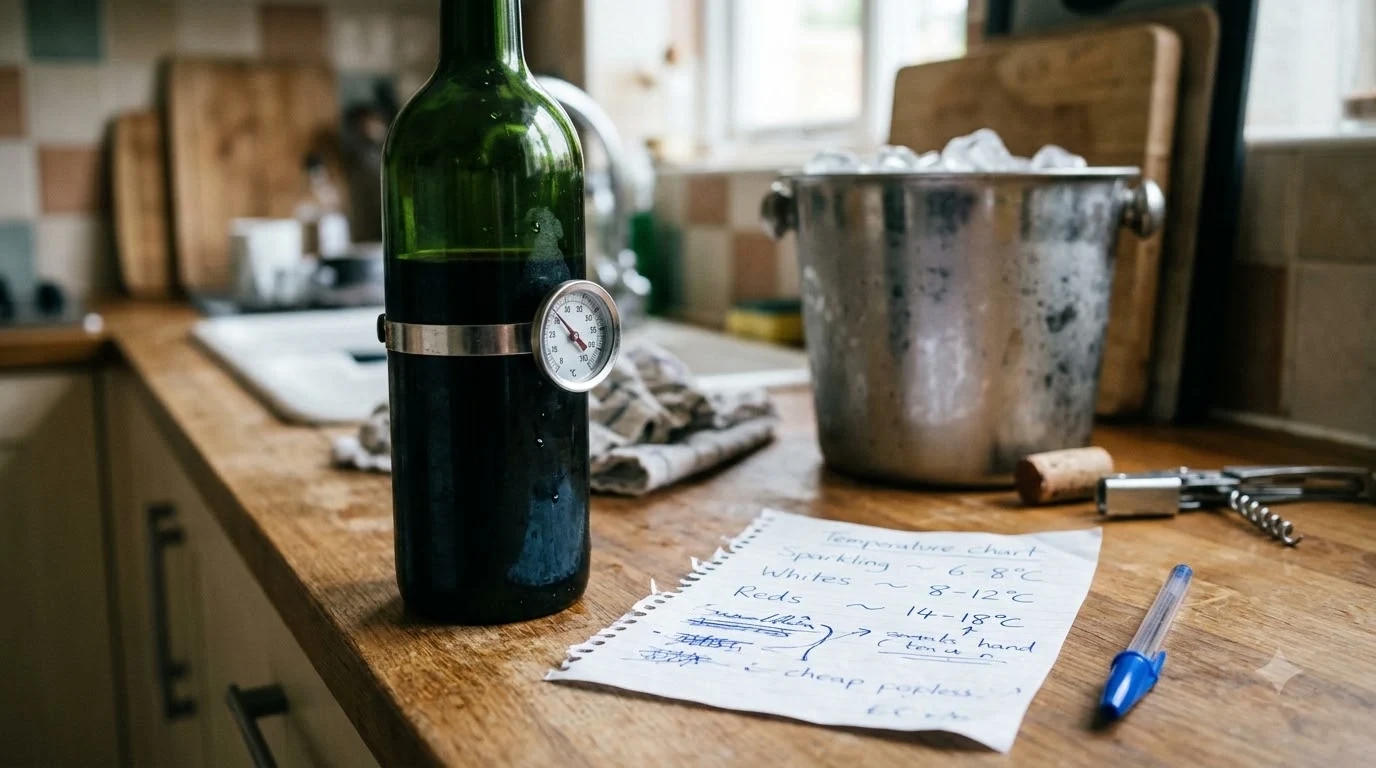
Ice wine is best served cool, not cold. Wine Folly gives a serving range of 45 to 55°F (7 to 12°C). In that range the sweetness and acidity stay balanced, and the aromas are easy to pick up. A bottle served too cold can taste flat and heavy in the mouth, while a bottle served too warm can make the sugar and alcohol dominate.
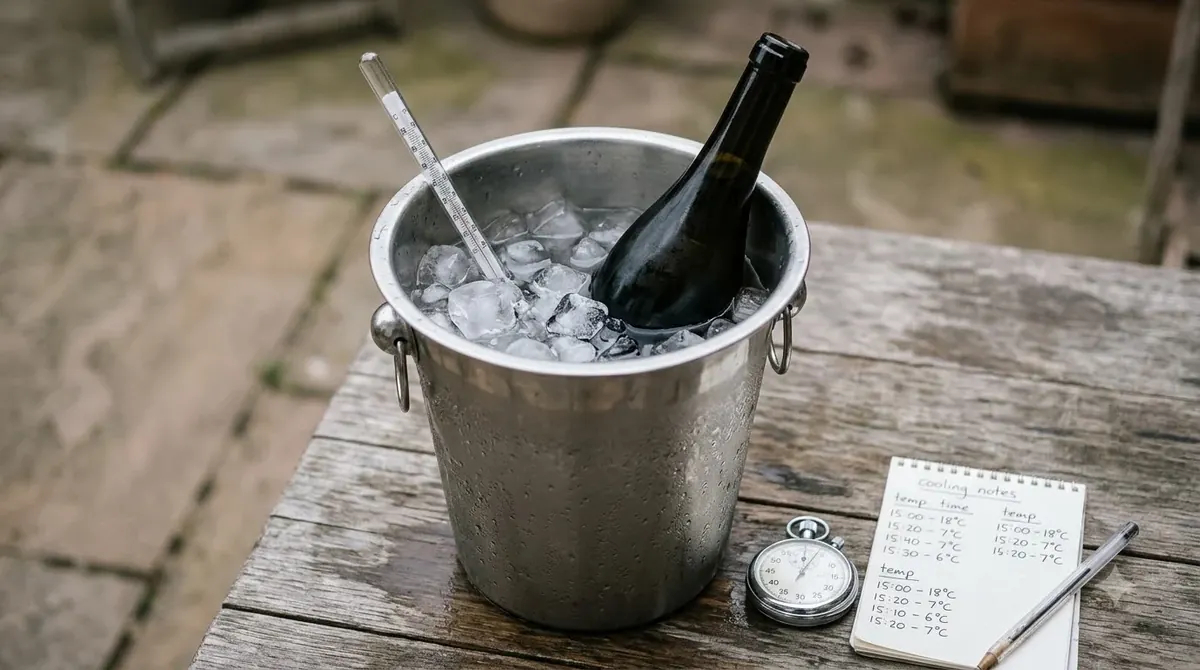
A practical approach is to move the bottle to the refrigerator about an hour before you plan to pour, then let the glass sit on the counter for a few minutes before serving. Do not place the bottle in the freezer to speed things up, since a very cold bottle is hard to judge by taste and the wine can end up tasting muted.
Glassware and How Much to Pour
Wine Folly lists a dessert glass as the recommended glass for ice wine. A small glass with a narrower bowl helps gather the aromas without letting them spread too quickly, and it keeps the serving size easy to control. A wide, open glass is less suited to a wine this sweet, because the aromas fade faster.
Pour only a small amount. Ice wine is rich, and a few sips can be enough for most people, especially after a meal. Many hosts pour a modest measure and let guests ask for more. Decanting is not needed. The wine does not require time to open up, and pouring it into a decanter adds nothing that the glass cannot provide.
| Factor | Recommendation | Why it matters |
|---|---|---|
| Serving temperature | 45 to 55°F (7 to 12°C) | Keeps sweetness and acidity in balance |
| Glass | Small dessert glass | Concentrates aromas and suits a small pour |
| Decanting | Not needed | The wine opens well in the glass |
| Cellaring window (unopened) | 3 to 5 years | Matches the window Wine Folly lists |
| Harvest condition | Grapes frozen on the vine | Concentrates sugar and acid in the juice |
Food Pairings That Work
Ice wine pairs best with desserts and cheeses that have some richness and contrast. Wine Folly suggests fruit-driven desserts, cheesecake, and ice cream. Each of these benefits from the wine’s acidity, which cleans the palate between bites and stops the sweetness from feeling heavy.
The same logic applies to other sweet wines. If you already know how to serve cabernet sauvignon at the table, you know that matching the wine’s weight to the food is the main goal, and ice wine follows the same rule with a much lighter, sweeter profile.
Soft cheeses such as Brie work well because their creamy texture meets the wine’s sweetness and acidity. Pungent cheeses such as Stilton offer a sharper contrast. The salt and blue flavor of the cheese stand up to the sugar, and the two tastes can make each other more interesting. A fruit tart with apricot or peach is a simple match for a glass of ice wine served with dessert.
Ice wine is usually a poor match for very spicy dishes, since heat can make the sweetness taste sharper and the alcohol more noticeable. If you plan a full meal, save the ice wine for the end.
Storage Before and After Opening
Wine Folly gives a cellaring window of 3 to 5 years for ice wine. That figure applies to unopened bottles kept in a cool, dark place away from heat and light. Unopened ice wine kept under those conditions can be stored until you are ready to serve it.
Once a bottle is open, the source does not give a shelf life, so it is best to treat it as a wine to finish within a reasonable time. Reseal the bottle tightly, keep it refrigerated, and check its color and smell before pouring. A change in color, a dull smell, or a flat taste is a sign the wine has declined. Smaller pours also help, since the bottle will be used across several servings rather than in one sitting.
For a broader look at how sweet wines differ, you can read our Wine by Type guide, which covers the main styles and how each one is usually enjoyed. Honey-based wines have their own serving habits, which are covered in how to serve mead.
Common Mistakes When Serving Ice Wine
The most common mistake is serving ice wine too cold. A bottle that goes straight from a very cold shelf to the glass can taste muted, and the sweetness may feel heavier than it should. Give the bottle time in the refrigerator, not the freezer, and let it warm slightly before pouring.
Another frequent error is pouring a large glass. Because ice wine is so concentrated, a generous pour can make the wine feel syrupy and tire the palate before dessert is finished. A small measure in a small glass lets each sip stay clear and lets the acidity do its job.
Some people also serve ice wine with food that is heavily spiced or very salty without tasting first. Heat can sharpen the sugar and make the alcohol stand out, while salt can flatten the fruit. Taste a small piece of the planned food with the wine before you serve the full course, and adjust the pairing if the flavors clash.
Finally, avoid leaving an open bottle on a sunny counter. Light and warmth shorten the life of any sweet wine, so reseal the bottle after each pour and return it to the refrigerator between servings.
Frequently Asked Questions
Does ice wine need to be decanted?
No. Ice wine does not need time to open up, so it can be poured directly from the bottle into a small dessert glass.
Should ice wine be served chilled?
Yes, but only lightly. Wine Folly gives a serving range of 45 to 55°F (7 to 12°C), which is cool rather than cold. Very cold wine can taste muted.
How long does ice wine last?
Wine Folly gives a cellaring window of 3 to 5 years for unopened bottles stored cool and dark. The source does not give a shelf life for opened bottles, so reseal it, refrigerate it, and check it before serving.
What glass is best for ice wine?
A small dessert glass is the usual choice. It gathers the aromas and makes a small pour easy to manage.
Ice wine rewards a simple approach. Serve it cool, use a small glass, pour modestly, and match it with fruit desserts or a bold cheese. With those steps, the wine’s sweetness and acidity stay in balance from the first sip to the last.
More in Wine Types & Grapes
 Zinfandel Sugar Content: Dry Red vs. White Zinfandel GramsUpdated Nov 21, 2026
 Best Zinfandel Substitute Options for Sipping and CookingUpdated Nov 21, 2026
 Zweigelt Food Pairing: Best Dishes, Cheeses, and Serving TipsUpdated Nov 21, 2026
 Zinfandel Tannins Explained: How Structure Shapes Every BottleUpdated Nov 21, 2026
 Zinfandel Sweetness Level: Dry Red vs. Sweet White Zin ExplainedUpdated Nov 21, 2026
 Xinomavro Food Pairing: Best Dishes, Styles, and Serving TipsUpdated Nov 21, 2026