

We may earn a commission when you buy through links on this page, at no extra cost to you. Learn more.
Underwood red wine is an approachable Oregon Pinot Noir made by Union Wine Company, offering bright fruit flavors, soft tannins, and convenient canned and bottled formats. Its character centers on cherry, strawberry, blackberry, and subtle earthy notes, with a dry finish that works well alongside everyday meals. The label also offers First Crush, a chillable red designed for casual drinking and serving cold.
Underwood has developed a recognizable place in Oregon’s everyday wine category by combining regional grape sourcing with practical packaging. Its red wines offer an accessible introduction to Pinot Noir without requiring an elaborate meal, a formal occasion, or specialized wine knowledge. Understanding the differences between its standard Pinot Noir and newer chillable red makes it easier to choose the right bottle or can for dinner, entertaining, or an outdoor gathering.
What Is Underwood Red Wine?
Underwood red wine is primarily an Oregon Pinot Noir produced by Union Wine Company. The label focuses on approachable wines that emphasize fresh fruit, balanced acidity, and practical everyday enjoyment rather than highly formal winemaking styles.
Union Wine Company was founded by Ryan Harms in 2005. The winery is based outside Portland in Oregon’s Willamette Valley, a region particularly associated with cool-climate Pinot Noir. Underwood is its flagship label, alongside other winery brands such as Amity Vineyards and Kings Ridge.
The standard Underwood red is Pinot Noir, a grape variety known for relatively delicate tannins, fresh acidity, and flavors that can range from red cherry and strawberry to darker berries, mushrooms, and forest-floor characteristics. This combination makes Pinot Noir versatile at the table and generally less imposing than fuller-bodied reds such as Cabernet Sauvignon or Syrah.
Underwood’s approach is based on sourcing grapes from multiple Oregon growing regions. Rather than relying exclusively on a single vineyard, the winery combines fruit from different locations to create a consistent, approachable house style. The vineyards contribute different elements, including fruit ripeness, acidity, aromatic character, and structure.
The label is also known for its packaging. Underwood Pinot Noir is available in conventional bottles and aluminum cans, allowing consumers to choose a format based on the occasion. The winery explains that its canned and bottled wines contain the same wine rather than separate recipes developed for different containers.
This distinction matters because canned wine sometimes carries an outdated reputation as a lower-quality alternative to bottled wine. Packaging alone does not determine quality. Grape variety, fruit condition, fermentation, blending, and storage all contribute to the finished wine.
Underwood’s identity is therefore relatively straightforward: Oregon-grown wine, a recognizable Pinot Noir foundation, accessible fruit flavors, and packaging designed for both home dining and informal occasions.
Grape Origins and Oregon Winemaking
Oregon’s diverse growing regions are central to Underwood Pinot Noir’s character. Its multi-region sourcing combines the freshness of the Willamette Valley with fruit contributions from the Umpqua Valley, Columbia Valley, and Rogue Valley.
The winery’s 2023 technical sheet provides a useful example of how the blend comes together. That vintage drew from four Oregon growing areas, with the Willamette Valley contributing the largest share. The proportions illustrate how a statewide blend can combine several regional expressions rather than presenting one vineyard’s individual character.
| Growing region | Share of 2023 blend | Contribution to the blend |
|---|---|---|
| Willamette Valley | 69% | Cool-climate freshness and aromatic character |
| Umpqua Valley | 17% | Fruit richness and additional structure |
| Columbia Valley, Oregon | 11% | Regional fruit diversity |
| Rogue Valley | 3% | Additional regional variation |
The Willamette Valley is particularly important because of its reputation for Pinot Noir. Its relatively cool growing conditions help preserve acidity and support the development of aromatic complexity. Pinot Noir from this region commonly shows red cherry, raspberry, cranberry, and earthy characteristics.
The Umpqua Valley, farther south, offers a different range of growing conditions. Its warmer areas can contribute riper fruit and additional body. Combining fruit from both regions allows a producer to work with a broader range of characteristics when building a balanced wine.
The Columbia Valley portion of the blend adds another geographical dimension. The Oregon portion of this region provides fruit from a different growing environment, contributing to the variety of sites available to the winemaking team.
Rogue Valley fruit represents a smaller percentage in the 2023 blend, but even a modest contribution can influence the finished wine. Blending decisions are not determined by percentage alone; fruit quality, ripeness, acidity, and aromatic intensity all matter.
For a closer look at the production details, the producer’s 2023 Underwood Pinot Noir technical sheet documents the regional percentages, cellar treatment, and analytical information.
Multi-region sourcing also helps explain why Underwood should be understood as an Oregon Pinot Noir rather than a single-appellation expression. Its purpose is to bring together different regional characteristics in an approachable finished wine.
Flavor Profile, Aroma, and Sweetness
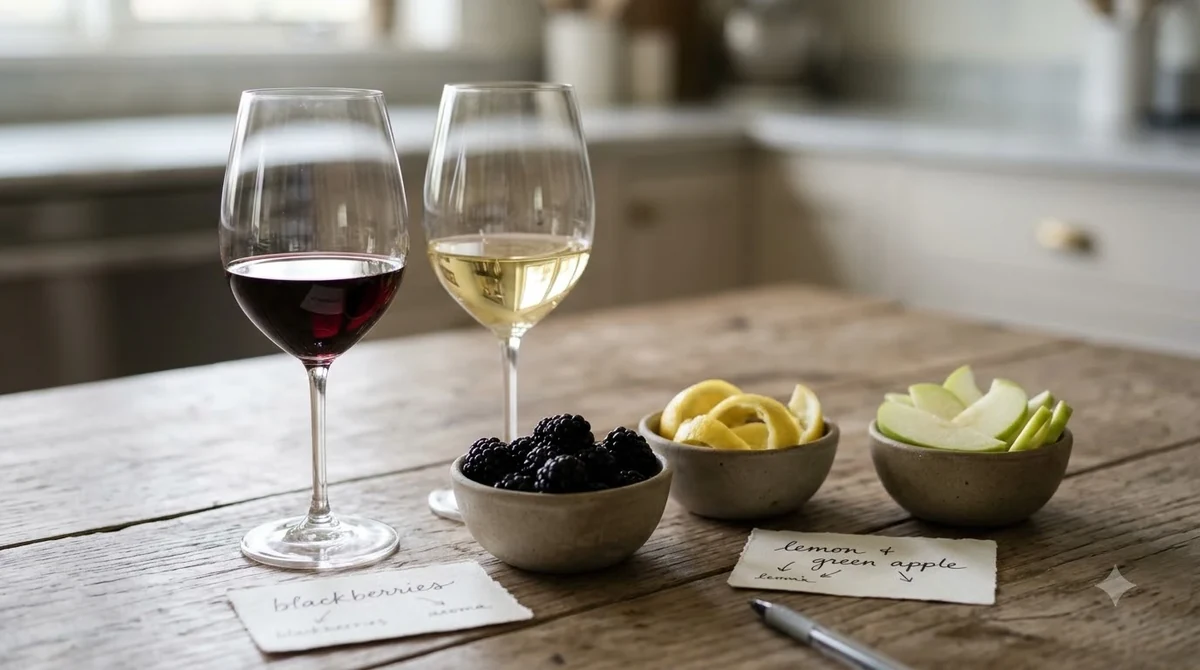
Underwood Pinot Noir is a dry red wine with fruit-forward aromas, moderate body, refreshing acidity, and relatively soft tannins. Its flavor profile can vary between vintages, but cherry, raspberry, strawberry, blackberry, and subtle earthy or spicy notes are useful reference points.
The producer’s 2023 technical sheet identifies strawberry, rhubarb, and fennel seed as the wine’s principal tasting notes. These descriptors suggest a red-fruited style with a gentle herbal dimension rather than a heavily concentrated or intensely tannic red.
Rhubarb contributes a tart, fresh impression, while strawberry provides a recognizable ripe-fruit character. Fennel seed introduces a subtle savory element that adds interest without making the wine taste heavily spiced.
Independent tasting assessments demonstrate that the wine’s character can shift depending on the vintage. Wine Enthusiast’s assessment of the 2023 bottling identified ripe blackberry, sweet black cherry, oak spices, and cedarwood. The publication awarded that vintage 87 points.
Its review of the 2022 bottling, meanwhile, described raspberry, strawberry, blackberry, and lively acidity, awarding it 88 points. These differences illustrate why the tasting notes for one vintage should not automatically be applied to every Underwood bottle.
Is Underwood Pinot Noir sweet?
No. Standard Underwood Pinot Noir is generally classified as dry, meaning it is not intended to taste like a sweet red wine. Ripe fruit aromas can create an impression of sweetness, but that does not mean the wine contains substantial residual sugar.
The 2023 technical sheet specifically describes the wine as dry. Its reported total acidity of 5.9 grams per liter and pH of 3.64 provide additional information about its chemical composition and structure.
Oak treatment also influences the overall impression. French oak can introduce subtle baking-spice, cedar, and vanilla-like characteristics, depending on the amount of new wood used and the duration of aging. These flavors contribute complexity without necessarily making the wine sweeter.
For drinkers who prefer light-to-medium-bodied reds, Underwood offers a more approachable alternative to highly structured Cabernet Sauvignon. Pinot Noir typically has lower-to-medium tannin levels and higher acidity, making it suitable for a wide range of meals.
Alcohol Content, Bottle Sizes, and Canned Formats
Underwood Pinot Noir generally falls within the 12% to 13% alcohol-by-volume range, although the exact figure can differ by vintage and bottling. The 2023 producer technical sheet lists 12% ABV for its 250 mL format, while Wine Enthusiast records 13% ABV for the reviewed 750 mL 2023 bottle.
Alcohol content is useful when comparing wines because it provides an indication of their relative alcoholic strength. It does not independently determine body, sweetness, or quality, but it helps establish expectations about the overall drinking experience.
Underwood’s smaller formats are particularly practical for people who want an individual serving rather than opening an entire bottle. Its product range has included 250 mL and 355 mL cans, as well as standard 750 mL bottles.
| Format | Volume | Approximate 5 oz servings | Typical use |
|---|---|---|---|
| Small can | 250 mL | 1.7 | Individual serving |
| Standard can | 355 mL | 2.4 | Sharing or two generous pours |
| Standard bottle | 750 mL | 5 | Dinner or small gathering |
These serving estimates use a standard 5-ounce wine pour. Actual servings depend on the amount poured, so a can should not automatically be treated as one serving simply because it comes in an individual container.
The 250 mL can is useful for a smaller portion, while a 355 mL can contains slightly more than two standard 5-ounce servings. A 750 mL bottle remains the conventional option for a meal with several people.
The aluminum packaging offers several practical advantages. Cans are lighter than glass bottles, do not require a corkscrew, and are easier to transport for picnics, camping trips, and outdoor meals. They also protect the wine from direct light.
Packaging does not eliminate the importance of proper storage. Unopened cans should be kept away from excessive heat and direct sunlight. Bottled wine should likewise be stored in a cool, stable environment rather than in a warm kitchen or exposed location.
There is also no requirement to drink canned Pinot Noir directly from its container. The winery recommends using an open glass when the goal is to experience the wine’s aromas more fully.
How to Serve Underwood Red Wine
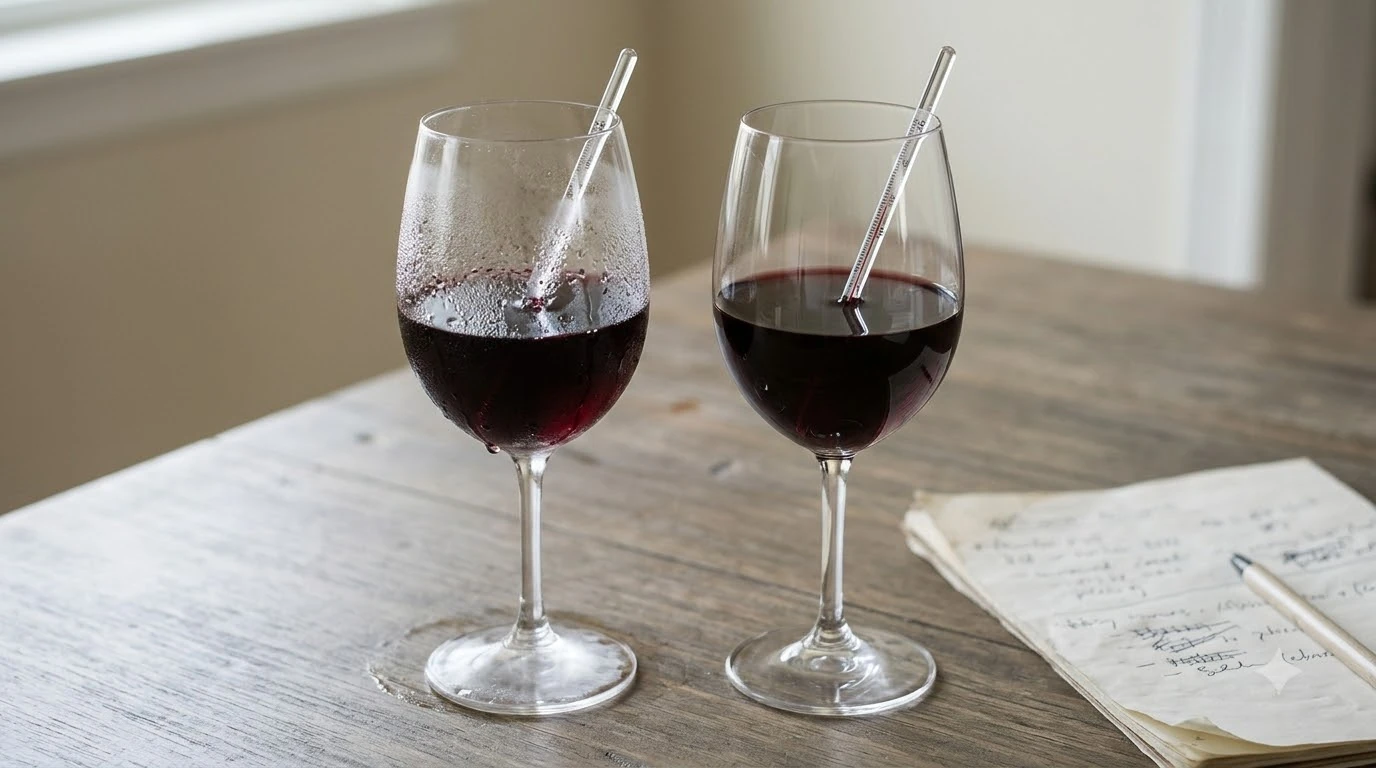
Underwood Pinot Noir is best served slightly cool rather than warm. A temperature of approximately 55–60°F suits its lighter body, fresh fruit character, and moderate tannin structure.
Serving temperature can make a noticeable difference. If Pinot Noir is served too warm, its alcohol can become more prominent and the fruit may seem less fresh. If it is excessively cold, its aromas can become muted and its acidity may appear sharper.
For a bottle stored at normal room temperature, a short period in the refrigerator can bring it closer to the ideal serving range. The exact cooling time depends on the starting temperature and the refrigerator, so checking the wine’s temperature is more reliable than following a fixed schedule.
For canned Underwood Pinot Noir, refrigeration is especially convenient. The can can be chilled before serving, then poured into a glass or enjoyed directly from the container.
Tip: Chill standard Underwood Pinot Noir to approximately 55–60°F before serving. For First Crush, follow its intended chillable-red style and serve it colder. Pouring either wine into a suitable glass helps release its aromas.
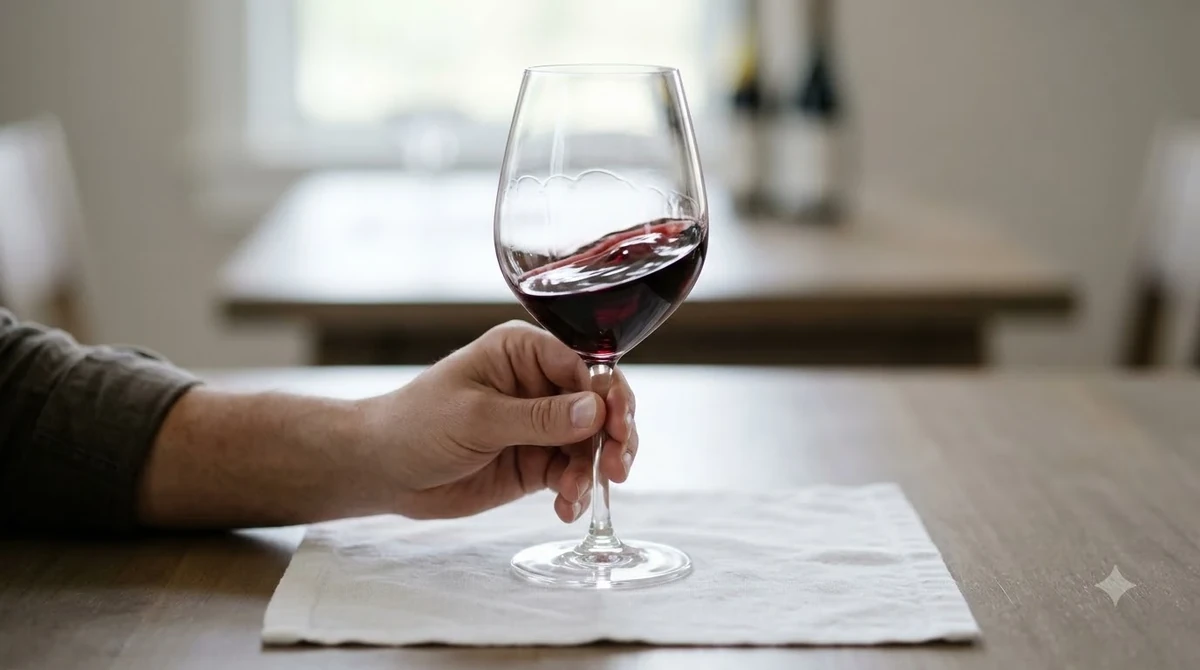
Glassware does not need to be complicated. A medium-sized red wine glass with a reasonably wide bowl gives Pinot Noir room to release its aromas. The opening should be wide enough to allow the drinker to notice the wine’s red-fruit and earthy characteristics.
Decanting is generally unnecessary for this approachable style. Young, full-bodied reds sometimes benefit from 30–60 minutes of aeration, but a lighter Pinot Noir usually needs less intervention. Simply opening the bottle and allowing it to breathe briefly is sufficient for most casual meals.
If the wine is being served over several hours, avoid leaving the bottle beside a hot stove, in direct sunlight, or near a heat source. Temperature stability is more important than elaborate serving equipment.
Once opened, a still red wine generally keeps for approximately three to five days in the refrigerator when properly sealed. Smaller containers can help reduce the amount of air in contact with leftover wine.
For canned wine, the winery recommends transferring leftovers into an airtight container or using a suitable can stopper, then refrigerating and drinking the remaining wine within one or two days.
Best Food Pairings for Underwood Pinot Noir
Underwood Pinot Noir pairs particularly well with poultry, pork, mushrooms, roasted vegetables, and moderately rich dishes. Its fresh acidity and relatively soft tannins allow it to complement food without overpowering delicate ingredients.
Pinot Noir is a useful choice for meals that contain both savory and earthy flavors. Its red-fruit character works with roasted chicken, while its acidity helps balance the richness of duck, pork, and dishes containing butter or cream.
Meat and poultry
Roasted chicken is one of the most reliable pairings. The wine’s cherry and strawberry characteristics complement the browned skin, herbs, and savory juices. A simple roast seasoned with rosemary, thyme, garlic, and black pepper makes a particularly suitable match.
Grilled pork tenderloin is another good option. Pork has enough flavor to stand alongside Pinot Noir without requiring the stronger tannin structure associated with Cabernet Sauvignon. A preparation with mushrooms, herbs, or a moderate fruit glaze can work especially well.
Duck breast also makes an excellent pairing. Its richer texture and savory flavor complement Pinot Noir’s fruit and acidity. A cherry-based sauce can reinforce the wine’s fruit character, provided the sauce is not excessively sweet.
Vegetarian dishes and mushrooms
Mushrooms are especially compatible with Pinot Noir because their earthy, savory flavors complement the grape’s characteristic secondary aromas. Mushroom risotto, roasted portobello mushrooms, and pasta with sautéed cremini mushrooms are all suitable choices.
Roasted vegetables also work well. Consider eggplant, carrots, beets, and zucchini seasoned with olive oil and herbs. Their caramelized edges provide savory depth while the wine’s acidity keeps the overall combination from feeling too heavy.
Cheese and casual meals
For cheese, consider Brie, Gruyère, mild aged Gouda, and other moderately rich varieties. These cheeses provide enough fat and texture to complement Pinot Noir’s fruit without overwhelming its relatively delicate structure.
Pizza is another practical match. Mushroom pizza, roasted vegetable pizza, and versions topped with sausage or moderate amounts of cheese are particularly suitable. Tomato sauce brings acidity, so choosing a wine with similarly fresh acidity helps maintain balance.
Burgers can work well too, especially when served with caramelized onions, mushrooms, or aged cheese. The wine’s moderate tannins make it a less demanding companion than a strongly tannic red.
Pairings to approach carefully
Very spicy dishes can make alcoholic wines seem hotter, especially when the food contains strong chili heat. Underwood Pinot Noir is therefore generally better suited to mildly spiced dishes than intensely hot preparations.
Highly acidic sauces also require attention. Tomato-based meals are often compatible with Pinot Noir, but very sharp vinegar-heavy dressings can make the wine seem less balanced.
Oily fish is another pairing to approach carefully with red wine. Salmon prepared with mushrooms or roasted vegetables may work in some combinations, but strongly tannic reds are generally less suitable for oily fish than lighter, fresher wines.
The general principle is to match the wine’s moderate body and fresh acidity with food of similar intensity. Underwood Pinot Noir is most successful with meals that allow its fruit and savory characteristics to remain noticeable.
For readers comparing other everyday options, exploring Underwood white wine can help identify a lighter alternative for seafood, salads, and meals where a red wine would feel too substantial. Those interested in a broader overview of producers can also browse the site’s Wine Brands section.
Underwood First Crush and Other Red Wine Comparisons
Underwood’s standard Pinot Noir is not the only red wine associated with the label. First Crush offers a different drinking experience, emphasizing chilled service, bright fruit, and an informal style that is distinct from a conventional red served at cellar temperature.
Introduced in February 2026, First Crush combines grapes from Oregon’s Willamette Valley and Umpqua Valley. The producer describes the blend as drawing on the Willamette’s cool-climate finesse and the Umpqua’s additional warmth and structure.
Its tasting profile includes pomegranate, red currant, and black peppercorn. These characteristics give the wine a fresh, fruit-driven personality while maintaining a savory dimension. The producer specifically describes it as fruity without being sweet.
The biggest difference is serving style. Standard Underwood Pinot Noir is generally served at 55–60°F, whereas First Crush is designed to be chilled. This makes First Crush a natural choice for warmer weather, casual outdoor gatherings, and occasions when a cooler red wine is more appealing.
Another Underwood variation is Nouveau Pinot Noir. This style takes inspiration from Beaujolais Nouveau and emphasizes fresh fruit rather than extended oak development. The producer’s 2023 Nouveau technical sheet identifies cherry, plum, and currant flavors, with 100% stainless-steel cellar treatment and 11% ABV.
Nouveau is a particularly useful example of how different winemaking techniques influence the final character of Pinot Noir. Carbonic or semi-carbonic fermentation techniques can emphasize fresh, juicy fruit and produce an immediately approachable style.
These different expressions can be understood through their intended drinking experiences:
- Standard Underwood Pinot Noir: A dry, fruit-forward Oregon red suited to meals, casual dinners, and everyday drinking.
- Underwood First Crush: A chillable red emphasizing pomegranate, red currant, and black peppercorn.
- Underwood Nouveau Pinot Noir: A fresh, youthful expression featuring cherry, plum, and currant characteristics.
For people who prefer a traditional bottle and a more structured red, the standard Pinot Noir is the logical starting point. First Crush is more suitable for those who enjoy chilled reds, while Nouveau offers a fresher, early-drinking style.
Underwood should also be distinguished from brands that specialize in other grape varieties and regions. For example, readers researching Baron Philippe de Rothschild wine will encounter a broader range of wines and regional styles rather than the Oregon-focused Pinot Noir identity that defines Underwood.
The important distinction is not that one format or style is automatically superior. Instead, the choice depends on whether the drinker wants a conventional food-friendly Pinot Noir, a chilled red, or a lighter, youthful expression.
Frequently Asked Questions
Is Underwood Pinot Noir made from 100% Pinot Noir grapes?
The standard Underwood Pinot Noir is identified as Pinot Noir, rather than a red blend. Its 2023 technical sheet describes vineyard contributions from four Oregon growing regions. The producer’s 2023 Nouveau technical sheet separately identifies that wine as 100% Pinot Noir.
Does Underwood red wine contain added flavoring?
Union Wine Company describes its wines as grape-based wines rather than flavored wine beverages. The standard Pinot Noir’s listed flavor characteristics come from the grapes, fermentation, and cellar treatment. Its French oak aging can also contribute additional aromatic characteristics.
Can Underwood red wine be aged for several years?
Underwood Pinot Noir is primarily intended for approachable everyday drinking rather than extended cellar aging. Its fruit-forward style is generally best enjoyed while its fresh fruit characteristics remain prominent. Long-term storage should not be assumed to improve every vintage.
Does Underwood wine use sustainable production practices?
Union Wine Company reports that its winery holds LIVE certification, a Pacific Northwest program addressing areas such as soil health, water quality, and integrated pest management. The company also identifies itself as B Corp certified, reflecting broader social and environmental business standards.
Where can consumers find Underwood Pinot Noir?
Union Wine Company distributes its wines through retailers and restaurants across the United States. The winery provides an online Wine Finder that helps consumers identify stores and restaurants carrying its products. Availability of specific vintages and packaging formats can differ by location.
Underwood red wine offers an approachable way to enjoy Oregon Pinot Noir, with fresh fruit, moderate structure, and versatile food-pairing potential. Its standard Pinot Noir is a dependable choice for everyday meals, while First Crush and Nouveau provide alternatives for drinkers who prefer chilled or especially youthful red wines. Choosing the right format and serving temperature makes it easier to enjoy each expression in the setting for which it was designed.
More in Wine Brands
 Underwood Wine Price: Compare Bottles, Cans, and Pack SizesUpdated Nov 21, 2026
 Zenato Wine Price: Compare Styles and Choose the Right BottleUpdated Nov 21, 2026
 Zuccardi Wine Price: Compare Bottles and Find the Right RangeUpdated Nov 21, 2026
 Yellow Tail Moscato Review: Taste, Sweetness and Serving TipsUpdated Nov 21, 2026
 Wolf Blass Yellow Label Review: Choose Your Best StyleUpdated Nov 21, 2026
 Wolffer Estate Rose Review: Choose the Right Bottle for Your TableUpdated Nov 21, 2026