

We may earn a commission when you buy through links on this page, at no extra cost to you. Learn more.
Trollinger grape is a red variety that is best known in Germany’s Württemberg region, where it makes light, fresh wines with soft fruit and moderate acidity. The same grape goes by other names in Italy, including Schiava and Vernatsch, and its wines are usually meant to be drunk young. If you want a red that is easy to drink and not heavy with tannin, Trollinger is worth knowing.
Trollinger does not show up on many wine lists outside German-speaking countries, which is one reason it is often misunderstood. It can look like a close relative of other red grapes, but its style is lighter and more approachable than many people expect. This guide covers where the grape came from, what its wines taste like, where it grows, how the vine behaves, and how to serve and pair it.
Where the Trollinger grape came from
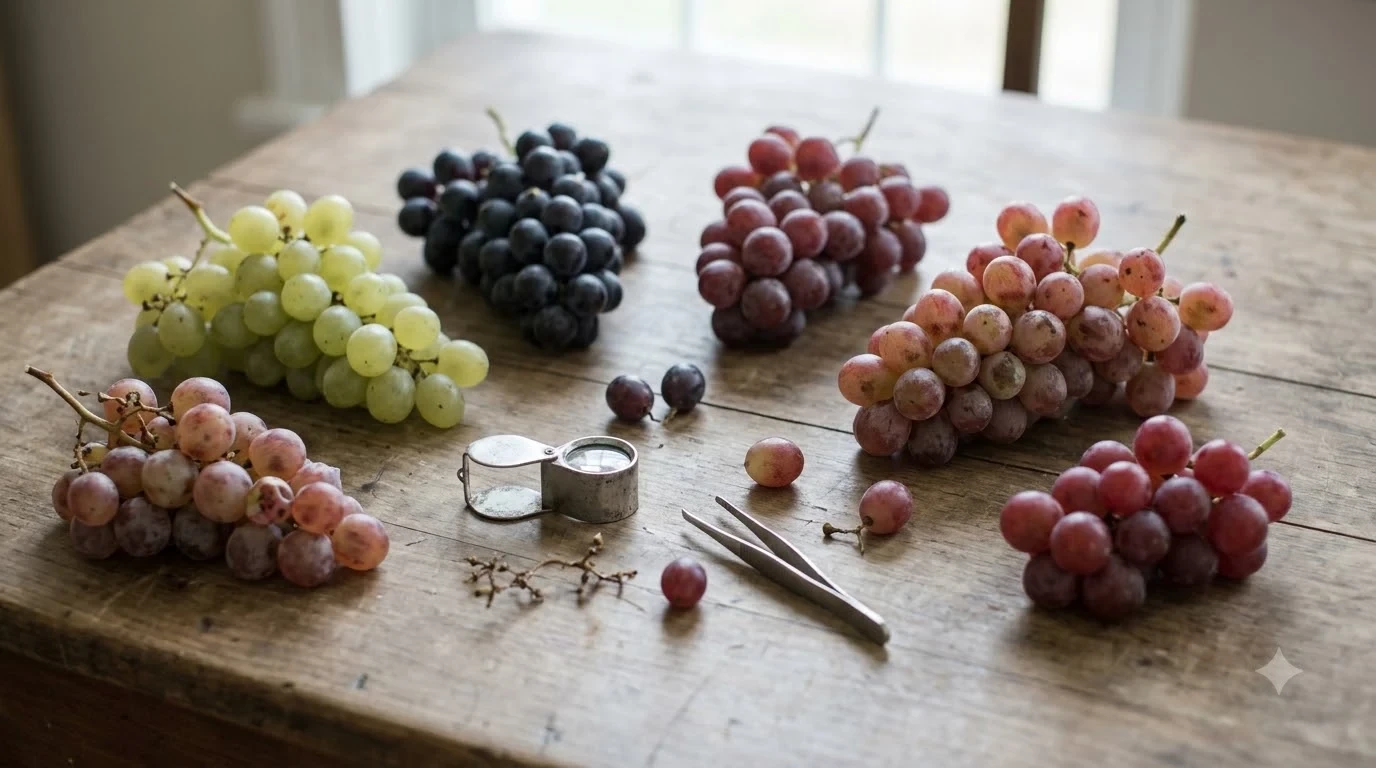
Trollinger has a long and tangled history under several names. According to the Wikipedia entry on the variety, it likely originated in South Tyrol and Trentino, though the origin is still recorded with a question mark in some sources. In Germany it is called Trollinger, in South Tyrol it is called Vernatsch, and in other Italian regions it is called Schiava. As a table grape it is sometimes known as Black Hamburg, which is a name you may see on fruit labels rather than wine bottles.
The grape is also part of several crosses. Black Muscat is a cross of Trollinger and Muscat of Alexandria. Kerner, a cross of Trollinger and Riesling, was bred in 1929 and released for general cultivation in 1969. A 2010 DNA analysis suggested that Uva Tosca may be a natural cross involving Trollinger or Schiava Grossa. These family links help explain why Trollinger is useful to breeders, even though most people meet it only as a single-variety red.
The different names can be confusing when you read wine labels. A bottle labeled Schiava from Italy and a bottle labeled Trollinger from Württemberg both come from the same grape family, but they are made in different places and often taste different. Checking the producer and region matters more than the name alone.
Flavor and wine styles
Wine expert Oz Clarke, as cited on Wikipedia, describes Trollinger as having moderate acidity and producing light-bodied wines with strawberry notes and subtle smoky notes. That description fits what most drinkers find in a glass: fresh red fruit, a soft texture and little of the grip you get from heavier reds.
Most Trollinger wines are red, though some producers make dark rosés as well. The Württemberg wines are often slightly sweet, which softens the acidity and makes them easy to drink on their own. Wikipedia notes that these wines are usually drunk within a year of the vintage, because they are not built to age for a long time.
Italian Schiava is similarly light, but it tends to be drier and more acidic than the German style. That difference is a good reason to read the label carefully. If you like a red that is fresh and crisp, look for an Italian Schiava or Vernatsch. If you prefer a softer, slightly rounder glass, a German Trollinger from Württemberg may suit you better.
Where Trollinger grows
Germany is the grape’s most important home today. Wikipedia reports that nearly 2,300 hectares of Trollinger are planted in Germany, mostly around Stuttgart and in the Neckar valley. Nearly a third of the plantings in Württemberg are Trollinger, which makes the grape a regional signature rather than a niche variety.
In Italy, the grape is permitted in several DOC designations, including Santa Maddalena in South Tyrol. Wikipedia describes the Santa Maddalena rules as requiring at least 90 percent of the blend to be this grape, with yields capped at 12.5 tonnes per hectare and a minimum alcohol level of 11.5 percent. Those are regulatory limits rather than typical results, but they show how carefully the grape is managed in that region.
If you are shopping, the region on the label is the best guide. Württemberg Trollinger tends to be softer and slightly sweet, while South Tyrolean Schiava is usually drier. Both are easy to find in specialty wine shops that carry German or Italian reds.
How the vine behaves in the vineyard
The grape’s behavior in the vineyard shapes the style of the wine. Its moderate acidity is one of the traits that shape the finished wine. Growers who want more concentration usually keep yields in check, because a vine that carries too much fruit can give thinner wine.
Because the wines are light-bodied, many drinkers find them easier to enjoy with a slight chill, which keeps the fresh fruit bright.
The regulatory limits for Santa Maddalena show how much attention the grape receives in Italy. A high minimum share in the blend and a capped yield help protect quality, so the grape is not simply pushed for quantity in that zone.
How to serve and pair Trollinger
Serve Trollinger lightly chilled, around cellar temperature or a little cooler, rather than at full room temperature. This keeps the fruit clean and makes the acidity feel lively. Use a standard red wine glass, since the wine is light enough to benefit from a glass that lets the aroma rise without overwhelming it.
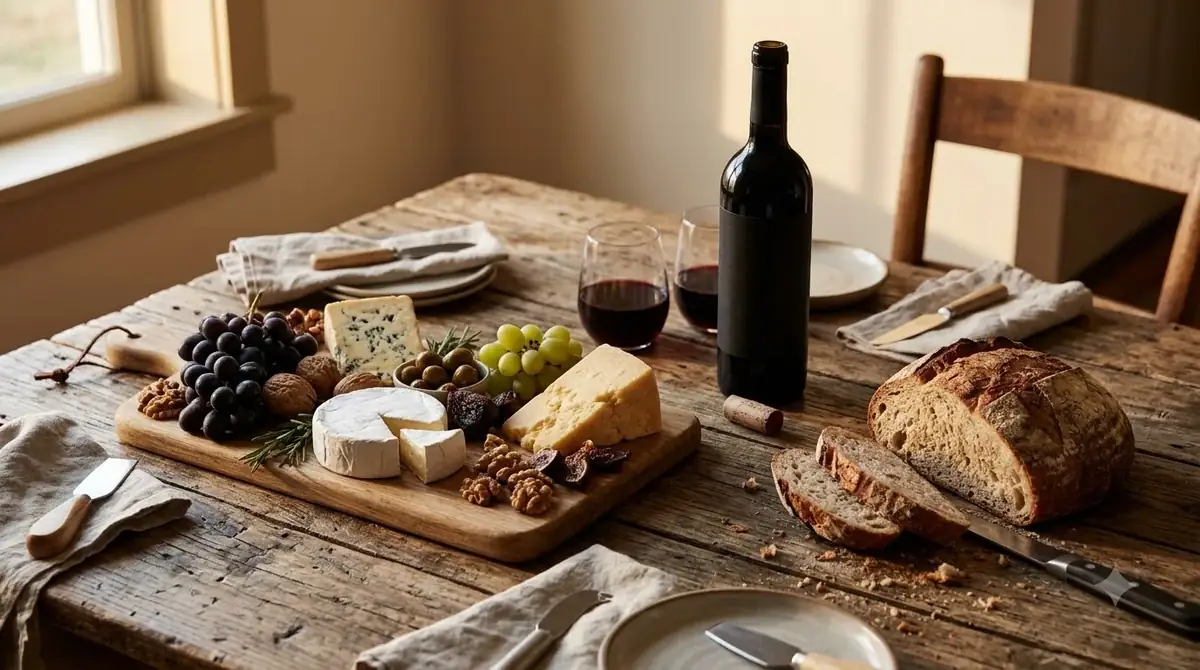
Because the wine is fresh and not heavy, it works with a wide range of simple foods. German dishes such as sausages, roast pork and potato salad suit the wine well. Lighter fare like roast chicken, cold cuts and mild cheeses also pair nicely. Because the wine is lighter than a bold red, it can suit some dishes that heavier reds overwhelm, though it is still a red wine, so pick the dish with care.
For a relaxed dinner at home, Trollinger can be a sensible choice to open alongside a simple meal, especially when the group wants a red that does not dominate the table. Pour a small glass first, then judge whether the fresh fruit suits the food. Many people find that a light red keeps conversation flowing better than a heavy wine would.
If you want a red with more structure for a richer meal, look at Nebbiolo, which brings firm tannin and more depth. For a more famous Italian red with fuller body, Brunello di Montalcino is the other direction. Trollinger sits in a lighter, more casual place between those two styles.
| Name | Where you will see it | What it usually means |
|---|---|---|
| Trollinger | German wine labels, especially Württemberg | Light, slightly sweet red that is best drunk young |
| Schiava | Italian wine labels | Drier and more acidic red, often from the Alto Adige |
| Vernatsch | South Tyrol labels | The South Tyrolean name for the same grape |
| Black Hamburg | Table grape markets | Name used for the grape as fruit rather than wine |
Tip: Trollinger is at its best young. If a bottle is several years old, it may have lost the fresh fruit that makes the style appealing, so buy recent vintages when you can.
Frequently Asked Questions
Is Trollinger a red or white grape?
Trollinger is a red grape. Most of its wine is red, although some producers make dark rosés as well.
Is Trollinger the same as Schiava?
Yes, they are the same grape under different names. Trollinger is the German name, Vernatsch is used in South Tyrol, and Schiava is used in other Italian regions. The wines can taste different depending on where they are made.
What does Trollinger taste like?
Trollinger is usually light-bodied with moderate acidity. Wikipedia cites Oz Clarke describing strawberry notes and subtle smoky notes, and the wines are typically fresh and easy to drink.
Should you age Trollinger wine?
Usually not for long. Wikipedia notes that Württemberg Trollinger is typically drunk within a year of the vintage, so it is best enjoyed young to keep its fresh fruit.
Trollinger is a good red to explore if you want something lighter than the classics. For a broader look at how grape families and styles fit together, the Wine by Type guide is a useful next stop. If you want to compare a firmer red, the Nebbiolo grape guide shows how a grape with more tannin behaves, and Brunello di Montalcino covers a more structured Italian red. The Wikipedia entry on Trollinger is a good place to read the grape’s history and crosses in more detail.
More in Wine Types & Grapes
 Zinfandel Sugar Content: Dry Red vs. White Zinfandel GramsUpdated Nov 21, 2026
 Best Zinfandel Substitute Options for Sipping and CookingUpdated Nov 21, 2026
 Zweigelt Food Pairing: Best Dishes, Cheeses, and Serving TipsUpdated Nov 21, 2026
 Zinfandel Tannins Explained: How Structure Shapes Every BottleUpdated Nov 21, 2026
 Zinfandel Sweetness Level: Dry Red vs. Sweet White Zin ExplainedUpdated Nov 21, 2026
 Xinomavro Food Pairing: Best Dishes, Styles, and Serving TipsUpdated Nov 21, 2026