

We may earn a commission when you buy through links on this page, at no extra cost to you. Learn more.
Trollinger wine is a light-bodied, pale ruby red wine made from the Trollinger grape, grown almost exclusively in Germany’s Württemberg region and known in northern Italy as Schiava or Vernatsch. It delivers bright aromas of strawberry, sour cherry, and red currant with gentle tannins and crisp, refreshing acidity. Best served slightly chilled and drunk young within a few years of harvest, it serves as the everyday tavern red of southwestern Germany.
While German vineyards are famous worldwide for crisp Riesling, the sunny slopes around Stuttgart tell a very different story. Here, red grapes dominate the landscape, and no variety shapes local dining tables quite like Trollinger. Whether poured from a traditional quarter-liter glass in a Swabian wine tavern or sipped chilled on a summer patio, this approachable red sits alongside other light, fruit-forward Wine by Type options that prize freshness over heavy oak.
What Is Trollinger Wine?
Trollinger is a thin-skinned, late-ripening red Vitis vinifera grape variety that produces pale, transparent, low-tannin red and rosé wines built for easy everyday drinking. In the glass, its light brick-red to translucent ruby hue can almost resemble a dark rosé rather than a full-bodied red.
The variety originated in northern Italy’s South Tyrol (Alto Adige) region, where growers still cultivate it under the names Schiava and Vernatsch. Historical records trace the vine’s arrival in southwestern Germany to at least the fourteenth century, with its German name likely evolving from “Tirolinger,” meaning a grape from Tyrol. Over centuries of cultivation along the Neckar River, the vine adapted so thoroughly to local slopes that Swabian winemakers treat it as an indigenous staple. Elsewhere in the world, the exact same grape is prized as a sweet, juicy table grape known as Black Hamburg, and breeders famously crossed it with Muscat of Alexandria to create Black Muscat.
According to German Wines USA, the vast majority of Trollinger bottlings are crafted to showcase clean, lively red berry fruit rather than dense extraction or heavy barrel aging. Because the berries grow large and carry relatively little pigment in their skins, winemakers rarely try to force the grape into a blockbuster mold. Instead, Trollinger occupies a cultural role similar to Beaujolais in France—an unpretentious, convivial pouring wine meant to be shared generously with friends rather than cellared for decades.
Flavor Profile and Winemaking Styles
Classic Trollinger wine bursts with primary red fruit flavors—most notably wild strawberry, tart cherry, raspberry, and red currant—backed by subtle floral notes and a clean, brisk finish. Its light body, low tannin grip, and moderate alcohol levels (typically around 11 to 13 percent ABV) make it remarkably refreshing on the palate.
In Germany, producers bottle Trollinger across a spectrum of sweetness and structural styles to suit different meals and local traditions:
- Trocken (Dry): Fermented completely dry, this crisp style emphasizes tart cherry, cranberry, and subtle earthy or almond-skin notes on the finish.
- Feinherb or Halbtrocken (Off-Dry): Leaving a touch of natural residual sugar rounds out the grape’s brisk natural acidity, highlighting ripe strawberry and red raspberry flavors.
- Trollinger mit Lemberger: Württemberg’s most beloved local blend pairs Trollinger’s bright, juicy lightness with Lemberger (Blaufränkisch), which contributes deeper color, black pepper spice, and firmer tannin structure.
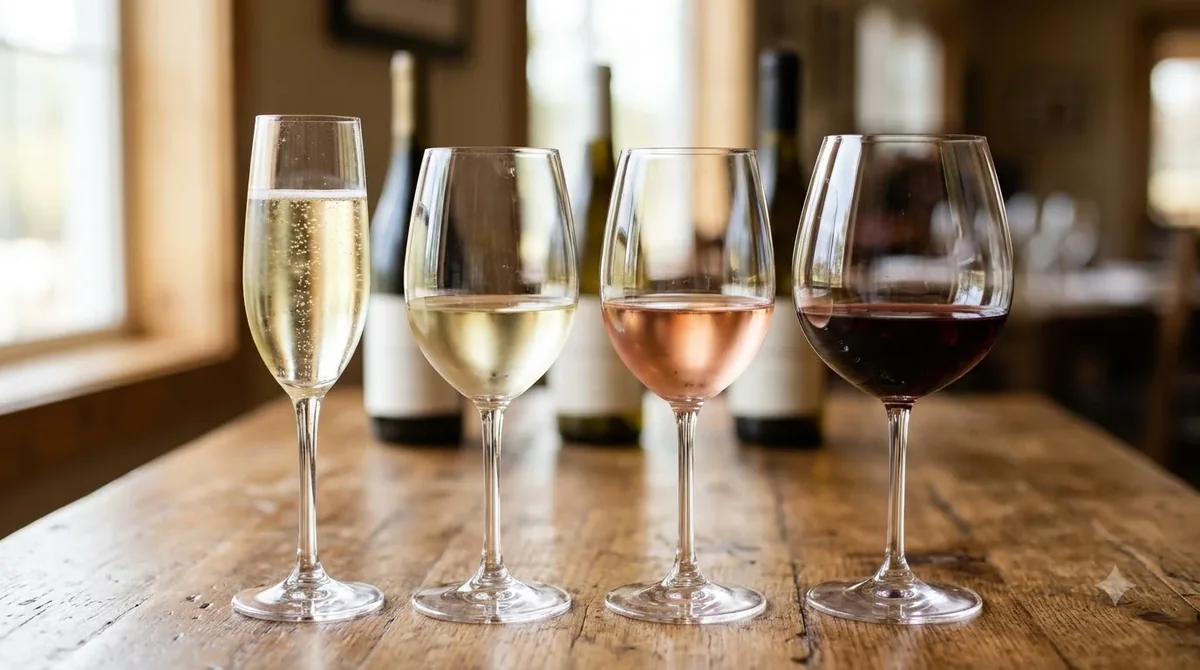
- Trollinger Rosé and Blanc de Noirs: Pressed quickly off the skins, these pale pink or white-vinified bottlings lean into crunchy watermelon, red currant, and citrus zest.
- Old-Vine and Steillage Bottlings: Harvested from steep, low-yielding hillside vineyards and occasionally aged in large traditional oak casks, these serious selections offer greater concentration, subtle spice, and finer mineral definition.
Reviewers at Wine Enthusiast point out that while basic cooperative pours can seem modest at first glance, carefully farmed examples from top estates reveal compelling precision, floral lift, and savory depth. Compared to the darker, structured bottlings familiar to fans of pinot noir carbs and dry cool-climate reds, standard Trollinger feels noticeably lighter, juicier, and less tannic, making it effortless to sip on its own.
| Style / Expression | Color & Body | Key Tasting Notes | Sweetness & Structure |
|---|---|---|---|
| Classic Dry Trollinger (Trocken) | Pale ruby; light-bodied | Sour cherry, red currant, bitter almond | Dry, crisp acidity, very low tannins |
| Off-Dry Trollinger (Feinherb) | Translucent red; light-bodied | Wild strawberry, raspberry, rose petal | Subtle residual sweetness, soft and juicy |
| Trollinger mit Lemberger | Medium ruby; light-to-medium body | Red berries, dark cherry, cracked pepper | Dry or off-dry, firmer tannins, balanced grip |
| South Tyrolean Schiava / Vernatsch | Light garnet-ruby; light-bodied | Cranberry, alpine herbs, wet stone, marzipan | Bone-dry, brisk alpine acidity, mineral finish |
Where Trollinger Grows
More than 90 percent of all German Trollinger vineyards are concentrated in Württemberg, a sunny, sheltered wine region stretching along the Neckar River valley between Stuttgart and Heilbronn. Outside Germany, the identical grape thrives across northern Italy’s Alto Adige (South Tyrol) and Trentino provinces under the names Schiava and Vernatsch.
Württemberg stands apart from the rest of Germany because roughly 70 percent of its vineyard area is dedicated to red varieties, with Trollinger serving as the region’s signature grape. Although Trollinger produces a simple, carefree wine in the glass, it demands serious care in the vineyard. Because the vine buds early and ripens very late—often harvested well after Riesling—it struggles in cool, frost-prone flatlands. Growers reserve warm, south-facing steep terraced slopes (known locally as Steillagen) along the Neckar and Rems rivers, where heat-retaining limestone and marl soils help the large clusters reach full phenolic ripeness.
Historically, local winegrowers’ cooperatives have vinified the lion’s share of Württemberg’s Trollinger, supplying fresh, reliable liters to neighborhood taverns called Besenwirtschaften (broom taverns). Today, a wave of ambitious family estates—including Weingut Aldinger, Weingut Schnaitmann, Weingut Knauß, and Weingut Graf Neipperg—has transformed the grape’s reputation by strictly limiting yields and farming older vines organically. Across the Alps in Alto Adige, Italian producers craft Schiava around Lake Caldaro (Kalterersee) and Santa Maddalena, producing slightly drier, more mineral-driven expressions that mirror their German cousins in lightness and charm.
How to Serve Trollinger Wine
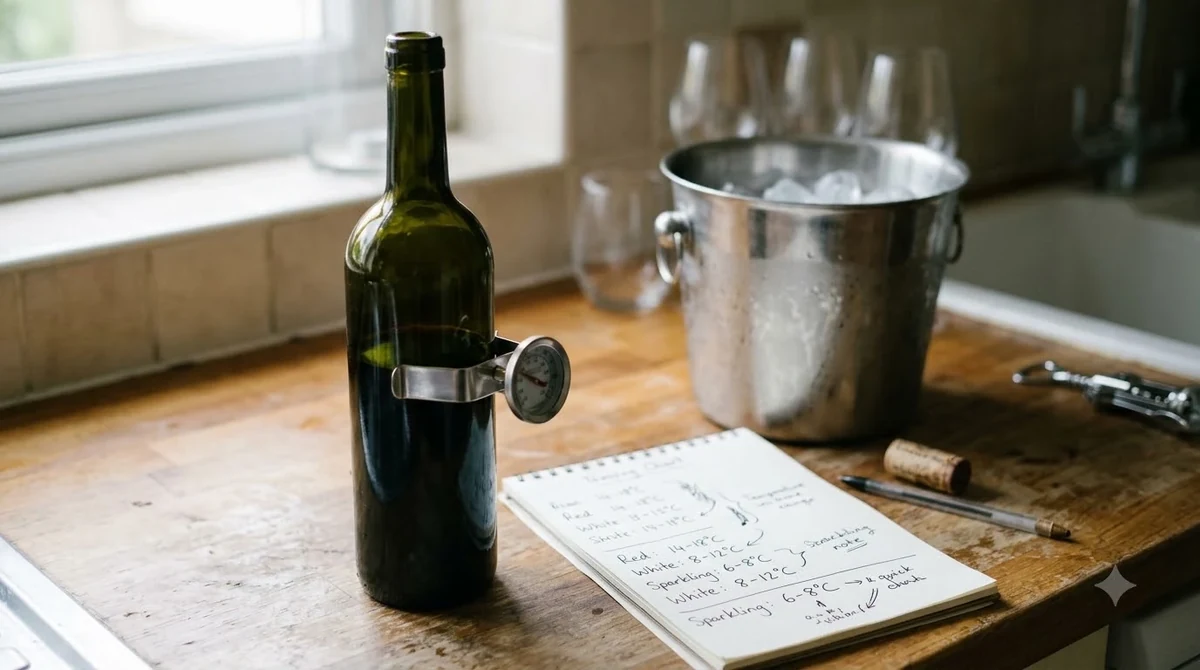
Serve Trollinger slightly chilled at 54°F to 60°F (12°C to 16°C) for red bottlings, and colder at 46°F to 52°F (8°C to 11°C) for Trollinger Rosé. Cooling the bottle down sharpens its natural berry acidity and keeps the wine crisp and lively.
Unlike full-bodied reds that benefit from hours in a decanter, Trollinger needs no prolonged aeration. Simply place the bottle in the refrigerator for 30 to 45 minutes before dinner, or set it in an ice bucket for 15 minutes if the room is warm. If you serve Trollinger at warm room temperature, the bright fruit can taste flat and any trace of residual sweetness will feel heavy. In Württemberg, locals traditionally pour the wine into a handled, straight-sided glass called a Viertele (holding 0.25 liters), though a standard tulip-shaped universal wine glass or Pinot Noir bowl captures its delicate strawberry and floral aromatics even better.
Most Trollinger is bottled under screw cap or cork for immediate enjoyment within one to three years of the vintage date. Only rare old-vine reserve selections from steep terraced sites benefit from four or five years of cellar rest; for standard releases, buying the youngest vintage on the shelf guarantees peak freshness.
Tip: Treat dry Trollinger like a sturdy rosé—if you are dining outdoors on a warm afternoon, keep the open bottle in a chilled sleeve or cooler between pours so it stays in that refreshing 54°F to 60°F sweet spot.
Food Pairing Ideas
Trollinger’s low tannins, bright acidity, and gentle berry fruit make it one of the most food-friendly reds at the table, pairing effortlessly with casual comfort foods, cured meats, and lighter proteins. Because it lacks heavy oak or astringency, it will not clash with delicate dishes or mild spices.
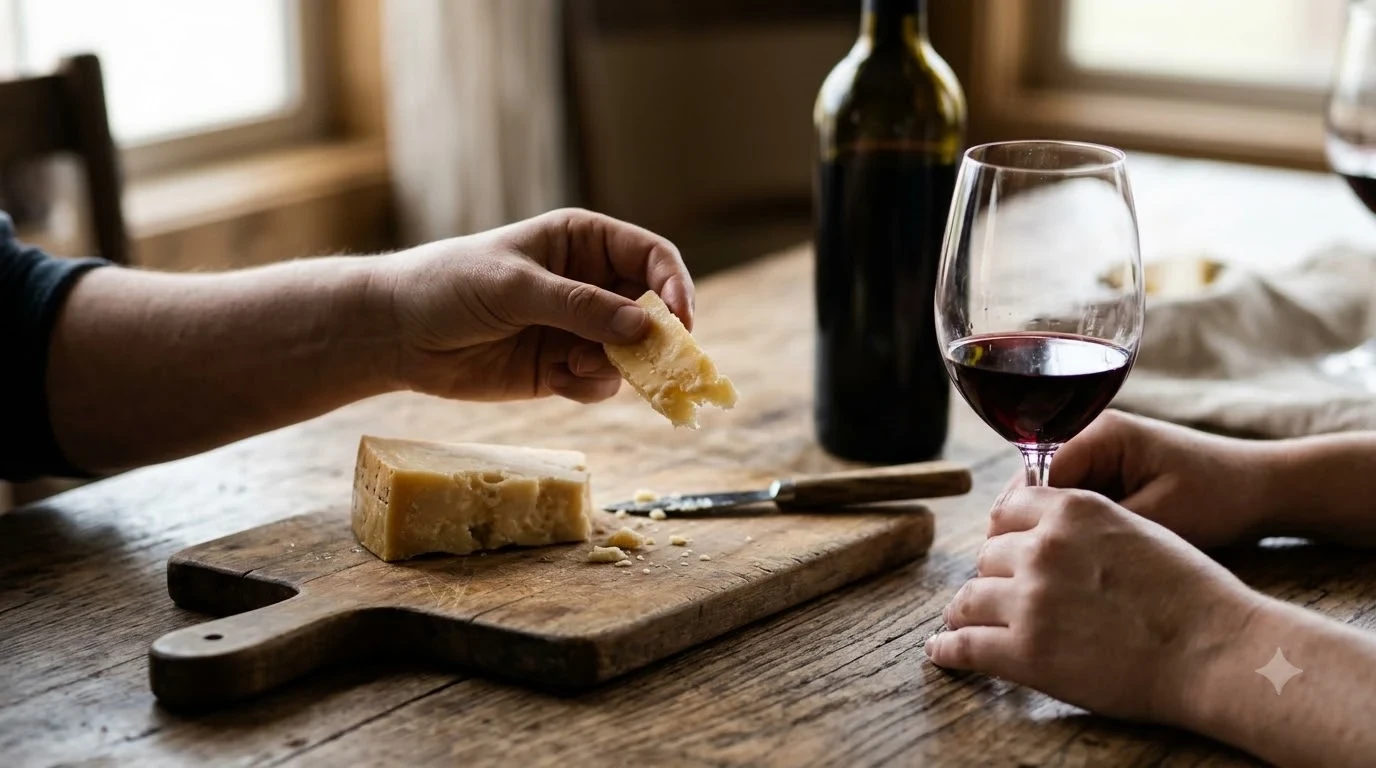
In its Swabian homeland, Trollinger is the natural partner for regional classics like Maultaschen (meat- and spinach-filled pasta pockets), buttery Käsespätzle (cheese noodles), and hearty Vesper boards piled with smoked ham, landjäger sausage, pretzels, radishes, and mild mountain cheeses. The wine’s crisp acidity cuts cleanly through rich butter, melted cheese, and cured pork fats without overwhelming the palate.
Beyond traditional German fare, Trollinger adapts smoothly to everyday American meals. Pour a chilled glass alongside wood-fired margherita pizza, roast chicken with herbs, turkey burgers, grilled salmon, or mushroom risotto. Its juicy red-fruit profile also makes it a natural base for warm-weather batch drinks—much like pinot noir sangria, a pitcher of dry Trollinger mixed with sliced strawberries, blood orange wheels, and sparkling water makes an effortless summer crowd-pleaser.
How to Choose a Good Bottle
Look for recent vintages from reputable Württemberg estates or Alto Adige Schiava producers, and check the front label for German sweetness terms like trocken or feinherb to match your palate. Because Trollinger is rarely exported in massive volumes to the United States, specialty wine shops and German-focused importers are your best places to browse.
Start by deciding how dry you want your glass to taste. German wine labels clearly state the sweetness level: choose trocken if you prefer crisp, bone-dry red fruit with a snappy finish, or pick feinherb (sometimes labeled halbtrocken) if you enjoy a subtle hint of natural fruit sweetness that softens the acidity. If you want a bit more body and spice for grilled meats, look for a bottle labeled Trollinger mit Lemberger, which blends in the darker, peppery structure of Blaufränkisch.
When comparing producers, pay attention to vineyard and yield cues. Bottles labeled Alte Reben (old vines) or Steillage (steep slope) come from lower-yielding vineyards that deliver noticeably deeper strawberry, cherry, and mineral concentration than entry-level one-liter jugs. If your local shop has no German Trollinger in stock, ask the staff for an Italian Schiava, Vernatsch, or Kalterersee from Alto Adige—you will get the exact same grape variety in a crisp, alpine-fresh style.
Frequently Asked Questions
Is Trollinger wine sweet or dry?
Trollinger is made in both dry and off-dry styles, though classic German bottlings are typically dry (trocken) or just barely off-dry (feinherb). Even dry examples can taste subtly fruity on the mid-palate because of their ripe strawberry and cherry aromatics, while Italian Schiava versions are almost always crisp and bone-dry.
What does Trollinger wine taste like compared to Pinot Noir?
Trollinger is lighter in color, lower in tannin, and brighter in fresh red-berry fruit than most Pinot Noir. While Pinot Noir often develops earthy forest-floor, baking spice, and oak complexity, Trollinger stays focused on juicy sour cherry, wild strawberry, red currant, and a clean, refreshing finish.
Are Trollinger and Schiava the exact same grape?
Yes, DNA profiling confirms that German Trollinger and northern Italian Schiava (also called Vernatsch in South Tyrol) are the exact same grape variety. Regional climate and winemaking create subtle differences in the glass, with Württemberg Trollinger leaning slightly softer and juicier while Alto Adige Schiava tends to feel crisper and more mineral-driven.
Can you age Trollinger wine in a cellar?
Most Trollinger is crafted to be drunk young within one to three years of harvest while its primary berry fruit and vibrant acidity are at their peak. Unlike sweet dried-grape reds such as recioto wine or tannic age-worthy reds, standard Trollinger loses its signature freshness if kept too long, though select old-vine bottlings can hold nicely for up to five years.
Whether you find it under its Swabian name Trollinger or its Italian alias Schiava, this pale, chillable red rewards anyone looking for a lighter alternative to heavy, high-alcohol wines. Serve a bottle cool alongside a casual weeknight dinner or weekend charcuterie board to experience why southwestern Germany has poured it by the glass for centuries.
More in Wine Types & Grapes
 Zinfandel Sugar Content: Dry Red vs. White Zinfandel GramsUpdated Nov 21, 2026
 Best Zinfandel Substitute Options for Sipping and CookingUpdated Nov 21, 2026
 Zweigelt Food Pairing: Best Dishes, Cheeses, and Serving TipsUpdated Nov 21, 2026
 Zinfandel Tannins Explained: How Structure Shapes Every BottleUpdated Nov 21, 2026
 Zinfandel Sweetness Level: Dry Red vs. Sweet White Zin ExplainedUpdated Nov 21, 2026
 Xinomavro Food Pairing: Best Dishes, Styles, and Serving TipsUpdated Nov 21, 2026