

We may earn a commission when you buy through links on this page, at no extra cost to you. Learn more.
The toro wine region in northwestern Spain is best known for powerful, deeply colored red wines made primarily from Tinta de Toro, the local form of Tempranillo. Its high, dry vineyards and long hours of sunshine help produce ripe fruit, firm tannins, and often substantial alcohol. Yet Toro also makes Garnacha reds, rosés, whites, and traditional-method sparkling wines, with styles that range from fresh and uncomplicated to concentrated and age-worthy.
Toro rewards a closer look than its reputation for big reds might suggest. The landscape, old vines, and changing cellar practices create meaningful differences from one village, vineyard, and producer to another. Knowing the grapes and label terms makes it easier to choose a bottle that fits the meal or the occasion.
Where the Toro Appellation Sits in Spain
Toro is a protected wine appellation in Castile and León, in northwestern Spain, southeast of Zamora city and southwest of Valladolid. The Duero River runs through the area, while the historic town of Toro gives the denomination its name and anchors its wine culture.
The official production zone extends across parts of Zamora and Valladolid provinces, including the natural districts of Tierra del Vino, Valle del Guareña, and Tierra de Toro. The regulatory council describes a boundary covering about 62,000 hectares, but that figure is the whole demarcated territory, not the area planted to vines. Its location puts Toro within the wider Duero wine landscape, though it has a distinct identity from nearby Ribera del Duero and Rueda.
The denomination’s official location page records about 8,000 hectares devoted to vineyards, with 5,418 hectares registered with the regulatory board and 981 registered winegrowers. Those figures describe different levels of the vineyard area: land planted to vines is not necessarily all entered in the appellation register. The production area includes municipalities such as Toro, Morales de Toro, Valdefinjas, and San Román de Hornija. Spain’s official tourism portal describes the town of Toro as the backbone of the local wine route, connecting wineries with historic streets, heritage sites, and regional festivals. That makes the denomination more than a patchwork of vineyard parcels: it is also a cultural landscape shaped by winegrowing and trade. For readers comparing wine landscapes, the Wine Regions overview is a useful way to place Toro alongside Spain’s other appellations.
Climate, Elevation, and Vineyard Soils
Toro has a semi-arid continental climate with Atlantic influence, marked by cold winters, hot summers, and a long, sunny growing season. These conditions favor full ripeness and concentrated fruit, while altitude and cool nights can help preserve freshness.
According to the Toro regulatory council, annual rainfall averages about 350 to 400 millimeters, annual mean temperature is 12 to 13 degrees Celsius, and sunshine totals around 2,600 hours, sometimes reaching 3,000. The council gives a broad temperature range from minus 11 to 37 degrees Celsius and an approximate vine growth cycle of 230 days. Water is limited, and the strong seasonal contrast puts real demands on vineyard management.
Vineyards sit at roughly 620 to 870 meters above sea level. Soils vary rather than forming one uniform layer: the council lists sandstone, clay, limestone conglomerate, gravel, sandy loam, and stony or silty profiles from different geological periods. A sandy plot can drain quickly, while clay-rich sections hold more moisture; even nearby parcels may ripen at different rates. In a dry year, those differences can influence how long a vine can sustain its canopy and how quickly its fruit reaches maturity. Growers therefore have to consider soil depth, water availability, exposure, and the timing of harvest rather than treating the appellation as one uniform site. This patchwork is one reason Toro wines do not all taste alike. Compared with the cooler mountain settings of the Savoie wine region or the Switzerland wine region, Toro generally delivers riper fruit and a broader, warmer palate.
Tinta de Toro and the Region’s Old Vines
Tinta de Toro is the signature red grape and the variety most closely associated with the appellation. It belongs to the Tempranillo family, but its long adaptation to Toro’s dry, high-altitude conditions gives it a local identity and a profile that can be more deeply colored, full-bodied, and firmly structured.
The Toro regulatory council recounts that vines survived the phylloxera era in loose, well-drained sandy soils, where ungrafted plantings remain part of the region’s heritage. Toro was first officially classified as a Designation of Origin on May 26, 1933. In 1990, the regional government began a vine-clone and health-selection program that helped preserve and multiply Tinta de Toro material. These details matter because the grape is not simply a label synonym: local selection and vineyard history have helped maintain a distinctive plant population.
Old vines are an important part of the appellation’s character. Decanter’s regional feature reports 125 hectares of vines aged at least 100 years and another 1,175 hectares aged from 50 to 100 years; it says nearly half of Toro’s vineyards are more than 35 years old. Old vines do not guarantee quality on their own, but their naturally modest crops can give growers small quantities of concentrated fruit. For more on the way this heritage is being interpreted today, see Decanter’s report on Toro’s changing wine styles.
Grapes and Wine Styles Beyond the Famous Red
Red wine dominates Toro’s reputation, but the appellation permits several grapes and wine categories. Garnacha Tinta gives producers another red-wine path, while four authorized white varieties support fresh, floral, or barrel-influenced white wines.
The current product specification sets a minimum of 85 percent Tinta de Toro for a red designated as Tinta de Toro and 85 percent Garnacha Tinta for a Garnacha-designated red. Up to 15 percent of the grapes may come from other authorized varieties. Rosé can use authorized red and white grapes, while white wine must be made exclusively from Malvasía Castellana, Verdejo, Moscatel de Grano Menudo, and Albillo Real. These rules give the region room to make varied wines without diluting the identity of its principal grapes. The product specification also sets minimum actual alcohol levels of 12.5 percent for dry reds and 11 percent for dry whites and rosés. These are legal floors, not promises about the strength of an individual bottle; ripe fruit and producer decisions can result in wines with considerably more alcohol.
There is also quality sparkling wine made by the traditional method, with the second fermentation taking place in the bottle. The specification requires at least nine months on the lees in that same bottle; rosé sparkling wine must include at least 25 percent red grapes. Sweet, semi-sweet, and semi-dry styles are also part of the legal framework, although dry reds are the wines most often associated with Toro. The official Toro appellation overview provides useful detail on the boundary, altitude, climate, and soil profiles behind these wines.
How Toro Red Wine Tastes
A typical Tinta de Toro red is full-bodied, dark in color, and rich in ripe fruit, with firm tannins and a warm finish. Blackberry, black cherry, plum, and dark raspberry are common descriptors, often joined by notes of licorice, pepper, herbs, cocoa, or tobacco as the wine develops.
Ripeness and structure are central to the style. The region’s sunshine and dry growing conditions can bring substantial fruit concentration and alcohol, while tannins provide grip and a frame for the fruit. Some bottlings feel muscular and broad; others show brighter red fruit, lively acidity, or a more savory edge. Alcohol levels vary by producer and vintage, so a region name alone cannot tell you exactly how weighty a wine will feel.
Winemaking makes a major difference. The Toro council explains that young wines generally spend less time fermenting with their skins, while wines intended for barrel aging undergo longer maceration before time in oak. A fresh, fruit-led joven may show juicy cherry and plum with direct tannins, whereas a barrel-aged example can add spice, toast, smoke, and more integrated texture. Carbonic maceration, which ferments whole clusters, is another option for aromatic, approachable wines that can be released soon after harvest. The technique can emphasize primary fruit and a softer impression of tannin, making it a useful contrast to wines built for long skin contact and oak maturation. The result is not simply a lighter version of a classic red; it is a different way to express the same grape and harvest conditions.
Reading Toro Labels and Choosing a Bottle
Start with the grape designation and aging term, then consider the producer’s preferred style. A bottle marked Tinta de Toro points to the appellation’s signature red grape, while Garnacha Tinta signals a different permitted red expression; terms such as joven, roble, crianza, reserva, and gran reserva indicate different approaches to freshness and maturation.
Joven generally signals a young, fruit-focused wine without extended oak aging. Roble identifies an oak-influenced style, but the word alone does not tell you how long the wine spent in barrel. Crianza, Reserva, and Gran Reserva are more formal aging categories, with the exact time requirements governed by Spanish wine law and the applicable regional rules. Producers may also state the vineyard, village, or old-vine source, clues that can help distinguish a site-specific wine from a broader regional blend.
When choosing, match the wine’s weight to the occasion. A youthful Tinta de Toro is often the most direct introduction to the grape, while a Reserva or a single-vineyard bottling may suit a longer meal or a cellar. Look for producer notes describing alcohol, oak, and drinking window, since two wines from the same appellation can have noticeably different balance. A useful first comparison is to taste a younger bottling beside an oak-aged one, ideally at the same temperature.
Serving Toro Wine and Pairing It With Food
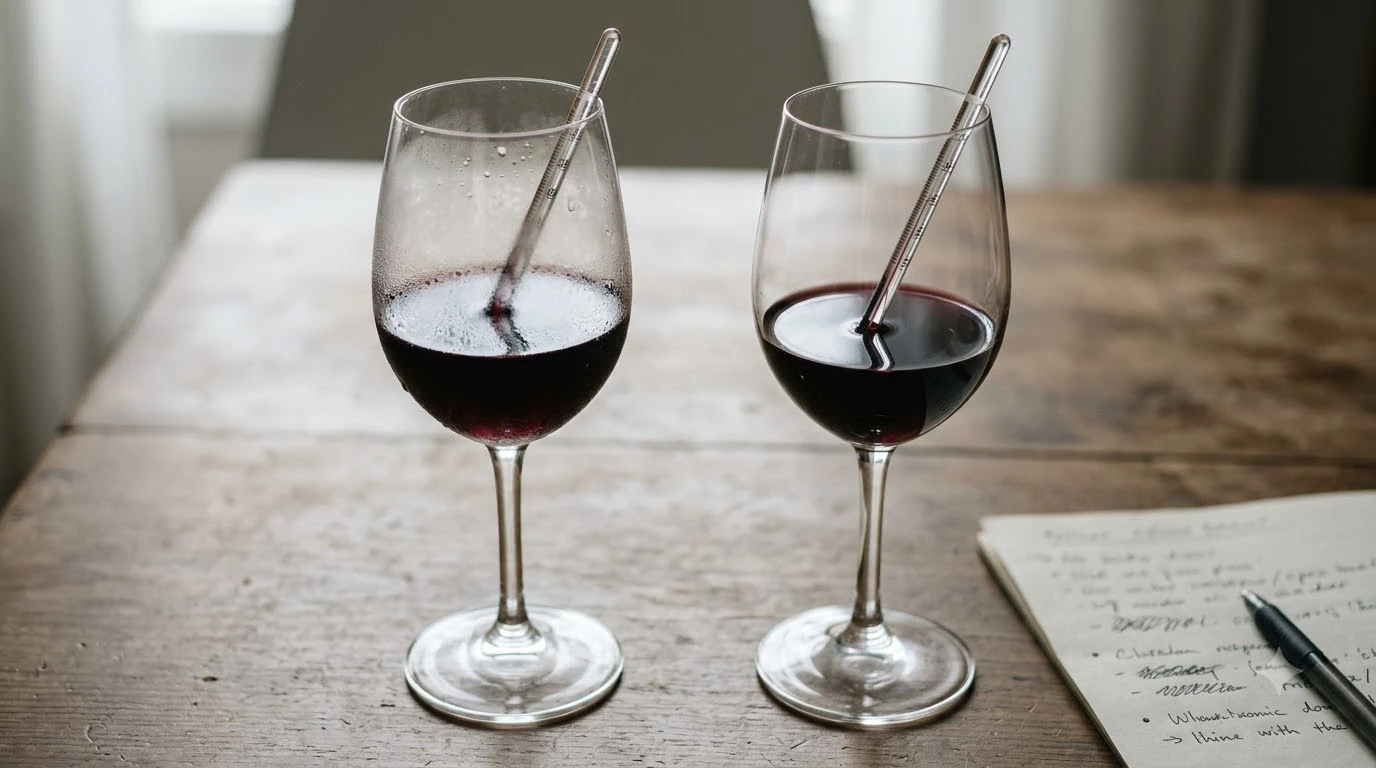
Serve structured Toro reds slightly cool rather than warm: about 60 to 65 degrees Fahrenheit is a practical range for full-bodied reds. This temperature keeps alcohol from dominating and allows dark fruit, savory notes, and tannins to show with better definition.
Young, full-bodied reds can benefit from 30 to 60 minutes in a decanter, especially when they feel tight on opening. Older bottles may need gentler handling because extended aeration can flatten delicate aromas. Pour a standard 5-ounce glass; a 750-milliliter bottle yields about five such servings. Store unopened bottles on their sides in a cool, dark place near 55 degrees Fahrenheit, and refrigerate a recorked bottle after opening. Most still wines are best enjoyed within three to five days once opened.
Toro’s firm tannins and dark fruit make it a natural partner for grilled beef, lamb, roast pork, chorizo, and slow-cooked dishes with paprika or herbs. Salt and fat soften the perception of tannin, so a well-marbled steak or aged hard cheese can make the wine feel smoother. Avoid pairing a strongly tannic red with delicate oily fish, and be cautious with very hot chili: alcohol and tannin can amplify the burn. For a lighter meal, try Garnacha or a fresher young red with roast vegetables, mushroom dishes, or tomato-based stews. White Toro is better suited to dishes where acidity and freshness matter, including grilled white fish, shrimp, lemony chicken, and vegetable tapas. Serve a light white or rosé at about 45 to 50 degrees Fahrenheit; fuller barrel-aged whites can be served a little warmer, around 50 to 55 degrees. This gives each style enough chill to stay lively without muting its aromas.
| Wine style | Serving temperature | Food matches | What to expect |
|---|---|---|---|
| Young Tinta de Toro | 60–65°F | Grilled pork, burgers, paprika chicken | Fresh dark fruit and firm tannin |
| Oak-aged Tinta de Toro | 60–65°F | Lamb, steak, aged Manchego | Ripe fruit with spice and oak notes |
| Garnacha red | 58–62°F | Roast vegetables, sausages, herb-roasted chicken | Often more aromatic and supple |
| Toro white | 45–50°F | Grilled fish, shellfish, chicken, tapas | Fruit, floral or herbal notes, refreshing acidity |
| Toro rosé | 45–50°F | Charcuterie, salads, grilled shrimp | Fresh red-fruit character |
Tip: If a Toro red tastes hot or heavy, chill the bottle for 15 to 20 minutes before serving. A modest drop in temperature can make ripe fruit feel fresher and keep alcohol from overshadowing the finish.
Frequently Asked Questions
Is Tinta de Toro the same grape as Tempranillo?
Tinta de Toro is locally recognized as a Tempranillo type, but the region’s selected material has its own agronomic and identifying characteristics. The Toro regulatory council says selected certified material carries a blue label and its corresponding clone number. This system helps identify and preserve the region’s specific grape material.
Does every Toro red wine need to be aged in oak?
No. Toro makes young wines intended to emphasize fresh fruit, as well as wines aged in oak. The product specification describes joven reds as cherry-to-ruby in color, with red or black fruit aromas and a medium to medium-long finish. An unoaked red can therefore be a deliberate regional style rather than an unfinished wine.
Can Toro produce white wine from Verdejo?
Yes. Verdejo is one of the four authorized white varieties in the Toro specification, alongside Malvasía Castellana, Moscatel de Grano Menudo, and Albillo Real. The specification describes dry whites as pale to golden yellow, light-bodied, and medium to medium-high in acidity, with a medium to long finish.
Is Toro an officially recognized Spanish wine appellation?
Yes. The Toro Designation of Origin received official classification on May 26, 1933, according to the appellation council’s grape-history page. Separately, its product specification is registered in the European Union as a Protected Designation of Origin, giving the name formal geographical protection within the EU.
Does Toro wine have to be bottled inside the appellation?
Yes. The Toro product specification requires bottling to take place at wineries located within the designated production area. This additional condition is intended to protect the wine’s provenance, maintain quality controls, and safeguard the characteristics associated with the appellation.
Toro is more than a source of big, oak-aged Tempranillo. Its high vineyards, varied soils, old plantings, and expanding range of cellar approaches make it a region with both a clear signature and room for stylistic choice. Start with a young Tinta de Toro, then compare it with a barrel-aged bottling or a Garnacha to see how broad the appellation can be.
More in Wine Regions
 Willcox Wine Trail: Discover Arizona’s High-Elevation Wine CountryUpdated Nov 20, 2026
 Yakima Valley Wine Region: Find the Best Styles to TryUpdated Nov 20, 2026
 Vosne Romanee Wine Tasting: Identify Aromas and Choose Better PairingsUpdated Nov 20, 2026
 Yakima Valley Wine Festival: Find the Best Seasonal Wine EventsUpdated Nov 20, 2026
 Wales Vineyards: Discover Cool-Climate Wines and Where to VisitUpdated Nov 20, 2026
 Yountville Wine Festival: Discover Napa Wines and Local FoodUpdated Nov 20, 2026