


We may earn a commission when you buy through links on this page, at no extra cost to you. Learn more.
A standard 5-ounce glass of dry wine contains roughly 3 to 4 grams of tempranillo carbs, with less than 1 gram coming from actual residual sugar. Because Spanish red wines made from this grape are almost always fermented completely dry, nearly all of the natural grape sugars convert into alcohol during winemaking. That leaves behind only trace carbohydrates from unfermented sugars and glycerol, putting a typical pour right alongside other classic dry red wines.
Checking nutrition numbers on wine bottles can feel frustrating because most producers are not required to list carbohydrate or sugar counts on the back label. Learning how fermentation, alcohol levels, and regional winemaking styles shape the carb count in a glass of Tempranillo makes it simple to pour with confidence.
What Tempranillo Carbs Actually Come From
The carbohydrates in Tempranillo come primarily from trace residual sugars and glycerol left behind after yeast finishes fermenting grape juice into wine. Because classic Spanish expressions are fermented to dryness, a standard 5-ounce pour holds approximately 3 to 4 grams of total carbohydrates and under 1 gram of sugar.

Fresh wine grapes start out packed with natural glucose and fructose before harvest. When winemakers crush Tempranillo grapes and add yeast, those microorganisms consume the grape sugars and convert them into ethanol and carbon dioxide. In dry red winemaking, fermentation runs until virtually all fermentable sugar is exhausted, leaving behind less than 2 to 4 grams of residual sugar per liter of finished wine.
Even when sugar levels drop near zero, a dry red wine still registers a few grams of carbohydrates on a nutrition panel. Those remaining grams come from non-fermentable grape compounds, soluble fiber traces, and glycerol—a natural alcohol-sugar byproduct created by yeast that gives red wine a smooth, rounded mouthfeel. According to Wine Folly’s guide to carbs in wine, a standard 5-ounce serving of dry wine stays within that 0 to 4 gram carbohydrate range, whereas noticeably sweet wines climb much higher.
Understanding this fermentation math also clarifies why alcohol by volume (ABV) and carbohydrate counts move in opposite directions. When yeast converts more of the grape’s natural sugar into ethanol, the finished wine ends up higher in alcohol and lower in leftover sugar. Most dry Tempranillo bottles sit between 13% and 15% ABV, which reflects thorough fermentation rather than lingering sweetness.
Tempranillo Carbs and Calories by Serving Size
A single 5-ounce restaurant pour of dry Tempranillo at 13.5% ABV carries about 3 to 4 grams of carbohydrates and roughly 113 to 125 calories. Scaling up to a generous home pour or splitting a full 750-milliliter bottle increases those totals proportionally.
| Serving Size | Volume | Estimated Carbs | Estimated Residual Sugar | Estimated Calories (13.5%–14% ABV) |
|---|---|---|---|---|
| Tasting Pour | 2 oz (60 ml) | 1.2–1.6 g | Under 0.4 g | 45–50 cal |
| Standard Glass | 5 oz (148 ml) | 3.0–4.0 g | Under 1.0 g | 113–125 cal |
| Large Home Pour | 8 oz (237 ml) | 4.8–6.4 g | Under 1.6 g | 180–200 cal |
| Half Bottle | 375 ml (12.7 oz) | 7.6–10.1 g | Under 2.5 g | 285–315 cal |
| Full Standard Bottle | 750 ml (25.4 oz) | 15.2–20.3 g | Under 5.0 g | 570–630 cal |
Calories and carbohydrates tell two different stories in dry red wine. While carbs account for only 12 to 16 calories in a 5-ounce glass, alcohol itself supplies 7 calories per gram. That means roughly 85% to 90% of the energy in a glass of Tempranillo comes from ethanol rather than sugar or starch.
Pour size matters just as much as grape variety when tracking intake over an evening. Oversized red wine stems designed for swirling can easily hold 8 or 9 ounces without looking full, which quietly doubles the carbohydrate and calorie count of a single glass. Measuring a 5-ounce pour into your favorite stemware once gives you an easy visual benchmark for future dinners.
How Oak Aging and Regional Styles Affect Carb Counts
Traditional aging classifications like Joven, Crianza, Reserva, and Gran Reserva change the oak influence and flavor profile of Tempranillo without adding meaningful carbohydrates. Across Spain’s major regions, the grape is vinified as a dry table wine that keeps carb counts consistently low.
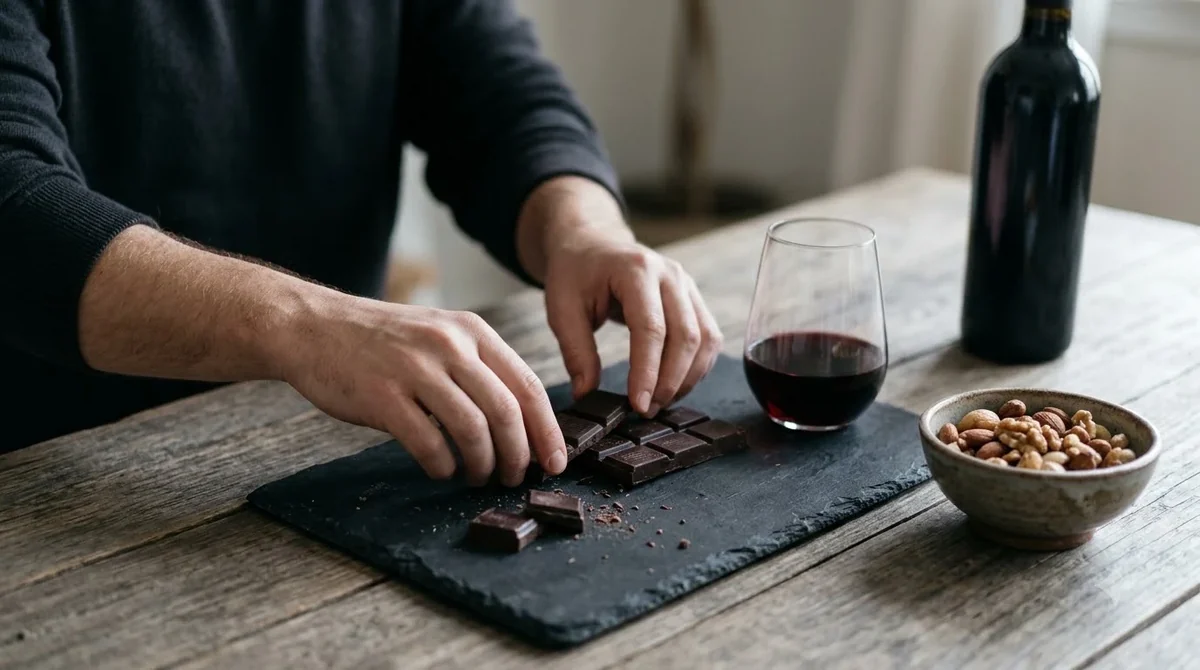
If you are learning how to pronounce tempranillo before ordering at a tapas bar, you will also notice Spanish labels categorized by barrel and bottle aging rather than sweetness. Vin Joven releases young with little or no oak contact, while Crianza, Reserva, and Gran Reserva spend progressively longer stretches maturing in American or French oak barrels. Oak barrels impart aromatic compounds like vanillin, dill, cedar, and baking spice, which can trick the palate into perceiving sweetness even though the liquid remains bone dry.
Regional climate plays a larger role in alcohol strength than in residual sugar. According to Wine Folly’s comprehensive profile of Tempranillo, warm high-altitude regions like Ribera del Duero and Toro produce concentrated grapes that regularly ferment to 14% or 15% ABV, whereas cooler sub-zones in Rioja often land closer to 13.5% ABV. Both styles finish dry with minimal carbohydrates, though higher-ABV bottles carry slightly more alcohol-derived calories per ounce.
The main exception to watch for is fortified wine or flavored wine cocktails. Tempranillo—known in Portugal as Tinta Roriz or Aragonês—is one of the primary blending grapes used in traditional Ruby and Tawny Port. Because winemakers halt Port fermentation early by adding grape spirit, a 3-ounce glass of Port packs around 10 grams of carbs and 9 grams of sugar. Similarly, bottled sangria made with Tempranillo typically includes added fruit juice and cane sugar that push carbohydrates far higher than a straight table wine.
Tip: Look for Spanish aging terms like Crianza, Reserva, or Gran Reserva on the label when you want guaranteed dryness—these regulated classifications require traditional dry fermentation with no added sweeteners.
Tempranillo Carbs Compared to Other Popular Wines
Compared with other dry red wines like Cabernet Sauvignon, Pinot Noir, and Sangiovese, Tempranillo sits squarely in the middle of the pack at 3 to 4 grams of carbohydrates per glass. It offers far fewer carbs than off-dry whites, sweet sparkling wines, or dessert styles.
Most dry red table wines share remarkably similar carbohydrate profiles because red winemaking practices worldwide favor complete fermentation. A 5-ounce pour of Pinot Noir, Merlot, Cabernet Sauvignon, or Sangiovese generally falls between 3.4 and 3.9 grams of carbs, making Tempranillo virtually interchangeable with any classic dry red from a carb perspective. Fuller-bodied reds can occasionally hold a fraction of a gram more glycerol and extract than light-bodied reds, though the practical difference in a single glass is negligible.
Where wine drinkers run into surprises is comparing dry reds against aromatic whites or sparkling styles across different Wine by Type categories. While a dry Sauvignon Blanc or Brut Nature Champagne matches Tempranillo at around 2 to 3 grams of carbs per serving, an off-dry German Riesling Kabinett jumps to roughly 9 grams, and a sweet Moscato d’Asti reaches nearly 19 grams. Alcohol-removed Tempranillo bottles can also contain slightly more carbs—around 7 grams per 5-ounce glass—because producers sometimes add small amounts of grape must to restore body after removing ethanol.
How to Spot a Lower-Carb Bottle of Tempranillo
Choosing a bottle with minimal carbohydrates comes down to reading regional cues, checking the alcohol percentage, and avoiding mass-market blends that rely on residual sugar for softness. Authentic Spanish dry reds make this straightforward once you know which label details matter.
Start by inspecting the stated alcohol percentage on the front or back label. Dry red wines with an ABV between 13% and 14.5% have undergone full fermentation, leaving very little unfermented grape sugar behind. Be cautious with entry-level, bulk-produced red blends that do not list a specific denomination of origin and sit around 11.5% or 12% ABV, as lower alcohol in a warm-climate red can occasionally indicate halted fermentation and extra residual sugar.
You can also look at visual and sensory clues once the bottle is open. Exploring tempranillo color reveals a translucent ruby-to-garnet hue with a brick-orange rim in aged bottles, signaling traditional barrel maturation rather than heavy grape concentrate additives. Likewise, reviewing classic tempranillo tasting notes highlights savory leather, dried fig, sour cherry, tobacco, and cedar—flavors rooted in acidity, tannin, and oak rather than sugary fruit syrup.
Frequently Asked Questions
Does Tempranillo have more carbs than Cabernet Sauvignon or Pinot Noir?
No, dry Tempranillo has virtually the same carbohydrate count as Cabernet Sauvignon and Pinot Noir. All three classic dry red varieties average between 3 and 4 grams of carbohydrates per 5-ounce pour, with less than 1 gram coming from residual sugar.
Is Rioja wine high in sugar?
Traditional red Rioja is a dry wine with very little sugar, typically containing under 4 grams of residual sugar per liter—which works out to less than half a gram of sugar per 5-ounce glass. The sweet vanilla and coconut notes you taste in aged Rioja come from American oak barrels rather than added sugar.
How many carbs are in an entire bottle of Tempranillo?
A standard 750-milliliter bottle of dry Tempranillo contains roughly 15 to 20 grams of total carbohydrates across five 5-ounce servings. Most of those grams come from glycerol and trace unfermented grape compounds rather than pure sugar.
Do alcohol-free Tempranillo wines have fewer carbs?
Not necessarily—non-alcoholic Tempranillo often contains more carbohydrates than traditional alcoholic versions, averaging around 6 to 8 grams per 5-ounce glass. Producers frequently blend in unfermented grape juice or must after dealcoholization to replace the body and mouthfeel that alcohol normally provides, though calorie counts remain much lower overall.
Dry Tempranillo remains one of the easiest red wines to fit into a carb-conscious meal without sacrificing complexity or structure. By sticking to traditional dry Spanish appellations like Rioja or Ribera del Duero and keeping pours close to a standard 5-ounce measure, you can enjoy savory, oak-aged character with only 3 to 4 grams of carbs in your glass.
More in Wine Types & Grapes
 What Does Mourvèdre Taste Like? Flavor Profile, Regions, and PairingsUpdated Nov 20, 2026
 What Does Marsanne Taste Like? Flavors, Styles, and Food PairingsUpdated Nov 20, 2026
 What Does Malvasia Taste Like? Styles, Flavors, and Food PairingsUpdated Nov 20, 2026
 What Does Grenache Blanc Taste Like? Flavor Profile, Styles, and PairingsUpdated Nov 20, 2026
 What Does Garnacha Taste Like? Key Flavors, Styles, and Pairing TipsUpdated Nov 20, 2026
 What Does Fruit Wine Taste Like? A Complete Flavor and Style BreakdownUpdated Nov 20, 2026