

We may earn a commission when you buy through links on this page, at no extra cost to you. Learn more.
Tempranillo color is usually medium ruby to garnet, with young wines tending toward brighter ruby or purple-red tones and mature bottles developing brick, rust, or tawny edges. The exact shade depends on the grapes, the winemaker’s extraction choices, and the wine’s time in barrel and bottle. A glass of Tempranillo can look vivid and youthful or more muted and garnet without either appearance being a guarantee of quality. Looking at the color is most useful when it is considered alongside aroma, flavor, and the wine’s origin.
Tempranillo is Spain’s signature red grape, familiar from Rioja, Ribera del Duero, and Toro. It produces both fresh, fruit-led wines and structured bottlings made for extended aging. Learning to read its color gives you a quick visual introduction to those different styles, and it helps explain why two wines made from the same grape can look noticeably different.
What Color Does Tempranillo Wine Usually Have?
The typical range runs from medium ruby to garnet, with the brightest red-purple shades more common in youthful wines and brick-tinged garnet more common in bottles that have matured. Tempranillo is not automatically an opaque, almost-black red; many examples have enough clarity for light to show through the center of the glass.
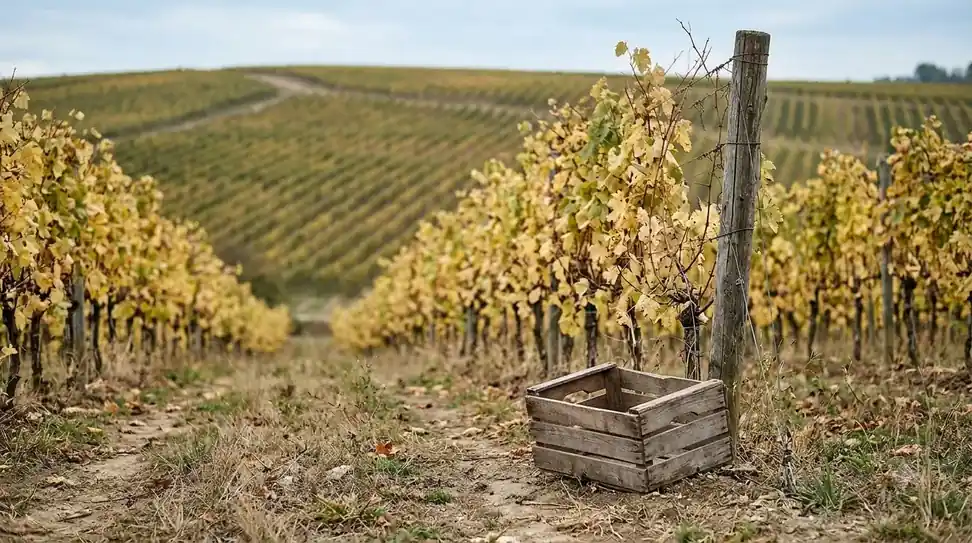
Ruby describes a clear red hue, sometimes with a violet or blue cast around the rim. Garnet is a red that has moved toward orange or brown, rather like the color of a garnet gemstone. A young Rioja Tempranillo may show a lively ruby center, while a mature Rioja Reserva can have a garnet core and a subtle brick-colored rim. The distinction is a matter of hue, not simply darkness: a medium-depth ruby can be darker than a pale garnet and still look younger.
Wine descriptions sometimes use words such as cherry red, crimson, or brick red to make the picture more immediate. Those phrases can be useful, but ruby and garnet are the most practical reference points for this grape. Wine Enthusiast’s guide to wine color places Tempranillo in the garnet category and describes the wine as tending toward brick. Wine Folly gives a broader range of medium ruby to garnet, which reflects the variety of styles found in the bottle. Wine Enthusiast’s Tempranillo profile also notes the grape’s ability to produce ageworthy wines in several Spanish regions.
Do not expect every Tempranillo to match a single color sample. A fresh, lightly matured red can look brighter than a structured wine from a warmer site, while a bottle with several years of development may have lost some of its initial purple edge. A slight variation in the glass is normal; the grape name identifies the variety, not a fixed shade chart.
How Grape Skins and Winemaking Create the Hue
Most of the red pigment in Tempranillo wine comes from the grape skins, not the clear juice inside the berry. During red-wine production, the juice ferments with the skins so that color compounds move into the liquid; the length and conditions of that contact help determine how much color is extracted.
Tempranillo is a dark-skinned grape, but a dark grape does not guarantee a very dark wine. The winemaker decides how to handle the crushed fruit, how long the juice stays in contact with the skins, and when to separate the wine from the solids. A shorter extraction can yield a more transparent ruby, while more extensive extraction can create a deeper, more saturated red. The result also depends on fruit condition and the particular vintage.
Some producers use a cold soak before fermentation to draw pigment from the skins at a lower temperature. Fermentation itself then brings further extraction, and cap management—wetting or submerging the floating skins—affects contact between the juice and the grape solids. These are cellar decisions rather than fixed rules for the Tempranillo grape, so two wineries in the same part of Spain can produce different color intensity.
Color can also be affected by the wine’s blend. Rioja Tempranillo is sometimes combined with Garnacha, Graciano, or Mazuelo; each grape contributes its own mix of pigment, acidity, aroma, and structure. A varietal Tempranillo and a Rioja blend may therefore differ in hue even when they come from neighboring vineyards. The blend is one reason the region and producer matter as much as the grape name.
How Tempranillo Color Changes with Age
Young Tempranillo commonly shows ruby or purple-red color, and mature examples tend to move toward garnet, brick, and eventually tawny-brown at the rim. This gradual shift happens as the wine develops and reacts with small amounts of oxygen during maturation and bottle aging.
Age does not work like a precise color calendar. A bottle does not turn garnet at a particular birthday, and two wines from the same vintage can evolve at different speeds. Oak-barrel aging exposes wine to small amounts of oxygen; bottle storage, closure, temperature, and the wine’s own composition also influence how quickly its color changes. Wines held in stainless steel generally retain a fresher, more youthful profile than wines given extended oxygen exposure in oak.
In Rioja, the terms Joven, Crianza, Reserva, and Gran Reserva help explain the intended aging style, although they do not promise one exact shade. A young Joven may keep a bright ruby appearance. A barrel-aged Crianza or Reserva may show garnet or brick notes as it develops, while a mature Gran Reserva can have a softer, more faded edge. These are tendencies, not visual guarantees: a well-preserved older wine can retain a clear ruby center, and a younger wine can show garnet at its rim.
Use color alongside the rest of the bottle’s story. A garnet rim paired with dried fruit, leather, tobacco, and softened tannins can support the impression of maturity. If the same wine looks unusually brown and smells tired or flat, that may suggest oxidation or poor storage, but color alone cannot establish that the bottle is faulty. Decanter explains that storage conditions and winemaking affect the rate of oxidation, so visual age estimates should remain cautious.
| Wine or service context | Typical visual cue | Useful number |
|---|---|---|
| Young, fruit-forward Tempranillo | Ruby to purple-red, often with a bright rim | Serve around 55–60°F |
| Oak-aged Tempranillo | Ruby moving toward garnet as it matures | Some top examples spend at least 12 months in oak |
| Older, developed Tempranillo | Garnet with possible brick or tawny at the edge | A 750 ml bottle gives about five 5 oz pours |
The table gives broad reference points, not a formula for dating a bottle. Wine Enthusiast recommends a 55–60°F serving range for Tempranillo, and Wine Folly notes that top examples often spend at least 12 months in oak. The five-glass estimate assumes standard 5 oz pours; it is a serving calculation, not a color rule.
Why Rioja, Ribera del Duero, and Toro Can Look Different
Place has a strong influence on how Tempranillo looks. Rioja often offers a range from bright, fruit-focused ruby wines to garnet, oak-shaped bottlings, while Ribera del Duero and Toro are widely associated with more concentrated and deeply colored expressions.
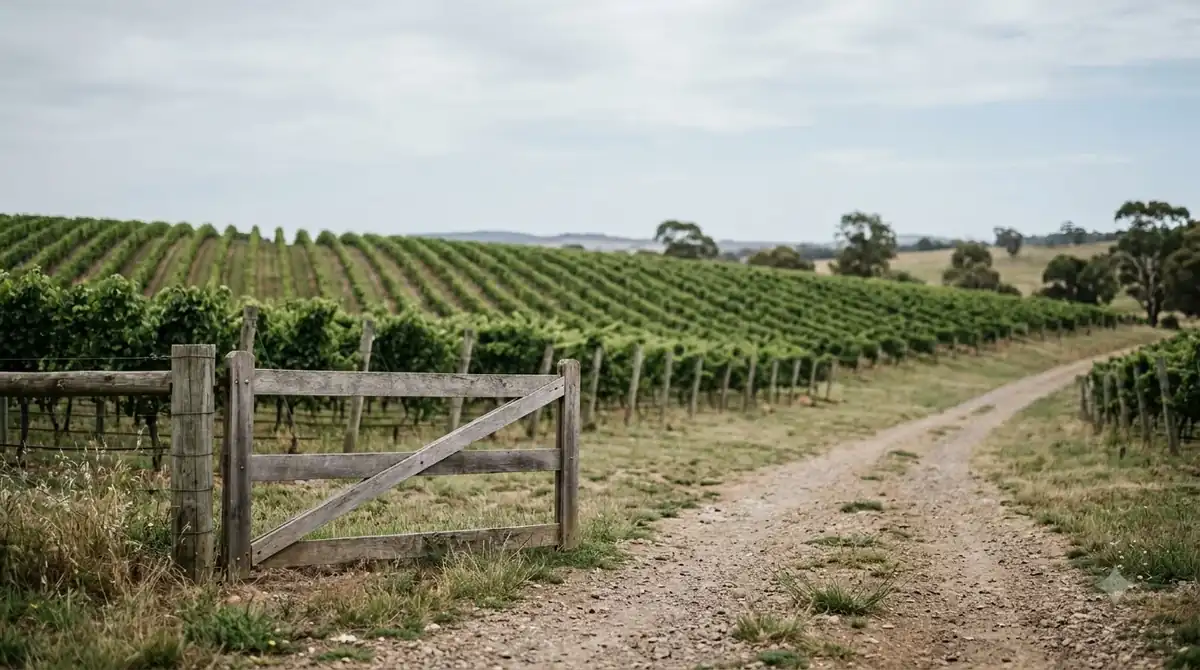
Rioja is the classic reference point for the grape, and its wines can be light and fresh, richly textured, or built for long aging. Tempranillo is frequently blended there with Garnacha, Graciano, or Mazuelo, so a wine’s final color reflects the proportions of the blend as well as extraction and maturation. Oak can add spice and savory complexity, but the barrel itself does not simply paint the wine darker; oxygen exposure during aging generally encourages red wine to lose some of its youthful purple and ruby intensity.
In Ribera del Duero, Tempranillo is often called Tinto Fino or Tinta del País. Wine Enthusiast describes wines from this area as more powerful and concentrated than many Rioja examples, and the region’s ripe black-fruit style can appear more saturated in the glass. Toro’s local name is Tinta de Toro, and its wines are also known for depth and firm structure. These regional descriptions are useful starting points, not rules that every bottle must follow.
Climate, vineyard elevation, sunlight, and the timing of harvest all affect grape ripeness and the balance of fruit and acidity. A warmer site can produce riper fruit and a fuller impression, while cooler nights help preserve freshness during ripening. Tempranillo is also grown beyond Spain, including Portugal, where related local naming traditions appear on labels. For a broader look at its regional identities, learning how to pronounce tempranillo is a small but helpful first step when discussing bottles from different places.
How to Read Tempranillo in the Glass
You can assess the wine’s hue and intensity with a clear glass, a plain white background, and good natural or neutral light. Tilt the glass slightly and look at the wine first through its center, then around the thinner layer at the edge.
The center, sometimes called the core, usually shows the wine’s depth most clearly. The rim or meniscus can reveal a change from purple or ruby toward garnet and brick. A youthful Tempranillo may have a bright red-purple edge; a more mature one may show orange-red or tawny tones at the rim. The difference between the core and edge is often more informative than the overall darkness of the wine.
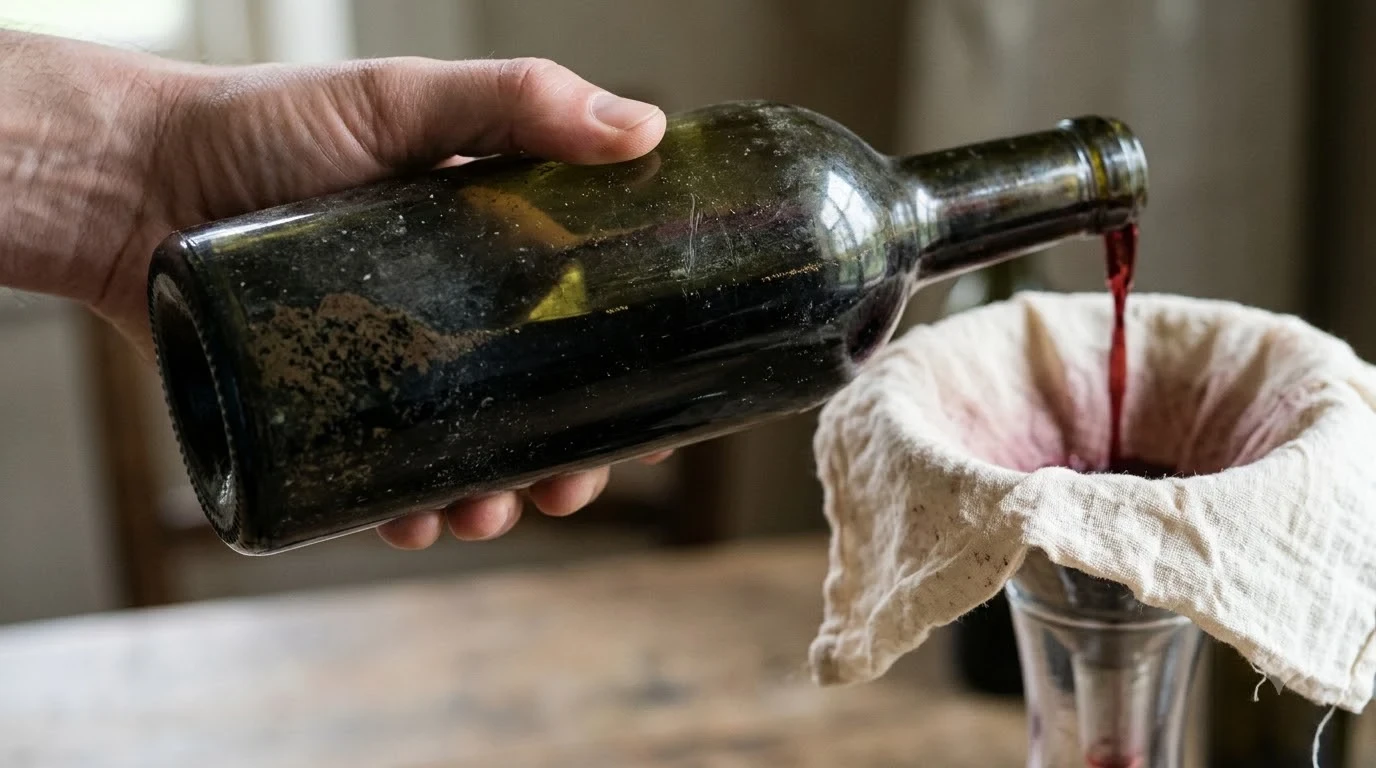
Look at clarity as well as color. A wine can be clear and bright, or it can look hazy because it was bottled unfiltered or because sediment has formed with age. Sediment in an older red is not automatically a flaw; it can be a natural result of wine development. Stand the bottle upright before opening if sediment is present, pour carefully, and leave the deposit behind rather than shaking it into the glass.
Lighting changes what you see. Warm indoor bulbs can make a ruby wine look more orange, while a dark table or colored glass can obscure its true hue. Decanter’s guide to reading wine color recommends assessing wine in a clear glass against a white background and emphasizes that color offers clues, not a complete description of taste. For a useful comparison, place a Tempranillo beside another red such as Pinot Noir or Cabernet Sauvignon and observe hue and intensity separately.
Tip: Hold the glass over a white sheet of paper, tilt it gently, and compare the center with the rim. This makes the shift from ruby to garnet easier to see without relying on room lighting.
What Color Suggests About Flavor, Pairing, and Quality
Color can hint at a Tempranillo’s style, but it cannot tell you whether the wine is sweet, balanced, well made, or ready to drink. A ruby wine often points toward a fresher fruit profile, while garnet and brick tones can accompany developed aromas such as leather, tobacco, dried fruit, and spice.
Young examples commonly show strawberry, cherry, plum, raspberry, and sometimes darker berry notes. Oak-aged Tempranillo can add vanilla, cedar, dill, or toast, while mature wines may develop leather and tobacco characteristics. The aroma and palate provide stronger evidence of these qualities than color alone. A dark wine is not necessarily more tannic, and a pale garnet wine is not necessarily light-bodied or old.
Tempranillo’s medium-to-full body and moderate-to-firm tannin make it a natural partner for roast lamb, grilled pork, burgers, and cured meats. Salt and fat soften the impression of tannin, which is why Manchego, jamón, and richer meat dishes often work well. Tomato-based dishes can suit fresher versions because their acidity meets the wine’s savory fruit, while a mature Rioja can match slow-roasted lamb or braised beef. Be more careful with sharp chili heat, which alcohol and tannin can make feel stronger, and with oily fish, which is a difficult match for a tannic red. Choose a fresher, less tannic wine for delicate seafood rather than relying on color to predict the pairing.
Serving temperature matters more than the precise shade. A light or medium-bodied Tempranillo is often most expressive around 55–60°F; very warm service can make alcohol seem more prominent and fruit less defined. Young, full-bodied bottles may benefit from 30–60 minutes in a decanter, while an older bottle should be handled more gently and checked as it opens. If you are comparing wine styles by appearance, the guides to cava color and moscato color show how differently sparkling white and sweet wines are described. The wider Wine by Type collection can help place Tempranillo among other grape varieties and styles.
Frequently Asked Questions
What does the name Tempranillo mean?
The name comes from temprano, the Spanish word for “early.” It refers to the grape’s tendency to ripen before many other varieties grown in Spain.
Can Tempranillo be made into white wine?
Yes, a rare natural mutation called Tempranillo Blanco is grown in Rioja Oriental. It is a distinct white-berried form associated with tropical-fruit aromas rather than the familiar red-wine profile.
Is Tempranillo used to make Port?
Yes. In Portugal, Tempranillo is known as Tinta Roriz and is one of the traditional grapes used in Port blends from the Douro Valley.
Does Tempranillo grow outside Spain?
It does. Plantings are found in Portugal, California, Texas, Washington, Oregon, Argentina, Chile, Australia, and Mexico, although Spain remains its best-known home.
Can Tempranillo be used for rosé or sparkling wine?
Yes. The grape is used for red wines most often, but it also appears in rosé, sparkling, and dessert-wine styles. The finished color depends on the production method and how much pigment is extracted from the skins.
For most shoppers, the easiest expectation is a medium ruby-to-garnet red that grows more brick-toned as it matures. Read that color as one useful clue, then confirm the style through its region, aging information, aroma, and taste.
More in Wine Types & Grapes
 Zinfandel Sugar Content: Dry Red vs. White Zinfandel GramsUpdated Nov 21, 2026
 Best Zinfandel Substitute Options for Sipping and CookingUpdated Nov 21, 2026
 Zweigelt Food Pairing: Best Dishes, Cheeses, and Serving TipsUpdated Nov 21, 2026
 Zinfandel Tannins Explained: How Structure Shapes Every BottleUpdated Nov 21, 2026
 Zinfandel Sweetness Level: Dry Red vs. Sweet White Zin ExplainedUpdated Nov 21, 2026
 Xinomavro Food Pairing: Best Dishes, Styles, and Serving TipsUpdated Nov 21, 2026