

We may earn a commission when you buy through links on this page, at no extra cost to you. Learn more.
The summit countertop wine cooler STC6 is a commercial-grade, six-bottle chiller designed to keep opened wine and champagne bottles refrigerated in an upright position. Its compressor-based cooling system, adjustable 41°F to 68°F temperature range, stainless steel construction, and digital controls make it particularly suitable for bars, restaurants, tasting rooms, and serious home entertaining spaces. However, its unusually wide countertop footprint and specialized open-bottle design make it a poor fit for shoppers who simply want a compact refrigerator for storing unopened wine bottles.
Summit Appliance approaches countertop wine refrigeration from a foodservice perspective rather than treating it as another small household appliance. The STC6 prioritizes quick cooling, accessible bottle storage, temperature monitoring, and an attractive display. Understanding those priorities is important before choosing this model, especially because its six-bottle capacity and 35.75-inch width make it quite different from the compact wine fridges commonly found in residential kitchens.
Specs and Key Features
The Summit STC6 combines compressor refrigeration with upright bottle storage, digital temperature controls, and a stainless steel exterior. Its specifications make the most sense for businesses or households that regularly serve wine by the glass and need several opened bottles available at serving temperature.
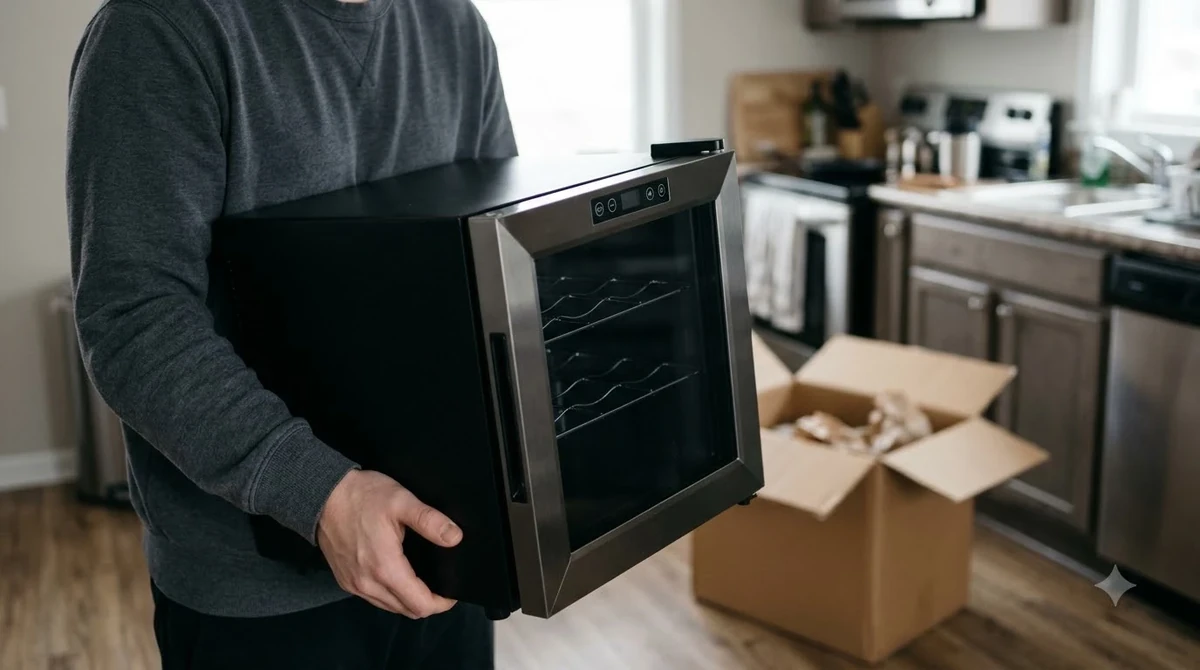
One of the most important distinctions is the intended storage arrangement. Instead of organizing bottles horizontally on conventional wine racks, the STC6 uses dedicated upright bottle positions. This allows staff or hosts to refrigerate opened bottles without relying on temporary corking arrangements or taking up space in a standard refrigerator.
| Specification | Summit STC6 |
|---|---|
| Model | STC6 |
| Maximum capacity | 6 bottles |
| Height | 12.5 inches |
| Width | 35.75 inches |
| Depth | 15.38 inches |
| Weight | 73 pounds |
| Cooling system | Compressor |
| Temperature range | 41°F–68°F |
| Temperature zones | 1 |
| Temperature control | Digital thermostat |
| Electrical requirements | 115V AC / 60Hz |
| Current draw | 1.25 amps |
| Exterior | Stainless steel |
| Defrost | Automatic |
| Listed sound level | 35.8 dB |
| Parts and labor warranty | 1 year |
| Compressor warranty | 5 years |
These specifications come from Summit’s product documentation and published STC6 brochure. The manufacturer also identifies the appliance as ETL listed for electrical safety and ETL-S listed for sanitation, with NSF-7 commercial sanitation standards applying to its intended foodservice use. Those certifications are particularly relevant for businesses that need equipment designed for commercial environments.
Compressor cooling and temperature control
The compressor system is one of the STC6’s defining features. Compressor refrigeration is designed to bring bottles down to the selected temperature and maintain cooling more reliably than many basic thermoelectric countertop units. This matters in restaurants and tasting rooms, where bottles may be replaced throughout a service period rather than loaded once and left undisturbed.
The digital thermostat covers 41°F to 68°F, providing enough flexibility for sparkling wine, crisp whites, rosé, and selected reds. A single temperature zone means all six bottles share the same general cooling environment. It is convenient for storing several bottles intended for the same service temperature, but less suitable for simultaneously maintaining white and red wines at distinctly different temperatures.
Display and operating features
The stainless steel exterior gives the cooler a professional appearance, while the tinted display window allows stored bottle labels to remain visible. Adjustable blue LED lighting provides three brightness settings and an off mode, helping businesses present their wine selection without relying on additional display equipment.
Other practical features include automatic defrost, an internal circulation fan, temperature alarms, and a memory function. The control panel can also be locked to prevent accidental setting changes. These additions are more useful during busy service periods than decorative features alone because they help maintain consistent operation with less staff intervention.
The manufacturer publishes additional technical information on the official Summit STC6 specifications and product page, including electrical requirements, dimensions, and certification details.
What Owners Like
The strongest reasons to consider the Summit STC6 are its upright storage arrangement, commercial-oriented cooling system, and convenient controls. Its published specifications reveal several practical advantages for frequent wine service, even though the available retailer information does not establish a large, independently verified owner-review consensus.
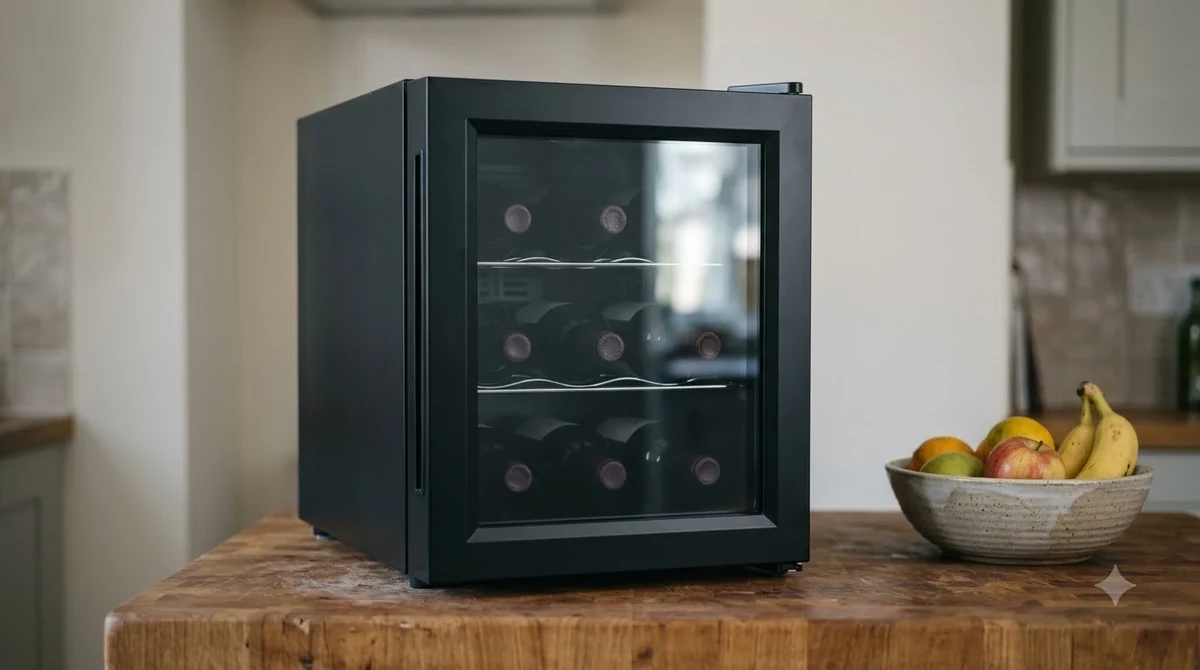
The upright bottle arrangement is arguably its most useful characteristic. Restaurants often need to keep partially used bottles available for additional pours without placing them on conventional horizontal shelves. The STC6 accommodates six bottles with diameters below 105 mm, according to the owner’s manual, making it more accommodating for wider bottle shapes than the STC12’s narrower bottle openings.
Convenient storage for opened bottles
Opened wine needs different storage arrangements from a long-term collection of sealed bottles. Keeping bottles upright reduces the chance of liquid escaping through an imperfect closure and makes it easier to identify, retrieve, and replace individual bottles during service.
This arrangement also helps with inventory organization. A bartender can keep several currently served wines in one dedicated location instead of repeatedly moving bottles between the main refrigerator, a counter, and a wine cabinet. For a tasting room offering six selections by the glass, that arrangement can be particularly convenient.
At home, the same design benefits people who entertain frequently. A dinner party featuring several wines can require more than one bottle of white, rosé, or sparkling wine to remain accessible throughout the evening. Having six upright positions provides a dedicated location for those bottles.
Temperature flexibility
The 41°F to 68°F operating range is another advantage. It covers the typical serving requirements of many popular wine styles without forcing the owner to rely on one fixed cooling temperature.
For example, sparkling wines generally benefit from serving temperatures around 40°F to 50°F. Light-bodied whites and rosé are commonly served at 45°F to 50°F, while fuller-bodied whites are often better around 50°F to 55°F. Light reds can be served around 55°F to 60°F, and fuller-bodied reds around 60°F to 65°F.
Although the STC6 has just one temperature zone, its broad adjustment range allows the entire collection to be configured for different service occasions. An establishment primarily serving Sauvignon Blanc, Pinot Grigio, and sparkling wine can select a colder setting than a bar focusing on lighter reds.
Useful monitoring and memory features
Temperature alarms are especially helpful in commercial settings. If the cooler moves outside its suggested operating range, the unit provides audible and visual warnings. This gives staff an opportunity to investigate a temperature problem before it affects the bottles being served.
The temperature memory function is another practical addition. Following a power interruption, the cooler restores its previous setting instead of requiring someone to reprogram it manually. The control-panel lock also reduces the possibility of accidental adjustments during busy periods.
Automatic defrost further reduces routine maintenance. Rather than requiring frequent manual defrosting during normal operation, the system handles the process automatically and directs water through its drainage arrangement.
For people comparing different configurations, the best rated wine cooler options offer a useful starting point for understanding how upright open-bottle storage differs from conventional wine cabinets.
Common Complaints
The Summit STC6 has several limitations that become apparent when its commercial design is compared with ordinary residential wine refrigerators. Its six-bottle capacity, substantial width, installation requirements, and single-zone arrangement deserve careful consideration before purchase.
The six-bottle capacity is restrictive
Six bottles may be adequate for a small tasting room or home bar, but it is not a large storage capacity for a business with frequent wine service. A restaurant offering ten wines by the glass, for example, would need additional refrigeration or another storage arrangement to accommodate its entire selection.
The upright configuration also means the STC6 is not designed to function as a traditional wine cellar. Collectors who want to store a mixture of Cabernet Sauvignon, Merlot, Chardonnay, and Pinot Noir in horizontal positions will find conventional shelving more practical.
Its six positions are intended for active service rather than building an extensive collection. Anyone who regularly purchases wine by the case should consider a separate wine cabinet for unopened bottles.
The footprint requires substantial counter space
The word countertop can create misleading expectations. At 35.75 inches wide, 15.38 inches deep, and 12.5 inches high, the STC6 occupies a substantial amount of horizontal space.
Its 73-pound weight is another consideration. This is not a lightweight appliance that can be moved easily between kitchen surfaces. The supporting counter must be sufficiently strong, stable, and level to handle the appliance safely.
Ventilation also requires more space than the cabinet dimensions alone suggest. Summit’s owner’s manual specifies at least four inches of clearance behind the unit, along both sides, and above it. Consequently, an installation area needs considerably more room than a simple 35.75-by-15.38-inch measurement indicates.
One temperature zone limits flexibility
Different wine styles generally benefit from different serving temperatures. A bottle of sparkling wine may be best around 43°F to 48°F, while a full-bodied red may be more enjoyable around 60°F to 65°F.
Because the STC6 uses one temperature zone, it cannot independently maintain those two temperatures at the same time. Owners who need simultaneous red and white wine storage should consider a dual-zone wine refrigerator alongside a dedicated open-bottle chiller.
For a business that serves mostly one category of wine, this limitation may be relatively minor. For a varied wine list, however, the lack of independent zones requires additional planning.
Commercial equipment is not necessarily the best residential choice
The STC6 is intended for wine storage and display in commercial environments. Its design makes sense behind a bar, but its wide cabinet, specialized upright positions, and dedicated ventilation requirements may be inconvenient in an ordinary kitchen.
It also requires a grounded 115V electrical outlet. Summit recommends a dedicated circuit, and the manual specifically advises against using an extension cord or removing the grounding connection. These installation requirements should be considered before arranging the appliance on a crowded countertop.
Another point to understand is that compressor refrigeration produces operating sounds. Summit publishes a sound-level figure of 35.8 dB, but actual sound perception depends on the installation environment and surrounding room noise. Buyers seeking a completely silent appliance should not assume that compressor-based refrigeration will meet that expectation.
Tip: Measure the entire installation area before purchasing. Allow at least four inches of ventilation clearance on the back, sides, and top, and make sure the counter can support a 73-pound appliance plus its contents.
Who Should Buy and Who Should Skip
The Summit STC6 is best suited to people who regularly serve opened bottles and need dedicated refrigerated upright storage. Its commercial construction and temperature controls are more valuable in a working bar or tasting room than in a household that occasionally opens a bottle of wine.
Who should consider the STC6
Restaurants and wine bars: Businesses serving several wines by the glass can benefit from having six opened bottles refrigerated in one accessible location. The upright arrangement makes it easier to organize service bottles, while compressor cooling supports frequent use.
Wine tasting rooms: Tasting rooms frequently open several bottles at once. The STC6 offers a convenient way to keep those bottles chilled and visible while maintaining an organized service station.
Hotels and hospitality venues: A commercial hospitality environment can make good use of the stainless steel exterior, temperature alarms, and digital controls. The NSF-7 commercial sanitation listing is particularly relevant to its intended foodservice applications.
Serious home entertainers: Households that regularly host wine tastings or large dinner parties may appreciate having six opened bottles ready for additional pours. It can be especially useful when several guests prefer different wines.
Small wine-focused businesses: Independent wine shops and tasting counters may benefit from the dedicated open-bottle format when their primary requirement is refrigerated service rather than long-term inventory storage.
Who should skip the STC6
Casual wine drinkers: A household that opens one bottle every few weeks probably does not need a specialized commercial chiller. A regular refrigerator and suitable wine stopper may be sufficient for occasional storage.
Wine collectors: The STC6 is not intended to hold a collection of unopened bottles horizontally. A traditional wine refrigerator with adjustable shelves offers a more suitable storage arrangement.
Small-apartment owners: Its 35.75-inch width makes the STC6 difficult to accommodate in a compact kitchen. The required ventilation clearance increases the amount of usable counter space needed.
Mixed red-and-white wine service: Owners who require different temperatures simultaneously should prioritize a dual-zone appliance or use separate refrigeration units for different wine categories.
Budget-conscious shoppers: Commercial equipment should be evaluated according to its intended use rather than its appearance alone. If the main requirement is simply keeping a few unopened bottles chilled, a conventional compact wine refrigerator is likely a more appropriate category.
How It Compares to Alternatives
Summit’s STC6 is part of a specialized tabletop commercial wine-cooler range that also includes the STC12. The two models share the same external dimensions and general compressor-based approach, but their bottle capacities and supported bottle sizes differ considerably.
Summit STC6 versus Summit STC12
The STC12 is the most direct alternative for shoppers who like the STC6’s upright format but need more bottle positions. Summit lists the STC12 as a 12-bottle tabletop commercial cooler measuring 12.5 inches high, 35.75 inches wide, and 15.38 inches deep.
That means the STC12 offers twice the stated bottle capacity without increasing the external footprint. For a restaurant serving a wider range of wines by the glass, this additional capacity can be a meaningful advantage.
However, there is an important compatibility difference. According to Summit’s owner’s manual, the STC6 accommodates six bottles with diameters below 105 mm, whereas the STC12 accommodates 12 bottles with diameters below 81 mm. Owners should therefore consider their actual bottle shapes rather than selecting the higher-capacity model automatically.
| Comparison | STC6 | STC12 |
|---|---|---|
| Bottle capacity | 6 | 12 |
| Height | 12.5 inches | 12.5 inches |
| Width | 35.75 inches | 35.75 inches |
| Depth | 15.38 inches | 15.38 inches |
| Maximum bottle diameter | Under 105 mm | Under 81 mm |
| Cooling approach | Compressor | Compressor |
| Storage arrangement | Upright | Upright |
| Primary advantage | Wider bottle compatibility | Greater bottle capacity |
Summit STC6 versus the older STC1
The STC1 represents a different approach to compact countertop wine refrigeration. Summit describes this older model as a thermoelectric cooler with upright storage for up to eight standard 750 ml bottles. It uses two interior fans, a digital thermostat, and a temperature range of 46°F to 66°F.
Unlike the STC6, the STC1 does not use a compressor. Summit describes its thermoelectric design as quieter and vibration-free. However, the manufacturer identifies the STC1 as discontinued and replaced by the STC12, so it should be treated as an older model rather than an equivalent current alternative.
The two designs also serve somewhat different requirements. The STC1 was a smaller residential-style countertop appliance, while the STC6 is a commercial open-bottle chiller with a wider stainless steel cabinet and compressor refrigeration.
Summit STC6 versus conventional wine refrigerators
A conventional wine refrigerator generally uses horizontal shelves to store unopened bottles. This arrangement is useful for people who want to maintain a collection, organize bottles by grape variety, or keep several wines available for future occasions.
The STC6 takes a different approach by focusing on opened bottles and immediate service. Its dedicated upright positions are useful for restaurants and tasting rooms, but they do not provide the same flexibility as traditional bottle racks.
For example, someone collecting Bordeaux wines for future drinking may prefer a conventional refrigerator that accommodates bottles horizontally. A wine bar serving Chardonnay, Sauvignon Blanc, and sparkling wine by the glass may find the STC6 more useful.
The decision is therefore less about which format is universally superior and more about the type of wine storage required. The STC6 is a specialized service appliance rather than a general-purpose replacement for every wine refrigerator.
Care, Installation, and Warranty
Correct installation and routine cleaning are important for maintaining consistent cooling performance. Summit’s owner’s manual provides specific instructions concerning ventilation, electrical connections, defrosting, and cleaning that prospective buyers should understand before setting up the STC6.
Installation requirements
The STC6 is designed for freestanding installation. Summit recommends leaving at least four inches of clearance at the back, sides, and top to allow sufficient ventilation. Positioning the cooler directly against a wall or enclosing it in a tight cabinet can interfere with proper airflow.
The recommended ambient operating temperature is 65°F to 90°F. Installing the appliance next to a stove, oven, heater, or other heat-producing equipment can make temperature management more difficult. Direct sunlight should also be avoided.
After transportation, Summit recommends allowing the appliance to stand upright for approximately two hours before connecting it to power. The unit should also be placed on a level surface strong enough to support its weight when fully loaded.
The manual specifies a grounded 115V AC electrical supply at 60Hz. A dedicated circuit is recommended, and the power cord should remain accessible after installation.
Temperature settings and wine service
The STC6 offers a broad range of temperature settings, but selecting the correct temperature depends on the wine being served. Sparkling wine generally benefits from colder service, while fuller-bodied whites and reds need progressively warmer conditions.
For example, a sparkling wine selection can be maintained around 43°F to 48°F, while Sauvignon Blanc and Pinot Grigio are often served around 45°F to 50°F. A fuller-bodied Chardonnay may be better around 50°F to 55°F.
Light reds such as Pinot Noir are commonly served around 55°F to 60°F. Fuller-bodied wines such as Cabernet Sauvignon generally benefit from temperatures around 60°F to 65°F. These ranges are serving recommendations rather than instructions for long-term wine aging.
Because the STC6 has one temperature zone, it is important to group bottles according to the intended service temperature. Businesses serving both sparkling wine and full-bodied red wine may need another storage arrangement for optimal presentation.
Cleaning and routine maintenance
Before cleaning, turn off the appliance, disconnect the power, and remove the stored bottles. Summit recommends cleaning the interior with warm water and baking soda, using approximately two tablespoons of baking soda per quart of water.
The exterior can be cleaned using a mild liquid detergent solution followed by rinsing and drying with a soft cloth. Avoid abrasive products and solvent-based cleaners that could damage the surfaces.
The automatic defrost function handles normal frost removal, but high heat and humidity can increase frost accumulation. The manual explains that repeated opening in humid environments can interfere with normal defrosting. It also describes the drainage arrangement at the back of the unit, which should be checked periodically to prevent water-management problems.
Keeping ventilation openings clear of dust is another useful maintenance step. Summit’s troubleshooting instructions identify dirty condenser surfaces and blocked ventilation as possible causes of insufficient cooling.
Warranty coverage
Summit’s published STC6 specifications identify a one-year parts-and-labor warranty and a five-year compressor warranty. The owner’s manual explains that the compressor coverage does not include labor for replacement.
Buyers should understand that compressor coverage and general appliance coverage are not interchangeable. The five-year provision applies specifically to the compressor, while the shorter warranty covers qualifying parts and labor under the stated conditions.
Before purchasing, confirm the applicable warranty terms with Summit or the authorized seller, particularly if the appliance will be used in a commercial environment. Installation, unauthorized modifications, and certain types of misuse may affect coverage.
The Summit STC6 and STC12 owner’s manual provides additional information about setup, temperature adjustment, drainage, cleaning, troubleshooting, and warranty conditions.
For a home entertaining station, the STC6 can also complement a dedicated cocktail setup. Hosts serving an Aperol Spritz recipe alongside wine can use the cooler for chilled bottles while keeping cocktail ingredients and glassware in separate storage areas.
Frequently Asked Questions
Can the Summit STC6 be installed under a kitchen counter?
The STC6 is specified for freestanding installation rather than enclosed built-in installation. Its four-inch ventilation clearance requirements on the back, sides, and top make a tightly enclosed cabinet inappropriate. A counter-height surface with sufficient surrounding airflow is a better installation arrangement.
Does the Summit STC6 have a reversible door?
The STC6 uses an open-bottle storage design rather than a conventional hinged cabinet door. Its bottle access and display arrangement therefore should not be evaluated using the reversible-door specifications commonly associated with traditional wine refrigerators. Check the manufacturer’s product drawings when planning the orientation of the installation.
Can the Summit STC6 accommodate large sparkling wine bottles?
The owner’s manual specifies a maximum bottle diameter below 105 mm for the STC6. However, diameter alone does not guarantee that every unusual bottle shape will fit properly. Champagne bottles and wider specialty formats should be measured before purchase, especially if the cooler will be used for a commercial selection.
Does the Summit STC6 require a water connection?
The unit does not require a conventional household water-supply connection. However, its manual describes a rear drainage hose and pipe arrangement for managing defrost water. Owners should follow the drainage instructions and arrange an appropriate way to handle collected water.
Can the STC6 maintain its temperature after a brief power outage?
The cooler includes a memory function that restores its previous temperature setting after power is interrupted. This feature does not mean that refrigeration continues while electricity is unavailable. Bottle temperatures can still rise during an extended outage, so businesses should monitor stored wine and avoid assuming that the memory function provides backup cooling.
The Summit STC6 is a specialized countertop wine cooler that makes the most sense for restaurants, bars, tasting rooms, and households that frequently serve opened bottles. Its compressor cooling, six upright positions, adjustable thermostat, and commercial-oriented features provide a practical service solution, but its wide footprint and single temperature zone limit its appeal as a conventional household wine fridge. Choose the STC6 when upright open-bottle storage is the priority, and compare it with the STC12 when greater capacity matters more than accommodating wider bottles.
More in Model Reviews
 Magic Chef 44 Bottle Wine Cooler Review for Flexible StorageUpdated Nov 21, 2026
 Whynter 164 Bottle Wine Cooler Review: Capacity, Features, and FitUpdated Nov 21, 2026
 Insignia NS WC16BK6 Review: Compact 16-Bottle Wine StorageUpdated Nov 21, 2026
 Wine Enthusiast Electric Blue Omega Review: Opening, Pouring, and Preserving Made EasierUpdated Nov 21, 2026
 Koolatron 20 Bottle Wine Cooler Review: Features, Fit, and PerformanceUpdated Nov 21, 2026
 NewAir AWC 330E Review for Home Wine StorageUpdated Nov 21, 2026