

We may earn a commission when you buy through links on this page, at no extra cost to you. Learn more.
The phrase sterling white wine usually refers to white wines from Sterling Vineyards, especially its Napa Valley Chardonnay and California Sauvignon Blanc bottlings. The producer is a Napa Valley winery, not a grape variety, so the wine’s region and label matter. Its Napa Valley Chardonnay is a richer, oak-influenced white, while Sterling’s Vintner’s Collection Sauvignon Blanc has been described as lighter and citrus-led. The right bottle depends on whether you want creamy texture or a brighter, zippier profile.
Sterling’s white wines make more sense when you separate grape variety, appellation, and bottling. The Chardonnay discussed here carries a Napa Valley designation and a detailed winery-published technical profile; past Vintner’s Collection reviews show that Sterling has also bottled California Sauvignon Blanc. Below are the useful details for identifying the style, understanding its flavor, choosing food, and serving it well.
What Sterling White Wine Means
Sterling white wine is a brand-and-producer search, not the name of one fixed blend. Sterling Vineyards was founded in 1964 in the Napa Valley, and its early winemaking history included both Chardonnay and Sauvignon Blanc alongside red Bordeaux varieties. The Calistoga Wine Growers Association lists both grapes among the winery’s white wines, which explains why two bottles carrying the Sterling name can taste quite different.
The two varieties offer different experiences. Chardonnay is generally broader in texture and can take on notes of apple, citrus, melon, vanilla, and toast when oak is used. Sauvignon Blanc usually emphasizes fresh acidity and citrus, green fruit, and herbal or floral notes. Sterling’s own 2023 Napa Valley Chardonnay is 100% Chardonnay; Wine Enthusiast’s review of its 2021 Vintner’s Collection Sauvignon Blanc identifies that wine as California Sauvignon Blanc, not Napa Valley Chardonnay.
That distinction matters at the shelf. Start with the full wine name and its appellation rather than relying on the word Sterling alone. A Napa Valley Chardonnay points toward a fuller, layered white, while a California Sauvignon Blanc is a better clue for a more refreshing, citrus-focused pour. For a wider look at how a producer name differs from a grape or region, see our guide to Wine Brands.
Napa Valley Chardonnay: Flavor and Winemaking
Sterling’s 2023 Napa Valley Chardonnay is a dry, medium-acidity white with a rounded palate, bright fruit, and a subtle oak frame. The winery lists it as 100% Chardonnay, 14.5% alcohol by volume, and 750 milliliters; these details describe that particular bottling and should not be assumed for every Sterling white wine.
The winery’s notes describe fresh citrus, Granny Smith apple, and lime, followed by ripe pineapple, Golden Delicious apple, and melon. Vanilla, brioche toast, shortbread, hazelnut, and a lanolin-like savory note add complexity. Its finish is described as crisp and dry, which is useful context: a creamy texture does not automatically mean a sweet wine. Readers comparing alcohol levels across widely distributed whites can also review our explanation of Black Box Pinot Grigio alcohol content; grape, vintage, and bottling all affect the number. Production choices help explain the texture. Sterling says the Chardonnay grapes were picked in cool morning hours and pressed promptly. The juice was fermented using 65% French oak and 35% American oak, and the winery reports that 100% of the wine completed malolactic fermentation. French and American oak can contribute toast, spice, and a broader mouthfeel, while malolactic fermentation converts sharper malic acid into softer lactic acid. The winery still describes the finished wine as having balanced, bright acidity.
| Sterling bottling reviewed | Grape and region | Alcohol | Published review or detail |
|---|---|---|---|
| 2023 Napa Valley Chardonnay | 100% Chardonnay; Napa Valley | 14.5% ABV | Oak-fermented; 100% malolactic fermentation |
| 2022 Vintner’s Collection Chardonnay | Chardonnay; California | 14.1% ABV | Wine Enthusiast rating: 89 points |
| 2021 Vintner’s Collection Sauvignon Blanc | Sauvignon Blanc; California | 13.8% ABV | Wine Enthusiast rating: 88 points |
The figures show why the label and vintage should stay attached to every tasting note. The 2022 Chardonnay and 2021 Sauvignon Blanc are separate Vintner’s Collection wines reviewed by Wine Enthusiast, while the 2023 Chardonnay is the winery’s Napa Valley bottling. Wine Enthusiast’s review of the 2022 Vintner’s Collection Chardonnay gives that wine 89 points; its 88-point Sauvignon Blanc review applies only to the named 2021 bottling. These are not ratings for every Sterling release. For the full technical description of the newer Napa Chardonnay, consult Sterling’s 2023 Napa Valley Chardonnay page.
Tip: Look at the grape and appellation before comparing tasting notes. “Napa Valley Chardonnay” and “California Sauvignon Blanc” describe different varieties and geographic designations, so their flavor profiles and alcohol figures should not be treated as interchangeable.
Sauvignon Blanc and the Lighter Sterling Style
Sterling’s Sauvignon Blanc offers a more citrus-driven alternative to its oak-influenced Chardonnay. A Wine Enthusiast review of the 2021 Vintner’s Collection bottling lists 13.8% alcohol and describes lemon, lime, green apple, and cherry blossom, with a simple, rounded style rather than a sharply grassy one.
That review awarded the specific 2021 wine 88 points. It is a useful snapshot of a particular vintage and bottling, not a permanent description of every Sauvignon Blanc Sterling may release. The Calistoga Wine Growers Association also identifies Sauvignon Blanc as one of Sterling’s white varieties, and Sterling’s vineyard information names Calistoga Ranch and Larsen Ranch among sites planted to the grape. Larsen Ranch covers 50 acres and is planted to Sauvignon Blanc and Cabernet Sauvignon; Calistoga Ranch has 45 acres planted exclusively to Sauvignon Blanc.
For shoppers, the practical distinction is freshness versus breadth. Sauvignon Blanc’s naturally high acidity gives it a lively edge with lemony seafood, goat cheese, herb salads, and vegetables with a vinaigrette. Chardonnay is often the easier match for roast chicken, richer fish, and dishes with butter or cream. If the bottle in front of you is Sauvignon Blanc, do not expect the same vanilla, brioche, and creamy texture described for the 2023 Napa Chardonnay.
Napa Vineyard Sites Behind the Chardonnay
Sterling’s Napa Valley Chardonnay draws on multiple vineyard areas rather than a single named estate block. The winery identifies Carneros sites Stanly Ranch and BV Ranch 9, with additional fruit from Big Ranch in Oak Knoll and Gamble Ranch in Oakville. The different sites contribute a combination of marine-influenced freshness and riper fruit character to the finished wine.
In Carneros, shallow clay-loam soils and a marine-influenced climate help support balanced Chardonnay with freshness. Farther north, Sterling says Big Ranch and Gamble Ranch contribute riper fruit and a rounder, creamier mouthfeel. The winery describes these sources together as providing fresh fruit flavors and bright acidity, a balance that helps the wine carry oak influence without losing its citrus and apple character.
Sterling’s wider vineyard map also shows why the appellation on a label is useful. Calistoga Ranch, for example, is a 45-acre Sauvignon Blanc site near the Napa River, where the river’s cooling influence brings cool mornings before warmer days. That is a different grape and a different vineyard story from the Chardonnay sourced in Carneros, Oak Knoll, and Oakville. For another producer comparison, our article on Baron Philippe de Rothschild wine explains why brand identity and regional origin should be read separately.
Food Pairings for Sterling Chardonnay and Sauvignon Blanc
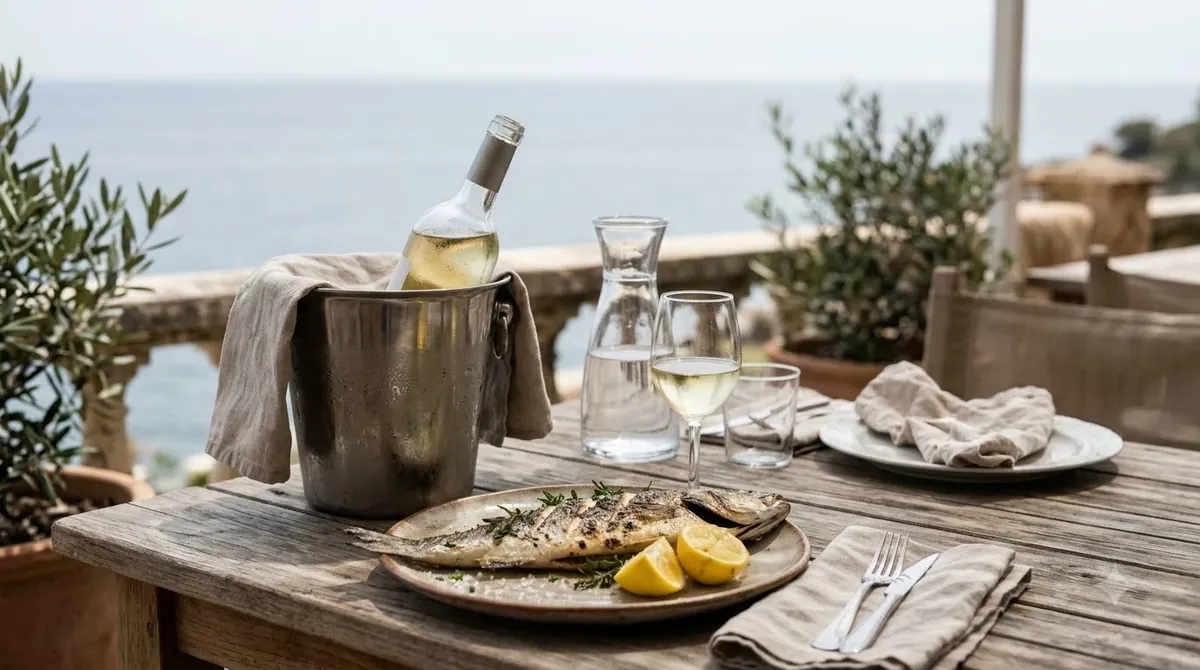
Match the weight and acidity of the dish to the wine. Sterling’s Napa Valley Chardonnay has a rounded texture and oak-derived spice, so it works well with roast chicken, pork tenderloin, buttery scallops, crab, and dishes with a moderate cream sauce. The wine’s apple, pineapple, and vanilla notes can complement golden-roasted poultry or a savory chicken dish without requiring a sweet sauce.
Sauvignon Blanc is a sharper partner for foods that benefit from acidity. Try it with oysters, shrimp, grilled white fish, goat cheese, asparagus, cucumber salad, or chicken with lemon and fresh herbs. Its lemon and lime profile can cut through olive oil and vinaigrette, while green-apple freshness suits crisp vegetables. Acidic foods need a wine with equal or higher acidity; otherwise, the wine can seem flat beside the dish.
Use salt, richness, and spice thoughtfully. A creamy sauce can make a high-acid white feel less austere, while a sharp vinaigrette calls for a similarly lively wine. Very hot chili dishes are more difficult with higher-alcohol wines because heat can make alcohol feel stronger; a milder preparation is a safer match for the 14.5% ABV Napa Chardonnay. For a table that includes red wine as well, compare the dish’s weight before reaching for something like Campo Viejo red wine: tannic reds are less suitable for delicate or oily fish than either of these white styles. The goal is not to pair every ingredient by itself, but to match the wine’s acidity and body to the overall dish. For a mixed menu, pour Sauvignon Blanc with the first course or salad, then move to Chardonnay with the main course. Keep sauces in view: a squeeze of lemon, capers, or fresh herbs tends to favor Sauvignon Blanc, while browned butter, mushrooms, and a light cream sauce can lean toward Chardonnay.
Serving Temperature, Glassware, and Storage
Serve Sterling’s Napa Valley Chardonnay at 50–55°F to let its fruit, oak, and creamy texture show without making the alcohol seem too prominent. A lighter Sauvignon Blanc is usually fresher at 45–50°F. Very cold white wine can mute aroma, so remove a bottle from the refrigerator briefly if its citrus and fruit notes seem difficult to smell.
A standard pour is 5 ounces, which means a 750-milliliter bottle yields about five glasses. Use a medium-sized white wine glass for Chardonnay, leaving space to swirl and release its apple, citrus, and vanilla aromas. Sauvignon Blanc also benefits from a glass with a narrower bowl that keeps the fresh aromas focused; elaborate glassware is not required for either style.
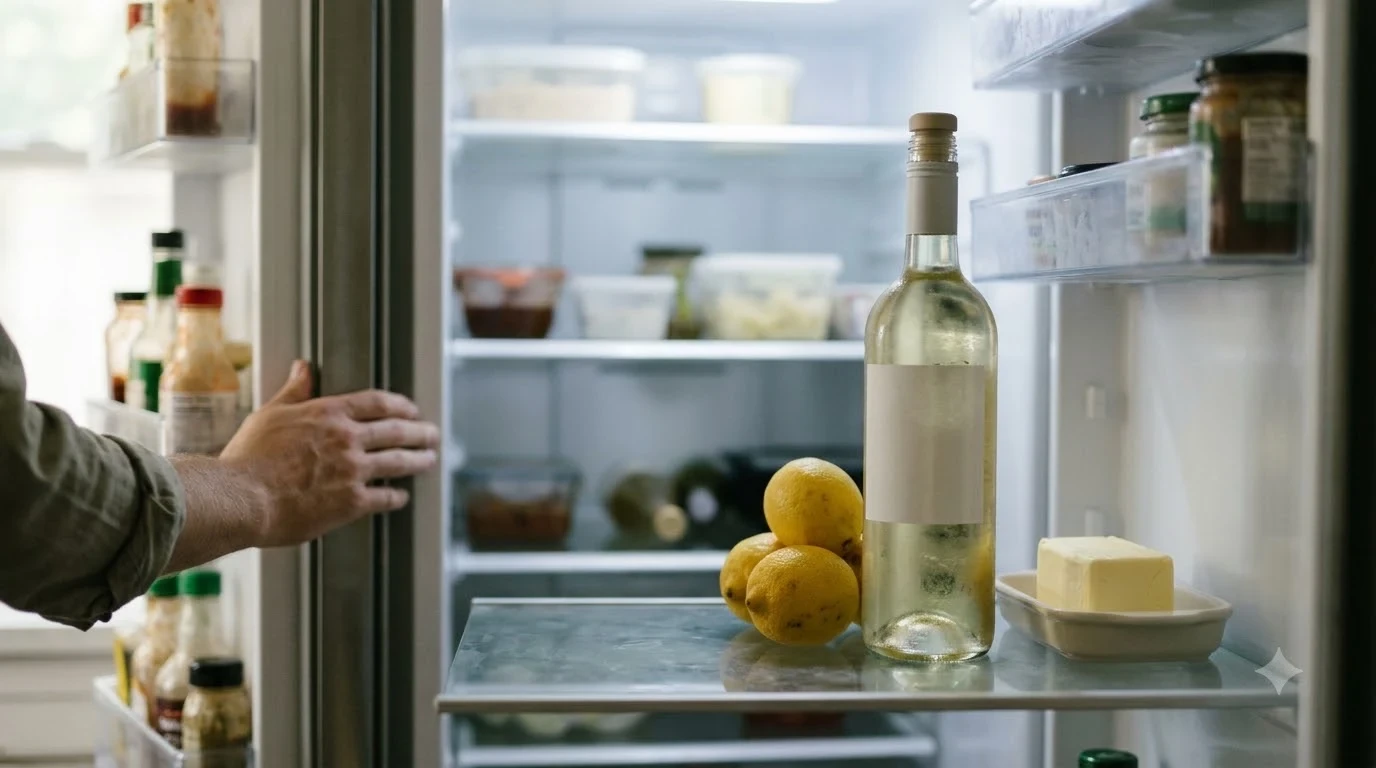
Store unopened bottles on their sides in a cool, dark place near 55°F, away from direct sunlight and large temperature swings. After opening, recork the bottle and refrigerate it; most still wines keep their best character for about 3–5 days under refrigeration. Bring the remaining wine back toward its serving temperature before pouring. A wine stopper helps limit air exposure, but it does not stop gradual oxidation, so plan to finish an opened bottle within that general window. Chardonnay’s fuller texture does not mean it needs a long decant. Open the bottle shortly before serving, pour a small taste, and allow a few minutes in the glass for aromas to develop. Sauvignon Blanc is generally best enjoyed young and cool, while a structured Chardonnay may show a little more aromatic detail as it warms from refrigerator temperature toward the recommended range.
Frequently Asked Questions
These answers cover label terms and serving details that can help make a Sterling bottle easier to understand. They apply to wine terminology generally unless a specific Sterling bottling is named.
What does “Napa Valley” on a wine label mean?
Napa Valley is an American Viticultural Area, or AVA, a federally recognized grape-growing region with defined boundaries. For an American wine labeled with an AVA, at least 85% of the grapes must come from that region. The designation identifies origin; it is not a quality score.
What does malolactic fermentation do to Chardonnay?
Malolactic fermentation is a bacterial conversion of malic acid, which tastes tart like green apple, into softer lactic acid. It can make a Chardonnay feel rounder and less sharply acidic. The buttery aroma sometimes associated with this process comes from compounds such as diacetyl, and its intensity varies with winemaking choices.
Is a lanolin note an ingredient in the wine?
No. Lanolin is a tasting descriptor for a waxy, wool-like aroma, not an ingredient added to Chardonnay. Wine writers use sensory comparisons such as lanolin, slate, or brioche to help describe aromas that can be difficult to name directly.
Should you swirl a glass of white wine?
Yes, a gentle swirl can help release aromas by increasing the wine’s contact with air. Hold the glass by its stem and use a small circular motion over a stable surface until you are comfortable swirling it in your hand. This is especially useful for a layered Chardonnay with oak and fruit aromas.
Why can the same grape taste different from one region to another?
Climate, soil, harvest timing, and cellar choices all affect a grape’s flavor and texture. Cooler growing conditions often help grapes retain acidity, while warmer conditions can encourage riper fruit character. Fermentation vessels, oak use, and malolactic fermentation can then shape the finished wine further.
Sterling white wine is easiest to choose when you identify the grape and region first: Napa Valley Chardonnay for a fuller, oak-framed glass, or Sauvignon Blanc for a brighter citrus profile. Serve each at the right temperature and pair it with food of similar weight, and the differences between the styles become clear.
More in Wine Brands
 Underwood Wine Price: Compare Bottles, Cans, and Pack SizesUpdated Nov 21, 2026
 Zenato Wine Price: Compare Styles and Choose the Right BottleUpdated Nov 21, 2026
 Zuccardi Wine Price: Compare Bottles and Find the Right RangeUpdated Nov 21, 2026
 Yellow Tail Moscato Review: Taste, Sweetness and Serving TipsUpdated Nov 21, 2026
 Wolf Blass Yellow Label Review: Choose Your Best StyleUpdated Nov 21, 2026
 Wolffer Estate Rose Review: Choose the Right Bottle for Your TableUpdated Nov 21, 2026