

We may earn a commission when you buy through links on this page, at no extra cost to you. Learn more.
To sip white wine, take a small mouthful, move it gently across your palate, and notice its acidity, sweetness, texture, flavor, and finish. Start with the wine at a suitable temperature and smell it before tasting, because aroma is a major part of what you experience as flavor. You do not need professional vocabulary or elaborate equipment; a clean glass and an attentive first sip are enough to form a useful impression.
White wine ranges from lean, citrus-driven styles to rich, creamy bottles and gently sweet pours. A simple tasting routine makes those differences easier to recognize, whether the glass holds Sauvignon Blanc, Pinot Grigio, Chardonnay, or Riesling. The goal is not to find a correct answer hidden in the glass. It is to notice what the wine does and decide which qualities you enjoy.
Prepare the Glass and Set a Simple Tasting Goal
A relaxed tasting starts with a clean glass, a modest pour, and one or two things to pay attention to. A standard 5-ounce pour leaves enough room to swirl, while a 750-milliliter bottle provides about five such servings.
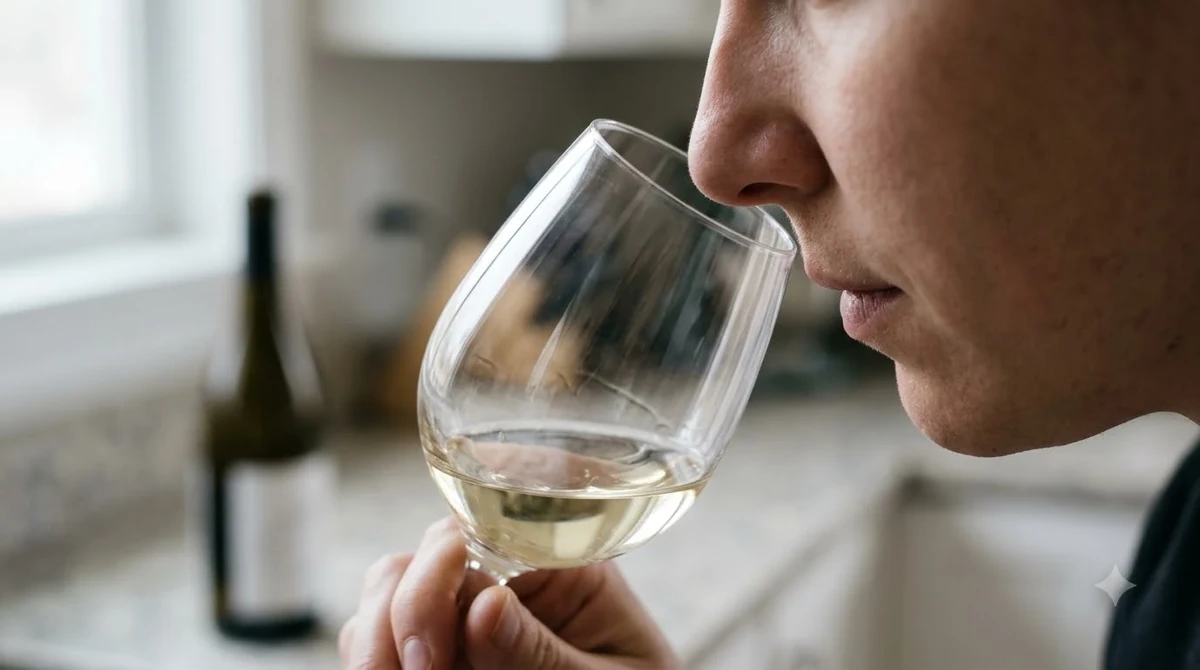
Choose a clear, stemmed wine glass with a bowl that narrows slightly toward the rim. That shape gives aromas room to collect without making it difficult to bring your nose near the wine. Hold the glass by its stem when possible; your hand can warm the bowl, which matters when a crisp white is meant to stay cool.
Before pouring, make sure the glass is free of detergent scent, dust, and water spots. Rinse it with clean water and let it drain rather than wiping it with a strongly scented towel. Pour enough wine to cover the broadest part of the bowl, usually around one-fifth to one-quarter full. Leaving headspace makes swirling easier and gives aromas room to gather above the liquid.
Give yourself a tasting question instead of trying to identify every possible aroma. You might ask whether the wine feels crisp or rounded, whether its fruit seems more like lemon or peach, or whether the finish disappears quickly or lingers. Compare a Sauvignon Blanc with a Chardonnay, for example, and focus first on acidity and body. A small number of observations will tell you more than a long string of guesses.
Serve White Wine at the Right Temperature
Temperature changes how white wine smells and feels, so serve lighter styles colder and fuller styles a little warmer. A practical starting point is 45–50°F for light whites and 50–55°F for fuller whites such as many Chardonnays.
A very cold glass can make fruit aromas seem muted and can make acidity feel more pronounced. That is one reason a bottle taken straight from a very cold refrigerator may taste tight at first. Let it sit briefly after pouring and revisit it as it warms. Aromas often become easier to notice, while a rich white can show more texture and layered flavor.
For a useful temperature guide, use 45–50°F for light, dry whites such as Pinot Grigio and Sauvignon Blanc, 50–55°F for fuller whites such as oaked Chardonnay, and 43–50°F for sweet whites. Rosé is generally comfortable around 45–50°F. These are practical ranges rather than rigid rules; a lighter wine usually benefits from the cooler end, while a richer wine often opens up closer to the warmer end.
Plan chilling around the style rather than leaving every bottle in the refrigerator for the same length of time. Wine Enthusiast gives roughly 1½ hours in the refrigerator as a guide for light, dry whites and about 1 hour for full-bodied whites. The serving-temperature guidance in Wine Enthusiast’s serving temperature guide also explains why the bowl and shape of a glass can affect how a wine presents itself.
Look at the Color and Smell the Aromas
Before taking a sip, look at the wine against a pale background and then smell it in two short passes. Color offers clues about appearance and development, while the aroma gives you an early sense of fruit, flowers, herbs, oak, and freshness.
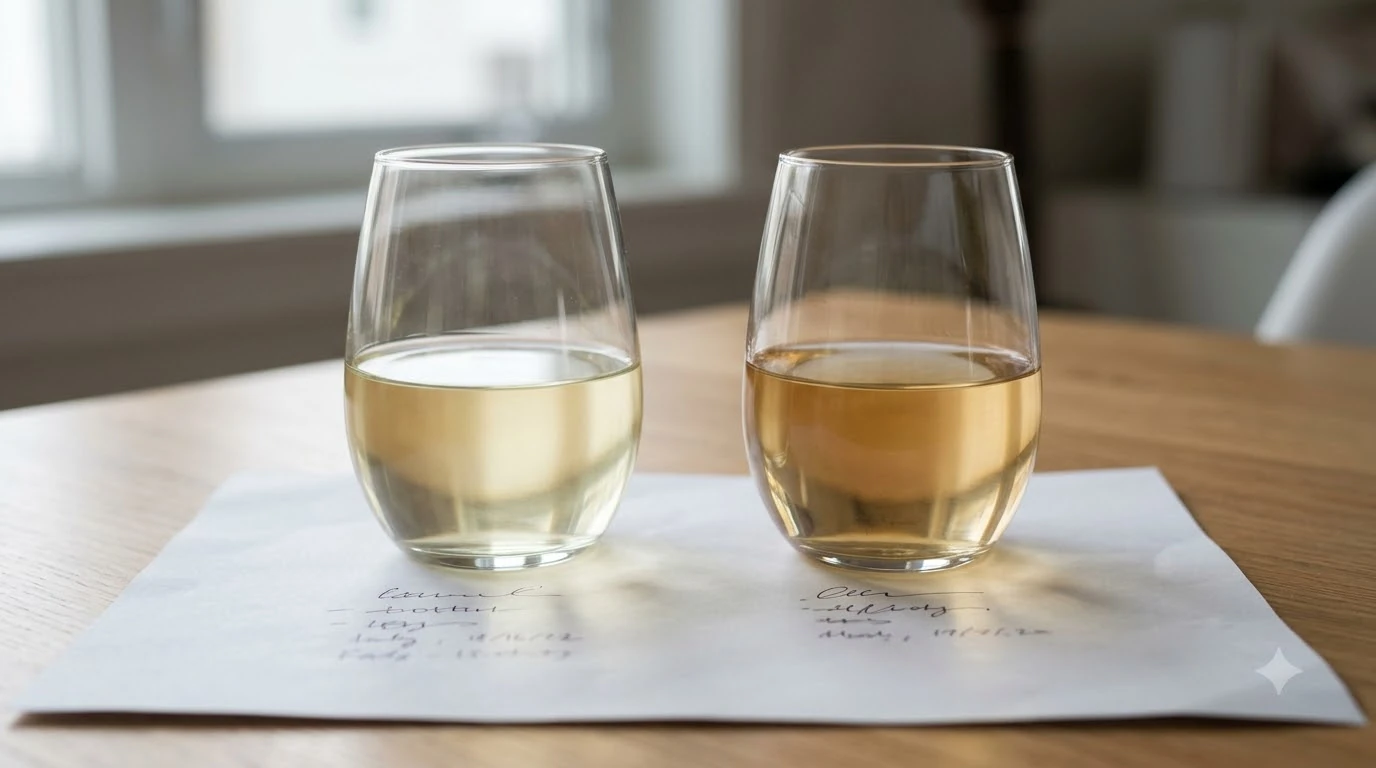
Hold the glass at a slight angle and notice whether the wine looks nearly clear, pale straw, lemon yellow, gold, or amber. Many young Sauvignon Blancs and Pinot Grigios appear pale, while some Chardonnays and mature sweet whites look deeper gold.
Bring your nose to the rim before swirling and take a gentle sniff. Then make one or two small circles with the glass on a stable surface, or swirl it carefully while holding the stem, and smell again. Movement increases the wine’s contact with air and helps aromatic compounds reach your nose. If the aromas are difficult to separate, start with broad families: citrus, orchard fruit, tropical fruit, flowers, herbs, spice, and wood.
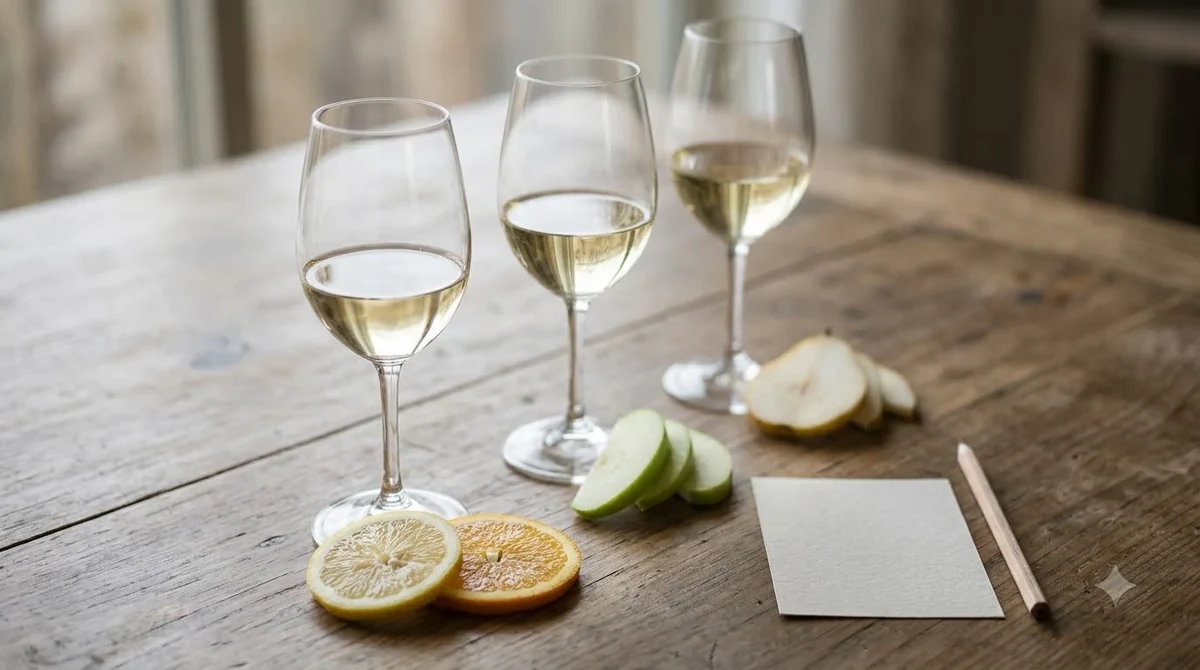
Use familiar comparisons rather than searching for an exact match. Lemon peel, green apple, pear, peach, melon, pineapple, and white flowers are useful reference points for white wines. Sauvignon Blanc can suggest lime, grapefruit, or fresh herbs; Riesling may recall citrus, orchard fruit, or flowers; Chardonnay can lean toward apple, peach, melon, or vanilla when oak is involved. These are possible descriptors, not a checklist every bottle must satisfy. For help keeping tasting language clear, Decanter’s guide to reading tasting notes explains how familiar terms describe structure, texture, and aroma without requiring an elaborate list.
Take a Small Sip and Follow the Wine Across Your Palate
A good sip is large enough to reach the whole mouth but small enough that you can pay attention to its changing sensations. Let the wine move gently across your tongue, notice its structure, and then pay attention to the flavor that remains after you swallow or spit.
Start with about half an ounce rather than filling your mouth. Notice the first impression, sometimes called the attack: does the wine feel sharp and lively, soft and rounded, sweet, or immediately warm from alcohol? Move it around your mouth so it reaches the front and sides of the tongue, the gums, and the area beneath the tongue. You can gently draw in a little air through pursed lips to release more aroma, but this technique is optional and can feel awkward at first.
Separate taste from texture. Sweetness and acidity are tastes; body and texture describe how the liquid feels. Acidity often creates a mouthwatering, fresh sensation, while residual sugar can make a wine feel rounder or softer. Body may seem light like skim milk, medium like regular milk, or full like cream. Alcohol can add warmth, particularly when the wine is served too warm or has a higher alcohol level.
After swallowing, notice the finish: the length and character of the sensations that remain. A short finish fades quickly; a longer one leaves fruit, citrus, mineral, floral, or oak-related impressions for several moments. There is no requirement for a white wine to have a long finish to be enjoyable. A simple, refreshing Pinot Grigio may be satisfying because it is clean and direct, while a richer Chardonnay may hold your attention with layers of fruit and texture. Try describing the wine with four notes: one aroma, one flavor, one structural feature, and one finish impression. For example: “The Sauvignon Blanc smells of grapefruit, tastes of lime, has high acidity, and finishes clean.” Or: “The Chardonnay suggests ripe pear, feels round, has medium acidity, and leaves a gentle buttery note.” This format is concise, repeatable, and personal.
Recognize the Main White Wine Styles
White wine styles are easiest to compare through acidity, body, sweetness, and aroma rather than grape name alone. The ranges below are useful starting points for common examples, although climate, ripeness, winemaking, and producer choices can change the result.
| Style or grape | Typical impression | Acidity | Useful serving range |
|---|---|---|---|
| Pinot Grigio | Light, crisp, citrus or pear; usually dry | Medium to high | 45–50°F |
| Sauvignon Blanc | Citrus, green fruit, herbs; usually dry | High | 45–50°F |
| Riesling | Floral, citrus, orchard fruit; dry to sweet | High | 45–50°F |
| Chardonnay | Apple, melon, citrus; can be lean or rich | Medium | 50–55°F |
| Moscato | Grapey, floral, often gently sweet | Low to medium | 43–50°F |
Pinot Grigio is a useful starting point if you prefer a lighter, uncomplicated white. Many examples emphasize citrus, pear, and a clean finish, while their body and alcohol level vary by producer and bottling. For a brand-specific example, the details in our page on Black Box Pinot Grigio alcohol content can help you separate the wine’s alcohol percentage from general expectations about the grape. Alcohol content is one part of the wine’s structure, not a complete measure of weight or sweetness.
Sauvignon Blanc often gives a more pronounced impression of freshness, with high acidity and aromas that may include lime, grapefruit, passion fruit, or herbs. Riesling is especially useful for learning how sweetness and acidity can work together: a bottle may be dry, off-dry, or distinctly sweet, yet its acidity can keep the overall impression lively. Do not assume that floral or ripe-fruit aromas automatically mean the wine contains much residual sugar.
Chardonnay covers a broad range, from light, stainless-steel-fermented examples to fuller wines with oak influence and creamy texture. A warmer serving temperature around 50–55°F helps fuller versions show their aroma and weight. Moscato tends to be aromatic and can have noticeable sweetness, so it is often served colder, around 43–50°F. For a wider introduction to producers, labels, and grape-based styles, explore the site’s Wine Brands resource or the profile of Baron Philippe de Rothschild wine as an example of how a producer name can appear across wine labels.
Pair White Wine With Food and Keep the Bottle Fresh
Choose a white wine whose acidity, sweetness, and body can stand beside the food rather than disappear behind it. Fresh seafood, vegetables, creamy dishes, and spicy flavors each call for a slightly different balance.
High-acid whites such as Sauvignon Blanc and many Rieslings can work well with lemon-dressed salads, goat cheese, oysters, and grilled fish because their freshness meets the brightness in the food. A richer Chardonnay can suit roast chicken, buttered seafood, or a creamy pasta because the wine has enough body to share the dish’s weight. Pinot Grigio is a flexible partner for simple seafood, light vegetable dishes, and mild cheeses, particularly when the preparation is not heavily spiced. Match sweetness thoughtfully: a wine should be at least as sweet as the dessert, or it can taste thin, sour, or unusually sharp beside it. A sweet Riesling or Moscato can make more sense with fruit tart or a lightly sweet dessert than a very dry Sauvignon Blanc. Acidic foods need a wine with equal or higher acidity; otherwise the wine can seem flat. Salt and fat can soften tannin in red wine, but white wine pairing is often more directly shaped by acidity, sweetness, and body.
Spice deserves care. Chili heat can seem stronger beside wine with higher alcohol or prominent tannin, so a lower-alcohol, fruit-forward white with some sweetness can be a gentler match for spicy dishes. With oily fish, avoid strongly tannic reds; choose a white with enough freshness to refresh the palate. If you are serving both colors, a softer white such as Pinot Grigio can begin the meal before a red such as the one described in our Campo Viejo red wine profile. The shift gives guests an easy way to compare white-wine acidity with the firmer structure often found in red wine.
Once opened, put the bottle back in the refrigerator and use a stopper to limit air exposure. Most still whites are best within about 3–5 days, although delicate aromas can fade sooner. Keep unopened bottles in a cool, dark place with little temperature fluctuation; a storage temperature near 55°F is a useful target, and bottles with natural corks are commonly stored on their sides. For a tasting at home, pour smaller 5-ounce servings and return the bottle to the refrigerator between rounds rather than letting it sit warm on the table.
Tip: Taste the same white wine twice during one sitting: once soon after pouring and again after it has warmed a few degrees in the glass. Note whether the fruit becomes clearer, the acidity seems less sharp, or the texture feels fuller.
Frequently Asked Questions
Does a green tint mean a white wine is unripe?
No. A faint green hue can be a normal visual characteristic in some young white wines, including certain Sauvignon Blancs. Color is affected by grape variety, ripeness, winemaking, and age, so it should not be used by itself to judge quality or ripeness.
Can white wine have tannin?
Yes. Most white wines have little noticeable tannin because the juice is usually separated from the grape skins relatively early. Skin-contact white wines spend more time with their skins and can develop a drying, grippy sensation that is more familiar from red wine.
Do wine legs tell you whether a white wine is sweet?
No. Legs or tears on the inside of the glass are mainly related to alcohol, surface tension, and evaporation, not a direct reading of sweetness. Taste the wine and assess its residual sugar rather than relying on how quickly the streaks move.
Is it acceptable to sip white wine from a tumbler?
Yes. A clean tumbler is fine for casual drinking, and the wine can still be enjoyable. A clear glass with a bowl and a narrower rim makes it easier to observe color and collect aromas, so it is more useful for a focused tasting.
Should every white wine be decanted?
No. Most young, fresh whites are ready to pour directly from the bottle. Decanting may help some older or more complex whites open up, but it can also cause delicate aromas to fade, so it is best treated as an optional technique rather than a standard step.
Learning to sip white wine is mainly a matter of slowing down enough to notice aroma, acidity, sweetness, body, and finish. Start with a familiar grape, serve it at a sensible temperature, and make a few short notes about what you enjoy. Repeating the same method with different bottles will make your preferences clearer and help you choose white wine with greater confidence.
More in Wine Brands
 Underwood Wine Price: Compare Bottles, Cans, and Pack SizesUpdated Nov 21, 2026
 Zenato Wine Price: Compare Styles and Choose the Right BottleUpdated Nov 21, 2026
 Zuccardi Wine Price: Compare Bottles and Find the Right RangeUpdated Nov 21, 2026
 Yellow Tail Moscato Review: Taste, Sweetness and Serving TipsUpdated Nov 21, 2026
 Wolf Blass Yellow Label Review: Choose Your Best StyleUpdated Nov 21, 2026
 Wolffer Estate Rose Review: Choose the Right Bottle for Your TableUpdated Nov 21, 2026