

We may earn a commission when you buy through links on this page, at no extra cost to you. Learn more.
Sassicaia white wine does not exist as an official wine from Tenuta San Guido; Sassicaia is an iconic red wine from Bolgheri, Tuscany, made primarily from Cabernet Sauvignon. The Bolgheri Sassicaia DOC designation is reserved exclusively for red wine, so a white bottle carrying the Sassicaia name should not be confused with the estate’s authentic bottling. However, Bolgheri produces excellent white wines, particularly those made from Vermentino, Sauvignon Blanc, and Viognier.
The search for Sassicaia white wine often comes from confusion about the winery, its prestigious appellation, and the broader range of Tuscan wines. Understanding the distinction makes it easier to identify authentic Sassicaia, discover the white wines of Bolgheri, and choose a bottle that suits your preferences. Here is what wine enthusiasts should know about the producer, the appellation, and the alternatives worth exploring.
Does Sassicaia White Wine Actually Exist?
No. Tenuta San Guido does not list an official white Sassicaia in its wine portfolio. Sassicaia is a red Bordeaux-style blend, and the Bolgheri Sassicaia DOC is specifically reserved for red wine. The distinction is important because white wines are produced in the surrounding Bolgheri territory, but they cannot carry the Sassicaia DOC designation.

Tenuta San Guido identifies three principal wines in its portfolio: Sassicaia, Guidalberto, and Le Difese. All three are red wines. Guidalberto was introduced with the 2000 vintage, while Le Difese followed with its first vintage in 2002. Neither is a white-wine version of Sassicaia.
The official production regulations provide another clear distinction. Under the Bolgheri Sassicaia DOC rules, Cabernet Sauvignon must account for at least 80% of the blend. Other authorized red grape varieties can make up the remaining 20%. White grapes such as Vermentino, Sauvignon Blanc, and Viognier are not permitted as components of an official Sassicaia DOC wine.
Consequently, a bottle described by a retailer or informal seller as Sassicaia white wine should be investigated carefully. It might be a white wine from another Bolgheri producer, a wine from a different Tuscan appellation, or an inaccurate product description. The name alone does not establish a connection with Tenuta San Guido.
For anyone specifically interested in the original wine, the producer’s official Sassicaia profile provides useful information about its history, vineyards, and identity. Its commercial history began with the 1968 vintage, which reached the market in 1971.
The simplest conclusion is that Sassicaia is a red wine, not a wine family containing separate red and white versions. The distinction between the estate’s wine and the wider Bolgheri region is the key to understanding why searches for a white version can be confusing.
Understanding the Sassicaia Name and Bolgheri Appellation
Sassicaia’s identity is closely connected to a specific vineyard area in Bolgheri, on the Tuscan coast. Its exclusive DOC status distinguishes it from the broader Bolgheri DOC, which permits several categories of wine, including white, red, and rosé.
Tenuta San Guido’s history began with Mario Incisa della Rocchetta, who started experimenting with French grape varieties in the 1940s. He recognized similarities between the gravelly soils of Bolgheri and those of Bordeaux, inspiring the development of a Cabernet-based red wine. The first Cabernet Sauvignon vineyard was planted in 1944, and the wine remained a private estate bottling for many years.
The Sassicaia name became commercially established after the 1968 vintage was released in 1971. Its reputation helped demonstrate that the Tuscan coastal area could produce internationally respected wines from Bordeaux varieties. This was a significant departure from the traditional emphasis on Sangiovese in much of Tuscany.
The appellation also has an interesting regulatory history. According to the Bolgheri DOC consortium, the original DOC regulations approved in 1983 permitted white and rosé wines only. In 1994, the rules were revised to recognize red wines, and Sassicaia received its own subzone. In 2013, Bolgheri Sassicaia became an independent DOC.
| Wine designation | Wine category | Key distinction |
|---|---|---|
| Bolgheri DOC Bianco | White | Can include Vermentino and Sauvignon Blanc |
| Bolgheri DOC Rosso | Red | Includes Bordeaux varieties and other permitted red grapes |
| Bolgheri DOC Rosato | Rosé | Made using authorized red varieties |
| Bolgheri Superiore DOC | Red | Requires at least 2 years of aging, including 1 year in oak |
| Bolgheri Sassicaia DOC | Red | At least 80% Cabernet Sauvignon |
These categories explain why the terms Bolgheri and Sassicaia should not be treated as interchangeable. Bolgheri is a wine-producing territory with multiple permitted styles, whereas Sassicaia identifies a particular wine and its exclusive appellation.
The distinction also matters when comparing bottles from different producers. A white Bolgheri DOC wine can be authentic, prestigious, and representative of the region without having any connection to Sassicaia. Consumers interested in the wider estate and its signature wine can also read about Sassicaia Bolgheri wine to understand its regional identity.
Which Grapes Make Authentic Sassicaia?
Authentic Sassicaia is based on Cabernet Sauvignon, supported by Cabernet Franc. These varieties create the wine’s structured red-wine character, with dark fruit, firm tannins, savory complexity, and the capacity to develop with bottle age.
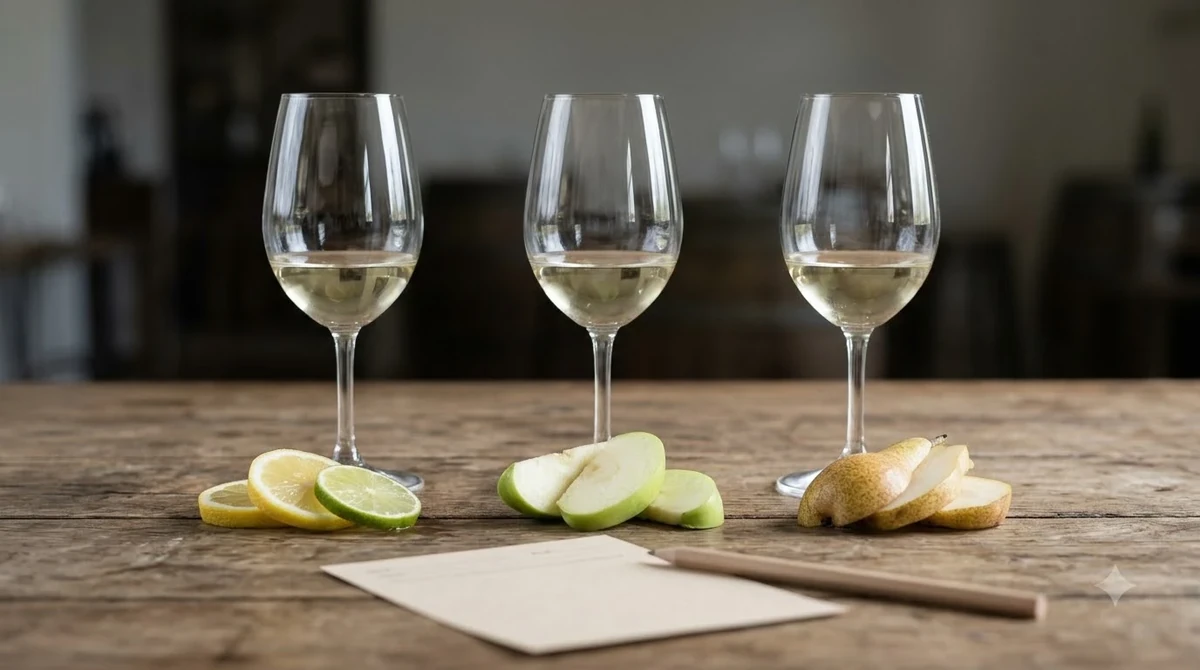
Cabernet Sauvignon is the principal grape under the Bolgheri Sassicaia DOC regulations, accounting for at least 80% of the blend. Cabernet Franc can contribute to the remaining proportion. The specific composition can vary between vintages, depending on growing conditions and the producer’s blending decisions.
Cabernet Sauvignon contributes much of the wine’s structure. It typically has high tannin levels, concentrated black-fruit characteristics, and enough acidity to support extended maturation. Common aromatic associations include blackcurrant, blackberry, cedar, and herbs.
Cabernet Franc offers a different dimension. It can contribute freshness, aromatic lift, and flavors associated with red and dark berries, herbs, and sometimes floral notes. Its contribution helps create balance rather than simply increasing the wine’s concentration.
The vineyard environment also influences the finished style. Tenuta San Guido describes its Sassicaia vineyards as having varied soils that include limestone, marl, stones, pebbles, and partially clay-rich areas. The estate identifies vineyard locations at different elevations, including sites between approximately 100 and 360 meters above sea level.
These differences in soil, exposure, and altitude help explain why the wine is not simply a generic Cabernet Sauvignon. The grapes come from a defined coastal Tuscan environment, and the estate selects vineyard parcels according to their individual characteristics.
It is also important not to confuse Sassicaia’s grape composition with that of other Tenuta San Guido wines. Guidalberto combines Cabernet Sauvignon and Merlot, while Le Difese incorporates Sangiovese alongside Cabernet Sauvignon. These are distinct wines with their own identities and blending approaches.
Understanding the grapes makes the absence of an official white Sassicaia even clearer. The denomination is based on red grape varieties and a specific production area, rather than a general label that can be applied to different colors of wine.
What White Wines Does the Bolgheri Region Produce?
Although Sassicaia itself is red, Bolgheri has a genuine white-wine tradition. Vermentino is the principal white grape associated with the area, while Sauvignon Blanc and Viognier are also used to make distinctive regional wines.
Vermentino is particularly important because it performs well in Mediterranean coastal conditions. Its wines typically feature refreshing acidity, citrus, orchard fruit, and herbal or mineral impressions. Depending on the producer and vineyard conditions, the style can range from light and crisp to more textured and concentrated.
Bolgheri’s proximity to the Tyrrhenian Sea contributes to its distinctive growing environment. Sea breezes influence vineyard conditions, while the surrounding hills and varied soils create differences between individual sites. These environmental factors are relevant to both white and red wine production.
Sauvignon Blanc offers another option for drinkers who prefer aromatic whites. It can bring pronounced citrus, green fruit, and herbaceous characteristics. Its naturally high acidity makes it suitable for seafood, fresh vegetables, and dishes featuring lemon or other acidic ingredients.
Viognier provides a contrasting style. Rather than emphasizing sharp acidity, it is generally associated with expressive aromas of peach, apricot, flowers, and sometimes tropical fruit. It can produce a fuller impression on the palate and works well with richer dishes.
The Bolgheri DOC consortium describes traditional regional white wines as fresh and fruit-focused, with limited reliance on oak aging. It also notes the development of more structured white styles, giving producers greater opportunities to explore different expressions of the territory.
For shoppers seeking something comparable in regional origin rather than grape composition, a Bolgheri Vermentino is a sensible starting point. It offers a direct connection to the Tuscan coast without suggesting that it is a Sassicaia product.
Other Tuscan whites are worth considering, too. Vernaccia di San Gimignano, for example, provides a different regional interpretation of Italian white wine, while coastal Vermentino offers a closer connection to the Mediterranean environment around Bolgheri.
The best choice depends on the preferred style. A crisp Vermentino is suitable for drinkers seeking freshness, Sauvignon Blanc is attractive for pronounced aromatic character, and Viognier is useful for those who prefer fuller-bodied whites.
How to Choose a White Wine Instead of Sassicaia
Choosing a white wine as an alternative to Sassicaia means deciding which characteristics matter most. The original wine is a structured, Cabernet-based red, so there is no exact white equivalent; however, several Tuscan and Italian varieties offer different forms of complexity and regional character.
Vermentino for freshness and coastal character
Vermentino is a natural choice for anyone interested in the Bolgheri area. Its refreshing acidity and citrus-driven profile make it particularly suitable for seafood, shellfish, grilled vegetables, and light pasta dishes. It also provides a useful introduction to the region’s white-wine production.
Look for a Bolgheri DOC Vermentino if regional identity is the priority. Bottles from other coastal Tuscan appellations can also provide interesting comparisons, although their production rules and growing conditions may differ.
Sauvignon Blanc for aromatic intensity
Sauvignon Blanc is a good choice for people who enjoy expressive aromas and lively acidity. Typical flavors include grapefruit, lime, green apple, and fresh herbs. These characteristics make it a particularly useful match for oysters, goat cheese, salads, and simply prepared fish.
Its high acidity is also helpful when serving food with citrus-based sauces. The wine can maintain freshness alongside acidic ingredients instead of tasting flat or heavy.
Viognier for a fuller white-wine style
Viognier is better suited to drinkers looking for aromatic richness rather than sharp acidity. Its peach, apricot, and floral characteristics can work well with roasted chicken, mild curries, and dishes containing aromatic spices.
Because it often has a fuller texture, it can also complement creamy sauces. However, serving temperature matters: keep fuller-bodied whites around 50–55 F to preserve their aromas while maintaining freshness.
Other Italian white varieties
Drinkers who want to explore beyond Bolgheri can consider Soave made from Garganega, Verdicchio from the Marche, or Fiano from southern Italy. These wines demonstrate the range of Italian white-wine styles without relying on the Sassicaia name.
For an introduction to different producers and wine categories, the Wine Brands section offers a broader starting point. Exploring producers by grape variety and region is often more useful than searching for a white version of a wine that is exclusively red.
Tip: If you want a white wine specifically from Sassicaia’s home territory, start with Bolgheri DOC Vermentino. Look for the grape variety and appellation on the bottle rather than relying on a retailer’s informal product description.
Serving and Food Pairing for Bolgheri White Wines
Serving temperature and food selection have a significant influence on how a white wine performs at the table. Bolgheri Vermentino and Sauvignon Blanc generally benefit from a cool serving temperature, while fuller-bodied Viognier can show more complexity when served slightly warmer.
For light-bodied whites and rosé, a serving range of 45–50 F is a practical starting point. Fuller-bodied white wines are generally best around 50–55 F. Very cold temperatures can suppress aromatic details, while excessive warmth can make alcohol and heavier textures more noticeable.
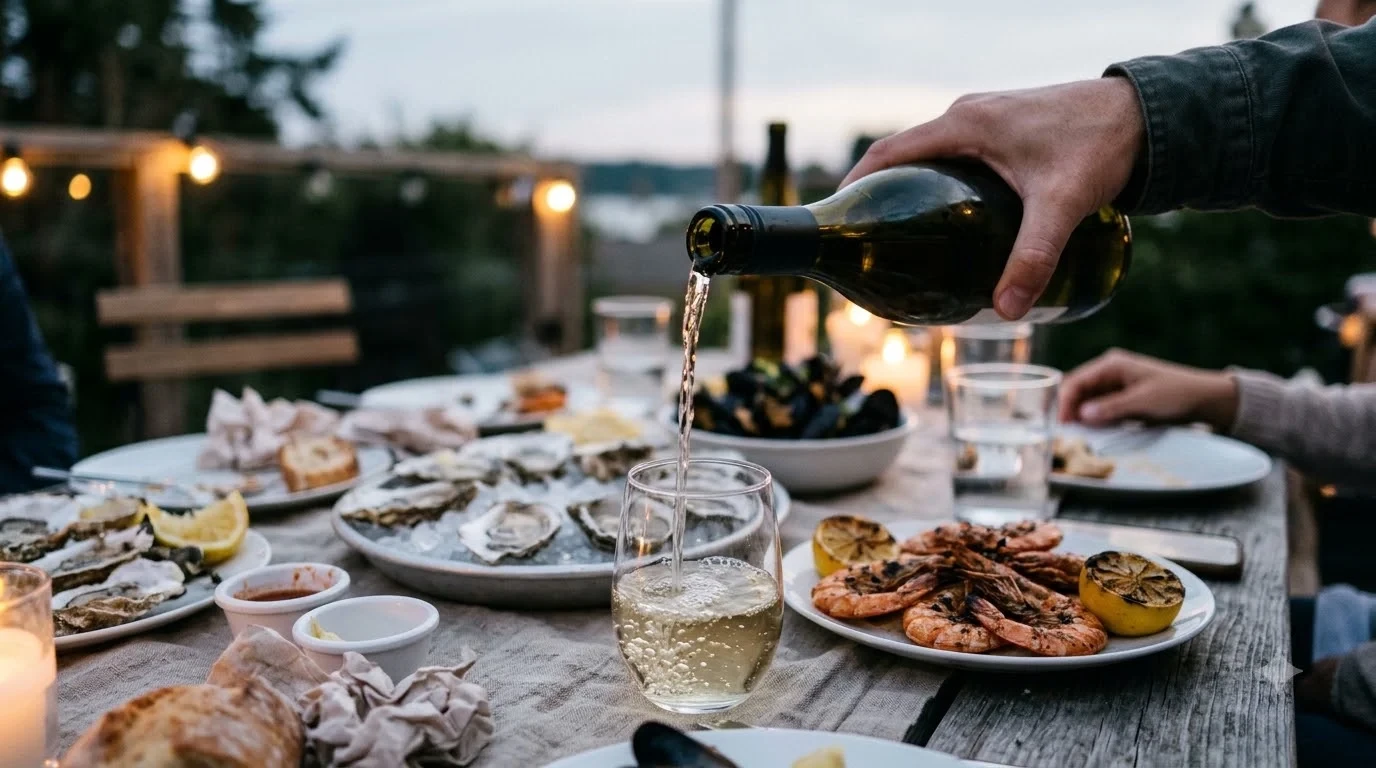
Food pairing should take acidity, weight, and flavor intensity into account. Vermentino’s refreshing profile is well suited to grilled sea bass, prawns, scallops, and seafood pasta. Sauvignon Blanc works especially well with dishes containing lemon, fresh herbs, or goat cheese.
Viognier can complement roasted poultry and creamy sauces because its fuller texture and ripe fruit characteristics provide a better match for richer preparations. It can also work with mildly spiced Asian dishes, provided the food does not overwhelm the wine’s aromas.
Salt and fat can soften the perception of tannin in red wines, but white-wine pairing usually depends more on acidity and texture. Acidic foods need wines with equal or greater acidity to maintain balance. A crisp Vermentino, for example, can handle a lemon dressing more successfully than a soft, low-acid white.
It is useful to consider the intensity of the preparation, not just the main ingredient. A delicate steamed fish needs a different wine from grilled fish served with garlic butter or a rich cream sauce. The cooking method and sauce can change the ideal pairing substantially.
| White wine style | Serving temperature | Food pairing |
|---|---|---|
| Vermentino | 45–50 F | Grilled fish, shellfish, seafood pasta |
| Sauvignon Blanc | 45–50 F | Goat cheese, oysters, lemon-dressed salads |
| Viognier | 50–55 F | Roasted chicken, creamy sauces, mild curries |
| Vernaccia | 45–50 F | White fish, vegetable risotto, antipasti |
For storage, unopened white wine should generally be kept away from direct sunlight and major temperature fluctuations. A cool environment around 55 F is suitable for longer-term storage. Bottles with natural cork closures are commonly stored on their sides to help keep the cork from drying out.
Once opened, still white wines generally keep for approximately three to five days in the refrigerator when properly resealed. The exact period depends on the wine’s condition, closure, and exposure to oxygen. For the best aromatic expression, remove the bottle from the refrigerator shortly before serving rather than allowing it to warm excessively.
Identifying Authentic Sassicaia and Avoiding Label Confusion
Recognizing authentic Sassicaia starts with understanding its producer, denomination, and grape composition. A genuine bottle should be associated with Tenuta San Guido and the Bolgheri Sassicaia DOC, rather than a generic reference to Tuscan wine or a white-wine category.
The producer’s official portfolio identifies Sassicaia alongside Guidalberto and Le Difese. The winery describes Sassicaia as its signature wine, with the first commercial vintage dating to 1968. Its history and appellation are specific to the estate, not to every wine made in Bolgheri.
One common source of confusion is the difference between the estate name and the wider geographical designation. Many independent producers make wines in Bolgheri, and some specialize in white wines. Their products can be authentic expressions of the area without being produced by Tenuta San Guido.
Another source of confusion is the presence of Cabernet Sauvignon in several Tuscan wines. A Cabernet-based wine from another estate is not automatically Sassicaia. The designation depends on meeting the applicable production rules, including the authorized growing area and grape composition.
When evaluating an unfamiliar listing, consider the following details:
- Producer: Confirm that the wine is identified with Tenuta San Guido.
- Denomination: Authentic Sassicaia carries the Bolgheri Sassicaia DOC designation.
- Wine color: Sassicaia is red, not white or rosé.
- Grape varieties: The blend must follow the DOC requirements, including at least 80% Cabernet Sauvignon.
- Vintage: The vintage should correspond to an actual release from the estate.
- Presentation: Be cautious with listings that use the Sassicaia name without clearly identifying the producer and appellation.
It is also useful to distinguish Sassicaia from Guidalberto and Le Difese. Guidalberto combines Cabernet Sauvignon and Merlot, while Le Difese combines Cabernet Sauvignon and Sangiovese. Both belong to Tenuta San Guido’s range, but neither is a white wine or an alternative name for Sassicaia.
For consumers researching other established wine houses, Baron Philippe de Rothschild wine provides another example of how producer identity and individual wine labels can represent different products within a broader portfolio.
The most reliable approach is to evaluate the actual wine designation rather than assume that every bottle associated with a prestigious producer follows the same style. This is especially important when online descriptions use broad search terms that may not accurately reflect the official classification.
Frequently Asked Questions
Who invented the name Sassicaia?
The name is associated with the stony land of the Tenuta San Guido estate. It reflects the distinctive rocky terrain where the vineyards were established. The name therefore connects the wine with its specific geographical origins rather than a grape variety.
Is Sassicaia considered a Super Tuscan?
Yes, Sassicaia is widely regarded as one of the pioneering Super Tuscan wines. The term describes prestigious Tuscan wines that historically developed outside traditional regional classifications. Sassicaia’s success helped establish international recognition for Bordeaux grape varieties grown on the Tuscan coast.
Can Sassicaia be made with Chardonnay?
No, Chardonnay is not an authorized grape for the Bolgheri Sassicaia DOC. The denomination requires at least 80% Cabernet Sauvignon and allows other authorized red varieties for the balance. Chardonnay therefore cannot be used to produce an authentic Sassicaia DOC bottling.
Is Sassicaia available in half bottles?
Sassicaia has appeared in different bottle formats through specialist wine distribution. The standard wine bottle is 750 ml, while smaller formats may be available depending on the vintage and market. Availability of particular formats should be confirmed with an authorized wine merchant.
Does Sassicaia have an official DOC classification in Italy?
Yes. Bolgheri Sassicaia became an independent DOC in 2013 after previously being recognized as a subzone within Bolgheri DOC. It is unusual because the denomination is exclusively associated with Tenuta San Guido’s production area and wine.
Sassicaia white wine is not an official Tenuta San Guido product, but that does not mean Bolgheri lacks outstanding white wines. Vermentino, Sauvignon Blanc, and Viognier offer authentic ways to explore the Tuscan coast while preserving the distinction between regional wines and the famous red Sassicaia. For anyone seeking a white wine from this part of Tuscany, Bolgheri DOC Vermentino is an excellent place to begin.
More in Wine Brands
 Underwood Wine Price: Compare Bottles, Cans, and Pack SizesUpdated Nov 21, 2026
 Zenato Wine Price: Compare Styles and Choose the Right BottleUpdated Nov 21, 2026
 Zuccardi Wine Price: Compare Bottles and Find the Right RangeUpdated Nov 21, 2026
 Yellow Tail Moscato Review: Taste, Sweetness and Serving TipsUpdated Nov 21, 2026
 Wolf Blass Yellow Label Review: Choose Your Best StyleUpdated Nov 21, 2026
 Wolffer Estate Rose Review: Choose the Right Bottle for Your TableUpdated Nov 21, 2026