

We may earn a commission when you buy through links on this page, at no extra cost to you. Learn more.
Saint Julien wine is a red from the Médoc on Bordeaux’s left bank, built mainly on Cabernet Sauvignon and known for structured, long-lived bottles. The Saint-Julien appellation was established in 1936 and covers about 920 hectares of vines. It has no First Growths, but 11 of its estates are classified in the 1855 ranking, which remains a useful reference for buyers.
If you are trying to understand what makes Saint Julien different from other Bordeaux reds, or you are choosing a bottle to age or serve with a special meal, this guide covers where the wines come from, the grapes behind them, the style divide inside the appellation, and how to serve them well.
Where Saint Julien sits in Bordeaux
Saint Julien is a red-wine appellation in the Médoc subregion, on the left bank of the Gironde estuary. It lies between the Margaux and Pauillac appellations, and it takes its name from the commune of Saint-Julien-Beychevelle. Most of the wine comes from that commune, with a small number of plots in Cussac-Fort-Médoc and Saint-Laurent-Médoc.
The climate is oceanic, which gives the Médoc a mild, damp character with long ripening periods. The subsoil is geologically complex, and that complexity is often credited for the variation in character between one vineyard and the next. Gravel and stony ground drain well, which helps the vines push their roots deeper in search of water.
Because the appellation is compact, it is easy to visit as part of a wider Médoc itinerary. Its position between two better-known neighbors also explains why its wines are often compared with Margaux and Pauillac. Tasting them side by side is one of the most practical ways to see how small differences in site shape a bottle.
Grapes and the Saint Julien style
Saint Julien red wines are made mainly from Cabernet Sauvignon, with Cabernet Franc, Merlot, Malbec, and Petit Verdot also permitted. Carménère appears only in trace amounts. Blends differ from estate to estate, and the mix on the label tells you how much of the wine’s structure comes from Cabernet and how much comes from Merlot for softness.
Cabernet Sauvignon gives the wines their backbone. The Wine Folly Cabernet Sauvignon guide describes the grape’s typical flavors as black cherry, black currant, cedar, baking spices, and graphite, with medium-high to high tannin and a dry, full-bodied style. Those tannins are the reason many Saint Julien wines need time before they feel fully balanced.
The appellation is traditionally split into southern and northern wines. Southern wines are described as smoother and closer in style to Margaux, while northern wines are seen as more firmly structured and closer to Pauillac. This division is somewhat debated among wine writers, but it is a useful lens for reading a producer’s style and understanding why two Saint Julien wines can taste quite different.
| Element | What it tells you | What to look for |
|---|---|---|
| Cabernet Sauvignon | Structure, tannin, and dark fruit | Usually the largest share of the blend |
| Merlot and Cabernet Franc | Softness and aromatic lift | Listed in the blend on the label or producer notes |
| Southern vs northern style | Smoother or firmer profile | Producer description of the commune and vineyard |
| 1855 classification | Estate rank from the historic Bordeaux list | Named on the label where the estate uses it |
The 1855 classification and notable estates
The 1855 Bordeaux classification remains a reference point for many buyers. Saint Julien has no First Growths, but it includes five Second Growths (Ducru-Beaucaillou, Gruaud-Larose, Léoville-Barton, Léoville-Las Cases, and Léoville-Poyferré), two Third Growths (Lagrange and Langoa-Barton), and four Fourth Growths (Beychevelle, Branaire-Ducru, Saint-Pierre, and Talbot).
The classification is a historic ranking rather than a guarantee of quality in every vintage. Some estates outside the list also produce strong wines, and unclassified names such as Gloria, La Bridane, and du Glana are often mentioned in regional guides. Read the vintage, the producer’s notes, and recent critical reviews before choosing a bottle on rank alone.
The vineyards of Léoville also sit close to the Latour estate, which is in Pauillac. That proximity is one reason Saint Julien is often discussed alongside its famous neighbors.
How to serve and age Saint Julien wine
Serving temperature changes how a red tastes. Wine Folly’s Cabernet Sauvignon profile recommends serving the grape at 60 to 68 degrees Fahrenheit, with a large glass and about one hour of decanting for a young bottle. That range keeps the fruit clear and the tannins from feeling harsh, so it suits most Saint Julien reds as well.
Ageing is a major part of the appellation’s appeal. Cabernet-based wines from Bordeaux are known for their long lives, and many buyers cellar good bottles for a decade or more. Keep the bottles lying down in a cool, dark place with a steady temperature, and avoid storage near heat sources or vibration.
Young bottles benefit from decanting, while older bottles often need only a gentle pour and a short rest. Serve them in a wide glass so the aromas open, and pour a modest amount so the wine has room to show its character as it warms in the glass.
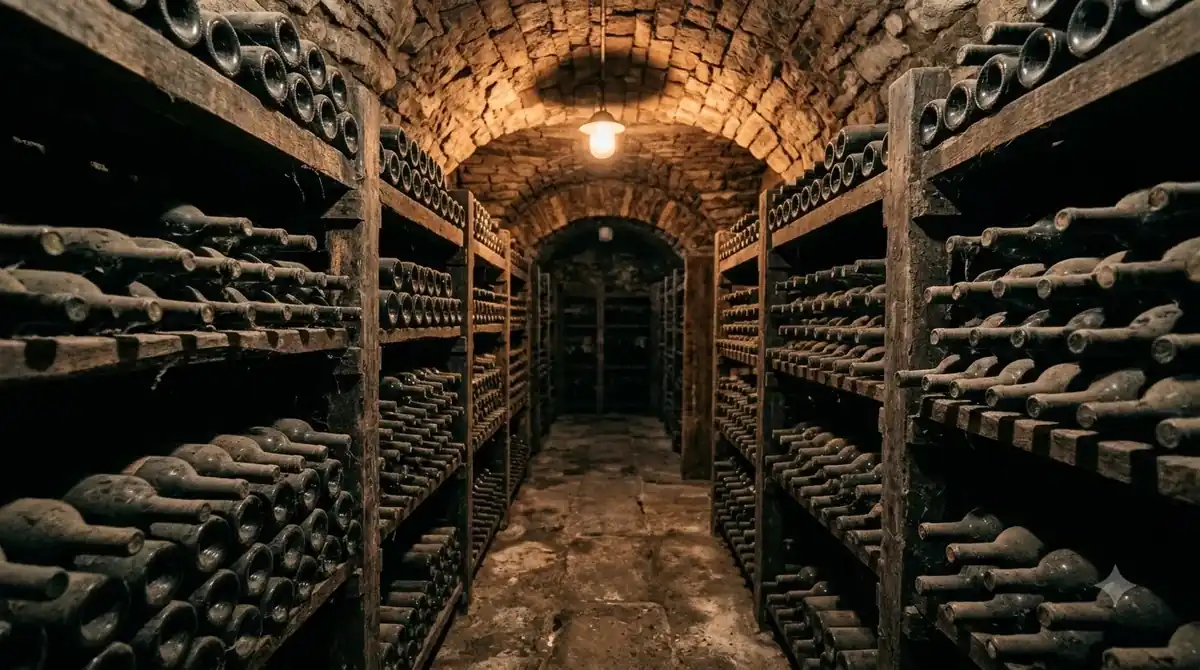
Tip: If a Saint Julien is young and very tannic, decant it for about an hour before dinner. The wine often tastes softer and more open once it has had time to breathe.
Pairing Saint Julien with food
Saint Julien wines suit foods with enough weight to match their tannin. Grilled or roasted beef, lamb, and game are classic partners, and dishes with peppery or herb-based sauces work well too. The wine’s structure can also stand up to aged cheeses, which soften the tannin and bring out the fruit.
Lighter dishes are harder to match. Delicate fish or vegetable-forward dishes often taste overwhelmed by a young Cabernet-based red. If you want to pair with fish, consider a lighter red from a different region or a white with enough body to hold its own.
For a wider look at how different regions suit different meals, our guide to Douro wine covers another red-wine region built on structure and food-friendly acidity. It is a useful comparison if you want to see how climate and blend change the pairing.
Where to learn more about Bordeaux wine regions
Saint Julien is one of many regions that shape how people think about red wine. Its classification, grape mix, and climate make it a clear example of how Bordeaux organizes its wines. Our Wine Regions section explains the main factors behind these differences, from soil and climate to blending traditions.
The contrast with a cooler, lighter style can also be instructive. Our guide to Hunter Valley wine shows how a different climate and grape mix produce a different kind of wine, which helps clarify what the Médoc gives to Saint Julien.
Frequently Asked Questions
What is Saint Julien wine made from?
Saint Julien red wine is made mainly from Cabernet Sauvignon. Cabernet Franc, Merlot, Malbec, and Petit Verdot are also permitted, and Carménère appears only in trace amounts. The exact blend changes from estate to estate.
Is Saint Julien a good wine to age?
Many Saint Julien wines are built for ageing because of their firm tannins and structure. Cabernet-based Bordeaux reds often reward cellaring for a decade or more, though the right window depends on the vintage and producer.
How is Saint Julien different from Margaux or Pauillac?
Saint Julien sits between those two appellations and is often described as offering a middle ground. Southern Saint Julien wines are seen as closer to Margaux, while northern wines lean toward Pauillac, though the division is debated.
What temperature should I serve Saint Julien red?
Serving the wine at about 60 to 68 degrees Fahrenheit keeps the fruit clear and the tannins balanced. Young bottles benefit from decanting for around an hour before the meal.
Saint Julien wine offers a clear window into the Médoc. Start with the grape blend, look at the style of the commune, and check the vintage before you buy. With a bottle from the right year and a good match for the meal, the structure and fruit of these reds come through very clearly.
More in Wine Regions
 Willcox Wine Trail: Discover Arizona’s High-Elevation Wine CountryUpdated Nov 20, 2026
 Yakima Valley Wine Region: Find the Best Styles to TryUpdated Nov 20, 2026
 Vosne Romanee Wine Tasting: Identify Aromas and Choose Better PairingsUpdated Nov 20, 2026
 Yakima Valley Wine Festival: Find the Best Seasonal Wine EventsUpdated Nov 20, 2026
 Wales Vineyards: Discover Cool-Climate Wines and Where to VisitUpdated Nov 20, 2026
 Yountville Wine Festival: Discover Napa Wines and Local FoodUpdated Nov 20, 2026