


We may earn a commission when you buy through links on this page, at no extra cost to you. Learn more.
The rosemount estate brand is an Australian wine name best known for Chardonnay and Shiraz, built by the Oatley family and returned to their ownership in October 2026. Its story begins in the Hunter Valley, but its historic portfolio drew fruit from several Australian regions. For shoppers, the most useful distinction is between the brand’s long-established labels and the wines or releases that its new owners may develop next.
Rosemount Estate has been part of Australia’s modern wine story for more than five decades. It helped bring Australian Chardonnay and Shiraz to international attention, pairing widely distributed wines with more ambitious regional bottlings. Understanding the original vineyards, familiar labels, and recent ownership change makes it easier to interpret a bottle on a U.S. shelf without assuming that every old label or wine style is still in production.
Rosemount Estate Today: An Australian Brand Back With Its Founders
Rosemount is an Australian wine brand with Hunter Valley roots and a portfolio that historically ranged from everyday varietal wines to premium regional releases. Treasury Wine Estates sold the brand to A.G. Oatley Wines in October 2026, bringing Rosemount back to the family that established it.
Announced on October 12, 2026, the sale also included Ingoldby and Secret Stone. The Australian company register lists “Rosemount Estates” as a business name of A.G. Oatley Wines Pty Ltd from October 30, 2026. The company said distribution through Oatley Fine Wine Merchants would begin October 23, returning the brand to the family that shaped its early growth. Read A.G. Oatley Wines’ announcement for the handover details.
For consumers, Rosemount has a new home, but its future range should not be confused with its older catalog. In October, the Oatley family said it was not yet ready to share its plans for the brand. Names such as Diamond Label, Roxburgh, and Balmoral are useful historical references, not a guarantee that every wine remains in production or will appear in every market.
Rosemount shows how a wine name can stay familiar while ownership and bottlings change. For background on producer names and labels, see Wine Brands. Buyers should treat the vintage, grape, and regional designation on an individual bottle as more informative than the brand name alone.
Oatley Family History and the Milestones Behind the Label
Rosemount began in the Hunter Valley under Bob Oatley and expanded into an internationally familiar Australian label. Its first commercial vintage was 1974, and Chardonnay became a defining wine in the following decade.

Bob Oatley acquired a Hunter Valley vineyard in the late 1960s after working in the coffee and cocoa trade. The National Portrait Gallery records the first vintage in 1974 and says Rosemount became Australia’s largest family-owned wine producer before its 2001 sale to Southcorp. The Oatley family returned to wine in 2006 through Oatley Wines, while Rosemount remained outside the family until 2026.
Rosemount’s expansion was not built on Shiraz alone. A historical account of the company’s early vintages describes its first commercial wines as Hermitage Shiraz and Rhine Riesling, followed by Cabernet Sauvignon, Cabernet-Shiraz, and Traminer. The winery made its first Chardonnay in 1979. A Show Chardonnay won double gold at Bristol in 1980, helping establish the brand as a serious Australian white-wine name rather than simply a large-volume producer.
Chardonnay became central to the brand’s reputation. Winemaker Philip Shaw joined before the 1982 vintage, and Roxburgh became a flagship expression. During the 1990s, Rosemount expanded its sourcing beyond the Hunter Valley, adding South Australian Shiraz and red wines from districts such as Coonawarra. Ownership changed as the Australian wine industry consolidated. Rosemount joined Southcorp in 2001; Southcorp later became part of Foster’s wine business, which was separated as Treasury Wine Estates in 2011. Its 2026 return to A.G. Oatley Wines reverses that earlier separation from the founding family.
Core Wine Styles and the Labels Worth Recognizing
Rosemount’s historic range ran from approachable varietal wines to premium bottlings. Diamond Label Chardonnay and Shiraz were familiar reference points; Roxburgh Chardonnay, Balmoral Shiraz, Show Reserve, and regional releases broadened the collection.
Diamond Label Chardonnay helped make Rosemount recognizable for Australian white wine. Chardonnay ranges from crisp, lightly handled styles to fuller wines with ripe peach, citrus, and oak-derived texture. Some premium Rosemount examples were known for generous fruit, creamy texture, and toast or spice from barrel maturation. The balance depends on the specific wine and vintage.
Diamond Label Shiraz reflects the grape that made Australia famous with many red-wine drinkers. Shiraz commonly offers dark or red berry fruit, pepper, spice, and a fuller palate, although regional climate changes the shape of those flavors. Rosemount also made Shiraz-Cabernet and Grenache-Shiraz blends, which combine varieties with different structures. Cabernet can contribute firmer tannin and black-fruit depth, while Grenache often adds red-fruit lift and a softer impression.
Roxburgh Chardonnay and Balmoral Shiraz are two of the historic names most closely associated with Rosemount’s premium reputation. Roxburgh drew on the Upper Hunter Valley, while Balmoral was associated with McLaren Vale Shiraz from older vineyard sources. Other past names include Mountain Blue, Show Reserve, and single-region or vineyard releases. Some are discontinued or may be difficult to find, so collectors should distinguish a surviving older bottle from a current release carrying the same broader brand identity. Rosemount’s portfolio has been broader than its best-known bottles suggest. A Chardonnay drinker comparing Australian labels might also read about Brancott Estate wine, a New Zealand producer whose regional identity and grape focus create a different reference point. The comparison is about how brands express place, not an assumption that their wines taste alike.
Australian Regions That Shaped Rosemount’s Wines
Rosemount began in New South Wales’ Hunter Valley, then drew on McLaren Vale, Coonawarra, Langhorne Creek, Mudgee, Orange, and the Adelaide Hills. Their climates shape Chardonnay, Semillon, Shiraz, and Cabernet Sauvignon differently.
The Hunter Valley is warm and humid, with harvest rain possible in some years and gentle sea breezes helping moderate the climate. Wine Australia identifies Shiraz, Semillon, Chardonnay, and Verdelho among its principal grapes. Its regional profile describes young Hunter Shiraz as medium-bodied, with berry fruit, spice, and soft tannins; bottle age can bring earthy and leathery notes. Hunter Semillon is usually picked early, often bottled without oak, and known for lively acidity and a light body.
McLaren Vale, south of Adelaide in South Australia, has a Mediterranean climate influenced by the ocean. Wine Australia describes Shiraz as the region’s leading red grape, accounting for almost half of its annual crush, and notes the prevalence of blueberry, dark chocolate, and spice in many examples. That helps explain the role McLaren Vale played in the Rosemount range: it was a natural source for Shiraz with deeper fruit and a fuller feel than the more restrained, savory style often associated with Hunter Valley Shiraz.
Rosemount’s historical sourcing also extended to Coonawarra, known for Cabernet Sauvignon and historically important to the brand’s Merlot bottlings; Langhorne Creek, a source for Diamond Label reds; and Adelaide Hills, which supplied cooler-climate Sauvignon Blanc and Chardonnay. In New South Wales, Orange and Mudgee expanded the range beyond the Hunter. These examples describe the company’s historic regional strategy, not a promise that every region remains represented in the current lineup. Regional differences are more useful than a generic “Australian wine” description. McLaren Vale Shiraz often feels riper and broader than Hunter Valley Shiraz, while Hunter Semillon is lighter and more acid-driven than oak-influenced Chardonnay. Wine Australia’s profile of the Hunter Valley region outlines the area’s grape varieties, climate, and typical wine styles.
How Rosemount Wines Taste and What to Serve With Them
There is no single flavor profile for every Rosemount bottle, because the range includes white wines, reds, blends, and fruit from several regions. Start with the grape and region: Chardonnay tends toward orchard or stone fruit and a medium-weight palate, while Shiraz usually gives more dark fruit, spice, and tannin.
A fuller Chardonnay works with roast chicken, pork, grilled fish, or creamy pasta. If it has noticeable oak and a creamy texture, match it with food that has enough richness rather than a very delicate preparation; fresher unoaked Chardonnay suits simply prepared seafood, salads, and vegetables. An archived note for Rosemount’s 2003 Roxburgh Chardonnay described peach and stone fruit with toast, cream, and oak spice, and suggested chicken, pasta, and seafood. That note applies to the 2003 wine, not every Rosemount Chardonnay.
Shiraz is a natural partner for grilled lamb, beef, sausages, mushrooms, and dishes with roasted or smoky flavors. The grape’s medium-plus to high tannin can feel firmer beside lean protein, while salt and fat soften the sensation of tannin. A McLaren Vale Shiraz with rich dark fruit can stand up to barbecue sauce or slow-cooked beef, whereas a medium-bodied Hunter Shiraz may be more flexible with roast pork, lamb chops, or mushroom dishes. Avoid pairing tannic red wine with oily fish, which can create an unpleasant metallic impression.
Semillon suits oysters, shellfish, white fish, chicken, salads, and fresh goat cheese. Its high acidity works with lemon or vinaigrette, provided the dish does not overwhelm a light-bodied wine. Match acidic food with wine of equal or higher acidity. Salt and fat soften tannin, but chili heat makes alcohol and tannin feel more aggressive, so a lower-alcohol, fruitier wine is usually easier with spicy dishes than powerful Shiraz. Blends call for attention to the grape mix. Shiraz-Cabernet can pair with grilled steak or braised short ribs because Cabernet contributes structure while Shiraz brings ripe fruit. Grenache-Shiraz is often more flexible with lamb, tomato-based dishes, or roasted vegetables. The best match still depends on the wine’s weight, oak, and acidity.
Buying, Serving, and Storing a Rosemount Bottle
When selecting Rosemount, begin with the wine name, grape variety, vintage, region, and alcohol percentage rather than the front label alone. An older Diamond Label or premium regional bottling may differ from future releases under the returned family ownership.
In a U.S. shop, look for the country of origin and region, then match the bottle to your preferred style. Chardonnay and Semillon are the natural starting points for a white-wine drinker; Shiraz, Shiraz-Cabernet, and Cabernet Sauvignon are the key historic red-wine cues. Alcohol by volume helps indicate weight, not quality. For a guide to reading that number on another style, see our explanation of Black Box Pinot Grigio alcohol content. For another perspective on international wine brands and ownership, our article on Baron Philippe de Rothschild wine explores a very different producer history. Serving temperature changes how fruit, acidity, and alcohol register. Keep crisp Semillon cool but not icy; fuller Chardonnay benefits from a few degrees more warmth. Lighter reds can be served slightly chilled, while fuller Shiraz should be cooler than a warm room but not as cold as a white.
| Wine style | Serving temperature | Useful match |
|---|---|---|
| Light white or rosé, including a fresh Semillon | 45–50°F | Oysters, shellfish, salads |
| Fuller Chardonnay | 50–55°F | Roast chicken, creamy pasta |
| Light-bodied red | 55–60°F | Roast pork, mushrooms |
| Fuller Shiraz or Cabernet blend | 60–65°F | Lamb, beef, grilled vegetables |
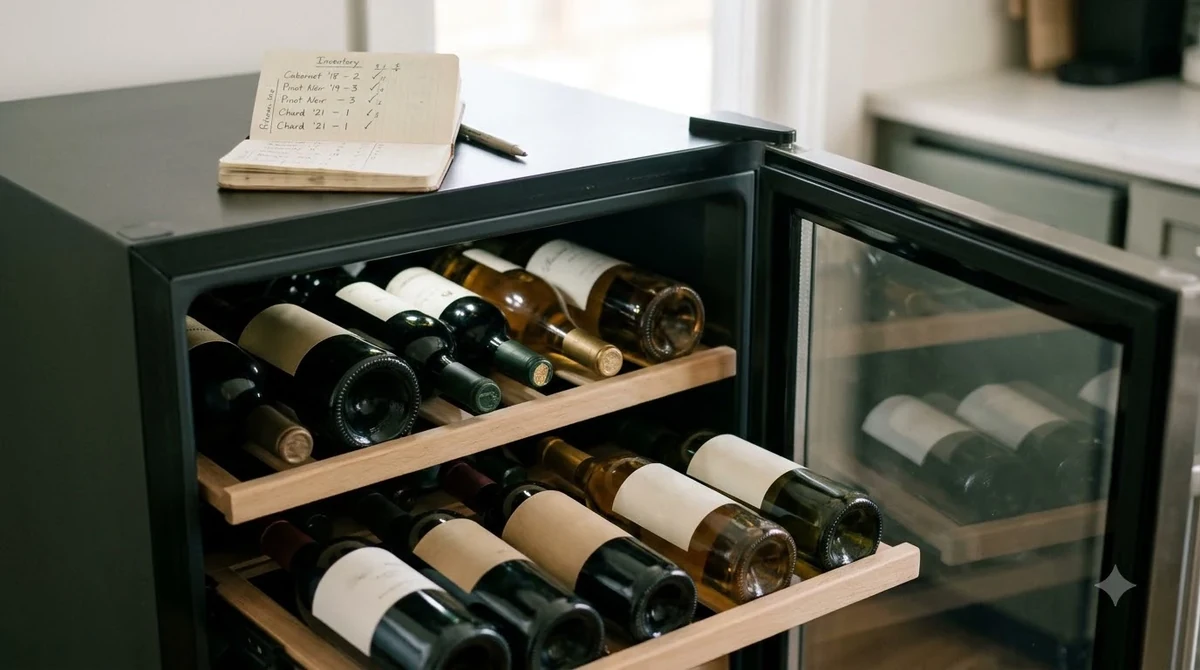
A standard pour is about 5 ounces, so a 750-milliliter bottle provides roughly five glasses. Young, full-bodied reds can benefit from 30 to 60 minutes in a decanter. Recorked still wines generally keep 3 to 5 days in the refrigerator; let red wine return toward serving temperature before pouring. Store unopened bottles on their sides near 55°F, away from direct sunlight and sharp temperature swings.
Tip: For an unfamiliar Rosemount bottling, taste a small pour before deciding whether to decant it or pair it with a rich dish. If the wine is already open and expressive, serve it as it is; give a young, concentrated red 30 minutes of air and reassess.
Frequently Asked Questions
What wines appeared in Rosemount’s first commercial vintage?
The first commercial vintage in 1974 included limited quantities of Hermitage Shiraz and Rhine Riesling. The following year, the range expanded to include Cabernet Sauvignon, Cabernet-Shiraz, and Traminer. These early bottlings show that the brand began with both red and white wine rather than Chardonnay alone.
What soil is associated with the historic Roxburgh Chardonnay vineyard?
The Roxburgh Vineyard in the Upper Hunter Valley was established in 1966 on gently sloping terra rossa over broken limestone. That site description appears in a Rosemount technical sheet for the 2003 Roxburgh Chardonnay. It is a vineyard-specific detail, not a description of every Hunter Valley vineyard.
How was the 2003 Roxburgh Chardonnay matured?
The 2003 technical sheet reports 11 months in a combination of new and one-year-old French oak. It lists alcohol at 14% ABV and describes a full-bodied wine with peach, toast, cream, and spice notes. Those figures apply to that vintage only and should not be used as a shortcut for estimating the alcohol or oak treatment of another release.
Can Hunter Valley Semillon improve with bottle age?
Yes. Wine Australia says Hunter Valley Semillon can develop fig, toast, and honey character after 6 to 8 years, and well-made examples can age for 40 years or more. The young wine is generally light, lemony, dry, and high in acidity, so the mature style can surprise drinkers expecting the same crisp profile.
Did Rosemount make wines beyond Chardonnay and Shiraz?
Yes. Its historic portfolio included Semillon, Riesling, Traminer, Sauvignon Blanc, Cabernet Sauvignon, Merlot, Cabernet Franc, and blends such as Grenache-Shiraz. The variety list changed over time as Rosemount expanded its vineyard sources and matched grapes to different Australian regions.
Rosemount Estate is best understood as a historic Australian brand with a wide regional footprint, not as a single fixed wine style. Its return to the Oatley family gives the name a new chapter, while the older Diamond Label, Roxburgh, and Balmoral wines remain useful reference points for understanding its legacy. When choosing a bottle, use the grape, region, vintage, and style to decide whether it fits the meal and occasion.
More in Wine Brands
 Underwood Wine Price: Compare Bottles, Cans, and Pack SizesUpdated Nov 21, 2026
 Zenato Wine Price: Compare Styles and Choose the Right BottleUpdated Nov 21, 2026
 Zuccardi Wine Price: Compare Bottles and Find the Right RangeUpdated Nov 21, 2026
 Yellow Tail Moscato Review: Taste, Sweetness and Serving TipsUpdated Nov 21, 2026
 Wolf Blass Yellow Label Review: Choose Your Best StyleUpdated Nov 21, 2026
 Wolffer Estate Rose Review: Choose the Right Bottle for Your TableUpdated Nov 21, 2026