

We may earn a commission when you buy through links on this page, at no extra cost to you. Learn more.
Red wine with spicy food works best when you choose a juicy, low-tannin bottle with moderate alcohol and serve it slightly cool. Gamay, Pinot Noir, and fruit-forward Grenache are reliable starting points because they bring fresh fruit without a heavy grip. For hotter dishes, keep the wine lighter and less alcoholic; for smoky, fatty food with moderate chili, a bolder red can work.
Red wine is not automatically a poor match for chili, curry paste, or spicy barbecue. A fresh jalapeño, sticky gochujang glaze, and slow-cooked lamb curry create different conditions for wine. Judge the sauce, heat, fat, and sweetness before choosing a bottle.
The Red Wine Styles That Work Best With Chili
For most spicy meals, begin with reds that have bright fruit, lively acidity, and low to moderate tannin. Gamay, Pinot Noir, and lighter Grenache are useful first choices, while more structured Syrah or Zinfandel is better reserved for dishes with savory depth and fat.
Gamay, the grape behind Beaujolais, is a dependable place to start because its typical style is juicy and relatively low in tannin. Expect cherry, raspberry, and sometimes a light peppery or earthy note. Beaujolais-Villages or a cru such as Brouilly can match grilled pork, chicken skewers, mushroom tacos, or moderately hot chili. Serve it at 55–60°F rather than at warm room temperature; a cool pour keeps the fruit lively and the alcohol less obvious.
Pinot Noir generally has low-to-medium tannin and high acidity, giving it a lighter grip than Cabernet Sauvignon. Its red-cherry, cranberry, and forest-floor notes suit roast pork, duck, grilled mushrooms, and mildly spicy beef. Choose a fresh, fruit-led style rather than a heavily extracted or strongly oaked bottle. Grenache, also called Garnacha, often brings ripe strawberry, raspberry, and a soft, generous texture; choose a version with moderate alcohol and restrained oak because some warm-climate examples can be powerful.
Frappato and Cinsault offer bright fruit and relatively light structure. Decanter also identifies fruit-forward Syrah and Grenache as “spice booster” choices, provided they have more fruit than tannin. Its suggestions include Malbec, Carmenère, Pinotage, and American Zinfandel for assertive dishes. Style matters more than the grape name: a plush, high-alcohol Grenache can be less comfortable with serious heat than a lighter bottle.
Why Chili Changes the Taste of Red Wine
Chili heat can make red wine seem hotter, more bitter, and more drying than it does on its own. Alcohol and tannin are the two structural features to watch, so a high-proof, heavily extracted red is usually a difficult partner for a very hot dish.
Capsaicin, the compound that gives many chile peppers their heat, creates a warming sensation in the mouth. Alcohol can intensify that sensation, which is why a wine that feels smooth with roast beef may seem fiery beside a hot curry. VinePair notes that alcohol above about 13% ABV can be enough to emphasize a dish’s heat; treat that as a warning point, not a rigid dividing line. A 12.5% red can still feel warm with a very hot sauce, while a slightly stronger wine may work with mild seasoning and fatty meat.
Tannin adds a separate problem. It creates a drying, grippy feeling, especially in young reds made from thick-skinned grapes or aged in new oak. Chili can make that sensation more aggressive, and a wine with firm tannin may lose its fruit beside a hot, salty, or fermented sauce. Wine Enthusiast describes tannin as the astringent sensation associated with compounds from grape skins, seeds, stems, and sometimes barrel aging. Fruitiness can help, but ripe fruit flavor is not the same as sweetness: a dry red may smell like blackberry while containing no noticeable sugar. With a sweet sauce made with honey, hoisin, or brown sugar, a bone-dry red may taste sharp. Avoid pairing very hot food with a red that is both high in alcohol and strongly tannic.
Match the Red to the Dish, Not Just the Pepper
The filling, sauce, and cooking method are often more important than the cuisine’s name. A smoky taco with fatty pork can welcome a fruitier red, while a sharp, vinegary chili sauce or very hot broth can make the same bottle taste lean and harsh.
For tacos al pastor, start with chilled Pinot Noir or Gamay when the salsa is moderately hot. The pork’s char and the pineapple’s sweetness give the wine something to meet, while softer tannin avoids an overly drying finish. With carne asada or grilled beef tacos, fruit-forward Grenache or young Tempranillo can work if the salsa is not extremely hot. Consider toppings as well as protein: raw onion, cilantro, lime, pickled jalapeños, and smoky chile sauce all change the balance. Mole, with dried chiles, toasted spices, nuts, seeds, and sometimes chocolate, usually suits a light-to-medium-bodied red with fresh acidity rather than a very tannic Cabernet.
Tandoori chicken and seekh kebabs often combine char, yogurt, ginger, cumin, coriander, and pepper alongside chili. A juicy Grenache or Gamay can follow those roasted flavors, especially with a yogurt-based accompaniment. For lamb rogan josh or another slow-cooked curry, choose enough body for the meat but keep tannin moderate. Fruit-forward Syrah can echo black pepper and dark fruit when the heat is medium; with a fiercely hot curry, a lighter red is more dependable. Aromas such as cardamom, ginger, clove, and coriander can connect with wine’s spice notes, but a shared aroma does not cancel chili heat.
For Korean barbecue with gochujang, choose a low-tannin red with ripe fruit and enough acidity to refresh the palate. Chilled Gamay can handle pork belly or beef short ribs when the paste is balanced by sweetness. Sichuan food is more demanding: chili oil, fermented bean paste, and numbing peppercorn can overwhelm a powerful red, so avoid prominent oak and high alcohol. Vietnamese food balances salt, sweetness, sourness, herbs, and spice; light Beaujolais can complement grilled pork, while heavy tannic reds may clash with fish sauce in nước chấm. Bò lúc lắc, with seared beef and savory glaze, can support a bolder red. Wine Enthusiast’s Vietnamese food pairing examples draw this distinction. Smoked brisket, ribs, and chili con carne also bring fat and char that can stand up to medium-bodied Syrah or fruit-forward Zinfandel at moderate heat; use ripe fruit for sweet barbecue glaze, and lower-alcohol Gamay or Grenache when the chili is genuinely hot.
Explore Grapes Beyond Pinot Noir and Gamay
Several less familiar grapes can offer the freshness and moderate structure that spicy food needs. Blaufränkisch, Carignan, Frappato, and Lambrusco each bring a distinct profile, so look for versions that emphasize fruit and freshness rather than extraction, oak, or high alcohol.
Blaufränkisch, also known as Lemberger in parts of Germany and Kékfrankos in Hungary, often shows tart cherry, dark berries, pepper, and refreshing acidity. Its structure varies: lighter examples can be energetic and food-friendly, while concentrated versions may have enough tannin to become challenging beside hot chili. Try a fresh, lightly oaked style with paprika-spiced sausage, grilled pork, or peppery beef stew. The site’s Blaufränkisch food pairing article offers more ideas for matching its savory side to the preparation.
Carignan can bring sour cherry, blackberry, dried herbs, and a savory edge that works with grilled meats and tomato-based sauces. Older vines and warm sites can produce concentrated wines, so the grape name alone does not guarantee a soft match. Choose a fresher, less extracted bottling for moderately spicy pork, sausage, ratatouille, or grilled vegetables. The Carignan food pairing guide adds context about its acidity and savory character; with a very tannic version, keep the chili mild and let the dish’s fat do some balancing.
Frappato from Sicily and Cinsault-based reds can be light, aromatic, and low in tannin, making them useful with gently spicy vegetables, roast chicken, or pork. Lambrusco is a red sparkling wine; a dry example can refresh salty, fried, or fatty dishes, although bubbles and acidity can make hot chili feel more vivid. Syrah and Zinfandel suit a different goal: their peppery or brambly character can echo chili con carne, grilled ribs, or charred lamb, as Decanter explains in its guide to wines for spicy food. Choose them to match or amplify moderate spice, not to reduce heat, and favor ripe fruit with measured tannin and alcohol.
Serving Temperature, Alcohol, and Pour Size
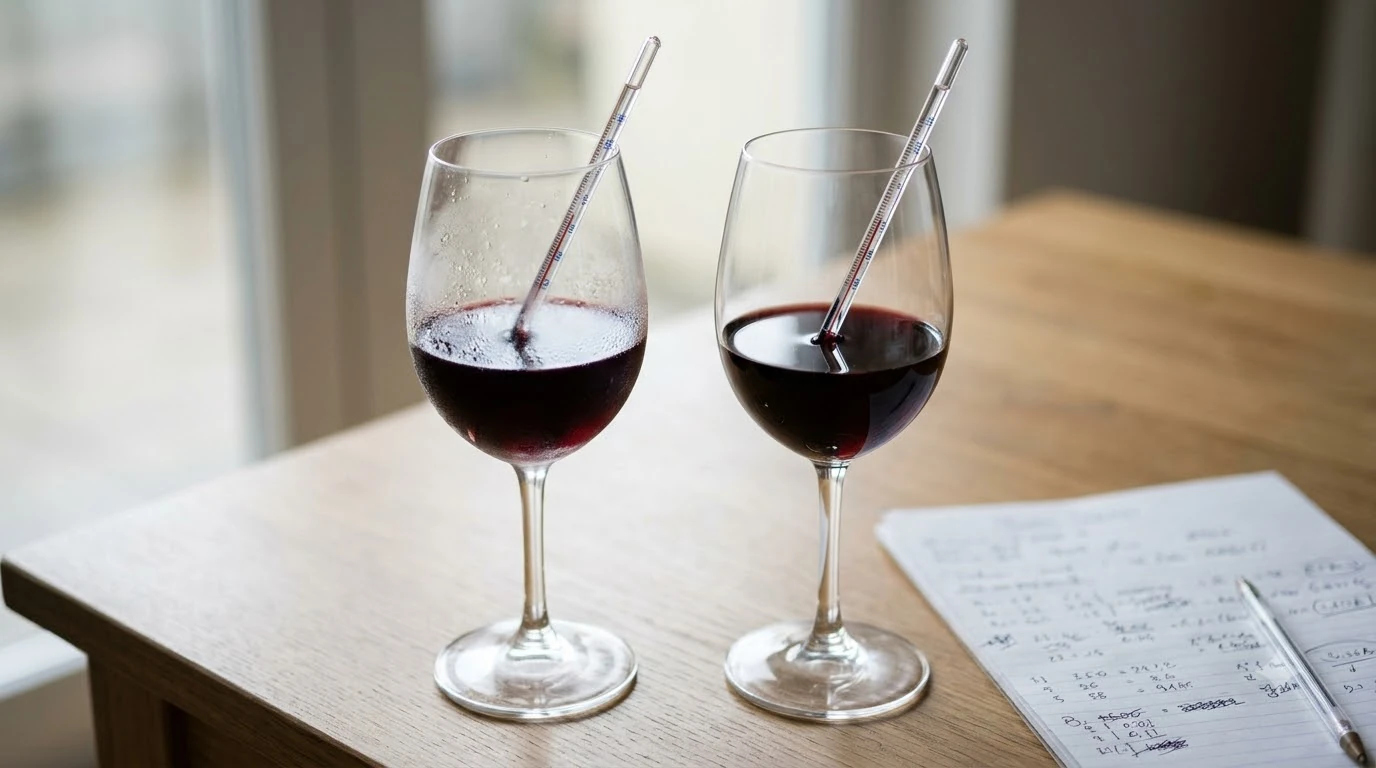
Temperature can make a sound pairing more comfortable. Light reds generally show best at 55–60°F, while fuller reds are usually served at 60–65°F; a slightly cool light red feels fresher and less warming beside chili.
Do not serve a light red straight from a warm counter or hot dining room. Place the bottle in the refrigerator briefly, then let it warm in the glass if needed. Very cold temperatures can mute aroma and make a wine seem harder, so the goal is cool rather than icy. Full-bodied reds should be warmer than Gamay or Pinot Noir, but never hot.
Alcohol is worth checking when the food is hot. For serious chili heat, a red around 12–13% ABV is a sensible starting point; bottles above 13% can add warmth, although the sauce and personal preference matter. A fresh, unoaked wine may feel more nimble than a heavily barrel-aged version from the same grape. A standard pour is 5 ounces, and a 750 ml bottle provides about five glasses. Pour a little less at first when serving dishes with different heat levels, so guests can compare mild and spicy bites without committing to a full glass.
| Red wine style | Typical structure | Serving temperature | Best use with spice |
|---|---|---|---|
| Gamay / Beaujolais | Low tannin, bright fruit | 55–60°F | Grilled pork, tacos, chili with moderate heat |
| Pinot Noir | Low-medium tannin, high acidity | 55–60°F | Duck, roast pork, mushrooms, gentle chili |
| Grenache / Garnacha | Soft to medium tannin, ripe fruit | 55–60°F if light; 60–65°F if full | Lamb, kebabs, tomato-based dishes |
| Blaufränkisch | Fresh acidity, moderate structure | 55–60°F | Paprika sausage, grilled pork, peppery stew |
| Syrah / Zinfandel | More body; tannin and alcohol vary | 60–65°F | Smoky meat and moderate chili |
Keep water on the table rather than using a large pour to compensate for a pairing that feels too hot.
Tip: Chill a light red to 55–60°F before serving it with chili. If the wine still tastes hot beside the first bite, switch to a lower-alcohol, lower-tannin bottle rather than serving it colder and colder.
When White Wine Is the Better Choice
Red wine has a place with spicy food, but it is not the easiest answer for every dish. When the heat is intense, the sauce is sharply acidic, or the main ingredient is delicate seafood, an aromatic white or dry rosé often gives you more room to balance the plate.
Off-dry Riesling and Gewürztraminer are classic partners for fiery Thai, Sichuan, and Indian dishes because a little residual sugar can soften the impression of chili while lively acidity keeps the wine from feeling heavy. A dry, high-acid white can work when the dish is spicy but not sweet, especially if it has herbs, lime, or fresh vegetables. For a fuller comparison of styles, see the guide to white wine with spicy food.
Match the dish’s acidity as carefully as its heat. A very acidic sauce needs a wine with equal or higher acidity or the wine may taste flat. If the food has a sweet glaze, choose a wine at least as sweet as the dish; otherwise the sauce can make the wine seem sour. These details explain why one wine rarely works equally well with spicy fish curry, sticky barbecue ribs, and chili noodles.
Be cautious with oily fish and tannic reds. Salmon or tuna may have enough richness for a light Pinot Noir, but heavily tannic Cabernet Sauvignon can feel drying beside oily fish. For white fish, shrimp, or a very hot seafood curry, crisp whites are usually more dependable; a good pairing lets both the food and wine retain their character.
Frequently Asked Questions
These answers cover five common decisions, from bottle age to serving logistics. The same principles apply whether the meal is tacos, curry, or a spicy backyard barbecue.
Does decanting make a high-alcohol red less hot?
No. Air can open a wine’s aromas and soften the first impression of a tight young red, but it does not remove alcohol or meaningfully lower the wine’s ABV. For a hot meal, changing to a lighter bottle is more effective than relying on a decanter.
Can an older red wine pair better with chili?
Age can soften a wine’s tannin and develop savory aromas, but it can also reduce fresh fruit. That trade-off is not always helpful beside chili, which can overwhelm delicate mature flavors. An older bottle is more promising with a mild, rich braise than with a sharply hot salsa.
Is black pepper the same pairing challenge as chili pepper?
No. Black pepper gives a warm, aromatic bite, while chile heat is driven by capsaicin and can intensify the sensation of alcohol. Pepper-crusted beef or lamb can therefore suit a peppery Syrah more readily than a dish loaded with fresh hot peppers.
Can I serve red wine with spicy cheese?
Yes, especially with firm, salty cheeses that have enough fat to soften a wine’s grip. A chilled Gamay or light Grenache can work with peppered salami and a moderately spicy aged cheese. Very hot cheese spreads are more difficult because the heat builds as you eat.
How should I plan wine for a table with different heat tolerances?
Keep chili oil, hot sauce, and fresh sliced peppers on the side so diners can adjust their own plates. A bottle of low-tannin red can suit the milder dishes, while an off-dry white gives heat-sensitive guests another option. This approach also makes it easier to pair one shared meal without forcing every plate to the same spice level.
The most reliable red wine with spicy food is usually juicy, fresh, and gentle in tannin, with alcohol kept in proportion to the heat on the plate. Start with Gamay, Pinot Noir, or a supple Grenache, then move toward Syrah or Zinfandel when the dish is smoky, fatty, and only moderately hot. The best pairing preserves the flavor of both the food and the wine.
More in Wine Types & Grapes
 What Does Mourvèdre Taste Like? Flavor Profile, Regions, and PairingsUpdated Nov 20, 2026
 What Does Marsanne Taste Like? Flavors, Styles, and Food PairingsUpdated Nov 20, 2026
 What Does Malvasia Taste Like? Styles, Flavors, and Food PairingsUpdated Nov 20, 2026
 What Does Grenache Blanc Taste Like? Flavor Profile, Styles, and PairingsUpdated Nov 20, 2026
 What Does Garnacha Taste Like? Key Flavors, Styles, and Pairing TipsUpdated Nov 20, 2026
 What Does Fruit Wine Taste Like? A Complete Flavor and Style BreakdownUpdated Nov 20, 2026