


We may earn a commission when you buy through links on this page, at no extra cost to you. Learn more.
Red wine tannins are naturally occurring polyphenol compounds extracted from grape skins, seeds, stems, and oak barrels that create a drying, puckering sensation on your tongue and gums. Rather than acting as a distinct flavor, tannin is a tactile element that gives red wine its structural grip, bitterness, and ability to age for decades. Because red wines ferment in contact with solid grape parts, they carry significantly higher tannin levels than white or rosé wines.
If you have ever sipped a bold Cabernet Sauvignon and felt the moisture instantly vanish from your mouth—much like biting into an unripe persimmon or drinking over-steeped black tea—you have experienced tannins firsthand. Understanding how these compounds work helps you predict how a bottle will feel on your palate, choose styles that fit your personal taste, and pair dinner dishes effortlessly.
What Are Red Wine Tannins?
Tannins are plant-based macromolecules known as polyphenols, composed of complex bonds of oxygen and hydrogen that serve as a botanical defense mechanism against insects, grazing animals, and ultraviolet radiation. In winemaking, these compounds bind to the lubricating proteins in your saliva, temporarily stripping away slickness and creating an astringent, textural grip across your palate.
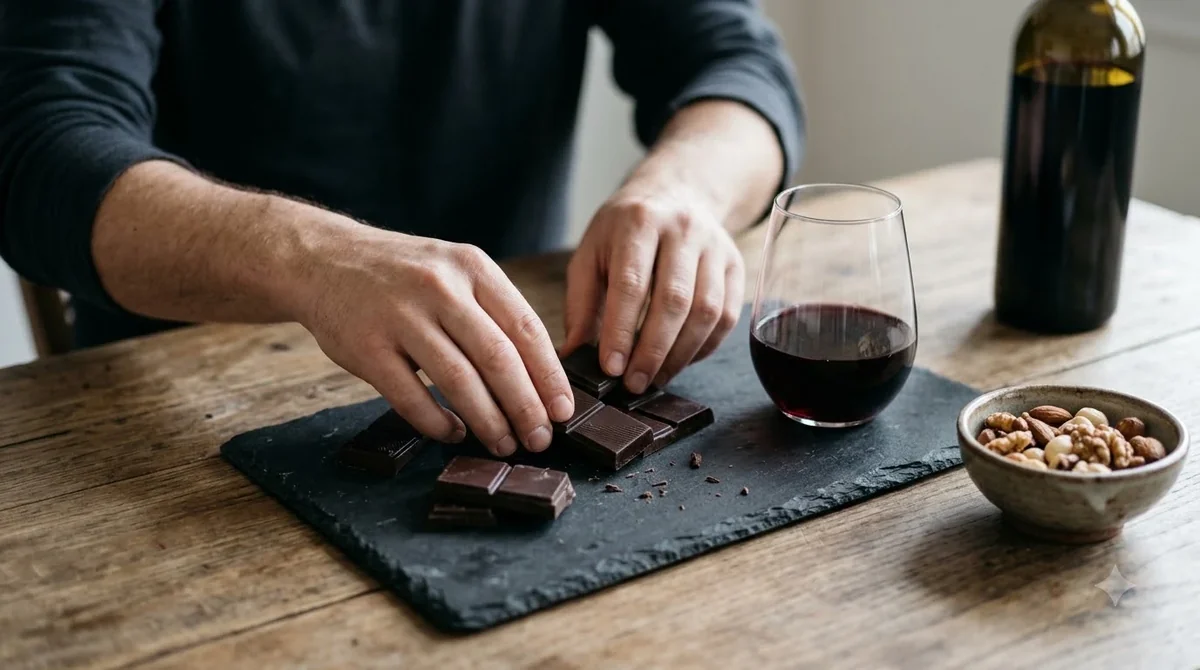
The word itself originates from the ancient Latin term for “tanner,” referring to the historical practice of using tannin-rich tree bark to cure animal hides into leather. Outside the vineyard, you encounter these exact same astringent compounds daily in dark chocolate, walnuts, pomegranate seeds, strong coffee, and black or green tea leaves, where tannins make up roughly half of the dry leaf weight.
Chemically, wine experts divide tannins into two main categories depending on their origin. Condensed tannins come directly from the grape’s skins, seeds, and stems, delivering firm astringency and bitterness. Hydrolyzable tannins, such as ellagitannin, leach into the wine from wooden aging vessels, contributing softer, rounder textures alongside spicy or vanilla-scented oak aromatics. If you are exploring Wine by Type, recognizing this balance between fruit and wood tannins is one of the fastest ways to tell different red styles apart.
Where Tannins Come From in Winemaking
Every red wine derives its tannic profile from four distinct sources—grape skins, seeds, stems, and oak barrels—alongside the specific fermentation choices a winemaker makes. Because white wines are pressed immediately so the clear juice separates from the solids, they retain minimal tannins, whereas red wines macerate with their skins and seeds to extract color, flavor, and structure simultaneously.
Grape skins provide the primary, most desirable source of tannin in red wine, working alongside anthocyanin pigment molecules to give reds both their deep hue and their velvety or firm backbone. Thick-skinned varieties like Cabernet Sauvignon and Tannat naturally yield higher concentrations than thin-skinned varieties like Pinot Noir. However, color alone is not a foolproof indicator: Nebbiolo produces pale, translucent ruby wines that pack some of the fiercest tannic grip in the wine world.
Grape seeds and stems contain much sharper, more bitter phenolic compounds than the skins. To avoid extracting harsh seed tannins, quality-focused wineries press grapes gently rather than crushing the pips. Some winemakers intentionally include whole grape clusters with stems during fermentation to add spicy complexity and structural lift, though unripe green stems can make a young wine taste overly astringent.
Oak barrels introduce a secondary layer of wood tannins while slowly allowing microscopic amounts of oxygen to pass through the staves. New oak barrels impart stronger tannins than neutral, previously used barrels, and that gentle oxygen exposure helps polymerize—or link together—harsher grape tannins so the wine feels smoother by the time it reaches the bottle.
Tannin Levels Across Popular Red Wine Styles
Red wine varieties span a wide spectrum from silky and barely-there to intensely grippy, depending on skin thickness, climate, and winemaking tradition. Warm growing regions ripen grape skins more thoroughly, producing softer, riper-feeling tannins, while cooler climates often yield firmer, more angular structure.
| Grape Variety | Tannin Level | Typical Mouthfeel & Texture | Notable Growing Regions |
|---|---|---|---|
| Tannat | Very High | Dense, muscular, and intensely grippy with dark fruit weight | Uruguay, Southwest France (Madiran) |
| Nebbiolo | Very High | Firm, dusty, and astringent despite a pale ruby color | Piedmont, Italy (Barolo, Barbaresco) |
| Cabernet Sauvignon | High | Full-bodied, structured, and velvety when ripe or oaked | Napa Valley, Bordeaux, Coonawarra |
| Sangiovese | Medium-High | Chalky, mouth-drying grip balanced by brisk acidity | Tuscany, Italy (Chianti, Brunello) |
| Merlot | Medium | Plush, rounded, and approachable with gentle mid-palate grip | Bordeaux Right Bank, Washington State |
| Pinot Noir | Low | Silky, delicate, and light with minimal astringency | Burgundy, Oregon, Sonoma Coast |
| Gamay | Low | Juicy, fresh, and smooth with soft, subtle texture | Beaujolais, France |
At the top of the intensity chart sits Tannat—Uruguay’s signature grape, which represents over a third of the country’s plantings—and Nebbiolo, the powerhouse behind Italy’s age-worthy Barolo and Barbaresco. Classic Italian varieties like the chianti grape (Sangiovese) occupy a middle-to-high tier, pairing chalky tannins with bright sour-cherry acidity that keeps the palate refreshed. For comparison, crisp white varieties such as the catarratto grape or the colombard grape undergo immediate pressing off their skins, relying on zesty acidity rather than phenolic grip for structure.
On the gentler end of the red spectrum, thin-skinned grapes like Pinot Noir and Gamay offer soft, approachable textures ideal for drinkers who dislike bitterness. Notably, about 25 percent of the population are genetic “supertasters” with heightened sensitivity to bitter compounds; if black coffee, kale, and dark chocolate taste overwhelmingly bitter to you, lower-tannin reds will generally feel much more pleasant.
Tannins vs. Dryness and Acidity
Many wine drinkers confuse tannin with “dryness,” yet the two terms describe completely separate chemical traits in your glass. In wine terminology, “dry” simply means that yeast consumed nearly all the grape sugar during fermentation, leaving little or no residual sweetness, whereas tannin causes a physical drying sensation on your gums.
Because sugar and tannin operate independently, a crisp white wine like Sauvignon Blanc can be bone-dry without having any noticeable tannic grip. Conversely, a mass-market red blend can pack hefty tannins from heavily pressed grape seeds while retaining a touch of residual sugar to mask that bitterness and make the wine taste smoother.
Acidity is the third structural pillar that interacts closely with tannin, acting as its sensory opposite. While tannins bind to saliva proteins and dry out your mouth, acidity triggers your salivary glands and makes your mouth water. Great winemaking relies on balancing tannin, acidity, fruit, and alcohol so no single element overwhelms the others.
How Aging and Decanting Soften Tannins
Tannins act as a natural preservative that protects red wine from oxidation, allowing structured bottles like Brunello di Montalcino or classified Bordeaux to evolve in the cellar for ten years or more. Over time, individual tannin molecules link together into longer molecular chains through a chemical process called polymerization, often bonding with anthocyanin color pigments along the way.

As these molecular chains grow larger and heavier, they lose their ability to bind effectively with the proteins in your saliva—and eventually precipitate out of the liquid as harmless sediment at the bottom of the bottle. As a result, a young wine that initially felt rough and grainy gradually transforms into something plush, supple, and velvety after several years of bottle age.
When opening a young, high-tannin red wine right away, decanting provides a helpful shortcut by exposing the wine to oxygen. Pouring the bottle into a wide-bottomed decanter at least one hour before serving encourages rapid micro-oxygenation, which rounds off sharp edges and opens up muted fruit aromas.
Tip: Do not confuse tannin with wine headaches—research shows no link between tannins and headaches, which are typically caused by dehydration or sensitivity to histamines and tyramine. Drinking one full glass of water alongside every glass of red wine prevents dehydration while resetting your palate between sips.
How to Pair High-Tannin Red Wines with Food
Tannic red wines shine brightest at the dinner table alongside rich, fatty, and protein-heavy dishes because food chemistry directly tames astringency. When you take a bite of marbled steak or aged cheese, the fats and dietary proteins coat your tongue and bind to the wine’s tannins before those tannins can strip moisture from your saliva.
In return, the wine’s astringent grip cuts through heavy richness and scrapes lingering fat from your palate, resetting your taste buds for the next bite. Classic pairings built on this mutual exchange include grilled ribeye, braised short ribs, roast lamb, charcuterie boards, hard aged cheeses like sharp cheddar or Parmigiano-Reggiano, and slow-simmered meat ragùs.
At the same time, certain ingredients clash sharply with heavy tannins. Spicy chili heat amplifies alcohol burn and makes astringency feel harsher, while delicate flaky fish can take on an unpleasant metallic taste when paired with high-tannin reds. When serving lighter seafood, poultry, or spicy dishes, reach for low-tannin reds like Pinot Noir or crisp white wines instead.
Frequently Asked Questions
Do all red wines have tannins?
Yes, every true red wine contains tannins because red winemaking requires fermenting the juice in contact with grape skins and seeds to extract color. However, the intensity varies dramatically from silky, low-tannin grapes like Gamay and Pinot Noir to intensely structured varieties like Tannat and Nebbiolo.
Are tannins in red wine bad for you?
No, wine tannins are naturally occurring plant polyphenols with strong antioxidant properties, similar to the beneficial compounds found in green tea and dark chocolate. Studies indicate that grape tannins resist oxidation in the body and are not responsible for red wine headaches.
How can you tell if a red wine is high in tannins?
Take a sip, swish it gently around your mouth, and pay attention to how your tongue and gums feel after swallowing. A high-tannin wine leaves a distinct drying, chalky, or grippy sensation along the sides of your tongue and inner cheeks, much like drinking strong black tea.
Does white wine ever contain tannins?
Most white wines have negligible tannins because the grapes are pressed immediately before fermentation, preventing prolonged contact with skins and seeds. Exceptions include white wines aged in new oak barrels and skin-contact white wines—often called orange wines—which pick up noticeable tannic grip during maceration.
Learning to spot how wine tannins shape texture and aging potential turns intimidating wine lists into clear, predictable choices. Whether you gravitate toward velvety, low-tannin reds for casual weeknight sipping or seek out structured high-tannin bottles to pair with a hearty steak dinner, paying attention to grip and mouthfeel ensures you always pick a bottle suited to your palate.
More in Wine Types & Grapes
 Zinfandel Sugar Content: Dry Red vs. White Zinfandel GramsUpdated Nov 21, 2026
 Best Zinfandel Substitute Options for Sipping and CookingUpdated Nov 21, 2026
 Zweigelt Food Pairing: Best Dishes, Cheeses, and Serving TipsUpdated Nov 21, 2026
 Zinfandel Tannins Explained: How Structure Shapes Every BottleUpdated Nov 21, 2026
 Zinfandel Sweetness Level: Dry Red vs. Sweet White Zin ExplainedUpdated Nov 21, 2026
 Xinomavro Food Pairing: Best Dishes, Styles, and Serving TipsUpdated Nov 21, 2026