


We may earn a commission when you buy through links on this page, at no extra cost to you. Learn more.
Rabbit wine opener instructions are straightforward: remove the bottle foil, position the lever corkscrew over the centered cork, lower the handle to insert the spiral, and raise it to extract the cork. The original Rabbit uses a mechanical lever system that makes opening a bottle faster than operating a traditional waiter-style corkscrew. Correct positioning, a firm grip, and the proper cork-release motion are essential for preventing stuck corks and unnecessary strain on the mechanism.
The Rabbit wine opener is a familiar accessory for people who regularly open traditional wine bottles at home or entertain guests. Its distinctive lever design simplifies the opening process, but its moving parts need to be operated in the correct sequence. There are also several Rabbit versions, including the original manual lever corkscrew, newer lever models with integrated foil cutters, vertical openers, and electric versions. This review focuses primarily on the manual Rabbit lever corkscrew and explains how its mechanism works, what owners appreciate, where problems can arise, and how to maintain it.
Specs and Key Features
The Rabbit Original Lever Corkscrew combines a spiral, gripping handles, and a mechanical lever to extract wine corks with relatively little effort. Its main advantages are quick operation, a comfortable grip, and a reusable spiral system that can be replaced when worn.
Rabbit’s product information describes the Original Rabbit as a manual opener designed to remove a cork in approximately three seconds. The product includes a foil cutter and an additional nonstick spiral. Its ergonomic handle and automatic cork-release mechanism distinguish it from simpler corkscrews. The manufacturer’s Original Rabbit Corkscrew product specifications provide further details about the included accessories and product features.
These features distinguish the Rabbit from a basic winged corkscrew. Instead of relying on two rising wings to pull a cork upward, the Rabbit uses a controlled lever movement to insert and extract the spiral. This arrangement is particularly useful when opening several bottles during a dinner party, although the opener takes up considerably more drawer space than a compact wine key.
| Specification | Rabbit Original Lever Corkscrew |
|---|---|
| Product category | Manual lever corkscrew |
| Opening mechanism | Lever-operated spiral |
| Typical opening time | Approximately 3 seconds, according to Rabbit |
| Spiral material | High-tensile-strength steel |
| Spiral coating | Nonstick coating |
| Estimated spiral lifespan | 800–1,000 cork removals, according to Rabbit |
| Included accessories | Foil cutter and extra spiral |
| Handle design | Ergonomic handle |
| Cork release | Automatic mechanical release |
| Manual corkscrew warranty | 10 years, according to Rabbit |
One important distinction concerns the word Rabbit itself. The brand sells several different opening mechanisms, so instructions for a manual lever model should not automatically be applied to an electric opener or an Aero air-pressure opener. For example, the Rabbit Aero uses a pressurization pin and a pumping action rather than the conventional spiral-and-lever process. The best Rabbit corkscrew options therefore depend partly on which mechanism you prefer.
For a conventional manual Rabbit, the most important components are the upper handle, gripping handles, spiral, and bottle-positioning area. Understanding how these pieces interact makes the opening and cork-release sequence much easier to follow.
What Owners Like About the Rabbit Corkscrew
The Rabbit’s strongest selling point is its straightforward mechanical operation. Once the opener is positioned correctly, two controlled lever movements handle the main cork-removal process, making it a practical option for people who dislike twisting a traditional corkscrew.
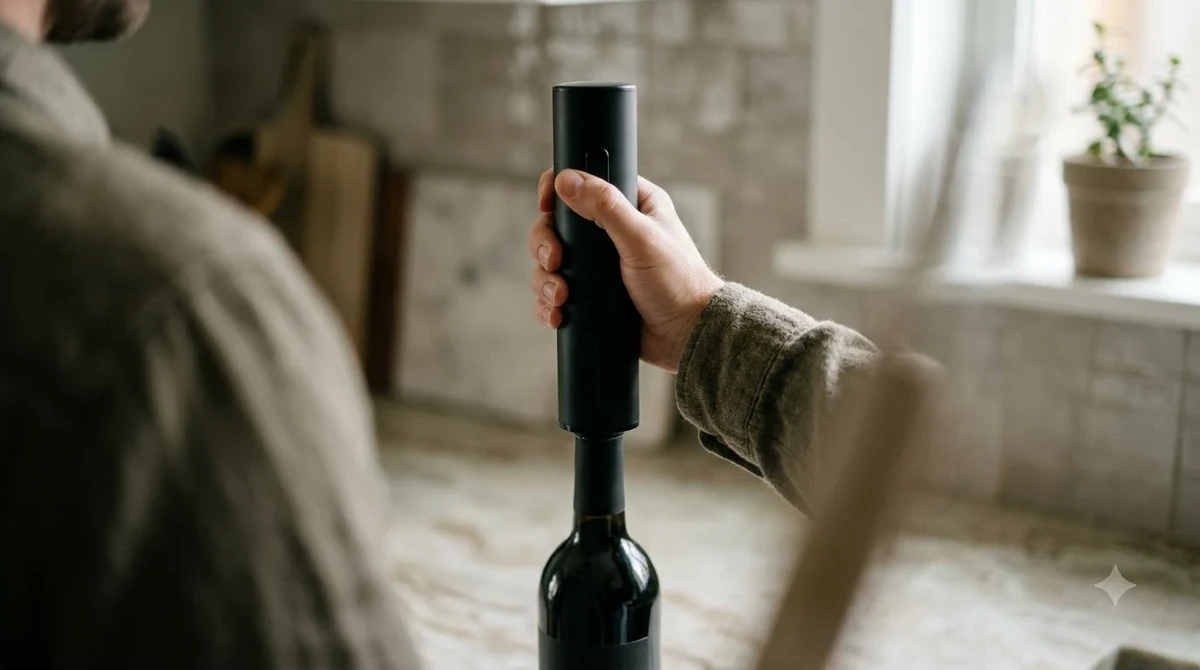
Another advantage is the speed of operation. Rabbit describes the Original Lever Corkscrew as capable of removing a cork in approximately three seconds. Actual opening time depends on the cork, bottle positioning, and the user’s familiarity with the mechanism, but the design avoids the repeated twisting required by many conventional openers.
The integrated accessories are also useful. The original package includes a foil cutter and an extra spiral. Having the foil cutter available with the opener reduces the need to search through a kitchen drawer for another tool before opening a bottle.
Comfort and mechanical leverage
The gripping handles help stabilize the opener around the bottle neck while the upper handle controls the spiral. This arrangement gives the user a consistent way to apply force instead of relying entirely on wrist movement. Rabbit’s newer lever design also specifies a solid metal lever and an improved mechanical core intended to provide additional leverage.
For households that regularly serve Cabernet Sauvignon, Merlot, Chardonnay, or other traditionally cork-sealed wines, a lever opener can make repeated bottle opening more convenient. It is particularly appealing when several guests arrive and bottles need to be opened without spending time working a small waiter-style corkscrew.
Owners also have the benefit of a replaceable spiral. Rabbit estimates that its spiral is designed for approximately 800 to 1,000 cork removals under appropriate conditions. That is a useful maintenance feature because a worn spiral does not necessarily mean the entire opener needs replacing.
For readers comparing different opening tools, Rabbit corkscrew reviews can provide additional context about differences between the brand’s manual and alternative designs. It is still important to distinguish feedback about one model from feedback about another because their mechanical components are not identical.
Common Complaints and Operating Problems
Most Rabbit operating problems involve incorrect positioning, insufficient pressure on the gripping handles, a worn spiral, or difficulties releasing the cork. Customer feedback also identifies occasional durability concerns, so correct operation and routine maintenance matter.
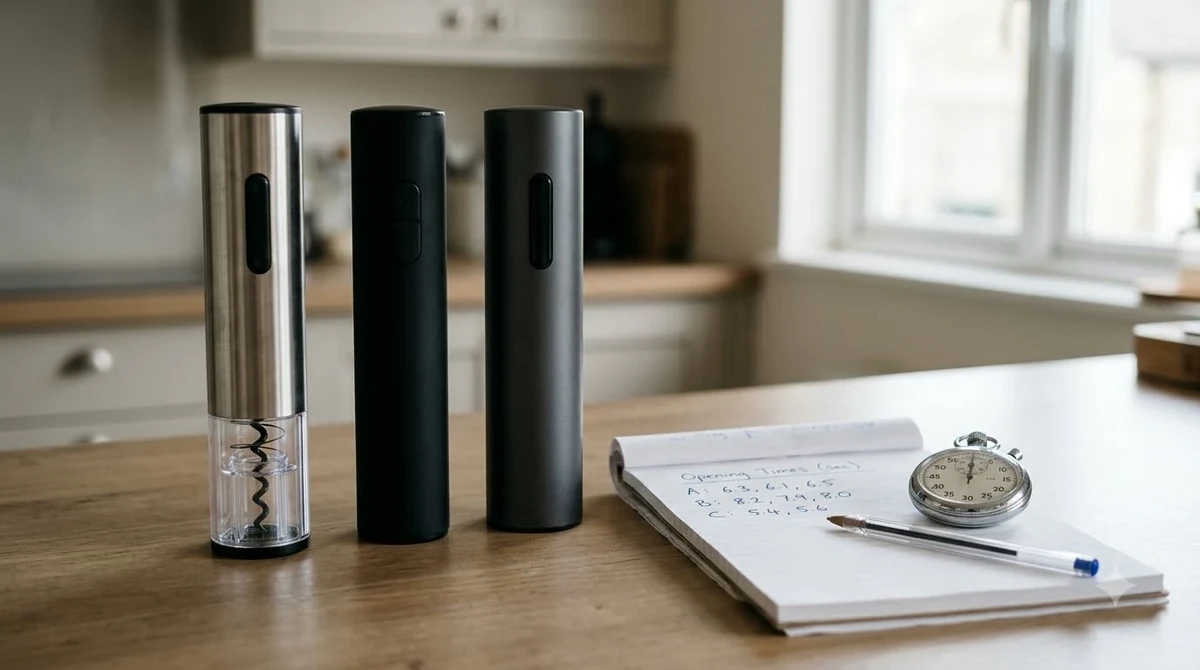
One recurring complaint is that the opener pushes the cork into the bottle rather than extracting it. This can happen when the mechanism is not reset correctly or when the gripping handles do not hold the bottle neck securely. The original Rabbit instruction manual specifically identifies incorrect operation and manually removing the cork from the spiral as possible causes of this problem.
Another complaint involves the corkscrew entering the cork but failing to pull it out. According to the Rabbit instruction manual, insufficient pressure on the gripping handles can allow the mechanism to move without maintaining the necessary hold on the bottle neck. The solution is to repeat the opening sequence while maintaining a firm grip throughout the extraction movement.
Stiff handles and worn spirals
A lever that becomes increasingly difficult to operate may indicate that the spiral coating has worn down or that cork residue is interfering with the mechanism. Rabbit explains that visible flaking or a silver-colored section showing through the black nonstick coating is a sign that the spiral may need replacing.
Some owners also report broken handles, mechanical failures, or problems with automatic cork release. These experiences mean that the Rabbit should not be treated as an indestructible accessory. A difficult cork should never be forced through the mechanism simply because the opener normally operates with little effort.
Durability concerns are especially relevant when comparing older Rabbit models with newer versions. A product listing may describe a metal lever, reinforced mechanical components, or an additional spiral, but those specifications do not establish that every Rabbit model has identical construction.
Why cork release sometimes fails
Removing the cork from the bottle and releasing it from the spiral are two separate operations. Some users successfully extract a cork but then struggle to remove it from the opener. This is particularly frustrating when the mechanism is operated in the wrong direction or when cork fragments have accumulated around the spiral.
The original Rabbit design includes a mechanical release sequence intended to remove the cork without pulling it off by hand. However, newer lever models can differ in how the cork is released. If the cork remains attached after extraction, avoid twisting or bending the spiral to force it free. Follow the instructions for the specific model and inspect the mechanism for visible damage.
These complaints do not make the Rabbit unsuitable for everyday use, but they highlight why correct technique is important. A properly maintained opener should move smoothly, grip the bottle securely, and release the cork without requiring excessive force.
Who Should Buy and Who Should Skip the Rabbit
The Rabbit lever corkscrew suits households that value fast, repeatable cork removal and prefer a larger, stable manual opener. It is less attractive for people who need a compact travel tool or want a mechanism with almost no moving parts.
For regular home wine drinkers, the lever design provides a convenient alternative to a traditional wine key. Its built-in foil-cutting arrangement and replaceable spiral are practical features, particularly when opening multiple bottles for family gatherings or dinner parties.
It can also be useful for people who find repeated twisting uncomfortable. The mechanical leverage changes how force is applied, although the opener still requires enough hand strength to position the device and operate its handles. It should not be considered completely effortless for every user.
When the Rabbit makes sense
- Frequent home wine drinkers: The quick lever action is convenient when opening several traditionally cork-sealed bottles in one evening.
- People who dislike twisting: The lever mechanism replaces much of the wrist rotation associated with waiter-style corkscrews.
- Home entertainers: The larger handle arrangement offers a practical way to open bottles repeatedly without changing tools.
- People who prefer replaceable components: The additional spiral and replacement-part availability are useful maintenance advantages.
- Wine accessory enthusiasts: The distinctive mechanical design makes the Rabbit a recognizable addition to a home bar.
When another opener makes more sense
- Travelers: The Rabbit is relatively bulky compared with a compact wine key.
- Small kitchens: The wider handle arrangement requires more storage space than a traditional waiter-style corkscrew.
- People seeking minimal maintenance: A mechanical lever system has more components to clean and maintain than a simple manual opener.
- Users who prefer electric operation: An electric opener may be more convenient for someone who wants to avoid manual lever movements.
- People opening fragile or unusual closures: A dedicated tool for delicate corks may be more appropriate than forcing a standard lever mechanism through a difficult closure.
Another consideration is the type of bottle closure. The Rabbit is designed for cork-sealed wine bottles, but unusual bottle shapes, damaged corks, and particularly resistant synthetic closures can make opening less predictable. Rather than applying additional force, stop and check that the spiral is centered and that the gripping handles are secure.
For anyone assembling a complete wine accessory collection, the Accessory Brands section offers a useful starting point for considering other tools that complement a manual opener.
How It Compares to Alternative Wine Openers
The Rabbit competes with traditional waiter-style corkscrews, winged corkscrews, and other lever-operated models. Its main distinction is the combination of a gripping mechanism and a lever that handles insertion and extraction through controlled movements.
Good Housekeeping identifies the Rabbit Wine Lever Corkscrew as a strong lever-style option, highlighting its ease of use, quick cork removal, and integrated foil cutter. The publication also points out that lever openers are generally larger and more difficult to store than conventional wine keys.
That distinction matters because a wine opener should fit the way a household actually serves wine. A compact waiter-style corkscrew is easier to carry and store, while a lever opener offers a more structured opening process for people who primarily open bottles at home.
Rabbit versus a waiter-style corkscrew
A waiter-style corkscrew, such as the Pulltap’s Double-Hinged Waiter’s Corkscrew discussed by Good Housekeeping, uses a spiral and a hinged support that rests against the bottle lip. The user inserts the spiral manually and lifts the cork through two leverage stages.
The Rabbit simplifies the physical sequence by using its gripping handles and upper lever. The waiter-style design is smaller and easier to transport, but it requires more coordination and practice. People who open wine professionally may prefer a traditional wine key because it fits easily into an apron pocket.
Rabbit versus a winged corkscrew
The OXO Steel Winged Corkscrew is another alternative named by Good Housekeeping. This style has two arms that rise as the spiral enters the cork. Pressing the arms down then extracts the cork.
Winged openers can be relatively easy to understand and store flat in a drawer, although they still require a twisting action to insert the spiral. The Rabbit uses a different grip-and-lever arrangement and is generally larger. Someone choosing between these two designs should consider storage space, preferred hand movement, and how frequently bottles are opened.
Rabbit versus the OXO vertical lever
The OXO Steel Vertical Lever Corkscrew offers another lever-based alternative. Good Housekeeping describes its opening process as two movements: pushing down to pierce the cork and pulling up to extract it. The mechanism is similar in principle to the Rabbit, although the product’s construction and handle arrangement differ.
Neither design should be judged by its opening mechanism alone. Comfort, mechanical reliability, replacement parts, and the way the cork releases are all relevant. For someone who already prefers the Rabbit grip, replacing it with another lever opener may not offer a meaningful improvement unless the alternative has features that address a specific complaint.
Tip: Before comparing lever openers, identify the exact Rabbit model you own. The original manual lever, newer integrated-foil-cutter model, and Aero air-pressure opener use different operating and cork-release procedures. Following instructions for the wrong mechanism can create unnecessary operating problems.
Frequently Asked Questions
How do you use a Rabbit wine opener for the first time?
Remove any protective packaging from the moving parts and check that the spiral is securely fitted before opening a bottle. The original Rabbit’s spiral is a replaceable component, and Rabbit supplies an additional spiral with the Original model. Familiarize yourself with the gripping handles and lever movement before positioning the opener on a bottle.
Can you use a Rabbit wine opener on screw-cap bottles?
No. A conventional Rabbit lever corkscrew is designed for cork closures, not threaded screw caps. A screw-cap bottle should be opened by turning its cap counterclockwise rather than attempting to insert the Rabbit spiral.
Can a Rabbit corkscrew be used on synthetic corks?
Rabbit describes its Original model as suitable for different cork types, including synthetic closures. However, some synthetic corks can create more resistance than natural cork, and individual user reports describe extraction difficulties. Stop if the spiral or lever begins to bind rather than forcing the mechanism.
Can you replace the spiral without replacing the whole Rabbit opener?
Yes. Rabbit provides replacement spirals for compatible manual corkscrew models. The manufacturer identifies the spiral as a replaceable part and recommends replacing it when the coating shows visible flaking or exposed metal. Confirm compatibility with your specific Rabbit model before ordering a replacement.
Does the Rabbit warranty cover accidental damage?
Rabbit specifies a 10-year warranty for its non-electric Rabbit corkscrews, while electric Rabbit corkscrews have a one-year warranty. Warranty coverage and eligibility depend on the applicable product terms and the nature of the problem. Rabbit recommends contacting Consumer Service before sending a defective opener for inspection or warranty assistance.
The Rabbit lever corkscrew is a convenient manual wine opener for people who value quick cork removal and a more structured alternative to traditional twisting mechanisms. Its performance depends on proper positioning, a secure grip, and a correctly maintained spiral. Follow the appropriate instructions for your model, avoid forcing a difficult cork, and replace worn components when necessary. With those precautions, the Rabbit can remain a useful part of a practical home wine accessory collection.
More in Wine Accessories
 Vinglace Wine Tumbler Review: A Glass-Lined Choice for Better SippingUpdated Nov 20, 2026
 ZWILLING Electric Wine Opener Review: Features and DrawbacksUpdated Nov 20, 2026
 Vinturi Electric Wine Opener Review for Easy UncorkingUpdated Nov 20, 2026
 Vinabon Wine Aerator Review for Easier, Cleaner Wine ServingUpdated Nov 20, 2026
 Vacu Vin Electric Wine Opener Review: Easy Cork Removal for Home Wine LoversUpdated Nov 20, 2026
 Rabbit Wine Accessories for Easier Home Wine ServiceUpdated Nov 20, 2026