

We may earn a commission when you buy through links on this page, at no extra cost to you. Learn more.
A classic match is pinot noir with chicken, especially when the bird is roasted with herbs, served with mushrooms, or finished with a light pan sauce. Pinot Noir’s bright acidity, gentle tannins, and red-fruit character complement poultry without overwhelming it. Choose a lighter, earthier bottle for a simple roast and a riper, fuller style for richer chicken dishes.
Chicken takes on the flavors of its seasoning, skin, cooking method, and sauce, so the best bottle depends on more than whether the meat is white or dark. Pinot Noir is a useful red-wine choice because it has enough freshness for savory dishes but usually less tannin than Cabernet Sauvignon or Syrah. The practical approach is to match the wine’s weight and flavor intensity to the whole plate.
Why Pinot Noir Works With Chicken
Pinot Noir works with chicken because its acidity refreshes the palate, while its light-to-medium body and relatively gentle tannins suit poultry’s delicate texture. Its red-fruit and earthy notes also connect naturally with familiar chicken seasonings such as thyme, rosemary, garlic, and mushrooms.
Pinot Noir is made from a thin-skinned grape, so it generally has less tannin than many red varieties. Tannin is the drying sensation that can make a delicate protein seem leaner or more bitter; a heavily structured Cabernet Sauvignon can dominate a plain chicken breast, while Pinot Noir is more likely to leave the meat’s flavor intact. The wine’s acidity provides another advantage: it refreshes the palate after bites of buttery pan juices, roasted skin, or a creamy side dish.
Think about the complete plate, not just the protein. A roast chicken with crisp skin, roasted carrots, and thyme has enough savory depth for a light red, while a chicken salad with cucumber and citrus may be better with a white wine. Mushrooms, lentils, and caramelized onions make the red-wine option more convincing because their earthy flavors echo common Pinot Noir aromas. For a broader framework, use the Grape x Food approach: compare acidity, body, sweetness, tannin, and the strongest flavor in the dish.
That balance makes Pinot Noir dependable with savory chicken, not every preparation. Heavy barbecue glaze or intense chili paste can overwhelm its delicate fruit, so choose another style for those meals.
Choose a Pinot Noir Style for the Dish
Cool-climate Pinot Noir is usually the safest starting point for straightforward chicken, while riper, fuller examples suit darker meat, richer sauces, and casseroles. Burgundy, Oregon, New Zealand, and California’s cooler coastal areas offer different expressions, so use the wine’s body and fruit intensity as your guide.
Wine Enthusiast describes Pinot Noir as typically dry and light- to medium-bodied, with bright acidity, silky tannins, and an alcohol range of 12 to 15 percent. Its overview notes that cooler-climate bottles often fall around 12 to 13.5 percent alcohol by volume, while warmer-climate examples can reach 13.5 to 15 percent. Those ranges are not a quality ranking. They are useful clues: a lower-alcohol, more restrained wine is often a natural match for plain roast chicken, while a warmer-region Pinot with riper fruit and a fuller texture can stay present beside chicken thighs, braised meat, or a savory pie.
Burgundy is a classic reference point for an earthy, restrained profile, with red cherry, cranberry, mushroom, and forest-floor notes often associated with cooler sites. Oregon and New Zealand can also produce lively, savory versions, while some California examples show riper raspberry, darker cherry, cola spice, or cedar. The style varies by producer and growing site, so a place name is a starting clue rather than a guarantee. A bottle described as earthy, restrained, or savory may suit a rosemary-and-thyme bird better than one described as jammy or heavily oaked. Choose a moderate alcohol level for lean breast and fresh herbs, then look for riper fruit when browned skin, dark meat, or a rich stuffing adds weight. Wine Enthusiast explains how climate and growing conditions shape those differences in its Pinot Noir overview.
| Pinot Noir style | Typical ABV range | Serving temperature | Chicken match |
|---|---|---|---|
| Lighter, cool-climate | 12 to 13.5 percent | 55 to 60 F | Roast breast, herbs, root vegetables |
| Medium-bodied | 12 to 15 percent | 55 to 60 F | Mushroom chicken, pan-seared thighs |
| Fuller, warmer-climate | 13.5 to 15 percent | 60 to 65 F | Casserole, braise, rich chicken pie |
These are guideposts rather than strict rules, because producer choices can change body and alcohol. Keep the wine’s weight in proportion to the sauce and sides rather than selecting a bottle from its alcohol number alone. Oak matters too: moderate oak can add spice and texture, but pronounced vanilla or toast may distract from a simple roast. With mushroom cream sauce, favor savory fruit and balanced acidity; with tomato or bold seasoning, choose enough fruit to meet the sauce.
Tip: When choosing between two bottles, match the lighter Pinot Noir to simply roasted chicken and the fuller, riper Pinot to a richer sauce or dark-meat preparation. The dish’s seasoning is a better guide than the color of the meat alone.
Pair Pinot Noir With Roast Chicken and Herbs
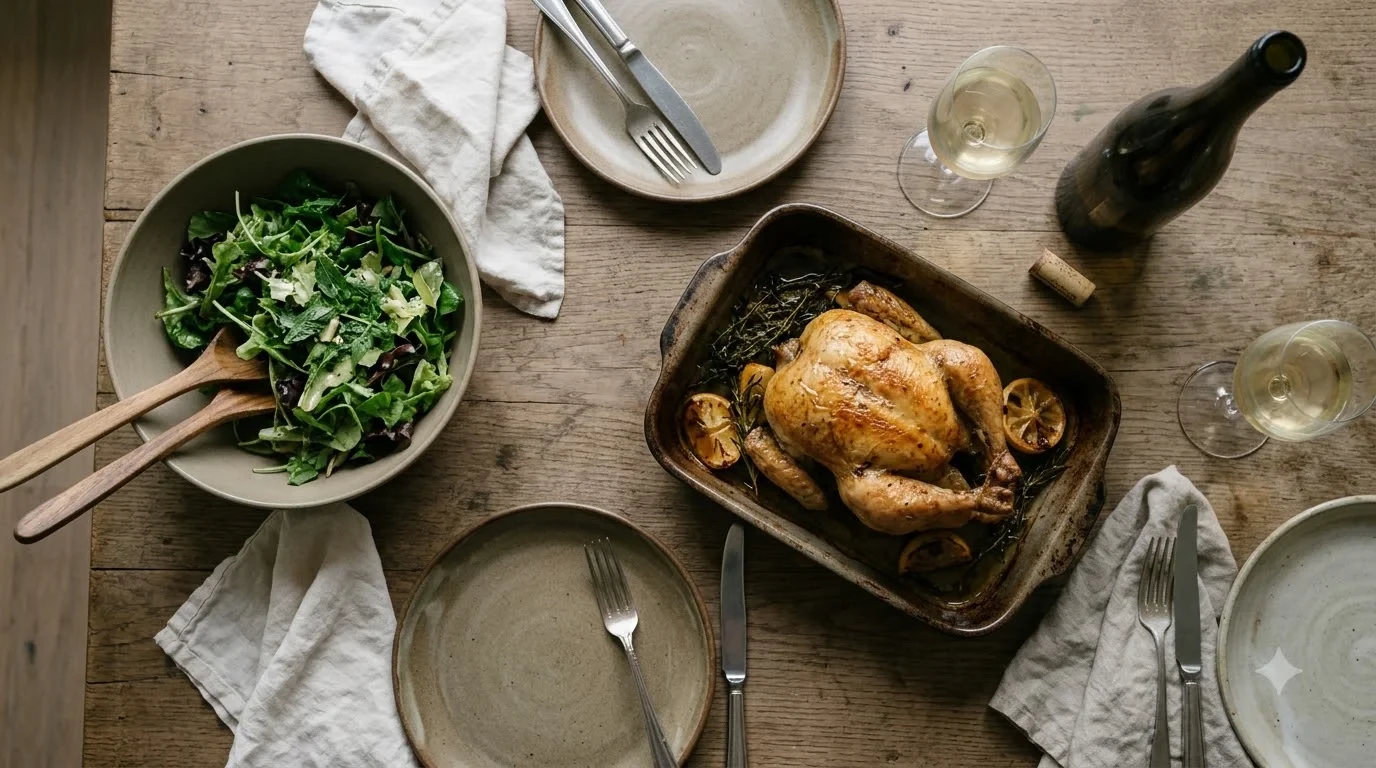
Roast chicken is one of the most reliable partners for Pinot Noir, particularly when it is seasoned with thyme, rosemary, garlic, black pepper, or lemon. The browned skin and pan juices add enough savory richness for the wine, while the bird’s mild flavor lets its red fruit and earthy notes remain clear.

A classic roast chicken has several flavors working together: crisp skin, tender meat, browned fat, aromatics, and perhaps lemon or butter. Pinot Noir’s acidity keeps each bite from feeling heavy, and the wine’s cherry or cranberry character gives a lively contrast to the roasted surface. A Burgundy-style Pinot with restrained fruit and earthy notes is especially natural with thyme, shallots, and root vegetables. A more fruit-forward Oregon or California Pinot can also work, especially when the chicken has deeper browning or a generous herb rub.
Think about the sides too. Roasted mushrooms, wild rice, lentils, sautéed kale, and buttered carrots add savory depth without competing with the wine. Very sweet potato mash, honey-glazed parsnips, or fruit sauce can make a dry Pinot seem thin or tart, so keep sweet elements modest.
The pinot noir with roast chicken pairing focuses on the classic roast bird. With lemon, capers, or vinaigrette, remember that acidic food needs equal or higher wine acidity; a squeeze of lemon is easier to match than a sharply sour dressing.
Match Grilled, Pan-Seared, and Smoked Chicken
Grilled and pan-seared chicken can suit Pinot Noir when the seasoning is savory and the char is controlled. The roasted edges bring out the wine’s spice and earthiness, but heavy smoke, hot chili, or a sticky barbecue glaze may call for a more powerful or sweeter wine style.
For grilled breast, choose a light-to-medium Pinot with cherry or raspberry notes and modest oak. Olive oil, garlic, rosemary, thyme, or a little balsamic usually fit better than a sugary glaze. A peppery rub can take a slightly fuller wine, but a heavily blackened crust may make tannins seem harsher and hide subtle aromas.
Pan-seared thighs have more richness than plain poached breast, so they can support a Pinot with more body and ripe fruit. Deglaze the skillet with a small amount of stock or wine, then finish the sauce with herbs rather than a large dose of sugar. The browned fond adds savory depth that connects with Pinot’s earthy character. For chicken sandwiches or a casual pizza night, a fruit-forward Pinot can also handle roasted chicken, mushrooms, and mild cheese; see how the pairing changes with pinot noir with pizza.
Smoke and barbecue require more judgment. Lightly smoked chicken with rosemary can suit a riper Pinot, but sweet, tangy sauce brings sugar, vinegar, spice, and smoke that can swamp delicate fruit. A fuller Zinfandel or Grenache is often a better match for that intensity. If you still want Pinot, serve it with the less sweet part of the plate, such as grilled chicken and roasted vegetables, and let the barbecue sauce remain a side condiment rather than the main coating.
Consider the Sauce: Mushrooms, Cream, Frying, and Spice
The sauce often decides whether Pinot Noir is the best choice. Mushroom gravy and gentle pan sauces usually suit it, while intense chili, very sweet glazes, and heavily fried coatings can make a different wine more effective.

Mushroom sauce is one of the strongest matches because mushrooms, thyme, and Pinot Noir share earthy, savory qualities. A sauce made with cremini, shiitake, or porcini can bring out the wine’s forest-floor notes, while its acidity keeps cream or butter from feeling too heavy. Chicken with wild mushroom risotto is a particularly natural combination, especially with an earthy Pinot from Burgundy or Oregon. Keep the sauce moderately rich and avoid overwhelming it with excessive truffle oil, which can dominate both the food and the wine.
Creamy chicken can work if the sauce is not too heavy. A light cream sauce with shallots, thyme, and stock suits a soft, fruit-forward Pinot, but thick Alfredo or abundant blue cheese may call for fuller Chardonnay. For chicken piccata, salad, or lemon-forward dishes, compare pinot grigio with chicken as a white-wine alternative.
Fried chicken is less predictable. A fresh, low-tannin Pinot can work with a mild coating, but sparkling wine often handles salt and frying fat better: high acidity and bubbles refresh the palate, and Cava is one option. Decanter’s chicken-pairing guide also highlights sparkling wine for fried preparations and Pinot Noir for savory casseroles. For hot wings or fiery curry, chili can amplify alcohol and tannin; an off-dry Riesling is usually more forgiving because residual sweetness softens the heat while acidity keeps the pairing lively.
Serve Pinot Noir at the Right Temperature and Pour
Serve most lighter Pinot Noir slightly cool, around 55 to 60 degrees Fahrenheit, and move fuller, more structured examples closer to 60 to 65 degrees. A modest chill preserves freshness and keeps alcohol from seeming too warm, while an oversized pour or an overly cold bottle can mute the wine’s aromas.
Wine Enthusiast gives a broad ideal serving range of 55 to 65 degrees Fahrenheit for Pinot Noir, with lighter versions nearer 55 degrees and fuller versions nearer 65. For a typical light red at the dinner table, 55 to 60 degrees is a practical target. If the bottle has been stored at room temperature, place it in the refrigerator briefly before serving; if it feels too cold, let the glass sit for a few minutes. Avoid serving it warm simply because it is red wine. Warmth can emphasize alcohol and make the fruit seem heavy next to chicken.
A standard pour is 5 ounces, and a 750-milliliter bottle yields about five glasses, leaving space for aromas in the glass. Decant a young, full-bodied Pinot for 30 to 60 minutes with braised chicken; lighter bottles usually need only time in the glass. Start a multi-wine meal with lighter styles and move toward fuller bottles. Store unopened bottles on their sides near 55 degrees Fahrenheit, away from sunlight and temperature swings. At the table, let the most assertive side or condiment guide the choice: sweet glaze and spicy dressing can matter more than the chicken itself.
Frequently Asked Questions
Is Pinot Noir better with chicken breast or chicken thighs?
Both cuts can work, but chicken thighs have more fat and a deeper flavor than skinless breast. That extra richness gives a medium-bodied Pinot more room to show its fruit and savory notes, while a lean breast is usually best with a lighter, fresher bottle. If the breast is served with a rich stuffing or mushroom filling, the sides can provide the extra weight.
Does Pinot Noir pair with chicken liver?
Yes, especially when chicken liver is served as pâté or mousse with toast and a tart garnish. The liver’s richness can suit Pinot Noir’s acidity, while a cranberry or sour-cherry accompaniment echoes the wine’s fruit. Avoid a heavily oaked or very tannic red, which can make the liver taste more metallic.
Can Pinot Noir go with chicken sausage?
It can, particularly with chicken sausage seasoned with fennel, sage, or black pepper. Sausage has a denser texture and more concentrated seasoning than plain chicken, so a medium-bodied Pinot is often a better fit than the palest, most delicate style. A side of lentils or roasted peppers can connect the dish to the wine’s savory notes.
Is Pinot Noir rosé another option with chicken?
A dry Pinot Noir rosé can pair well with chilled chicken, chicken salad, or a picnic plate with herbs and soft cheeses. Serve it around 45 to 50 degrees Fahrenheit, cooler than a still red, so its crispness stays prominent. A darker, more structured rosé can stand up to richer preparations better than a very pale, delicate style.
Can Pinot Noir work with chicken leftovers?
Yes, especially when leftover roast chicken is turned into a savory pie, mushroom sandwich, or warm grain bowl. Reheating the meat with stock and herbs keeps the flavors gentle enough for Pinot, while a sweet barbecue sauce or hot chili dressing may shift the match toward a fruitier or off-dry wine. The next-day preparation matters more than the fact that the chicken was cooked earlier.
Pinot Noir is a dependable red for chicken when the preparation is savory, the sauce is not too sweet, and the wine has enough freshness for the dish. Start with roast chicken, herbs, or mushrooms, then adjust the bottle’s body and fruit intensity as the recipe becomes richer or more heavily seasoned.
More in Food & Wine Pairing
 Risotto With White Wine Recipe: Make a Creamy Dinner at HomeUpdated Nov 20, 2026
 Wassail With Wine Recipe for a Festive Spiced Holiday DrinkUpdated Nov 20, 2026
 Spritz Veneziano Recipe: Make a Classic Venetian Aperitivo at HomeUpdated Nov 20, 2026
 Summer Wine Punch Recipe for Easy Homemade EntertainingUpdated Nov 20, 2026
 Bishop Recipe: How to Make a Bright, Citrus-Forward Red Wine CocktailUpdated Nov 20, 2026
 Wine Cupcakes Recipe: Bake Rich Chocolate Cupcakes at HomeUpdated Nov 20, 2026