

We may earn a commission when you buy through links on this page, at no extra cost to you. Learn more.
Pinot noir sugar content is very low, because Pinot Noir is made as a dry wine and the fermentation converts nearly all of the grape sugar into alcohol. Wine Folly labels Pinot Noir as dry, and the wine’s fruit flavors, such as cherry and raspberry, come from the grape rather than from leftover sugar.
Many people ask about pinot noir sugar content because the wine tastes so fruity. Ripe cherry and raspberry can feel sweet on the palate, yet the wine itself is usually dry. This guide explains what sugar means in a dry red, why Pinot Noir can taste round without being sweet, and how to check a specific bottle. For comparison with other styles, see the guides on cabernet sauvignon sugar content and white wine sugar content.
What Sugar Means in a Dry Wine
In winemaking, sugar refers to the natural grape sugar that remains after fermentation. Yeast consumes most of that sugar and turns it into alcohol and carbon dioxide. When the yeast finishes its work, the wine is called dry. A wine with noticeable leftover sugar is called off-dry or sweet, depending on how much remains.
This is a different question from alcohol. A wine can have a high alcohol level and still be dry, because the alcohol comes from the sugar that fermentation consumed. Pinot Noir is a good example: it can reach roughly 12 to 14 percent ABV and still taste dry, as Wine Folly’s profile of the grape shows.
Understanding this difference helps you read a label. The sugar level tells you how sweet the wine is, while the alcohol level tells you how strong it is. Both matter, but they are not the same measure.
What the Sources Say About Pinot Noir
Wine Folly’s Pinot Noir grape profile labels the wine as dry and lists its alcohol at 12 to 14 percent ABV. It describes the body as medium and the tannin as low, with medium-high acidity. The same page lists ripe cherry and raspberry as core fruit notes, with forest floor, tea leaves, and sometimes clove as undertones.
VinePair’s Pinot Noir overview describes the wine as layered with red fruit, florals, earth, herbs, and spice, with bright acidity and silky tannins. That overview does not discuss residual sugar or give an alcohol figure. The gap matters, because it means the sweetness question is best answered by the bottle itself rather than by a general grape profile.
Taken together, the two sources point to a dry wine with fruit-forward flavors. Neither gives a residual sugar number, so a precise gram-per-liter figure should come from the producer or the technical data sheet.
| Question | What the sources say |
|---|---|
| Sweetness label | Dry (Wine Folly) |
| Fruit flavors | Ripe cherry, raspberry, red fruit |
| Alcohol | 12 to 14 percent ABV (Wine Folly) |
| Acidity | Medium-high (Wine Folly), bright (VinePair) |
| Tannin | Low (Wine Folly), silky (VinePair) |
| Residual sugar figure | Not stated in either source |
Why Pinot Noir Can Taste Sweet Without Being Sweet
Ripe fruit is the main reason. Cherry and raspberry are naturally sweet-smelling aromas, and when the wine has a soft texture, the fruit can read as sweetness even when no sugar is left. Wine Folly’s profile points to ripe cherry and raspberry as core notes, which explains why the wine often feels fruity in the mouth.
Tannin and acidity also shape the perception. Low tannin makes the wine feel smooth, and medium-high acidity keeps it bright. That balance can make the fruit seem fuller than the sugar content would suggest. Oak can add vanilla and smoke, which further rounds the flavor in some bottles.
Region and vintage also play a role. Sonoma Coast examples are often described as richer and more structured, while Burgundy versions are more delicate, according to VinePair. A riper, warmer-grown bottle can taste fuller, which can also be mistaken for sweetness.
How to Check the Sugar in a Specific Bottle
The most reliable check is the producer’s technical data sheet, which often lists residual sugar in grams per liter. Many wineries publish these sheets on their websites, and retailers sometimes include them in product pages. If the number is not available, the producer’s tasting notes usually describe the wine as dry or fruit-forward, which is a useful clue.
Look at the label language too. A dry Pinot Noir usually does not carry a sweetness claim, while a sweeter bottle may say so. Be cautious with marketing words like “smooth” or “jammy,” because they describe texture and fruit rather than sugar. Those words are common on dry bottles as well.
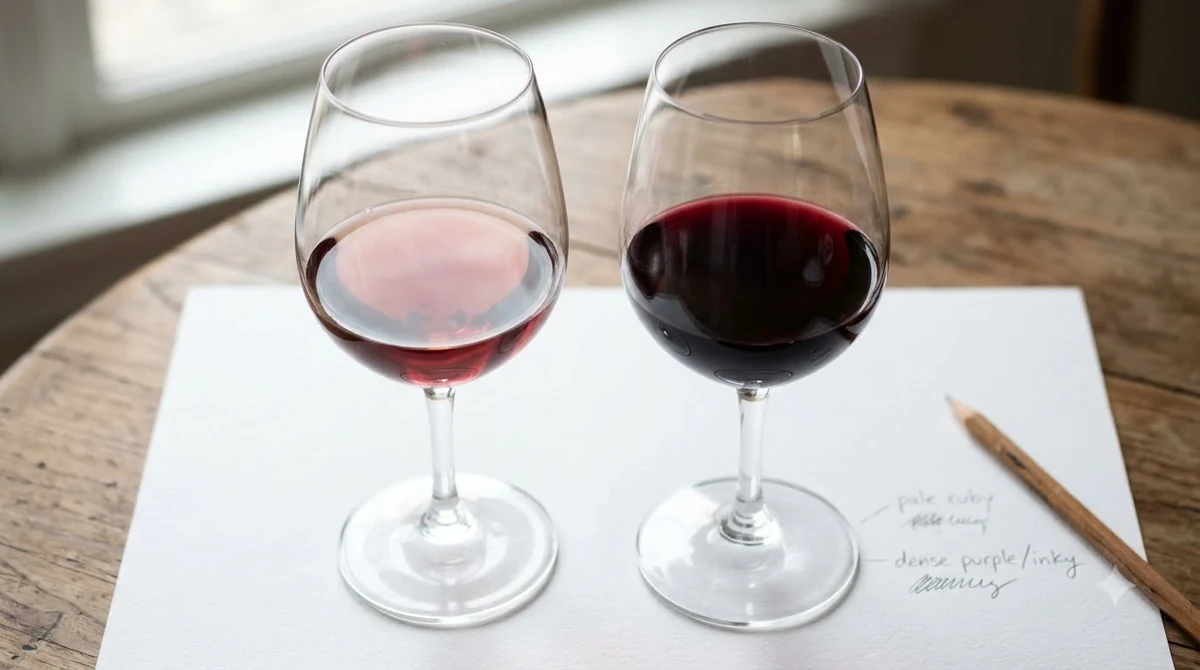
Taste is another test. If a Pinot Noir feels syrupy, heavy, or lingering in the finish, check whether it is a sweeter style or a riper, oak-heavy bottle. Comparing two bottles side by side makes the difference easier to notice.
Pinot Noir Compared With Other Wines
Pinot Noir is in the same dry red family as many other reds, and the sugar question works the same way across them. Dry red wines generally finish with little residual sugar, so the focus shifts to fruit, structure, and alcohol. Sweeter styles exist, but they are less common in the Pinot Noir category.
White wines show a wider range. Some whites are off-dry or sweet, and the label or technical sheet is the best guide there. For more on that contrast, see the sauvignon blanc sugar content guide, which covers how white styles differ in residual sugar.
How Pinot Noir Sugar Relates to Food and Serving
Because Pinot Noir is dry, it pairs well with foods that have fat, salt, or savory flavor. Its medium-high acidity and low tannin make it a flexible partner for salmon, roast chicken, mushroom dishes, and duck. Sweet-tasting fruit can also match foods with a little sweetness, such as glazed pork, but the wine itself is not sweet.
Serving temperature helps the fruit and structure show. A slightly cool serving brings out the bright acidity and keeps the alcohol in check. Pinot Noir is often served a little cooler than many reds, and that also makes its fruit feel lively rather than heavy.
Tip: If a Pinot Noir tastes sweeter than expected, check the technical sheet first. If the sheet lists little residual sugar, the sweetness is probably coming from ripe fruit and a soft texture.
How to Choose a Dry Pinot Noir
To choose a dry bottle, start with the sweetness label or technical data, then look at the region. Sonoma Coast and Burgundy styles differ in weight, so choose the one that matches your taste. A lighter, more delicate bottle may feel less sweet than a riper, richer one, even when both are dry.
Price is not a reliable guide to sweetness. Many dry Pinot Noirs sit at different price points, so the label and producer notes are more useful than cost. Reading two or three bottles from the same producer is a practical way to learn the house style.
Frequently Asked Questions
Is Pinot Noir a sweet wine?
Usually not. Wine Folly labels Pinot Noir as dry. Its fruit flavors can taste sweet, but the wine does not normally carry noticeable residual sugar.
What is the sugar content of Pinot Noir?
Neither Wine Folly nor VinePair gives a residual sugar figure. The producer’s technical data sheet is the best place to find a gram-per-liter number for a specific bottle.
Does alcohol mean a Pinot Noir is sweet?
No. Alcohol comes from sugar that fermentation converts. A dry Pinot Noir can carry 12 to 14 percent ABV and still taste dry.
Why does Pinot Noir taste fruity if it is dry?
Ripe cherry and raspberry flavors, combined with low tannin and soft texture, can read as sweetness. The fruit comes from the grape, not from leftover sugar.
Pinot noir sugar content is easiest to judge by combining the label, the technical sheet, and your own tasting. The wine is usually dry, and its fruit can taste generous without being sweet. For a broader view of how dryness is measured across styles, the wine by type guide is a helpful next step.
More in Wine Types & Grapes
 Zinfandel Sugar Content: Dry Red vs. White Zinfandel GramsUpdated Nov 21, 2026
 Best Zinfandel Substitute Options for Sipping and CookingUpdated Nov 21, 2026
 Zweigelt Food Pairing: Best Dishes, Cheeses, and Serving TipsUpdated Nov 21, 2026
 Zinfandel Tannins Explained: How Structure Shapes Every BottleUpdated Nov 21, 2026
 Zinfandel Sweetness Level: Dry Red vs. Sweet White Zin ExplainedUpdated Nov 21, 2026
 Xinomavro Food Pairing: Best Dishes, Styles, and Serving TipsUpdated Nov 21, 2026