

We may earn a commission when you buy through links on this page, at no extra cost to you. Learn more.
The best pinot gris food pairing depends on the wine’s style, but seafood, roast chicken, pork, fresh cheeses, and creamy pasta are among its most reliable matches. Lighter Italian Pinot Grigio works particularly well with delicate fish, shellfish, salads, and lemon-seasoned dishes. Fuller Pinot Gris from Alsace or Oregon can accompany richer meals, including roast duck, pork, mushroom risotto, and aged cheeses. Matching the wine’s acidity, body, and sweetness to the food is the key to a successful pairing.
Pinot Gris is one of the more adaptable white wines to bring to the dinner table. Its flavors can range from crisp lemon, green apple, and pear to ripe peach, honey, dried fruit, and gentle spice. That variation makes it suitable for everything from a simple seafood lunch to a substantial autumn dinner. The important distinction is that not every bottle has the same weight or sweetness. Understanding the style in your glass makes choosing the right food considerably easier.
Understanding Pinot Gris Styles Before Choosing Food
Pinot Gris and Pinot Grigio are names for the same grape, but their regional expressions can produce noticeably different dining experiences. Italian Pinot Grigio is often light, dry, and refreshing, while Alsace Pinot Gris typically has more body, aromatic depth, and sometimes noticeable residual sweetness.
Italian Pinot Grigio, particularly from northeastern regions such as Alto Adige, Friuli-Venezia Giulia, and Veneto, commonly features lemon, lime, green apple, and mineral notes. Its refreshing acidity makes it a natural companion for shellfish, white fish, salads, and simply prepared chicken. These wines generally work best when the food is delicate rather than heavily seasoned.
Alsace Pinot Gris offers a different experience. According to the Alsace wine organization, the wine can develop smoky aromas alongside dried fruit, apricot, honey, beeswax, and gingerbread. Its fuller structure and rounded texture allow it to accompany richer ingredients without disappearing beside them. Roast pork, duck, mushrooms, and substantial cheeses are particularly suitable choices.
Oregon Pinot Gris offers another useful style to consider. Many examples combine pear, apple, melon, and citrus with a medium-bodied structure. They can sit comfortably between crisp Italian Pinot Grigio and richer Alsatian expressions, making them practical choices for seafood, salads, and moderately creamy dishes.
The following comparison provides a useful starting point when deciding what to serve.
| Wine style | Typical characteristics | Best food matches |
|---|---|---|
| Italian Pinot Grigio | Light body, crisp acidity, citrus, green apple | Oysters, shrimp, salads, grilled white fish |
| Alsace Pinot Gris | Fuller body, moderate acidity, apricot, honey, smoke | Roast pork, duck, mushrooms, aged cheese |
| Oregon Pinot Gris | Light to medium body, pear, melon, citrus | Salmon, roast chicken, seafood pasta |
| Off-dry Pinot Gris | Noticeable fruit sweetness, rounded texture | Spiced poultry, fruit-based sauces, savory Asian dishes |
| Sweet late-harvest Pinot Gris | Concentrated fruit, honey, pronounced sweetness | Fruit desserts, blue cheese, foie gras |
Sweetness deserves particular attention. A dry wine can taste surprisingly sharp beside a dish containing honey, fruit preserves, or a sweet glaze. Conversely, a slightly off-dry Pinot Gris can soften the impression of spice and work well with dishes containing ginger, aromatic seasonings, and subtle sweetness.
For a broader explanation of how acidity, sweetness, body, and flavor intensity interact, see our guide to Wine Pairing.
Seafood, Shellfish, and Fish Pairings
Seafood is among the most dependable choices for Pinot Gris, particularly lighter Italian styles. Oysters, shrimp, scallops, white fish, and grilled trout allow the wine’s citrus character and refreshing acidity to complement the natural flavors of the ingredients.
Start with oysters served with lemon, lightly dressed shrimp cocktail, or chilled crab. These dishes have delicate flavors that benefit from a crisp white wine rather than a powerful, heavily oaked bottle. Italian Pinot Grigio is especially effective because its acidity refreshes the palate between bites without overwhelming the seafood.
Grilled white fish is another excellent match. Cod, halibut, sole, and sea bass can all work well when prepared with olive oil, fresh herbs, lemon, or a light butter sauce. The wine’s fruit and acidity provide contrast to the fish’s soft texture, while avoiding heavy flavors that could obscure its delicate character.
Scallops deserve special consideration. Pan-seared scallops develop a lightly caramelized exterior while retaining a tender center. A crisp Pinot Grigio provides freshness alongside that gentle sweetness. Add a little lemon, parsley, or a restrained white wine sauce to connect the flavors.
Salmon and richer fish
Salmon presents a slightly different challenge because its higher fat content calls for more texture and flavor in the wine. A fuller Oregon Pinot Gris or a richer Alsace example can be a better choice than an especially delicate Italian Pinot Grigio. The wine should have sufficient body to stand alongside the fish.
Try roasted salmon with fennel, grilled salmon with lemon and dill, or smoked salmon served with a mild cream sauce. Pinot Gris with a fuller texture can complement the richness of these preparations, particularly when the seasoning includes citrus or fresh herbs.
Skin-contact Pinot Grigio, often called Ramato, is another interesting possibility. This copper-colored style has additional texture and more pronounced aromas because of contact with grape skins during winemaking. For more on the different expressions of this grape and their food matches, see Wine Enthusiast’s Pinot Grigio food pairing recommendations. Ramato can be particularly interesting with fried sardines or other strongly flavored fish.
For delicate raw preparations, keep the wine fresh and relatively light. Ceviche, tuna carpaccio, and shrimp crudo benefit from crisp acidity. The citrus and salt in these dishes complement a similarly refreshing wine.
However, avoid assuming that every fish preparation requires the same wine. Delicate poached sole needs less body than salmon with a creamy sauce. A lightly seasoned shellfish platter calls for a different level of intensity from a richly seasoned seafood stew. Matching the preparation rather than simply the seafood category produces more consistent results.
Chicken, Turkey, and Other Poultry Dishes
Chicken and Pinot Gris are a natural combination because poultry has enough flavor to work with both crisp and fuller-bodied white wines. The cooking method and accompanying sauce determine which expression is most appropriate. Lemon-roasted chicken suits a bright Italian Pinot Grigio, while creamy chicken casseroles are better matched with a richer Pinot Gris.
For a simple weeknight meal, serve grilled chicken breast with lemon, garlic, olive oil, and parsley. The wine’s acidity complements the seasoning, while its fruit flavors provide a refreshing contrast to the lightly browned exterior. Chicken paillard, where the meat is flattened and cooked quickly, is another good choice.
Roast chicken offers more possibilities. A traditional roast with rosemary, thyme, and pan juices can pair with either Italian or Oregon Pinot Gris. The lighter version emphasizes freshness, while the fuller version works particularly well if the chicken is accompanied by roasted vegetables, buttery potatoes, or a creamy sauce.
Turkey is equally suitable. Roast turkey with sage and thyme pairs comfortably with medium-bodied Pinot Gris, particularly when the meal includes vegetables and savory stuffing. A slightly richer wine can accommodate gravy and roasted root vegetables more successfully than a very light, delicate bottle.
Choosing sauces and seasonings
Sauce is often more important than the poultry itself. Lemon butter, light cream, and herb sauces work well with Pinot Gris because they combine richness with flavors that complement the wine’s fruit and acidity. Mushroom cream sauce is particularly appropriate for fuller Alsatian styles.
For grilled or roasted poultry, consider these combinations:
- Lemon and herb chicken: Choose crisp Italian Pinot Grigio with refreshing citrus character.
- Roast chicken with garlic: Try Oregon Pinot Gris with apple and pear flavors.
- Chicken in cream sauce: Choose fuller Alsace Pinot Gris with enough body for the sauce.
- Turkey with sage stuffing: Serve a medium-bodied, dry Pinot Gris.
- Duck breast with fruit sauce: Select a fuller Pinot Gris with ripe fruit and aromatic depth.
Duck is particularly interesting because it has more pronounced flavor and richness than chicken. Roasted duck with orange, plum, or apricot sauce can work beautifully with an aromatic Pinot Gris. The wine’s fruit character echoes the sauce, while its acidity provides contrast to the meat’s fat.
Seasonal considerations also matter. A chilled, crisp Pinot Grigio can feel especially appropriate with grilled chicken and summer vegetables, whereas a fuller Pinot Gris suits a winter roast with mushrooms and root vegetables.
Pork, Veal, and Richer Meat Dishes
Full-bodied Pinot Gris can accompany several meats that people traditionally associate with red wine. Roast pork, veal, duck, and some game dishes have enough richness and flavor to match the wine’s rounded texture and aromatic complexity.
Roast pork is one of the strongest choices. A slow-roasted pork loin with rosemary, garlic, and fennel works well with Alsace Pinot Gris because the wine’s body complements the meat without introducing excessive tannin. Pork tenderloin with apple or pear sauce is another excellent combination, especially when the fruit sauce is not excessively sweet.
For a more substantial meal, consider pork shoulder with roasted vegetables or a traditional pork casserole. These preparations have more concentrated flavors and benefit from the depth of a fuller white wine. Pinot Gris with notes of dried fruit, honey, and gentle spice can complement the browned edges and savory meat juices.
Veal is another natural match. Roasted veal, veal chops, and veal with mushroom sauce all have the texture and flavor intensity needed for richer Pinot Gris. The Alsace wine organization specifically identifies pork and veal roasts among the dishes suited to its regional style.
Duck, game, and savory sauces
Duck provides an especially rewarding combination. Its richer texture makes it a good partner for Pinot Gris with sufficient weight and aromatic complexity. Try roast duck with apricot glaze, duck breast with plum sauce, or duck confit with potatoes and herbs.
Game birds and other moderately rich game preparations can also work. Roasted pheasant, rabbit stew, and delicately seasoned game dishes are possibilities for fuller Pinot Gris. The goal is to match the depth of the food without relying on a heavily tannic red wine.
Foie gras is a classic Alsace pairing. Its rich, creamy texture calls for a wine with body, aromatic intensity, and enough acidity to balance the dish. A concentrated or slightly sweet Pinot Gris can complement the richness particularly well.
Sweet-and-sour preparations offer another interesting direction. Veal with vanilla cream, pork with apricot sauce, and tajine featuring prunes are examples of dishes that can work with aromatic Alsatian Pinot Gris. Fruit notes in the food connect with the wine, while its acidity helps balance the richness of the sauce.
When selecting a wine for meat, remember that Pinot Gris does not have the firm tannin structure of Cabernet Sauvignon or Syrah. This can be advantageous with delicate meat preparations and sauces that would otherwise be overwhelmed by a strongly structured red wine.
For a different approach to richer red-wine pairings, compare these dishes with our guides to Amarone food pairing and Barbera food pairing. These wines provide a useful contrast in body, acidity, and tannin.
Vegetables, Salads, Pasta, and Mushroom Dishes
Vegetables and pasta are excellent partners for Pinot Gris, especially when the preparation includes citrus, olive oil, fresh herbs, or moderate amounts of cream. The wine’s acidity and fruit flavors work with a wide range of ingredients without requiring complicated seasoning.
Start with a green salad dressed with lemon vinaigrette or a light citrus dressing. Italian Pinot Grigio complements the acidity and freshness of the ingredients. A salad featuring cucumber, fennel, green apple, or fresh herbs is another attractive option.
Caprese salad is particularly suitable. Fresh mozzarella, ripe tomatoes, basil, and olive oil create a combination of acidity, salt, creaminess, and herbal aromas. A dry, crisp Pinot Grigio provides a refreshing counterpoint to the mozzarella while complementing the tomatoes.
Roasted vegetables can be matched according to their intensity. Zucchini, asparagus, green beans, and cauliflower generally suit lighter expressions, particularly when finished with olive oil and lemon. Roasted squash, carrots, and caramelized onions have greater sweetness and can work better with a fuller Pinot Gris.
Pasta and risotto
Simple pasta dishes are among the most flexible options. Spaghetti with olive oil, garlic, and parsley pairs naturally with crisp Pinot Grigio. Seafood linguine, pasta with shrimp, and light cream sauces also work because the wine’s acidity offsets some of the sauce’s richness.
Pesto provides another useful match. Basil, olive oil, garlic, and Parmesan create a savory combination that can complement Pinot Grigio’s fruit and freshness. Similarly, pasta with Pecorino or other salty Italian cheeses benefits from the wine’s refreshing acidity.
For creamy pasta, choose a fuller style. Fettuccine with mushrooms, chicken Alfredo, and pasta with a light cream sauce are better suited to an Oregon or Alsace Pinot Gris than to a very delicate Italian example. The additional body helps the wine remain present alongside the sauce.
Mushroom risotto is particularly well suited to fuller Alsace Pinot Gris. Earthy mushrooms and the creamy texture of the rice complement the wine’s smoky and dried-fruit characteristics. The Alsace wine organization specifically recommends girolle mushrooms, porcini risotto, and truffled mashed potatoes.
Other good possibilities include:
- Seafood risotto: Choose dry Pinot Grigio with crisp acidity.
- Asparagus pasta: Use a fresh, citrus-driven style.
- Porcini mushroom risotto: Choose a fuller, aromatic Pinot Gris.
- Roasted squash pasta: Try a rounded Pinot Gris with ripe fruit notes.
- Garlic and olive oil spaghetti: Serve a light Italian Pinot Grigio.
Tomato-based pasta deserves a little more attention. Fresh tomatoes and lightly seasoned tomato sauces can work with Pinot Grigio, particularly when the wine has sufficient acidity. However, heavily reduced tomato sauces with concentrated sweetness and intense seasoning may overpower a particularly delicate bottle.
For vegetable dishes with substantial butter or cream, select a wine with more body. The principle is straightforward: the heavier the sauce, the more structure the wine should have. A light salad should not need a powerful, concentrated Pinot Gris, just as a rich mushroom risotto deserves more than an extremely delicate white wine.
Cheese, Spicy Food, and Dessert Pairings
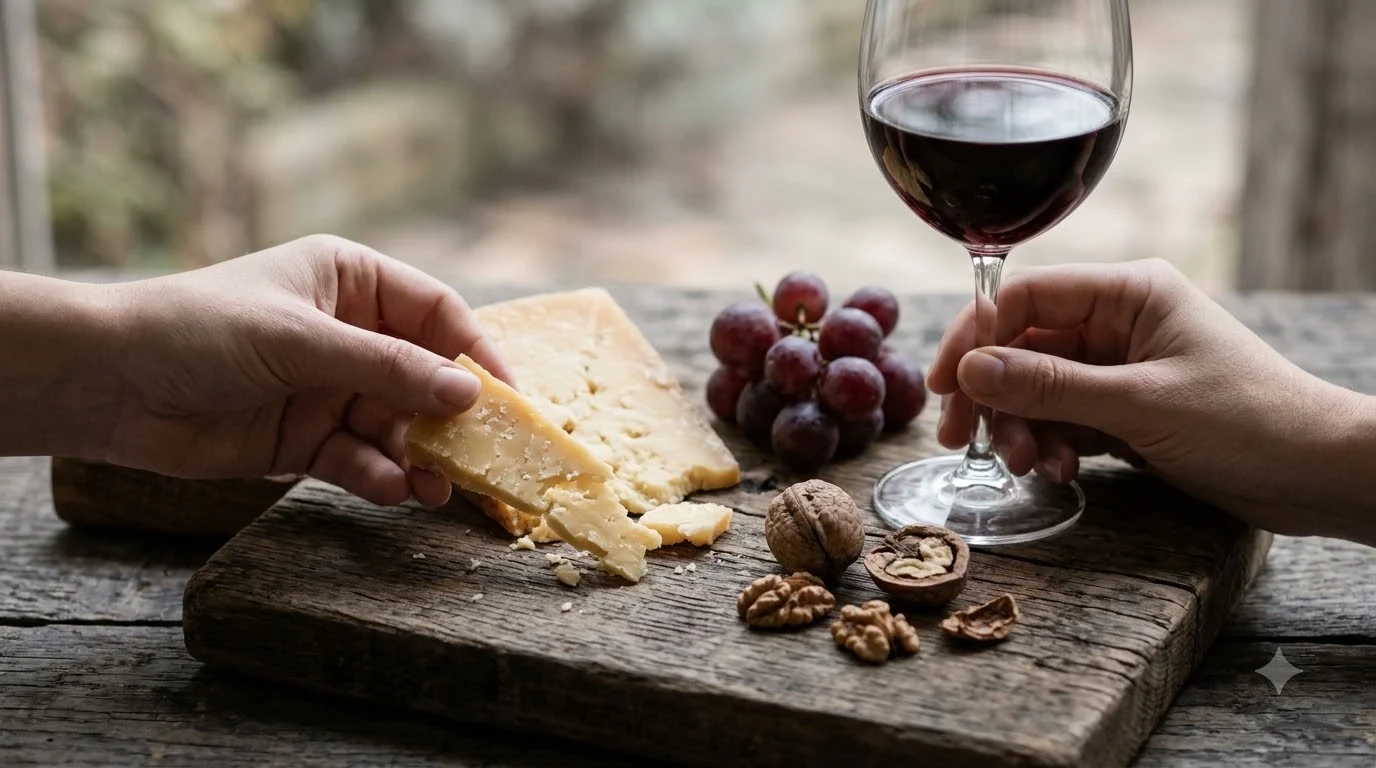
Cheese is another excellent category for Pinot Gris, although the best match depends on the cheese’s saltiness, fat content, and intensity. Fresh goat cheese, mozzarella, and feta suit lighter styles, while aged Alpine cheeses and blue cheese can work with fuller or sweeter expressions.
Fresh goat cheese is a particularly dependable option. Its tangy flavor complements the acidity of Italian Pinot Grigio, while its creamy texture provides a pleasant contrast. Serve it with a green salad, toasted bread, or fresh herbs for a simple appetizer.
Mozzarella and feta also work well. Mozzarella has a mild flavor that does not overwhelm the wine, while feta provides additional salt and acidity. These cheeses are especially suitable for Mediterranean-style appetizers with tomatoes, olives, cucumber, and fresh basil.
For richer Alsace Pinot Gris, consider Comté, Beaufort, Gruyère, and Appenzeller. These cheeses have greater depth and a more substantial texture. Their savory flavors can match the weight and long finish of a fuller-bodied Pinot Gris.
Spicy and Asian-inspired dishes
Pinot Gris can be an excellent choice with aromatic Asian cuisine, particularly dishes featuring ginger, fruit, and balanced sweet-and-sour flavors. A fuller, slightly off-dry style can complement the combination of sweetness and spice without making the wine seem excessively sharp.
Try ginger chicken, pork with apricot sauce, mild Thai curries, or stir-fried vegetables with a lightly sweet sauce. The fruit character of the wine connects with the ingredients, while acidity provides freshness.
However, there is an important distinction between aromatic spice and intense chili heat. Alcohol and tannin can amplify the sensation of chili, so avoid choosing a particularly high-alcohol or heavily structured wine for very hot dishes. A moderately alcoholic, slightly off-dry Pinot Gris is generally a more comfortable option.
For dishes with pronounced heat, keep the seasoning moderate and choose food that includes some sweetness or creaminess. Coconut-based sauces, ginger, and mild fruit-based seasonings are generally easier matches than intensely hot chili preparations.
Desserts and sweet wines
Sweet Pinot Gris can accompany dessert, but the wine should be at least as sweet as the food. Otherwise, the wine may taste thin, sour, or unpleasantly acidic beside the dessert.
Late-harvest Pinot Gris with concentrated fruit and honeyed notes can be served with fruit tarts, apricot desserts, poached pears, and lightly spiced fruit cakes. A sweeter style can also complement blue cheese, where the contrast between salty cheese and concentrated fruit sweetness is particularly appealing.
Dry Pinot Grigio, on the other hand, is usually better served before dessert or alongside savory courses. It does not have enough sweetness to balance a sugary pastry or chocolate dessert. For an after-dinner pairing, choose a genuinely sweet expression rather than assuming that ripe fruit aromas mean the wine is sweet.
These distinctions are especially useful when planning a multi-course meal. A crisp Italian Pinot Grigio can begin the evening with seafood or salad, while a fuller Alsace Pinot Gris can accompany a main course of roast duck or pork. A separate sweet wine can then be served with dessert.
Serving Temperature, Food Matching, and Practical Tips
Serving temperature affects how Pinot Gris tastes alongside food. Too much chilling can suppress aromatic complexity, while excessive warmth can make alcohol and sweetness more noticeable. A suitable temperature helps preserve freshness while allowing the wine’s fruit, texture, and aromas to develop.
For lighter Italian Pinot Grigio, aim for approximately 45–50°F. This temperature keeps the wine refreshing and allows citrus and green-apple characteristics to remain prominent. Fuller Pinot Gris benefits from slightly warmer serving temperatures, generally around 50–55°F, which allow its richer aromas and texture to show more clearly.
| Wine style | Serving temperature | Suggested food |
|---|---|---|
| Light Italian Pinot Grigio | 45–50°F | Oysters, shrimp, salads |
| Medium-bodied Oregon Pinot Gris | 45–50°F | Salmon, chicken, pasta |
| Full-bodied Alsace Pinot Gris | 50–55°F | Roast pork, duck, mushrooms |
| Sweet Pinot Gris | 43–50°F | Fruit desserts, blue cheese |
A practical way to prepare the wine is to refrigerate the bottle before dinner and allow it to warm slightly in the glass if it is too cold. This is particularly useful with fuller Alsace styles, where aromatic complexity is an important part of the pairing.
Build a balanced plate
Successful wine pairing is not simply about choosing foods with similar flavors. Texture, acidity, salt, sweetness, and intensity all influence how the combination tastes.
Use these principles when planning a meal:
- Match acidity: Highly acidic food needs a wine with equal or greater acidity. Lemon-marinated seafood, vinaigrette, and ceviche therefore work particularly well with crisp Pinot Grigio.
- Balance fat: Cream sauces, butter, and richer cheeses benefit from the refreshing acidity of the wine.
- Consider sweetness: A slightly off-dry Pinot Gris is more suitable for fruit-based sauces and mildly sweet dishes than a bone-dry wine.
- Match intensity: Delicate shellfish needs a lighter wine, while roast pork and mushroom risotto benefit from more body.
- Watch chili heat: Very hot food can make alcoholic wines feel hotter, so choose a moderately alcoholic style for spicy dishes.
- Account for salt: Salty ingredients can soften the perception of acidity and make refreshing white wines particularly enjoyable.
Tip: If you are uncertain which style to serve, start with the main ingredient and sauce. Choose crisp Italian Pinot Grigio for lemon-seasoned seafood or fresh salads, Oregon Pinot Gris for salmon and roast chicken, and fuller Alsace Pinot Gris for pork, duck, mushroom risotto, or aged cheese. This simple approach is more reliable than choosing by grape name alone.
Plan a meal around one bottle
Pinot Gris can also be used as the central wine for a complete meal. A dry, medium-bodied bottle is particularly practical because it can accompany several courses without becoming mismatched as the menu progresses.
For example, begin with shrimp and citrus salad, follow with roast chicken and herb potatoes, and finish with a mild cheese course. A medium-bodied Oregon Pinot Gris can work throughout the savory portion of this menu.
For a richer dinner, begin with mushroom appetizers, serve roast pork with apple and roasted vegetables, and finish with Comté or Gruyère. A fuller Alsace Pinot Gris is a more appropriate choice for this menu because its texture and aromatic depth complement the stronger ingredients.
Remember that the wine does not need to match every ingredient individually. The main course and its sauce should determine the bottle, while appetizers and side dishes can be selected to complement the same overall flavor profile.
For serving, use a standard white wine glass with enough room to release the aromas. A typical wine pour is 5 ounces, and a 750 ml bottle provides approximately five standard glasses. Leftover still Pinot Gris can generally be kept refrigerated with a stopper for 3–5 days.
Frequently Asked Questions
Is Pinot Gris the same grape as Pinot Grigio?
Yes. Both names refer to the same grape variety, which is also known as Grauburgunder in German-speaking wine regions. The French and Italian names reflect regional naming traditions rather than different grape varieties. The grape’s naturally grayish-pink skin is responsible for the word gris, meaning gray.
Can Pinot Gris be used to make rosé or orange wine?
Yes. Although it is usually made as a white wine, Pinot Gris can produce wines with pink, copper, or deeper amber hues depending on how the grape skins are handled. Ramato is a traditional Italian skin-contact style associated with Friuli-Venezia Giulia. Extended skin contact can contribute additional color, texture, and aromatic complexity.
Does Pinot Gris improve with bottle aging?
Some concentrated Pinot Gris wines can develop additional complexity with bottle aging. Certain Alsace examples develop more integrated aromas of dried fruit, honey, and spice as they mature. However, many lighter Italian Pinot Grigio wines are made for relatively early drinking, when their fresh citrus and apple character is most prominent.
Is Pinot Gris suitable for vegetarian and vegan meals?
Yes. Vegetarian dishes such as vegetable risotto, mushroom tart, roasted squash, and herb-based pasta can be excellent matches. For vegan menus, consider olive oil-based pasta, grilled vegetables, tofu with ginger, and mushroom dishes. Wine production methods vary, so people seeking vegan-certified wine should look for an appropriate producer certification.
Can Pinot Gris be used in cooking as well as served with dinner?
Yes. A dry Pinot Gris can be used in seafood sauces, risotto, chicken preparations, and dishes requiring a splash of white wine. Its fruit character and acidity can contribute freshness to sauces without introducing the pronounced oak flavors associated with some Chardonnay wines. Avoid using a sweet Pinot Gris in recipes that require a dry white wine unless the recipe specifically calls for sweetness.
Pinot Gris is a versatile white wine that can accompany much more than seafood and light salads. Crisp Italian Pinot Grigio is an excellent choice for fresh, delicate dishes, while richer Oregon and Alsace styles can handle roast poultry, pork, duck, creamy pasta, and aged cheese. Choose the bottle according to its body, acidity, and sweetness, and you will have a reliable wine for everything from a casual lunch to a substantial dinner.
More in Food & Wine Pairing
 Risotto With White Wine Recipe: Make a Creamy Dinner at HomeUpdated Nov 20, 2026
 Wassail With Wine Recipe for a Festive Spiced Holiday DrinkUpdated Nov 20, 2026
 Spritz Veneziano Recipe: Make a Classic Venetian Aperitivo at HomeUpdated Nov 20, 2026
 Summer Wine Punch Recipe for Easy Homemade EntertainingUpdated Nov 20, 2026
 Bishop Recipe: How to Make a Bright, Citrus-Forward Red Wine CocktailUpdated Nov 20, 2026
 Wine Cupcakes Recipe: Bake Rich Chocolate Cupcakes at HomeUpdated Nov 20, 2026