

We may earn a commission when you buy through links on this page, at no extra cost to you. Learn more.
A concise set of petite sirah tasting notes describes a deeply colored, full-bodied red with concentrated blueberry, blackberry, plum and dark-chocolate flavors, high tannins and medium acidity. The wine is usually dry, firm and intense rather than light or delicate. Its texture can feel dense and gripping, while black pepper, violet, spice, earth or oak-derived notes add detail around the fruit.
Petite Sirah rewards a little patience in the glass because its fruit, tannin and acidity can unfold at different speeds. The following guide explains what to look for, how origin and winemaking shape the profile, and which foods make the wine feel more balanced.
What Petite Sirah Is and Where It Comes From
Petite Sirah is a red grape variety best known in California, where it is bottled on its own and used to give blends darker color and firmer structure. Its original name is Durif, and it is genetically distinct from Syrah despite sharing one parent. The name can cause confusion, but Petite Sirah is not simply a smaller, lighter version of Syrah.
University of California, Davis Foundation Plant Services identifies Durif as a French variety released in 1880, with Syrah and Peloursin as its parents. The grape was named for the French viticulturist who propagated it. The small berries and compact clusters help explain the word “petite”; it does not describe a small-bodied wine. In California, the local name Petite Sirah became established after the vine arrived from France in the 1880s. The UC Davis record uses Durif as the principal variety name and lists Petite Sirah and Petite Syrah among its synonyms, a distinction that helps when comparing American and European references.
California remains the main home for varietal bottlings. Wine Enthusiast identifies Lodi, the Sierra Foothills, Livermore, Paso Robles and Santa Barbara among the state’s regions for the grape. Smaller plantings also exist in Australia and South America, while the name Durif is more commonly used outside the United States. For a reliable variety profile, see the UC Davis Durif grape record, which lists the grape’s parentage and naming history. Wine Enthusiast’s Petite Sirah varietal overview also outlines its California regions, color and high-tannin character.
Aroma Notes: Blueberry, Blackberry and Savory Spice
The first aromas are usually dark-fruited and concentrated. Blueberry, blackberry, black plum and boysenberry are common starting points, sometimes joined by cassis or ripe black cherry. The fruit may smell fresh and juicy, or more like preserves and compote when the grapes were harvested very ripe.
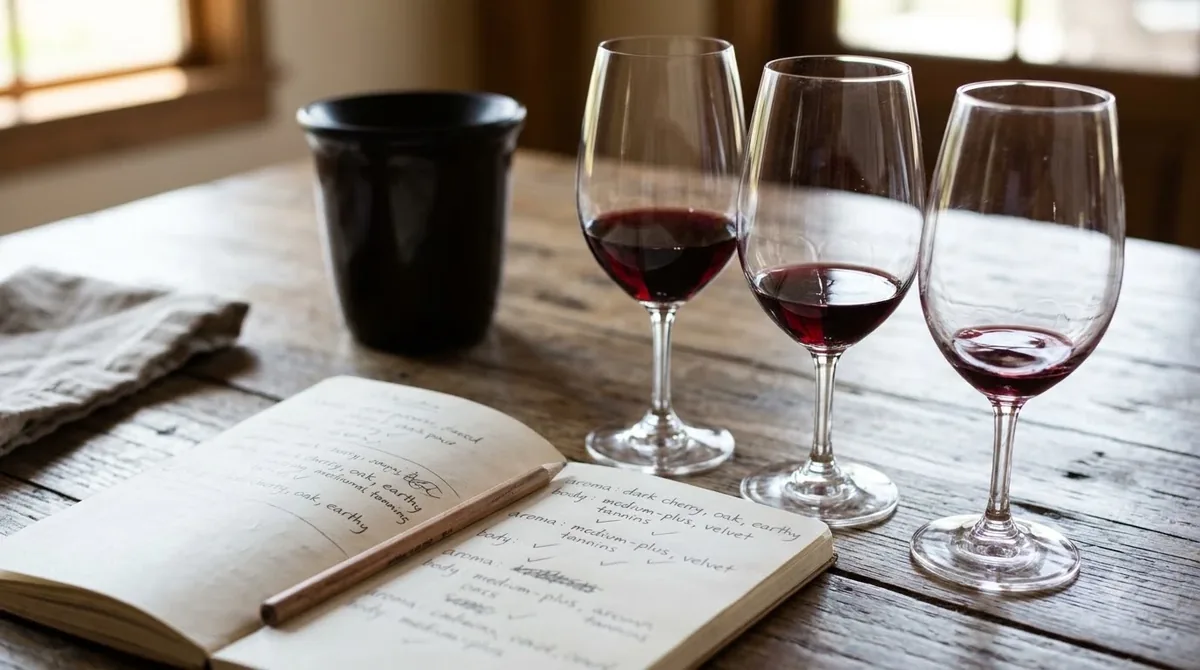
Give the glass a gentle swirl and look for secondary aromas. Black pepper, clove, licorice, dried herbs, violet and a faint smoky or earthy note can appear alongside the fruit. Oak aging may contribute vanilla, cocoa, toast, espresso or baking spice, although these aromas come from the barrel rather than from the grape alone. A wine with restrained oak may show more direct berry and floral character; a barrel-influenced example can smell richer and more layered.
Do not assume every bottle will show every descriptor. One Petite Sirah may emphasize blueberry and violet, while another leans toward blackberry, black pepper and dark chocolate. Aroma intensity also changes as the wine warms and takes in air. Start by identifying the broad family—dark fruit, spice, floral or savory—then narrow it down to the individual notes you can actually smell.
Palate, Tannin, Acidity and Finish
On the palate, Petite Sirah is generally full-bodied with high tannin and medium acidity. Those elements create its recognizable combination of weight and grip: ripe fruit gives the middle palate breadth, while tannin dries the gums and cheeks and acidity keeps the wine from feeling completely flat.
Expect flavors that echo the nose, especially blueberry, blackberry, black plum and dark chocolate. Depending on ripeness and oak, you may also find black cherry, cassis, pepper, cocoa, coffee, licorice or a savory herbal edge. The texture can feel broad and almost chewy, with a persistent finish. High tannin is not the same thing as sweetness; a ripe-fruited Petite Sirah can smell like jam but still finish dry.
Pay attention to where the structure lands. Fine, ripe tannins may feel firm but polished, while more forceful extraction can leave a drying sensation that lingers after the fruit fades. Medium acidity is important because it brings lift to a wine with considerable body. A well-balanced example lets fruit, acidity and tannin remain visible together rather than allowing a single component to dominate. For a focused tasting, take a small sip, let it coat the mouth, and notice whether the drying sensation builds at the front gums, along the cheeks or toward the finish. Then take a second sip after a minute or two. A modest shift toward softer texture can be a sign that the wine is opening, while fruit that disappears quickly beneath rough tannin may point to a more severe style. This simple check is more useful than judging structure from the first sip alone. For comparison, petit verdot tasting notes can help clarify another dark, structured red, while grenache tasting notes offer a useful contrast in a red grape that is often more open and less tannic.
How California Regions and Winemaking Change the Profile
California is not one uniform source of Petite Sirah. Warm inland sites can produce ripe, lush fruit and a broad texture, while cooler or higher-elevation sites may retain a fresher edge and show more savory, peppery or earthy detail. The region is a useful clue, but vineyard conditions and cellar decisions also shape the final wine.
Lodi and other Central Valley districts are often associated with concentrated blackberry, blueberry and jam-like fruit, sometimes with vanilla or pepper from oak and fermentation choices. Paso Robles bottlings can also be powerful, with dark berry flavors, firm tannins and spice. In cooler coastal or mountain settings, the profile may lean toward fresher berry character, smoke, herbs or earth. Livermore and Santa Barbara are additional California names worth recognizing on a label.
Winemaking has a direct effect on texture. Petite Sirah can release substantial tannin during fermentation, so extraction needs to be managed to suit the fruit. Santa Cruz Mountain Vineyard describes destemming without crushing the berries and monitoring the wine on its skins to decide when to press. That approach aims to limit harsh tannin while retaining flavor. Other producers may use different fermentation and barrel programs; oak can add vanilla, toast and cocoa, but it cannot substitute for balanced fruit and acidity.
Blending is another important use. Because Petite Sirah contributes deep color and firm tannin, a winemaker may combine it with varieties that have a softer structure or a different aromatic profile. A single-variety bottling gives a clearer picture of the grape, while a blend may use a smaller proportion to strengthen the overall shape of the wine. Read the style rather than assuming that every bottle carrying the name will have the same intensity.
Serving Temperature, Glassware and Decanting
Serve Petite Sirah slightly cool rather than warm. A practical target for a full-bodied red is 60–65°F; excessive warmth can make alcohol seem more prominent and the texture feel heavier. If the bottle has been stored at room temperature in a warm home, a short spell in the refrigerator can bring it closer to the target before pouring.
| Serving detail | Practical reference |
|---|---|
| Serving temperature | 60–65°F for a full-bodied red |
| Young-wine decanting | 30–60 minutes |
| Typical pour | 5 ounces |
| Bottle size and yield | 750 ml; about five 5-ounce pours |
| Storage temperature | Near 55°F |
| Opened still-wine window | About 3–5 days refrigerated |
Use a standard red-wine glass with enough room to swirl without spilling. Pour about 5 ounces, which leaves space for the aromas to gather in the bowl. A 750 ml bottle yields about five such pours. You do not need a specialized glass to appreciate the wine, but a broad bowl can make it easier to assess the aroma and follow how it changes with air.
Young, full-bodied reds can benefit from 30–60 minutes in a decanter. This gives a tightly wound Petite Sirah time to open and can soften the first impression of astringency, although air will not erase the wine’s natural tannin. Taste a small pour before decanting, then check it again after 20 or 30 minutes. Older bottles may need gentler handling, since extended exposure to air can make mature aromas fade rather than improve.
Tip: Taste the wine once soon after opening and again after 30 minutes. Note whether the fruit becomes more distinct, the tannins feel less angular or the aromas shift from primary berry toward spice and earth; use that change to decide whether the remaining bottle needs more air.
For storage, keep unopened bottles in a cool, dark place with a steady temperature near 55°F, away from strong light and vibration. Store cork-finished bottles on their sides. After opening, reseal the bottle and refrigerate it; a still red wine generally keeps for about 3–5 days, though its aroma and fruit may gradually become less expressive.
Food Pairings That Balance Petite Sirah
Pair Petite Sirah with dishes that have enough richness and flavor to meet its full body and high tannin. Protein, fat, salt and savory browning help make the wine feel less drying, while grilled or roasted flavors echo its dark fruit and spice. Beef, lamb, pork and hearty meat-free dishes are natural places to start.
Grilled ribeye, brisket, short ribs, lamb shoulder and a well-seasoned burger can work especially well. The protein and fat soften the perception of tannin, and charred edges bring out peppery or smoky notes in the wine. Slow-cooked beef stew and braised lamb are good choices when the wine has a firm, structured profile. For pork, try roast shoulder or sausages with herbs rather than a very sweet glaze. Barbecue can be a strong match, but sauce matters: a savory, peppery rub or moderately sweet tomato-based sauce can complement the wine’s ripe fruit. Very sweet sauces may make the wine seem harder and more bitter by comparison. Keep chili heat restrained, since alcohol and tannin can amplify the burn and a fiery sauce may overwhelm both the food and the wine.
Meat-free dishes can also supply the needed weight. Try roasted portobello mushrooms, eggplant, lentil stew, black beans, mushroom risotto or pasta with a deep tomato-and-herb sauce. Aged Gouda and other flavorful cheeses can stand up to the wine, while a softer fresh cheese may seem slight beside it. For a different red-wine contrast, sancerre tasting notes show how a high-acid, often lighter-bodied wine can suit dishes where Petite Sirah would feel too forceful. More ideas across styles are collected in Wine by Type.
Be cautious with delicate fish, especially oily fish, because tannic red wine can clash with their texture and flavor. Very spicy dishes can also be difficult, since alcohol heightens chili heat. If a meal is acidic—such as a salad with a sharp vinaigrette—the wine needs enough acidity to avoid tasting flat; Petite Sirah’s medium acidity may not be the best fit for a highly tart dressing. Match the wine’s intensity to the dish rather than expecting it to work with every dinner.
Frequently Asked Questions
These quick answers address common points that come up when choosing, serving or comparing Petite Sirah. They add a few useful details beyond the core aroma and pairing profile above.
Why is Petite Sirah so dark in color?
The grape is associated with unusually high levels of anthocyanin, the pigment group responsible for red and purple color in grape skins. That concentration helps explain the wine’s opaque, inky appearance and why Petite Sirah is sometimes used to deepen the color of a red blend.
Was Petite Sirah first bottled as a single-variety wine in California?
Wine Enthusiast credits Concannon Vineyard in Livermore Valley with claiming the first single-varietal Petite Sirah bottling, in 1961. The grape had already been grown in California for decades, but it was also valued as a blending component for its color and tannin.
Can Petite Sirah be made into a sweet wine?
Yes. Although most bottles encountered as Petite Sirah are dry red wines, the grape is also used for Port-style wines and dessert bottlings. These are distinct from the typical dry table-wine profile and can show a sweeter, richer finish.
Can a good Petite Sirah age for more than a decade?
Some carefully balanced examples can age for 10–20 years, particularly bottlings from Napa or Sonoma with enough fruit and acidity to support their tannin. That is not a promise for every bottle: a wine with ripe fruit but insufficient acidity may lose freshness sooner, so producer style and vintage balance matter.
Are old California Petite Sirah vineyards always planted to one grape?
No. UC Davis Foundation Plant Services documents a historic Oakville vineyard where researchers found Durif alongside Peloursin and Syrah. Those mixed plantings show why the historic California name could sometimes refer to a vineyard selection that was not genetically uniform.
Petite Sirah is a strong choice for drinkers who enjoy dark fruit, full body and pronounced tannin. Look for balance between fruit, acidity and structure, serve it a little cool, and bring it to the table with rich, savory food. With those cues in mind, its intensity becomes easier to understand and enjoy.
More in Wine Types & Grapes
 What Does Mourvèdre Taste Like? Flavor Profile, Regions, and PairingsUpdated Nov 20, 2026
 What Does Marsanne Taste Like? Flavors, Styles, and Food PairingsUpdated Nov 20, 2026
 What Does Malvasia Taste Like? Styles, Flavors, and Food PairingsUpdated Nov 20, 2026
 What Does Grenache Blanc Taste Like? Flavor Profile, Styles, and PairingsUpdated Nov 20, 2026
 What Does Garnacha Taste Like? Key Flavors, Styles, and Pairing TipsUpdated Nov 20, 2026
 What Does Fruit Wine Taste Like? A Complete Flavor and Style BreakdownUpdated Nov 20, 2026