

We may earn a commission when you buy through links on this page, at no extra cost to you. Learn more.
Petite petit wine usually means Petite Sirah, a dark, tannic red grape that is mainly grown in California. In the United States the grape is sold as Petite Sirah, and it is also known as Durif, which the US ATF recognizes as a synonym. The wines are inky and firm, with blue and black fruit, black pepper, and tannin strong enough to reward food and a few years of cellaring.
Shoppers searching for petite petit wine are often looking for the same red under a slightly different name. This guide explains where the grape comes from, what its wines taste like, how to serve them, and which foods suit a bottle, so you can decide whether a Petite Sirah belongs on your table.
What Petite Sirah Is and Where the Name Comes From
Petite Sirah is not a small version of Syrah, despite the name. According to Wikipedia, the grape is called Durif in France, where François Durif kept a nursery at his home in Tullins. Syrah and Peloursin likely grew side by side there, and the two vines crossed to produce the variety. DNA fingerprinting at UC Davis in 1997 identified Syrah as the pollen source, with Peloursin as the other parent.
In the United States the variety came to be sold as Petite Sirah, and the name stuck. Wikipedia notes that the grape is also called Duriff, Plant Durif, Pinot de Romans, and Petit Syrah in various markets. If a label says Durif, the wine is the same grape family, and the ATF treats the two names as synonyms.
Where Petite Sirah Grows
Most of the vines labeled Petite Sirah in California turn out to be Durif when they are tested. Wikipedia reports that DNA testing showed more than 90 percent of California plantings are Durif. The vine is grown across several counties, including Lake, Mendocino, Sonoma, Napa, Monterey, and San Joaquin.
Some older vineyards are field blends, where Petite Sirah grows alongside other varieties such as Mondeuse noire. That mix matters for the flavor of a bottle, so a label that names only Petite Sirah may still carry some blended character from the vineyard.
What Petite Sirah Tastes Like
Petite Sirah wines are dark, inky, and firm. Wikipedia describes them as relatively acidic with a firm texture, showing herbal and black pepper notes alongside blue and black fruit, plums, and blueberries. Wine Folly lists sugarplum, blueberry, dark chocolate, black pepper, and black tea among the grape’s main flavors, with high tannins as a defining feature.
The tannin is the most important part of the style. Wikipedia calls the wines very tannic, and notes that they can age for more than 20 years in the bottle. A young Petite Sirah can feel closed and grippy, which is why many people decant it or serve it with rich food. Over time the tannins soften and the fruit takes on more savory, earthy notes.
| Trait | Typical Petite Sirah | What it means at the table |
|---|---|---|
| Color | Deep, inky purple-black | Bold, dark wine that looks heavier than it is |
| Fruit | Blueberry, plum, blue and black fruit | Pairs with smoky, charred, or sweet-spiced dishes |
| Tannin | High, sometimes very firm | Needs fat, protein, or time to soften |
| Other notes | Black pepper, herbs, sometimes dark chocolate | Works with pepper-crusted meats and dark chocolate desserts |
How to Serve Petite Sirah
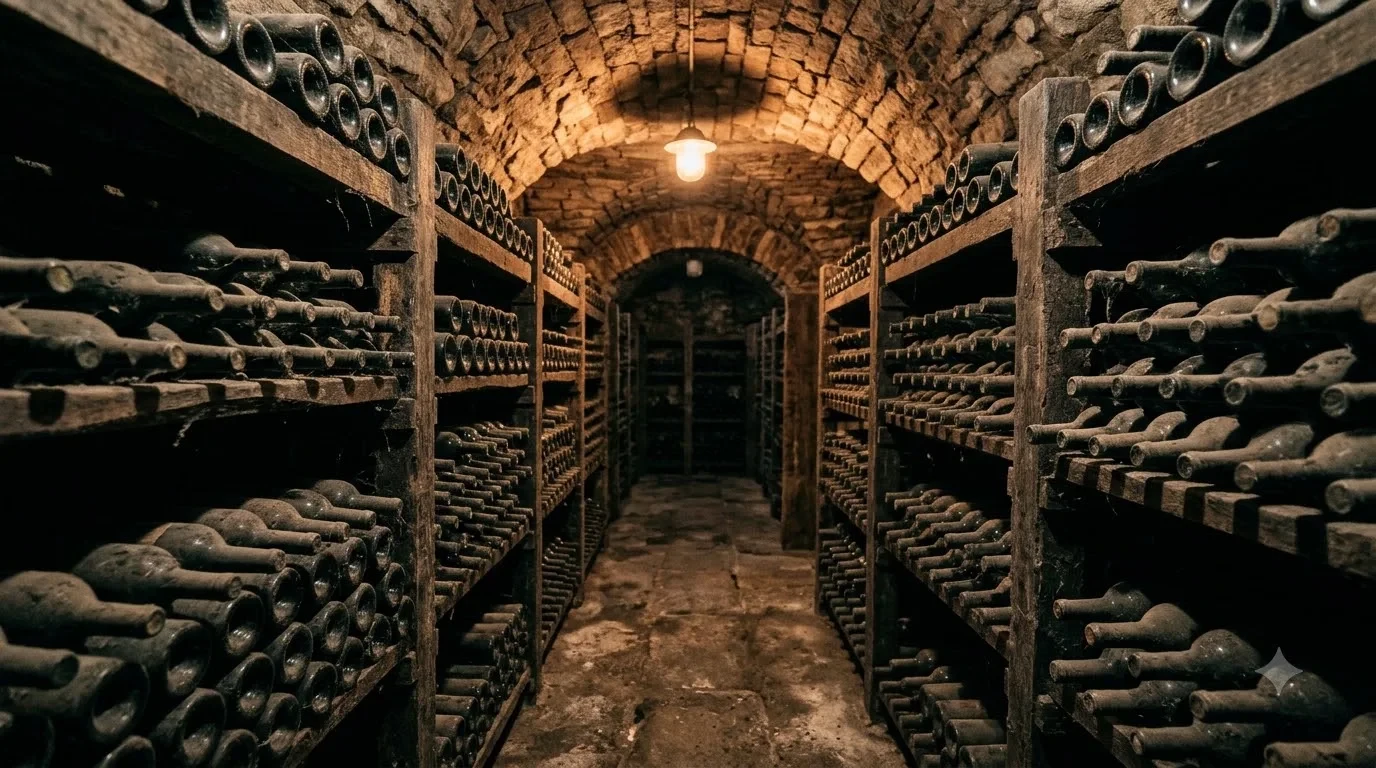
Serving temperature matters for a big red. Wine Folly’s grape guides generally place full-bodied reds at a slightly cooler range than room temperature, so a practical serving point is about 60 to 65°F (15 to 18°C). Pull the bottle from a cool cellar a few minutes before pouring so the wine does not taste hot or heavy.
Decanting helps most Petite Sirah bottles. Pour the wine into a carafe at least 45 minutes before serving, and longer for a young vintage. The air softens the tannins and lets the blueberry and pepper notes come forward. For an older bottle with sediment, decant more carefully and pour slowly.
Use a large glass so the aromas have room to open. Give the wine a few swirls and wait a few minutes before the first sip, since big reds often taste tighter when first poured.
Food Pairing Ideas for Petite Sirah
Petite Sirah is built for rich food. Grilled steak, beef short ribs, and lamb with rosemary all work well, because the fat and char soften the tannins and match the wine’s dark fruit. A pepper-crusted ribeye is a classic match for the wine’s black pepper notes.
Barbecue is another natural partner. Smoky pork, brisket, and sausage bring out the wine’s fruit and spice, and the tannins cut through the richness of the meat. Pair it with grilled vegetables, mushrooms, or charred peppers to keep the meal in balance.
For dessert, try dark chocolate or a plum tart. The wine’s dark fruit and chocolate notes make a natural bridge to sweet food, though a drier chocolate works better than a sugary one.
How to Choose a Petite Sirah Bottle
Start with the meal. If you are serving red meat or barbecue, Petite Sirah is a strong choice, especially for a group. If your menu is light, such as fish, poultry, or salads, a bold red like this one will overpower the food, so choose a lighter wine instead.
Next, look at the label for the vintage and the region. Petite Sirah from different counties tastes different, and a bottle from a cooler area may show more acidity and fresh fruit than one from a warmer valley. The label often gives the growing county, which is a helpful clue to the style.
Consider how long you plan to keep the bottle. A young Petite Sirah can be enjoyed within a year or two, but the grape is known for aging. If you plan to cellar a bottle, choose a vintage from a producer with a good track record and store it in a cool, dark place.
Tip: If a Petite Sirah tastes harsh at the start of the meal, give it more time in the glass or decant it for 45 minutes. The softening is often dramatic, and the fruit becomes much easier to appreciate.
If you are comparing options, the wine brands hub covers the names shoppers often weigh against each other. For other styles of red and white, you can also look at A to Z Wineworks to see how a different producer approaches a similar price point and style.
For the grape itself, the Wine Folly Petite Sirah guide covers its flavor, tannin, and where it grows in more detail, and the Wikipedia Petite Sirah article covers its origin and naming history.
Frequently Asked Questions
Is petite petit wine the same as Petite Sirah?
Most people searching for petite petit wine are looking for Petite Sirah, the dark red grape also called Durif. Check the label to confirm the grape name, since the spelling varies across shelves.
Is Petite Sirah related to Syrah?
Yes. DNA testing at UC Davis identified Syrah as one parent of Durif, with Peloursin as the other, according to Wikipedia. The name Petite Sirah reflects that Syrah connection, although the two wines taste different.
Does Petite Sirah need to be decanted?
Decanting is recommended for most bottles. Giving the wine at least 45 minutes in a decanter softens its firm tannins and brings out the blueberry and pepper notes.
How long can Petite Sirah age?
Wikipedia says the wines can age for more than 20 years in the bottle. Most bottles are enjoyed much sooner, and a younger wine benefits from decanting and rich food.
Petite petit wine, which usually means Petite Sirah, is a bold, dark red that rewards rich food and a little patience. Pair it with steak, barbecue, or pepper-crusted meat, decant it for a young bottle, and you will get the most from its dark fruit and firm structure.
More in Wine Brands
 Underwood Wine Price: Compare Bottles, Cans, and Pack SizesUpdated Nov 21, 2026
 Zenato Wine Price: Compare Styles and Choose the Right BottleUpdated Nov 21, 2026
 Zuccardi Wine Price: Compare Bottles and Find the Right RangeUpdated Nov 21, 2026
 Yellow Tail Moscato Review: Taste, Sweetness and Serving TipsUpdated Nov 21, 2026
 Wolf Blass Yellow Label Review: Choose Your Best StyleUpdated Nov 21, 2026
 Wolffer Estate Rose Review: Choose the Right Bottle for Your TableUpdated Nov 21, 2026