

We may earn a commission when you buy through links on this page, at no extra cost to you. Learn more.
Palomino wine usually means a dry white made from the Palomino grape, the variety that forms the backbone of sherry. Palomino is a white grape believed to come from Spain, and its most famous role is as the principal grape used to make sherry in Jerez. Outside sherry, it is far less common as a stand-alone table wine, which is why most drinkers meet it first in a fortified bottle rather than a glass of still white.
Few grapes are as closely tied to one product as Palomino. If you have seen the name on a sherry label or a bottle from southern Spain, you have already met it, even if you did not know it was a grape. This guide explains where Palomino comes from, how it is used, what its wines are like, and how it differs from the Palomino grape name you may see in other contexts.
What Palomino Wine Is
Palomino is a white Vitis vinifera variety. According to the Wikipedia entry on the Palomino grape, it is believed to originate in Spain, and it is best known as the principal grape used in the manufacture of sherry.
The name appears on wines in a few different forms, so it helps to know the terms. Palomino Fino is the sub-variety that matters most for sherry. Palomino Basto and Palomino de Jerez are other Spanish sub-varieties, but Fino is by far the most important of the three. When you see Palomino on a label, you are usually looking at a wine that is either a fortified sherry style or a still white from a warm region.
The grape has spread well beyond Spain. It is found in South Africa, Australia, and California, and in the Canary Islands it is called Listan Blanco. In each place, the grape’s role depends on local tradition and climate.
Where Palomino Is Grown
Palomino is grown most heavily in Spain, where it is one of the country’s main white varieties. The Andalusian plantings that support sherry production are the largest single reason the grape is so widely known.
Wikipedia reports that Palomino was Spain’s fourth most common white grape in 2015, with 20,261 hectares planted that year. Those figures are older than the current harvest, so treat them as a rough picture of the grape’s scale rather than a current count.
Outside Spain, the grape is also grown in Galicia and in Portugal’s Douro region, where it is used for table and fortified wines. In South Africa it is known as Fransdruif or White French, and in France it appears under the name Listán.

| Setting | Where you will see Palomino | What it is used for |
|---|---|---|
| Sherry | Andalusia, Spain | The principal grape in the manufacture of sherry |
| Canary Islands | Spain, where it is called Listan Blanco | Local white wines |
| Douro | Portugal | Table and fortified wines |
| South Africa | Known as Fransdruif or White French | Mostly wines of local tradition |
| California and Australia | Smaller plantings | Mainly fortified wines |
The table shows that Palomino is less a wine of its own than a grape that thrives in specific traditions. Its strongest identity comes from the sherry it helps make.
Tip: If a bottle is labeled simply Palomino and does not mention sherry, check the producer’s description. Still wines made from this grape are less common, and the style can vary a lot.
Why Palomino Works So Well for Sherry
Palomino is a grape that suits fortified wine rather than delicate table wine. Its juice tends to be low in acidity and sugar, and the wine made from it is often described as fairly neutral in flavor. That neutral base is useful for sherry, where the flavor comes from the aging process rather than from the fruit.
The grape’s juice also oxidizes quickly, a trait that is a problem for many white wines but does not matter for sherry. Winemakers use that reactivity as part of the process that gives sherry its nutty, savory character. Wikipedia notes that the same traits make still wine from Palomino less appealing unless the acidity is adjusted, which helps explain why the grape is so rarely bottled on its own.
What Still Palomino Wine Tastes Like
Still wine made from Palomino tends to be light and low in acidity. It can feel soft and round, but it often lacks the lift that makes many white wines refreshing. Producers who want a more vibrant bottle may adjust the acidity during winemaking.
Because the grape is not as well known for still wine, you will find fewer stand-alone bottles than for varieties such as Chardonnay or Sauvignon Blanc. When you do find one, expect a wine that is more about texture and drinkability than bold fruit. If you want a richer, more characterful style, sherry is usually the better place to start.
Because of its low acidity, still Palomino often benefits from careful handling in the cellar and from being drunk fairly young. A bottle that has been stored for a long time, or one that was poorly kept in a warm place, may taste flat or dull. Checking the vintage and the producer’s guidance helps you enjoy the wine at its best.
For a closer look at the grape itself, see the Palomino grape guide, and for a broader explanation of the name, read what is Palomino.
How to Serve Palomino Wine and What to Pair With It
Serving depends on the style. Dry sherry styles are usually served chilled, while still Palomino wines are best cool rather than cold, so the soft texture comes through. A standard white wine glass works well for either style, because it lets you judge the aroma before you taste.
When you shop, look for style words rather than the grape name alone. Sherry labels often use terms such as Fino, Manzanilla, Amontillado, and Oloroso to signal the style of the wine, and those words tell you more about how it will taste than the grape does. A Fino or Manzanilla tends to be pale and dry, while Oloroso is usually darker and richer. Since most sherry is made from Palomino, the style name is the most useful clue on the label.
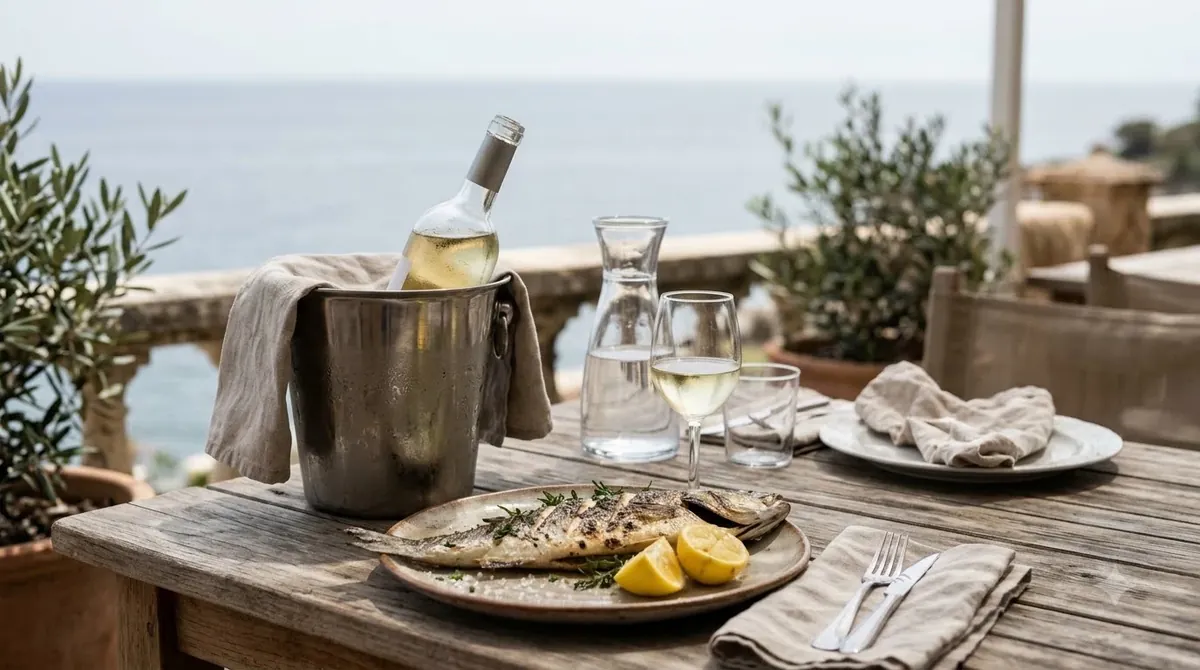
Sherry made from Palomino is famous for pairing with food. Dry styles go well with tapas, olives, almonds, and seafood. Richer, aged styles can match cheese, roasted nuts, and dishes with a savory or caramelized edge. Still Palomino tends to suit simple grilled fish, roasted chicken, and fresh salads, where its soft body does not compete with the food.
Frequently Asked Questions
Is Palomino a red or white grape?
Palomino is a white grape. It is the main grape used to make sherry, and it is rarely used for red wine.
Is Palomino wine the same as sherry?
Not exactly. Palomino is the grape, while sherry is a fortified wine style made in Jerez, Spain, from Palomino and sometimes other varieties. Some still wines are labeled Palomino, but they are not sherry.
Where is Palomino grown?
Spain has the largest plantings, especially in Andalusia. The grape also grows in the Canary Islands, Portugal’s Douro region, South Africa, Australia, and California.
Is Palomino wine sweet?
Most dry sherry styles made from Palomino are not sweet, while some sweeter sherries are made separately. Still Palomino wines are generally light in style. Check the label or the producer’s description for the exact sweetness level.
Palomino wine is best understood through sherry, the wine that made the grape famous. Its low acidity and neutral base suit the aging process that gives sherry its character. If you want to explore further, start with Wine by Type and compare how white varieties differ in body, acidity, and style.
More in Wine Types & Grapes
 Zinfandel Sugar Content: Dry Red vs. White Zinfandel GramsUpdated Nov 21, 2026
 Best Zinfandel Substitute Options for Sipping and CookingUpdated Nov 21, 2026
 Zweigelt Food Pairing: Best Dishes, Cheeses, and Serving TipsUpdated Nov 21, 2026
 Zinfandel Tannins Explained: How Structure Shapes Every BottleUpdated Nov 21, 2026
 Zinfandel Sweetness Level: Dry Red vs. Sweet White Zin ExplainedUpdated Nov 21, 2026
 Xinomavro Food Pairing: Best Dishes, Styles, and Serving TipsUpdated Nov 21, 2026