

We may earn a commission when you buy through links on this page, at no extra cost to you. Learn more.
Orange vineyards are high-altitude cool-climate wine estates located in the Central Ranges of New South Wales, Australia, defined strictly as land sitting above 600 meters (1,969 feet) in elevation around the extinct volcano Mount Canobolas. Positioned roughly 200 to 260 kilometers (124 to 160 miles) west of Sydney, this Australian Geographical Indication produces bright, structured wines led by Chardonnay, Shiraz, Pinot Noir, and Sauvignon Blanc. Unlike most warm inland Australian appellations, the elevation here creates cool nights and a slow ripening season that preserves natural acidity.
For American wine drinkers used to thinking of Australian wine as sun-drenched and full-bodied, the Orange region offers a striking contrast. Named after the town of Orange—which itself was named for the Prince of Orange rather than the citrus fruit—the appellation has grown from commercial plantings in the 1980s into a compact, food-focused wine destination with more than 60 wineries and over 80 individual vineyard sites.
Overview of the Orange Wine Region
Registered as an official Australian Geographical Indication (GI) in 1997, the Orange wine region is the only appellation in Australia defined entirely by a minimum contour line. Every vineyard within the boundary sits at or above 600 meters (nearly 2,000 feet) above sea level, with the highest sites climbing past 1,000 meters on the slopes of Mount Canobolas.
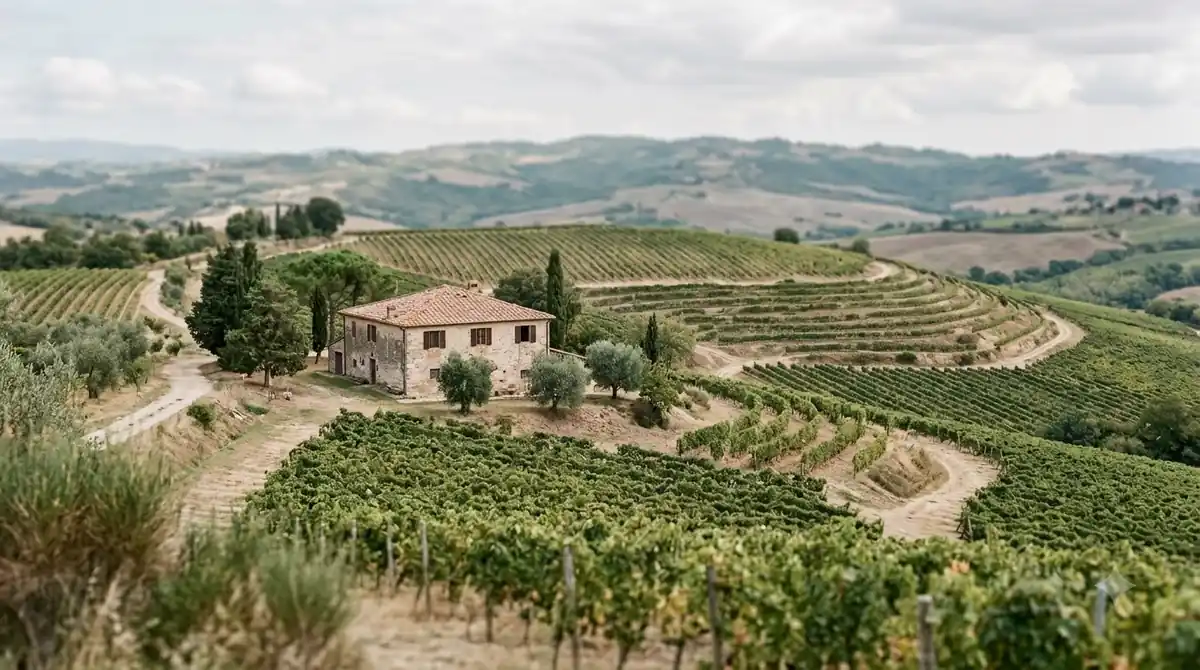
That elevation fundamentally shapes the growing environment. According to Wine Australia, the continental climate brings warm summer days followed by sharp temperature drops at night, alongside dry autumn conditions during harvest. Fewer than one percent of all vineyards across Australia sit higher than 600 meters, making these high-country slopes a rare microclimate on the continent.
Soils across the district reflect the geological history of Mount Canobolas, an extinct volcano rising to roughly 1,395 meters (4,593 feet). Vineyard soils range from deep volcanic basalt clays and free-draining loams to patches of red terra rossa. Combined with roughly 1,075 to 2,000 hectares under vine across the broader GI, these volcanic soils give wines from the area a recognizable mineral tension and savory backbone.
Sub-Regions and Vineyard Corridors
While the Orange GI is a single legal appellation covering a roughly 30-kilometer diameter, local growers divide the landscape into four main vineyard corridors radiating outward from the town center. Elevation, aspect, and soil depth shift noticeably depending on which side of Mount Canobolas a vineyard occupies.
North of town toward Nashdale and Cargo, gently rolling hills mix grapevines with apple and cherry orchards. Sites here tend to sit closer to the 600-to-750-meter band, yielding approachable, fruit-expressive whites and medium-bodied reds. Heading east toward Millthorpe and Forest Road, the terrain rises gradually with broad valley views and morning sun exposure suited to aromatic whites and structured Shiraz.
To the south, the landscape opens into wider valleys where some of the district’s earliest modern vineyards were established. The most extreme cool-climate conditions appear to the west along Pinnacle Road and Canobolas Road, where vineyards climb the upper volcanic slopes between 900 and 1,050 meters. In these high-altitude blocks, harvest often runs several weeks later than in neighboring Central Ranges zones like Mudgee or Cowra.
| Vineyard Corridor | Direction from Town | Typical Elevation Profile | Primary Wine Styles |
|---|---|---|---|
| Nashdale and Cargo | North (10–20 minutes) | Lower to mid-slope rolling hills | Chardonnay, Pinot Gris, Merlot, Tempranillo |
| Millthorpe and Forest Road | East (10–15 minutes) | Mid-to-high rising slopes (up to 900m+) | Shiraz, Pinot Noir, Riesling, Prosecco |
| Southern Valleys | South (15–25 minutes) | Open valley floors and gentle ridges | Sparkling wines, Cabernet blends, Chardonnay |
| Mount Canobolas Slopes | West (15–20 minutes) | Highest sites (900m to 1,050m) | Riesling, Pinot Noir, Sauvignon Blanc, Chardonnay |
Key Grapes and Wine Styles
Orange vineyards support a wide mix of classic French varieties alongside aromatic whites and sparkling bases, unified by crisp natural acidity and moderate alcohol levels. Rather than relying on heavy oak or overripe fruit, winemakers here emphasize linear freshness, floral aromatics, and clean mineral finishes.
Chardonnay is widely considered the flagship white grape of the district, thriving across every elevation band. Lower sites produce generous stone-fruit profiles with subtle barrel texture, while higher vineyards yield taut, citrus-driven bottles with struck-match complexity and lively acidity. Sauvignon Blanc and Riesling also perform strongly at higher altitudes, delivering crisp lime, white blossom, and passionfruit notes without grassy heaviness.
Among red varieties, Shiraz is the most widely planted grape in the region. Cool nights shift its flavor profile away from jammy warmth toward dark cherry, plum, black pepper, and subtle chocolate. Pinot Noir has gained rapid acclaim on the highest volcanic slopes, offering red rose, cranberry, and earthy spice, while Cabernet Sauvignon and Merlot are frequently blended into structured, age-worthy Bordeaux-style reds.
Notable Producers in Orange
The producer landscape in Orange leans heavily toward small, family-run estates and single-vineyard labels rather than industrial-scale wineries. Many winemakers who built careers at major Australian houses established second acts here specifically to work with high-altitude fruit.
Philip Shaw Wines is one of the region’s foundational names, established after winemaker Philip Shaw planted the Koomooloo vineyard in the late 1980s and developed high-elevation blocks like Long Rail Gully above 900 meters. Bloodwood Wines, located in the southern corridor, stands among the earliest pioneering estates that proved commercial viticulture could succeed at these elevations.
Other benchmark names frequently highlighted by critics include Printhie Wines, known for its traditional-method Swift Sparkling lineup; Ross Hill Wines, recognized for sustainable farming and award-winning Chardonnay and Shiraz; and Colmar Estate, perched on the high western slopes of Mount Canobolas. Boutique operators such as See Saw Wines, De Salis Wines, Gilbert Family Wines, Nashdale Lane Wines, and ChaLou Wines further define the modern small-batch identity of the region.
Tip: When comparing bottles from Orange, check the back label for vineyard elevation—wines grown above 850 meters typically show noticeably sharper acidity and lighter body than those from the 600-meter boundary.
Visiting Tips for Wine Travelers
Planning a trip to Orange vineyards is remarkably straightforward because the entire appellation sits within a 25-minute drive of the town center. Travelers exploring international wine regions will find that Orange pairs rural vineyard access with an established local dining scene centered on seasonal produce, truffles, and orchard fruit.
Because cellar doors are clustered along distinct routes, grouping visits by direction saves driving time. Visitors can spend one day touring northern producers like Nashdale Lane and Rowlee Wines, then dedicate a second day to eastern and southern stops such as Ross Hill, See Saw, and Printhie before climbing Mount Canobolas to visit Borrodell Estate or Colmar Estate. Most tastings run 30 to 45 minutes, making four or five stops comfortable in a single day.
According to Visit NSW, several cellar doors operate out of converted apple-packing sheds and historic woolsheds, reflecting the area’s agricultural roots. While some tasting rooms accept walk-ins, advance reservations are strongly recommended on weekends, and smaller boutique estates often open only from Friday through Monday.
How to Buy Orange Wines in the US
Although the majority of production from Orange is consumed domestically within Australia, select bottles reach independent wine shops and specialty online retailers in the United States. Because total vineyard acreage is modest compared to giants like the Barossa Valley or Hunter Valley, distribution tends to focus on flagship exports rather than broad supermarket placement.
When shopping in the US, look for producers with established export footprints—such as Philip Shaw, Gilbert Family Wines, or larger Australian houses like Penfolds that source high-altitude Orange fruit for regional Chardonnay releases. Checking the front or back label for the “Orange” GI designation ensures the grapes were grown strictly above the 600-meter elevation line rather than blended from warmer surrounding Central Ranges zones.
For buyers who appreciate cool-climate precision in domestic appellations—from red mountain vineyards in Washington to augusta vineyards in Missouri or nevada vineyards—Orange bottles offer a compelling Southern Hemisphere benchmark for crisp Chardonnay, peppery cool-climate Shiraz, and aromatic Pinot Noir.
Frequently Asked Questions
Are orange vineyards named after orange wine or citrus fruit?
Neither—the vineyards are named after the city of Orange in New South Wales, Australia, which was named in 1846 in honor of Prince William of Orange. While some local winemakers experiment with skin-contact white wines, the region produces primarily conventional white, red, and sparkling wines.
What makes Orange vineyards unique in Australia?
Orange is the only Australian wine region legally defined by altitude, requiring all vineyards within the Geographical Indication to sit at least 600 meters (1,969 feet) above sea level. Combined with fertile volcanic soils from extinct Mount Canobolas, this elevation delivers a true cool-climate growing season rare in mainland Australia.
What are the best grape varieties grown in Orange?
Chardonnay and Shiraz are the region’s two flagship varieties, prized for their vibrant acidity, balance, and aromatic clarity. Pinot Noir, Sauvignon Blanc, Riesling, Cabernet Sauvignon, and traditional-method sparkling blends also achieve widespread critical recognition.
When is the best time of year to visit the Orange wine region?
Autumn (March through May) and spring (September through November) offer the most comfortable weather, with autumn bringing harvest activity and golden foliage across the orchards and vines. The annual Orange Wine Festival also takes place each October, featuring tastings, vineyard lunches, and winemaker events across the district.
From volcanic slopes rising over 1,000 meters to family-run cellar doors tucked among apple orchards, Orange vineyards demonstrate how altitude transforms Australian wine. Exploring bottles from this high-country appellation rewards curious drinkers with crisp acidity, savory structure, and unmistakable sense of place.
More in Wine Regions
 Willcox Wine Trail: Discover Arizona’s High-Elevation Wine CountryUpdated Nov 20, 2026
 Yakima Valley Wine Region: Find the Best Styles to TryUpdated Nov 20, 2026
 Vosne Romanee Wine Tasting: Identify Aromas and Choose Better PairingsUpdated Nov 20, 2026
 Yakima Valley Wine Festival: Find the Best Seasonal Wine EventsUpdated Nov 20, 2026
 Wales Vineyards: Discover Cool-Climate Wines and Where to VisitUpdated Nov 20, 2026
 Yountville Wine Festival: Discover Napa Wines and Local FoodUpdated Nov 20, 2026