

We may earn a commission when you buy through links on this page, at no extra cost to you. Learn more.
Nicolas Feuillatte Brut is the flagship non-vintage Champagne from France’s largest grower cooperative, officially bottled as Réserve Exclusive Brut. Blended from 40 percent Pinot Noir, 40 percent Meunier, and 20 percent Chardonnay across the Champagne appellation, it ages on its lees for three to four years before release. The style leans fresh, bright, and fruit-forward rather than heavily toasty, carrying an alcohol by volume of 12 to 12.5 percent.
While centuries-old houses often dominate American wine shelves, this relatively young label—created in 1976—has grown into the top-selling Champagne in France and the third largest worldwide by volume. Understanding how a cooperative model shapes the bottle explains why it tastes distinct from traditional prestige houses and how to get the most out of every pour.
Who Makes Nicolas Feuillatte Brut
Champagne Nicolas Feuillatte is produced by Terroirs & Vignerons de Champagne (TEVC), a massive grower union headquartered in the Grand Cru village of Chouilly just outside Épernay. Unlike classic négociant houses that purchase grapes or own concentrated estates, this producer operates as a collective uniting thousands of individual winegrowers and dozens of local village cooperatives across the region.
The story began in 1972 when Henri Macquart established the Centre Vinicole de la Champagne as a shared storage and winemaking facility to help local growers manage harvests and build reserve stocks. Four years later, in 1976, French businessman Nicolas Feuillatte—who had built a fortune importing African coffee to the United States—launched a private Champagne label named after himself for his circle of American friends, which included Jacqueline Kennedy and Aristotle Onassis.
In 1986, Feuillatte sold his brand to the Centre Vinicole, uniting global marketing flair with one of Champagne’s broadest vineyard networks. Following a merger with Coopérative Régionale des Vins de Champagne in 2022, the parent organization adopted the name Terroirs & Vignerons de Champagne. Today, Chief Winemaker Guillaume Roffiaen oversees blending across fruit sourced from roughly 150 cru villages spanning the Côte des Blancs, Montagne de Reims, Vallée de la Marne, and Côte des Bar.
The Lineup and Where Réserve Exclusive Brut Fits
Because “Nicolas Feuillatte Brut” is commonly used as shorthand on restaurant lists and retail shelves, it helps to know how the core non-vintage bottle fits within the house portfolio. The flagship blue-labeled bottling is formally titled Réserve Exclusive Brut, though certain export markets have historically seen it labeled as Selection Brut.
Beyond the flagship Brut, the house crafts several distinct expressions tailored to different sweetness levels, grape compositions, and aging regimens. Each cuvée uses the traditional Champagne method—secondary fermentation inside the bottle—while highlighting different facets of the cooperative’s vineyard holdings.
| Cuvée Name | Grape Blend | Sweetness & Dosage | Cellar Aging | Key Character |
|---|---|---|---|---|
| Réserve Exclusive Brut | 40% Pinot Noir, 40% Meunier, 20% Chardonnay | Brut (6–10 g/L) | 3–4 years on lees | Crisp orchard fruit, bright citrus, balanced roundness |
| Réserve Exclusive Premier Cru Extra-Brut | Premier Cru blend | Extra-Brut (under 6 g/L) | Extended lees aging | Taut acidity, lemon zest, saline minerality |
| Réserve Exclusive Rosé | Pinot Noir, Meunier, Chardonnay | Brut | 3–4 years on lees | Fresh red berries, supple texture, lively finish |
| Réserve Exclusive Demi-Sec | Pinot Noir, Meunier, Chardonnay | Demi-Sec (higher dosage) | 3–4 years on lees | Ripe stone fruit, subtle sweetness for desserts |
| Palmes d’Or Brut | Grand Cru Pinot Noir & Chardonnay | Brut (vintage only) | Extended vintage aging | Prestige cuvée with deep brioche and nutty complexity |
Comparing these releases alongside other major wine brands shows how the blue-label Brut serves as the accessible anchor of the range. While single-vintage bottles like Blanc de Blancs Millésime or the prestige Palmes d’Or demand extended cellar patience, Réserve Exclusive Brut is blended every year to deliver a consistent house signature right upon release.
Taste Profile and Winemaking Details
Nicolas Feuillatte Brut is defined by crisp white fruit, citrus energy, and a clean, creamy mousse rather than heavy oak influence. Base wines ferment in temperature-controlled stainless steel tanks, a deliberate choice that preserves primary fruit purity before the wine undergoes secondary bottle fermentation.
According to technical specifications from the official Champagne Nicolas Feuillatte producer profile, the blend relies on 40 percent Pinot Noir for structural backbone, 40 percent Meunier for supple fruitiness, and 20 percent Chardonnay for floral lift and finesse. Aging on the spent yeast cells (lees) for three to four years—more than double the 15-month legal minimum for non-vintage Champagne—builds a fine, persistent stream of bubbles and subtle notes of bread crust without masking the fresh fruit.
In the glass, the wine pours a pale straw-gold with bright clarity. Reviewers at Decanter note a generous orchard fruit nose with hints of hazelnut and ripe nectarine alongside upfront charm, while technical tasting sheets highlight juicy pear, apricot, and gentle spice. With a dosage between 6 and 10 grams of sugar per liter, it sits squarely in the dry Brut category—feeling brisk and refreshing on the finish while retaining enough roundness to appeal to casual drinkers and seasoned Champagne fans alike.
How to Serve and Pair Nicolas Feuillatte Brut
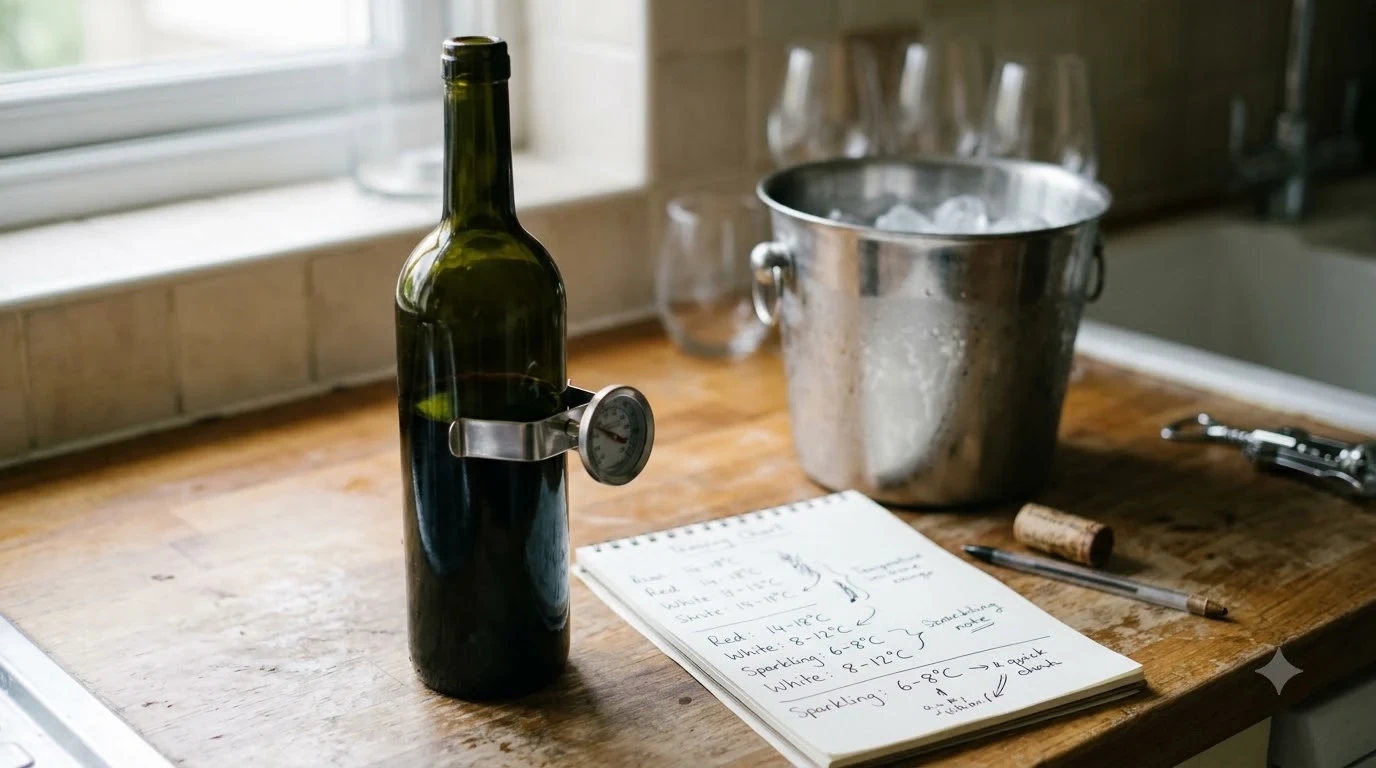
Serving temperature makes a noticeable difference in how this cuvée expresses its aromatics and effervescence. Chilling the bottle between 45°F and 50°F (7°C to 10°C) keeps the fine bubbles lively while allowing the pear, apricot, and light brioche notes to open up in the glass; serving it ice-cold straight from a freezer mutes the fruit and exaggerates the acidity.
Skip narrow, straight-sided flutes in favor of a tulip-shaped Champagne glass or a standard white wine glass. A wider bowl gives the wine room to breathe and directs aromas toward the nose while still maintaining a steady column of bubbles. Once opened, a proper sparkling wine stopper preserves carbonation in the refrigerator for up to two days.
Tip: Chill a room-temperature bottle in a bucket filled with half ice and half cold water for 25 to 30 minutes rather than leaving it in the freezer, which cools the wine unevenly and risks freezing the neck.
Because Réserve Exclusive Brut balances bright acidity with a soft, fruit-driven mid-palate, it transitions smoothly from aperitif hour through a full meal. Both the house culinary team and sommeliers favor pairings that echo its clean minerality or play off its crisp bubbles:
- Raw and cured seafood: Smoked salmon on toasted brioche, sea bass sashimi, poached prawns, and freshly shucked oysters match the wine’s brisk citrus cut.
- Light poultry and tapas: Roasted chicken with herbs, spring vegetable wraps, and Spanish tortilla pair naturally with the Pinot Noir and Meunier body.
- Aged and creamy cheeses: Ripe 18-month Beaufort, aged Comté, or triple-cream brie balance the wine’s refreshing acidity.
- Fruit-forward pastries: Lightly sweetened desserts such as a warm rhubarb tarte tatin complement the baked pear and apricot undertones.
Who It Suits and How It Compares
Nicolas Feuillatte Brut suits drinkers who prefer an energetic, fruit-forward Champagne over rich, oxidative, or heavily oak-aged styles. If you enjoy lively green apple, white peach, and subtle brioche rather than intense roasted nuts or caramel, this house style hits an approachable middle ground that works well for both weeknight takeout and large celebrations.
When placed next to classic négociant houses such as Taittinger Brut, which leans heavily on Chardonnay for a leaner, more linear profile, Nicolas Feuillatte’s higher proportion of Pinot Noir and Meunier gives it slightly broader orchard-fruit generosity. It also offers a useful benchmark for anyone exploring the broader sparkling and still wine landscape, whether comparing French traditional-method bubbles against everyday American blends like 14 Hands Hot to Trot wine or exploring alcohol-removed alternatives such as Ariel wine.
Because the cooperative produces the cuvée across multiple bottle formats—ranging from 187 ml quarter bottles and 375 ml half bottles up to standard 750 ml bottles, 1.5-liter magnums, and 3-liter jeroboams—it adapts easily to solo glasses, dinner parties, or milestone toasts. Non-vintage bottles are disgorged ready to drink upon purchase and hold their peak freshness for roughly two to three years when stored on their side in a cool, dark spot around 50°F to 55°F (10°C to 12°C).
Frequently Asked Questions
Is Nicolas Feuillatte Brut dry or sweet?
Nicolas Feuillatte Brut is a dry sparkling wine with a dosage of 6 to 10 grams of residual sugar per liter, placing it comfortably within the official Champagne Brut range. While it feels crisp and refreshing on the finish, its ripe pear and apricot fruit notes give it a softer, rounder impression than bone-dry Extra-Brut styles.
How long should you age a bottle of Nicolas Feuillatte Brut?
Réserve Exclusive Brut is aged on its lees for three to four years at the winery and is released ready to drink immediately. While it will stay fresh for two to three years in a cool, dark wine rack, non-vintage Brut is crafted for vibrant fruit energy rather than long-term cellar aging.
What grapes are in Nicolas Feuillatte Brut?
The flagship Réserve Exclusive Brut blends all three classic Champagne grape varieties: 40 percent Pinot Noir, 40 percent Meunier, and 20 percent Chardonnay. Pinot Noir supplies structure and body, Meunier contributes supple orchard fruit, and Chardonnay adds citrus brightness and finesse.
What is the difference between Nicolas Feuillatte Brut and Extra-Brut?
Réserve Exclusive Brut contains 6 to 10 grams of sugar per liter and blends grapes from across the wider Champagne appellation for a balanced, fruit-forward profile. Réserve Exclusive Premier Cru Extra-Brut uses fruit strictly from Premier Cru villages and receives less than 6 grams of sugar per liter, resulting in sharper acidity and pronounced chalky minerality.
By uniting fruit from more than a hundred Champagne villages under a grower-owned cooperative model, Nicolas Feuillatte Brut delivers a consistent, food-friendly expression of the region. Whether poured as a chilled aperitif in a tulip glass or paired with seafood and aged cheese at the dinner table, it captures the fresh, fruit-driven side of traditional-method French sparkling wine.
More in Wine Brands
 Underwood Wine Price: Compare Bottles, Cans, and Pack SizesUpdated Nov 21, 2026
 Zenato Wine Price: Compare Styles and Choose the Right BottleUpdated Nov 21, 2026
 Zuccardi Wine Price: Compare Bottles and Find the Right RangeUpdated Nov 21, 2026
 Yellow Tail Moscato Review: Taste, Sweetness and Serving TipsUpdated Nov 21, 2026
 Wolf Blass Yellow Label Review: Choose Your Best StyleUpdated Nov 21, 2026
 Wolffer Estate Rose Review: Choose the Right Bottle for Your TableUpdated Nov 21, 2026