

We may earn a commission when you buy through links on this page, at no extra cost to you. Learn more.
The best champagne glass for most people is a tall, tapered flute, because the narrow bowl slows the loss of bubbles and shows the rising streams of carbonation; a tulip shape suits anyone who wants more aroma, and a coupe suits a vintage look. The glass matters less than the wine itself, but the shape changes how fizz lasts and how the drink smells. Choose the bowl shape first, then the stem, material, and set size for the way you drink.
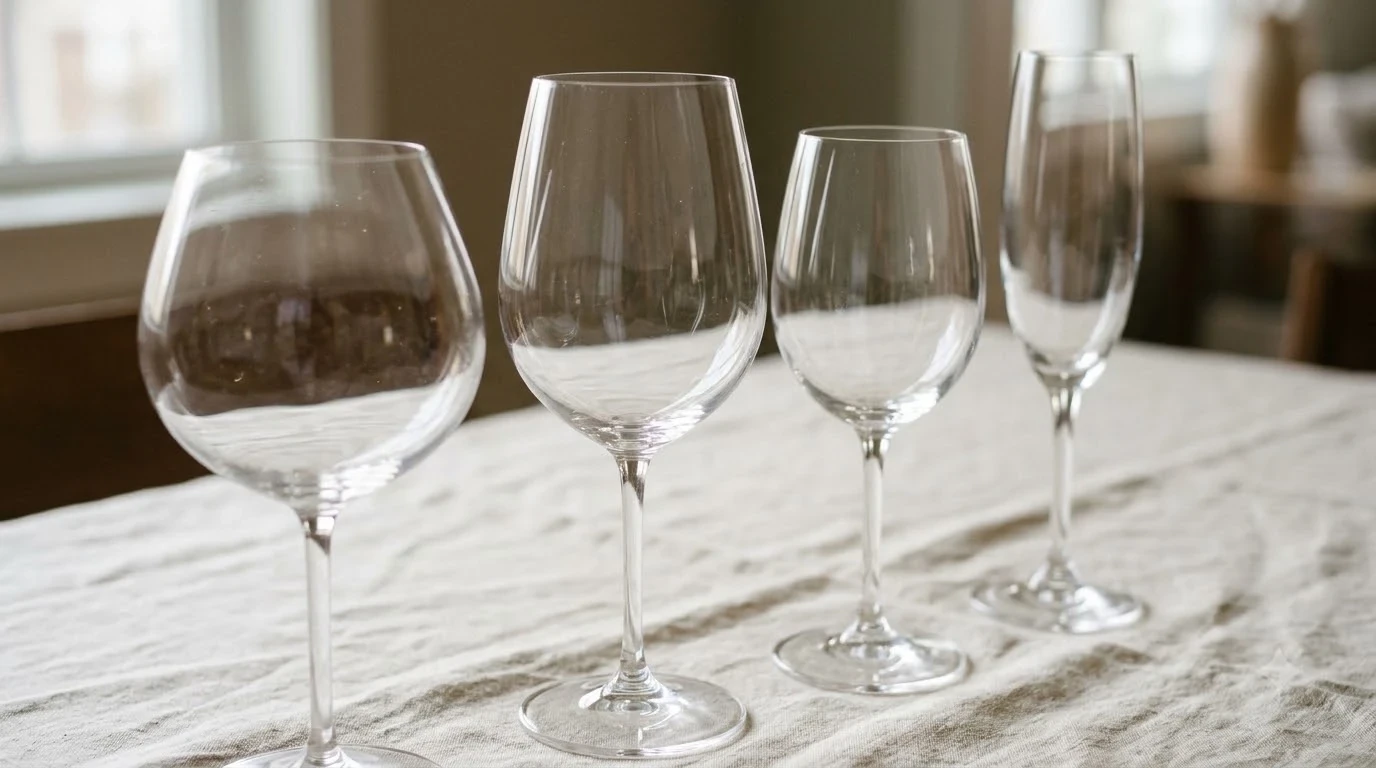
Champagne and other sparkling wines are served in a few glass shapes, and each one changes how the wine looks and tastes. A tall glass keeps the bubbles in view, a wider bowl opens up the scent, and a shallow bowl gives a more relaxed pour. This guide groups the main choices by how you use them, from a formal dinner to a backyard party.
Quick Comparison
The main sparkling wine glasses differ in bowl shape, bubble retention, and how much aroma they hold. The table compares them on the points most buyers ask about.
| Glass Shape | Bowl Shape | Bubble Retention | Aroma Release | Best Use |
|---|---|---|---|---|
| Classic flute | Tall and tapered | Strong | Limited | Everyday celebrations |
| Tulip flute | Tall with a wider middle | Good | Better | Tasting and food pairing |
| Coupe | Shallow and broad | Weak | Good | Vintage style and toasts |
| Shatterproof flute | Tall and tapered | Strong | Limited | Pools, patios, and parties |
| Matching set | Varies | Varies | Varies | Gifts and hosting |
Best for Bubbles and Presentation: Classic Flutes
The classic flute is the tall, slender glass most people picture when they think of Champagne. Its inward taper gives the bowl a narrow opening, and the wine stays in the glass longer before the fizz fades.
Why it stands out: According to the Wikipedia entry on the Champagne glass, a flute holds about 180 to 200 ml, and its tapered shape reduces the surface area, so carbonation escapes more slowly. The deep bowl also makes the rising bubbles easy to watch, which is the reason flutes became the standard for sparkling wine in the early 18th century.
Keep in mind: The narrow opening makes the aroma harder to reach with the nose. Some wine writers argue that flutes are too narrow for the scent to collect where you can smell it, so a flute is a strong choice for bubbles but a weaker one for fine aromas.
Best for: Anyone who wants the bubbles to stay visible and a glass that looks right on a celebratory table.

- Material
- Lead-free crystal
- Capacity
- 6.7 oz
- Set Size
- 4 flutes
- Care
- Dishwasher safe
Crisp sparkling wines like prosecco show best in a narrow stemmed flute, and this Czech-made crystal set is shaped for exactly that. Each 6.7 oz glass has a reinforced stem for stability and a uniform rim for comfortable sipping. It is lead free and dishwasher safe, which makes it a practical small set for couples or a housewarming gift.
Pros & ConsView
- Lead-free crystal made in the Czech Republic
- Reinforced stems add stability
- Dishwasher safe for easy cleanup
- Four glasses will not cover large gatherings
- Crystal stems are more delicate than plastic
Best for Aroma and Food: Tulip-Shaped Glasses
A tulip glass has the tall stem of a flute but a bowl that bulges at the middle and tapers toward the rim. It keeps some of the bubble control of a flute while giving the aromas more room to gather before they reach the nose.
Why it stands out: The wider middle lets scents gather, so a sparkling wine with fruit or yeast notes is easier to read. It also suits a glass that will be used for a full meal, because the shape handles both bubbles and aroma without feeling too narrow.
Keep in mind: A tulip holds slightly more wine than a classic flute, and the wider bowl lets the bubbles fade a little faster. Pour it at the table and top it up in smaller amounts if the glass will sit for a while.
Best for: Wine lovers who taste sparkling wine with a meal or want to notice the aroma more closely.
Best for Vintage Style and Toasts: Coupe Glasses
The coupe is a shallow, broad saucer on a stem. It has a long history, and its wide bowl gives a relaxed, old-fashioned look that suits a formal toast or a themed party.
Why it stands out: The Wikipedia entry on the Champagne glass describes the coupe as a shallow, broad-bowled saucer shape holding about 180 to 240 ml, and notes that it was popular in France through the 1970s and in the United States from the 1930s to the 1980s. Its wide surface makes a pour look generous and gives a clear view of the wine.
Keep in mind: The broad surface lets the bubbles escape quickly, so the wine will go flat sooner than in a flute. It is a poor choice for a long glass of sparkling wine, though it works well for a single toast.
Best for: Themed parties, weddings, and anyone who wants a classic look for a short toast.
Best for Pools, Patios, and Parties: Shatterproof Flutes
Shatterproof flutes are made from plastic or another unbreakable material, and they keep the shape of a classic flute without the risk of broken glass. They are useful wherever a glass might be knocked over or carried to the water.
Why it stands out: A shatterproof flute keeps the tall, narrow shape that holds bubbles well, while removing the hazard of glass near a pool or on a deck. It is easy to pack for a picnic and simple to wash after a party.
Keep in mind: Plastic does not feel the same as crystal or fine glass, and the material can hold odors if it is not rinsed well. Check that the flute is clear enough to see the color of the wine, because a tinted plastic flute hides the pour.
Best for: Households with children, outdoor hosts, and anyone who wants a practical flute for events where breakage is a risk.

Complex champagnes deserve fine crystal, so this pack fits the opposite brief: a big tasting-style gathering where breakage and washing up are the real worries. The 5 oz clear plastic flutes are shatterproof, lightweight and sold as a bulk pack of 40. Use them for sampling mimosas or bubbly at open houses, then simply dispose of them afterward.
Pros & ConsView
- Pack of 40 covers medium-sized parties
- Shatterproof plastic suits crowded rooms
- Lightweight and easy to carry
- Plastic gives a less refined tasting experience
- Disposable design creates waste after each event
Best for Gifts and Hosting: Matching Champagne Sets
A matching set gives a group of guests the same glass and makes a gift that looks complete. Sets range from simple stemmed flutes to sets that mix flutes with all-purpose glasses, so the buyer can match the set to the way the recipient entertains.
Why it stands out: A set saves the host from buying glasses one at a time and keeps a table looking uniform. The VinePair wine glass guide recommends that a home keep a set of sparkling wine flutes alongside a set of all-purpose glasses, which makes a set of flutes a sensible starting point.
Keep in mind: Matching sets can be heavier and more expensive than single glasses, and the stems can break if they are stored loosely. Check the number of glasses in the set and the storage space before buying.
Best for: Gift-givers and hosts who want a complete look for a table or a celebration.

- Set Size
- 6 flutes, gift box
- Capacity
- 7.5 oz
- Material
- Lead-free crystal glass
- Care
- Hand wash only
Gifting and hosting are covered by this matched set of six hand-blown flutes, packed in a gift box for weddings, anniversaries, and housewarmings. Each 7.5-ounce glass has a thin, polished rim and a slender stem, and the tall body is designed to help stabilize the rising bubbles. Six identical glasses make a toast easy for a family or a small party.
Pros & ConsView
- Gift box packaging ready for presents
- Six matching hand-blown glasses
- Thin polished rim and slender stem
- Hand wash only
- Six glasses fall short for a big party
How to Choose the Right Champagne Glass
Start with what matters most for the night. A celebration with bubbles on display needs a flute, while a long meal with food needs a tulip. The table below matches common needs to a glass shape.
| Main Need | Best Glass | Why |
|---|---|---|
| Keep bubbles for a long pour | Classic flute | Narrow opening slows fizz loss |
| Smell the wine | Tulip | Wider middle gathers aroma |
| A single toast | Coupe | Classic look for a short moment |
| Outdoors or near a pool | Shatterproof flute | No broken glass |
| A complete table or gift | Matching set | Uniform look for guests |
Look at the stem and the base as well as the bowl. A stem that is easy to hold keeps the hand away from the bowl, so the wine stays cool for longer. A heavy base steadies the glass on a crowded table, which matters at a party.
Frequently Asked Questions
What is the best champagne glass shape for keeping bubbles?
A tall, tapered flute keeps bubbles longest because its narrow shape slows the escape of carbonation. A coupe loses bubbles faster because its wide surface lets them out quickly.
Is a tulip glass better than a flute?
A tulip is better for aroma, since the wider middle lets scents gather. A flute is better for keeping bubbles visible. Choose the tulip for a tasting or food pairing and the flute for a celebration.
Can I use a wine glass for Champagne?
Yes, a standard all-purpose wine glass works for sparkling wine. A flute keeps the bubbles longer, but the wine itself matters more than the glass, so any clean glass is a reasonable choice for a casual meal.
How many champagne glasses should I buy?
Buy one for every guest you expect and a few spares for breakage. A set of six or eight is a common starting point for a home that hosts regularly.
To compare more styles, the guide to champagne flutes covers stems and bowls in more detail, and the wine glass set guide helps when the table needs both flutes and red wine glasses. For a quick look at how to handle the glass, see how to hold a wine glass, and the Glass by Wine library lists the other shapes.
More in Wine Glasses
 Spiegelau Crystal Wine Glasses That Bring Clarity to Every PourUpdated Nov 21, 2026
 Zalto Crystal Wine Glasses: Are They Worth the Investment?Updated Nov 21, 2026
 Villeroy And Boch White Wine Glasses for a More Cohesive TableUpdated Nov 21, 2026
 Zalto Wine Glasses On Sale: Find the Right Denk’Art GlassUpdated Nov 21, 2026
 Zwiesel Glas Champagne Glasses: Features, Quality and Buying AdviceUpdated Nov 21, 2026
 Zwiesel Glas Decanter Review: A Durable, Elegant Choice for Wine ServiceUpdated Nov 21, 2026