

We may earn a commission when you buy through links on this page, at no extra cost to you. Learn more.
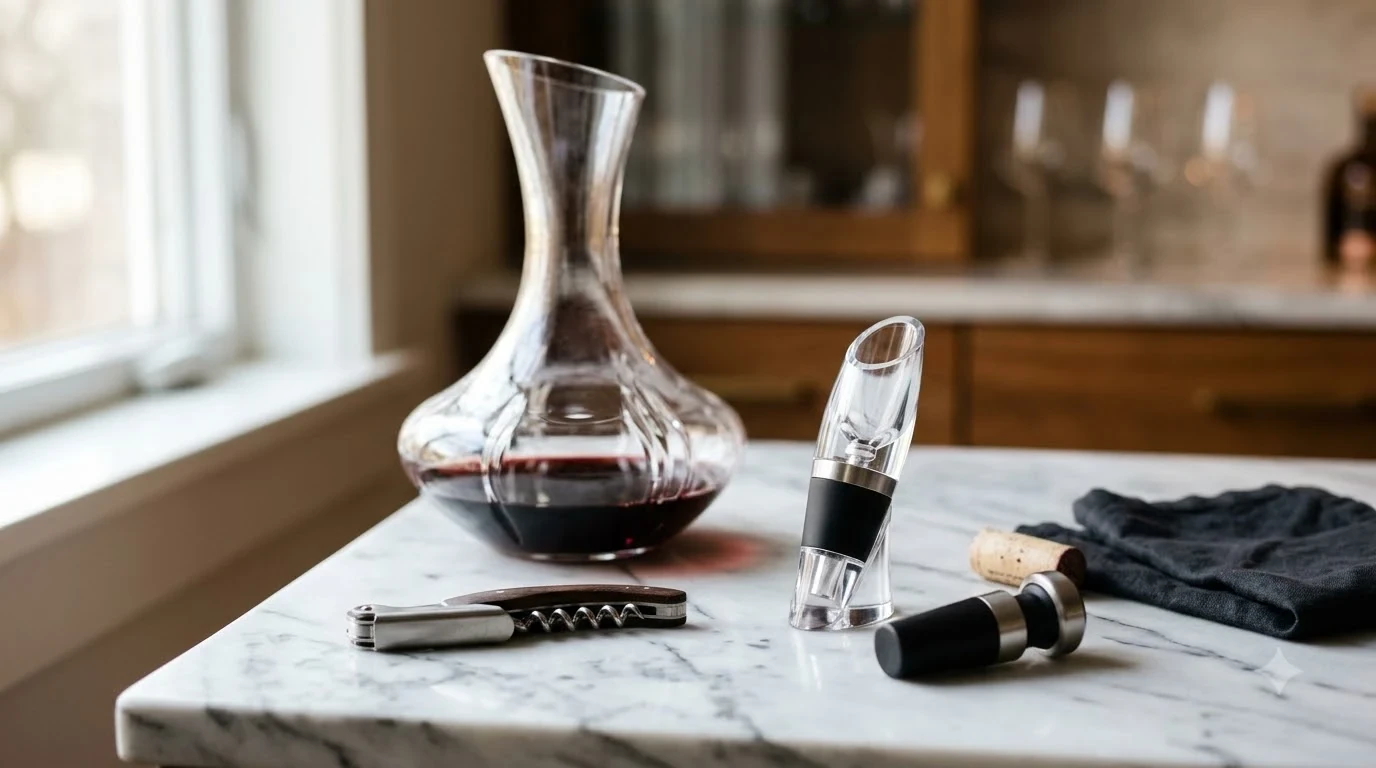
The zwiesel glas decanter is a stylish, durable crystal wine decanter that combines an angular design, lead-free TRITAN crystal, and a broad base for serving and aerating wine. The Pure model is particularly appealing to wine drinkers who want functional glassware with a contemporary appearance. Its approximately 750 ml capacity accommodates a standard wine bottle, although that capacity leaves limited extra room for vigorous swirling or additional wine.
Zwiesel Glas has a long history in German glassmaking, and its decanters reflect the company’s emphasis on material quality and practical design. The Pure decanter stands out for its geometric silhouette rather than a traditional rounded bowl. That makes it an interesting option for a dining table, home bar, or wine-focused gift, but its relatively compact capacity and cleaning requirements deserve consideration before buying.
Specs and Key Features of the Zwiesel Glas Pure Decanter
The Zwiesel Glas Pure decanter combines lead-free crystal construction with a broad, angular body and a clean-cut opening. Its approximately 750 ml capacity makes it suitable for serving a standard bottle, while its distinctive silhouette gives it a more contemporary appearance than many traditional decanters.
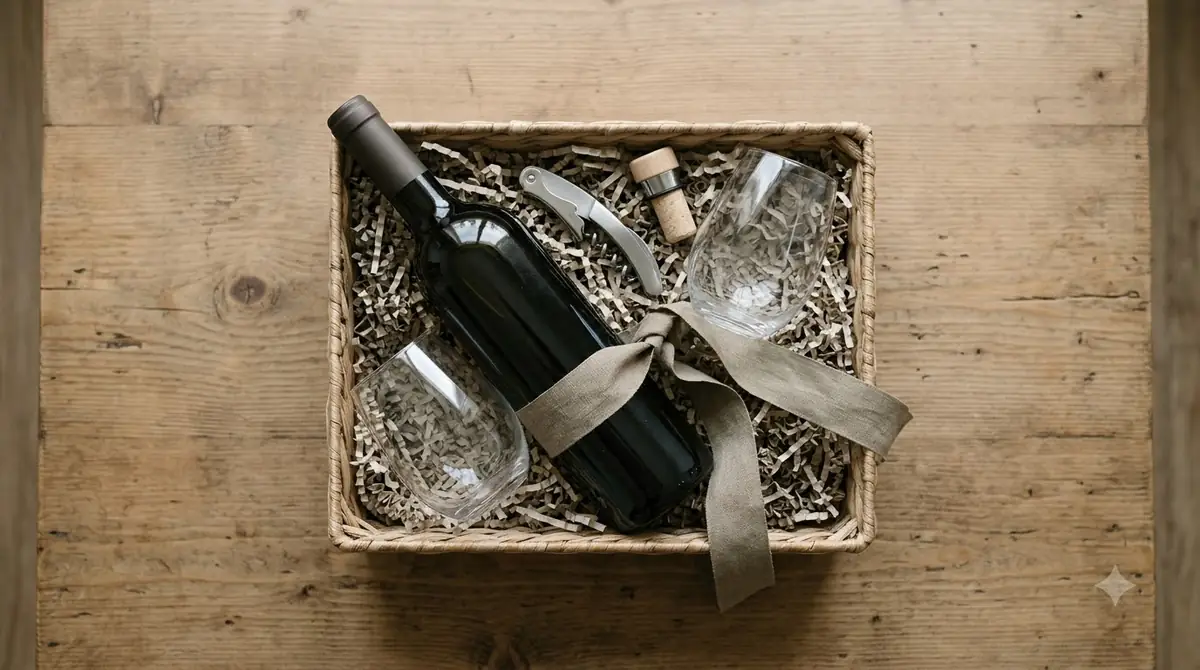
The specific Pure model reviewed here is identified by IWA Wine as product number 19.113745. It uses Zwiesel Glas TRITAN crystal, a material developed by the manufacturer for clarity and resistance to everyday wear. The angular profile is more than a decorative choice: the wide lower section creates an area where wine can spread out and encounter air after pouring.
| Specification | Zwiesel Glas Pure Decanter |
|---|---|
| Manufacturer | Zwiesel Glas |
| Collection | Pure |
| Product number | 19.113745 |
| Material | TRITAN lead-free crystal |
| Capacity | 25 oz (approximately 750 ml) |
| Width | 8.75 inches |
| Depth | 8.75 inches |
| Height | 10.75 inches |
| Weight | 3.7 pounds |
| Opening | Flat, laser-cut top |
| Shape | Angular, broad-based design |
| Dishwasher suitability | Listed as dishwasher safe by IWA Wine |
| Manufacturing origin | Europe, according to IWA Wine |
These specifications make the Pure a substantial piece of tableware rather than a small pouring carafe. The 8.75-inch square footprint is particularly important because it affects where the decanter can sit on a crowded dining table. Its 10.75-inch height also means buyers should consider cabinet clearance and the available space beneath kitchen shelves.
The TRITAN material is one of the product’s main selling points. Zwiesel Glas describes its specially developed crystal as resistant to breakage, scratching, and repeated dishwasher use. The company also states that its TRITAN crystal contains no lead, cadmium, or BPA. These properties make it attractive to buyers who want the appearance of fine crystal without choosing traditional lead crystal.
Another important feature is the flat, laser-cut opening. A clean opening contributes to controlled pouring and gives the decanter a finished appearance. The angular body provides a distinctive presentation, particularly when filled with deep-colored Cabernet Sauvignon, Syrah, or Merlot.
Capacity deserves a closer look. A standard 750 ml bottle contains approximately 25.4 US fluid ounces, while IWA Wine lists this decanter at 25 ounces. The measurements are close enough to make it a nominal full-bottle vessel, but they do not establish generous additional headroom. Buyers who frequently decant larger quantities or prefer substantial swirling space may want a larger vessel.
For a household that generally serves one bottle at a time, however, the dimensions offer a useful balance between capacity and visual presence. The Pure design is also compatible with a range of dining styles, from contemporary table settings to simpler arrangements featuring clear crystal, white plates, and understated linens.
What Owners Like About the Design and Performance
Owner comments about the Zwiesel Glas Pure decanter frequently emphasize its appearance, perceived quality, and practicality. The geometric design attracts attention without relying on elaborate decoration, while the crystal construction gives the piece a substantial presence for regular entertaining.
IWA Wine customer feedback includes comments describing the decanter as attractive, durable, and easy to clean. One owner specifically appreciates having matching wine glasses, suggesting that the Pure design can work as part of a coordinated glassware collection rather than as an isolated serving accessory. Another customer describes receiving the decanter as a wedding gift and being pleased with the purchase.
The visual design is particularly appealing for people who prefer modern glassware. Traditional decanters often use a bulbous lower bowl and a narrow neck, creating a familiar wine-service silhouette. The Pure model instead uses crisp geometric lines and a broad base. It can therefore complement minimalist dinnerware, contemporary furniture, and other angular serving pieces.
Its crystal clarity is another practical advantage. A transparent decanter allows the wine’s color to remain visible during service. That is especially attractive when pouring young red wines with vivid ruby or purple hues, or mature wines with lighter garnet coloring. The visual presentation becomes part of the serving experience rather than simply a way to transfer wine from a bottle.
Owners also have reason to appreciate the material’s everyday practicality. Zwiesel Glas developed TRITAN crystal to combine clarity with greater resistance to common forms of wear. The material is intended to maintain its appearance through repeated use, although no crystal vessel should be considered unbreakable.
There is a useful distinction between resistance and immunity. A decanter can resist ordinary scratches and mechanical stress better than some conventional crystal products without surviving a fall onto a hard kitchen floor. Careful handling remains important, particularly because the broad base and angular edges create contact points that can be exposed to knocks during cleaning or storage.
Another advantage is versatility. Macy’s customer comments mention using the Pure decanter for water, juice, and cocktail mixers as well as wine. This makes sense for households that enjoy entertaining but do not want every serving piece limited to a single beverage category. A clear crystal vessel can look equally appropriate beside a dinner setting or on a home bar.
For wine service, its broad base is most useful with wines that benefit from contact with air. A young Cabernet Sauvignon or Syrah can be transferred into the vessel before serving, giving the wine an opportunity to open up. The shape also creates an attractive presentation for a dinner involving multiple courses and a bottle intended to be shared.
However, the decanter’s usefulness should not be confused with a guarantee of improved wine quality. Aeration changes how a wine interacts with oxygen, but not every bottle needs extended exposure. Older delicate Pinot Noir, for example, may need more cautious handling than a young, firmly structured Cabernet Sauvignon.
Common Complaints and Practical Limitations
The most important limitation of the Pure decanter is its capacity relative to a standard wine bottle. Although its nominal capacity is approximately 750 ml, the vessel offers little additional room beyond one bottle, making it less convenient for buyers who prefer to aerate wine with plenty of space for movement.
A Macy’s customer specifically raises this concern, questioning how a 25.3-ounce vessel can provide adequate room for a bottle of wine and meaningful aeration. This is a legitimate practical consideration rather than simply a criticism of appearance. The wine needs room to move when being transferred, and a vessel filled close to its maximum capacity can make swirling awkward.
There is an important distinction between accommodating a bottle and providing an ideal amount of headroom. The former concerns whether the wine can fit inside the vessel. The latter concerns whether the user can comfortably swirl the wine, manage splashes, and pour without approaching the opening too closely.
For someone who pours an entire bottle into a decanter immediately before dinner, the Pure’s nominal capacity may be sufficient. Someone who prefers to transfer wine well in advance, swirl it occasionally, or aerate two bottles together may find a larger decanter more practical.
Cleaning is another consideration. Although some retailers identify the product as dishwasher safe, the manufacturer’s care instructions for decanters and carafes specifically recommend handwashing with warm water and mild detergent. These instructions matter because a broad vessel can be difficult to position securely in a dishwasher, and its opening may not provide easy access for ordinary dishwashing brushes.
The decanter’s relatively wide footprint also limits placement options. At 8.75 inches across, it occupies more horizontal space than a narrow-necked carafe. That may be inconvenient on a small sideboard, a compact kitchen counter, or a dinner table already holding several wine glasses, plates, and serving dishes.
Its visual character is another subjective limitation. Buyers who prefer traditional hand-blown forms, curved silhouettes, or decorative details may find the Pure design too architectural. The straight lines and broad angular body communicate a distinctly modern style rather than a classic wine-cellar aesthetic.
Some customer feedback also highlights the importance of checking the actual product listing and fulfillment arrangements. A Macy’s customer reports receiving an incomplete order and having difficulty arranging an exchange. That comment concerns the retailer’s service rather than the decanter’s construction, but it illustrates why buyers should verify packaging, quantity, and return terms before ordering.
Finally, TRITAN crystal should not be mistaken for a material that eliminates all maintenance. Water spots, dried wine residue, and handling marks can still affect the appearance of clear glass. Regular cleaning and careful storage remain part of owning a quality decanter.
Who Should Buy the Zwiesel Glas Decanter and Who Should Skip It
The Zwiesel Glas Pure decanter is best suited to wine drinkers who appreciate contemporary design and generally serve one standard bottle at a time. Its crystal construction, angular presentation, and broad base make it a compelling option for entertaining, although buyers who prioritize maximum aeration capacity should compare larger designs.
It makes particular sense for someone who already owns modern Zwiesel Glas wine glasses or wants a coordinated serving collection. Matching glassware can give a dining table a consistent appearance, especially when the wine service includes two or more stemware styles. The Pure decanter’s straightforward appearance also means it does not need elaborate accessories to look appropriate.
Buy it if you value contemporary tableware
The strongest reason to consider this decanter is its appearance. Its geometric body offers something different from conventional rounded glass vessels. It is an appealing choice for modern dining rooms, minimalist kitchens, and home bars where the serving pieces are intended to remain visible even when not in use.
It is also a sensible candidate for someone who regularly serves medium- to full-bodied red wines. Cabernet Sauvignon, Syrah, and young Merlot can benefit from decanting when their structure or aromas seem restrained immediately after opening. The broad base provides a practical surface for spreading the wine during this process.
For entertaining, the approximately 750 ml capacity corresponds closely to one standard wine bottle. A couple or small household that generally opens one bottle for dinner may find that arrangement entirely adequate. It is less suitable for larger groups where several bottles need to be prepared simultaneously.
Gift buyers may also appreciate its contemporary presentation. The positive IWA Wine customer comments include wedding-gift feedback, and the decanter’s distinctive shape gives it a recognizable appearance. It is particularly appropriate for someone who already enjoys fine crystal, wine accessories, or matching glassware.
Skip it if you need extra aeration space
Buyers who regularly decant large quantities should consider a larger vessel. A decanter with a capacity comfortably above 1 liter provides more room for swirling and transferring wine without working close to the opening. This is especially helpful for gatherings where multiple guests will be sharing a bottle.
It may also be the wrong choice for people who want a traditional, highly curved decanter. The Pure’s geometric construction is distinctive, but it does not reproduce the softer proportions associated with classic wine-service designs.
People with limited cabinet space should measure before purchasing. The 8.75-inch width and 10.75-inch height are manageable in many kitchens, but the vessel’s footprint can be inconvenient in smaller cupboards or crowded display cabinets.
Finally, someone who wants a genuinely maintenance-free accessory should reconsider buying any crystal decanter. Even durable glass requires sensible handling, appropriate cleaning, and a secure storage location. The Pure is designed for practical use, not careless treatment.
How It Compares to Other Zwiesel Glas Decanters
The Pure is part of a broader Zwiesel Glas decanter offering that includes several distinct shapes and capacities. Comparing the designs is useful because the brand’s collection includes both traditional wine-serving forms and more expressive contemporary pieces.
The manufacturer’s catalog identifies options including Air Sense, Alloro, Cirquo, Enoteca, Pollux, and Symbiosis. These names represent different approaches to serving and presentation rather than interchangeable versions of the same vessel. A buyer should therefore consider capacity, opening shape, storage dimensions, and intended use before choosing a model.
The Pure stands out for its crisp angular construction. Its broad square footprint and flat opening create a strong architectural appearance. This is the most relevant choice for someone who wants a contemporary design that looks deliberate on a modern dining table.
By comparison, the Enoteca and Pollux designs offer different silhouettes. Zwiesel Glas identifies these as separate decanter designs in its consumer catalog. Their presence in the same product family gives buyers alternatives if the Pure’s angular form is not the preferred aesthetic.
The Cirquo Master Piece is another named option in the manufacturer’s range. Its sculptural appearance makes it a different kind of purchase from the more restrained Pure design. Buyers choosing between these options should focus on the overall proportions and practical handling rather than assuming that a more elaborate shape necessarily provides better wine aeration.
The Air Sense collection is particularly relevant because the manufacturer’s catalog identifies separate red-wine and white-wine decanters. The red-wine version has a listed capacity of 1.5 liters, while the white-wine version is listed at 750 ml. That gives buyers a more explicit capacity distinction for different wine-serving situations.
For a household that regularly opens structured red wines or serves multiple guests, the 1.5-liter Air Sense red-wine model offers substantially more capacity than the 750 ml Pure. The additional room can make transferring and swirling wine more comfortable. On the other hand, the Pure is easier to consider as a single-bottle serving piece for a smaller dinner.
These distinctions also illustrate why choosing a decanter based solely on appearance can be misleading. A broad vessel may provide useful wine exposure, but a larger capacity may be more important for someone who regularly serves several guests. A narrow profile may fit better in a cupboard, while a wide base may be more attractive on an open dining table.
For people who want to build a matching set, Zwiesel Glas also offers extensive wine-glass collections. Browsing the brand’s Glassware Brands information can help identify complementary designs, while a broader comparison of wine glasses is useful when choosing stemware for different wine styles.
For a complete table setting, dedicated red wine glasses can complement the decanter when serving Cabernet Sauvignon, Merlot, or Syrah. Buyers planning sparkling-wine service can also compare appropriate champagne flutes rather than expecting one glass shape to cover every occasion.
Ultimately, the Pure makes the most sense when its capacity and shape fit the household’s actual serving habits. The larger Air Sense red-wine decanter is more attractive for higher-volume service, while the other named collections provide different design options. The right choice depends on whether capacity, appearance, or storage convenience matters most.
Care and Storage for the Zwiesel Glas Decanter
Proper cleaning and storage help preserve the Pure decanter’s clarity and reduce the risk of scratches or accidental breakage. Zwiesel Glas recommends handwashing decanters with warm water and mild detergent, followed by a thorough rinse.
Although IWA Wine and Macy’s list the Pure as dishwasher safe, the manufacturer’s specific decanter instructions favor handwashing. This distinction is important because general claims about dishwasher-resistant crystal do not automatically mean that machine washing is the manufacturer’s preferred method for every vessel.
For the full instructions, consult the manufacturer’s Zwiesel Glas handling and care recommendations. They explain how to clean decanters, protect their surfaces, and store them between uses.
Cleaning the interior
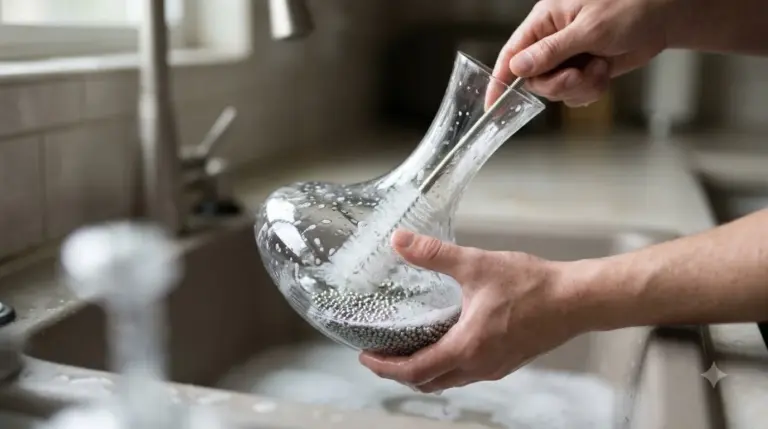
The Pure’s broad body is visually striking, but its angular interior can make thorough drying and cleaning less straightforward than with a conventional drinking glass. A soft brush or dedicated decanter-cleaning tool is useful for reaching the interior walls without applying excessive pressure.
After serving red wine, rinse the decanter promptly rather than allowing residue to dry inside. Dried wine can leave visible marks, especially around the lower corners and areas where liquid collects. Use a mild detergent and warm water, then rinse thoroughly to remove both wine and cleaning-product residues.
Abrasive pads, hard brushes, and metal utensils should be avoided. They can scratch glass surfaces or create unnecessary contact stress. A soft cleaning tool is a better option for maintaining the clarity of crystal over repeated use.
Drying and storage
Allow the decanter to dry completely before putting it away. Water left inside can create visible mineral deposits, particularly in areas where droplets collect. A clean, dry storage environment helps preserve the appearance of the vessel.
Zwiesel Glas recommends storing decanters upright with their openings facing upward. This allows air to circulate and avoids placing unnecessary pressure on the opening. The manufacturer also recommends keeping glass items separated rather than stacking them or allowing direct contact with other objects.
The 8.75-inch footprint deserves consideration when selecting a storage location. A stable cabinet shelf or dedicated display surface is preferable to a crowded area where the decanter might be knocked against ceramic dinnerware, metal accessories, or other glass vessels.
Tip: Rinse the decanter soon after pouring, wash it by hand with warm water and mild detergent, and store it upright with the opening facing upward. Avoid sudden temperature changes and keep it separated from other glassware.
Temperature is another consideration. Zwiesel Glas recommends a range of 8 to 25 degrees Celsius for decanters and carafes. The manufacturer also advises against using these vessels for hot drinks or placing them in an oven, microwave, or on a stovetop.
These precautions are straightforward, but they matter for long-term ownership. TRITAN crystal is designed for practical durability, not immunity to thermal shock or physical impact. Treating the Pure as quality glassware rather than indestructible equipment is the sensible approach.
Frequently Asked Questions
Does the Zwiesel Glas Pure decanter have a matching stopper?
The product information reviewed for the Pure decanter does not establish that a stopper is included. Buyers who want to store partially used wine should plan to use an appropriately sized compatible closure rather than assume one comes with the vessel. A stopper should fit securely without requiring pressure that could damage the opening.
Can the Pure decanter be used to separate sediment from mature wine?
Yes, a decanter can be used to separate sediment from older wine during a careful transfer. Keep the bottle upright before serving so sediment settles toward the bottom, then pour slowly while watching the wine near the bottle’s shoulder. The broad opening allows the wine to be observed during transfer, although careful pouring remains more important than the shape of the vessel.
How long should wine remain in a decanter before serving?
There is no universal waiting period because wine structure and age matter. Many young, full-bodied reds benefit from approximately 30 to 60 minutes of aeration, while delicate mature wines may need considerably less exposure. Taste the wine periodically rather than assuming that a longer wait always produces a better result.
Can the decanter be used for nonalcoholic beverages?
Yes. The manufacturer’s general instructions identify decanters and carafes as suitable for serving beverages including water and juice, in addition to wine. A clear crystal vessel can therefore serve a broader purpose at a dinner party, although strongly colored or sugary liquids should be rinsed away promptly to reduce cleaning difficulties.
Is TRITAN crystal the same material as ordinary Tritan plastic?
No. Zwiesel Glas uses the name TRITAN crystal for its specially developed crystal-glass material. It is not the same product category as Tritan copolyester plastic used in some reusable drinkware. The shared name should not be taken to mean that the decanter is made from plastic.
The Zwiesel Glas Pure decanter is a strong option for buyers who want clear, durable crystal and a contemporary wine-serving design. Its approximately 750 ml capacity works for a standard bottle, but the limited additional headroom makes it less appealing for people who prefer larger-volume aeration. For modern table settings and regular single-bottle service, it offers a distinctive combination of appearance and practical functionality.
More in Wine Glasses
 Spiegelau Crystal Wine Glasses That Bring Clarity to Every PourUpdated Nov 21, 2026
 Zalto Crystal Wine Glasses: Are They Worth the Investment?Updated Nov 21, 2026
 Villeroy And Boch White Wine Glasses for a More Cohesive TableUpdated Nov 21, 2026
 Zalto Wine Glasses On Sale: Find the Right Denk’Art GlassUpdated Nov 21, 2026
 Zwiesel Glas Champagne Glasses: Features, Quality and Buying AdviceUpdated Nov 21, 2026
 Zalto Cabernet Glass Review: Features, Fit, and CareUpdated Nov 21, 2026