

We may earn a commission when you buy through links on this page, at no extra cost to you. Learn more.
Knowing how to dry a decanter comes down to rinsing it well, letting water drain fully, and air-dry it upside down on a clean towel or drying stand. Glass and crystal decanters can keep water spots and musty smells if moisture stays trapped inside, so the goal is a fast, complete dry with no lint or residue left behind. Avoid closing the decanter with its stopper until the inside is completely dry.
Decanters are used to serve wine, to separate clear wine from sediment, and to show off a favorite bottle at the table. Each use leaves a little wine residue, and a decanter that sits wet can develop cloudiness or an odd smell. Drying it properly after every wash takes only a few minutes and keeps the glass clear.
What a decanter is and why drying matters
A decanter is a vessel that holds wine after it has been poured off a bottle. According to the Wikipedia entry on decanters, decanters are traditionally made of glass or crystal and usually hold about one standard 0.75-liter wine bottle. A carafe is similar but has no stopper, which matters for drying because a narrow neck can trap water more easily.
Because a decanter is a closed container, water and residue can collect in the base, the shoulders, and the area under a stopper. A quick rinse does not always remove sugar, tannin, or sediment from the corners, and those deposits are what leave a film after drying. A few simple habits prevent most problems.
Rinse and clean before you dry
Empty the decanter as soon as the wine has been served. Rinse it with warm water right away, before the wine dries on the glass. Warm water works better than cold for loosening residue, and a little mild dish soap helps with sugary or oily stains.
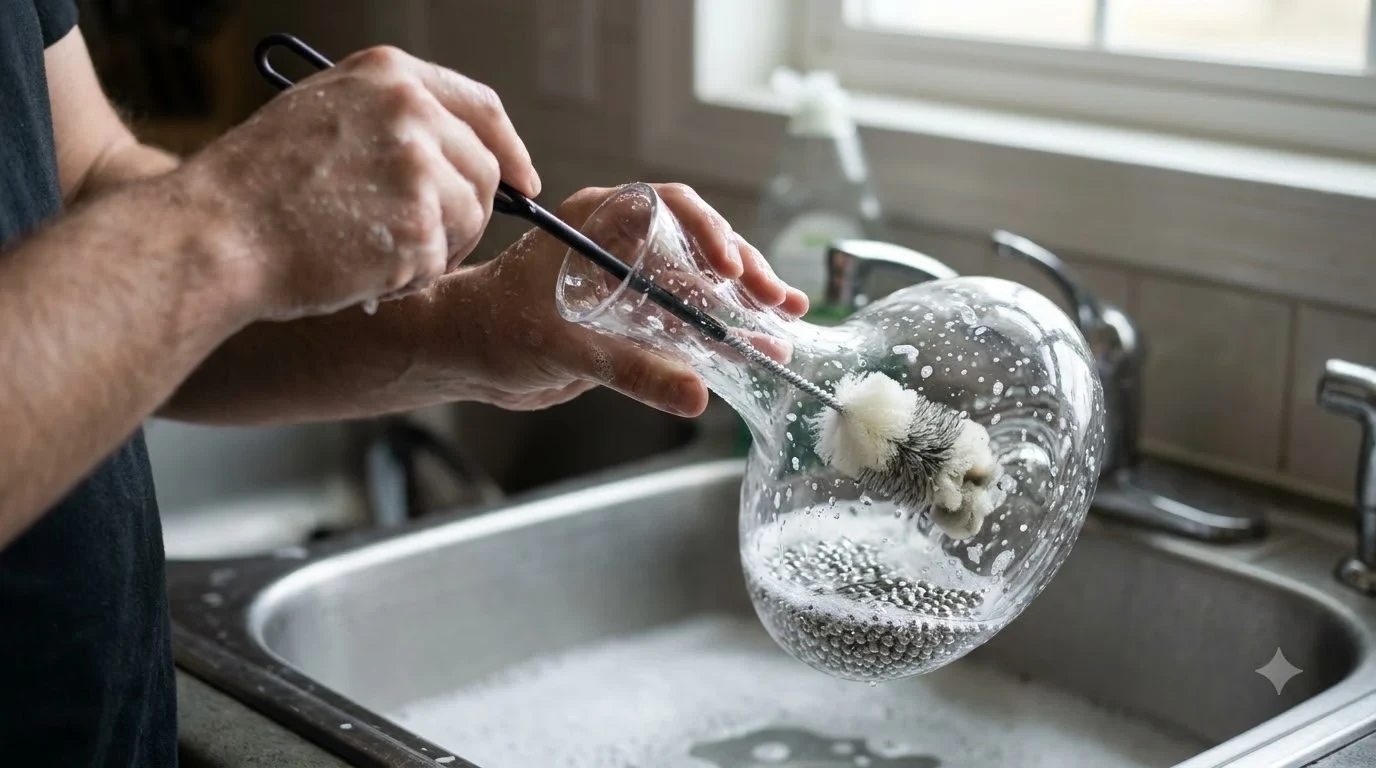
For a decanter with a narrow neck, a bottle brush or a long-handled decanter brush reaches the base. Swirl warm water inside, then rinse twice with clean water. Avoid harsh abrasives, which can scratch the glass and make later spots harder to remove.
If the decanter has a stain or a cloudy film, soak it in warm water with a small amount of cleaning agent for a short time, then rinse thoroughly. Check the glass against a light after rinsing. Any leftover film will show as a faint haze, and it is better to rewash than to dry over it.
Air-dry the decanter upside down
Once the decanter is clean, the drying step matters most. Turn it upside down so water can run out of the neck. Set it on a clean, lint-free towel or on a dedicated drying stand with the mouth facing down. A stand lets air move around the glass and helps the inside dry without leaving fibers behind.
Give it time. A decanter with a wide base may dry in an hour or two in a warm room, while a narrow or tall decanter can take longer. Leave it in a spot away from direct sun and heat, because fast or uneven drying can leave marks on crystal.
Many people reach for a dish towel pushed inside the decanter, but loose fibers and a damp cloth can leave lint on the walls. A thin cotton cloth wrapped on a long spoon or a small bottle brush does the job more cleanly, and it lets you reach the shoulders without forcing anything into the neck. Paper towels tend to shed, so they are a poor choice for the final dry.
Do not seal the decanter with its stopper until the inside is fully dry. Trapped moisture under a stopper can cause a musty smell and can cloud the glass over time.
Cleaning aids and water spots
Some decanter owners use cleaning beads or small pieces of rice inside the vessel to scrub the walls during a rinse. The beads move with a swirl of water and loosen residue from the inner surface. Rinse them out completely afterward, because leftover beads or grains can cause problems later.
Water spots are the most common issue after drying. They form when minerals in hard water dry on the glass. To reduce them, finish the rinse with clean or filtered water, then dry promptly. If spots have already formed, a soak in a mix of warm water and white vinegar, followed by a thorough rinse, often softens them. Test the vinegar step on a small area first, especially with leaded crystal, and never leave vinegar in the decanter for long.
Tip: Dry the decanter the same day you wash it. A quick pass with a lint-free cloth on the outside removes fingerprints and leaves the glass clear for the next pour.
Drying by decanter type
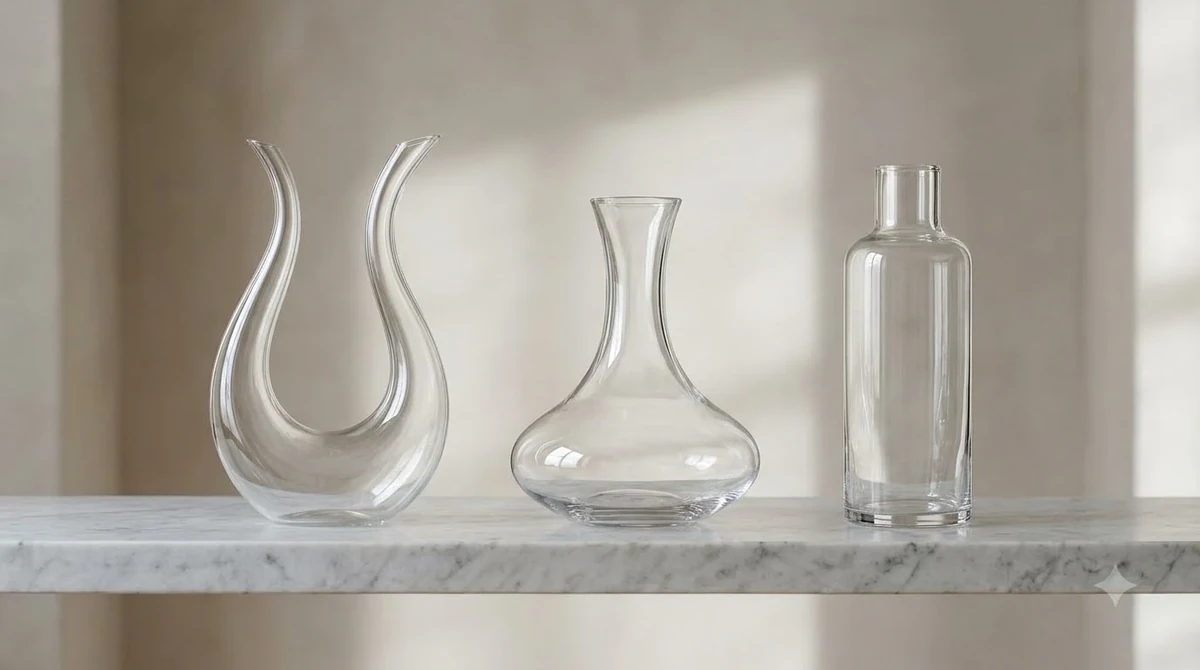
Not every decanter dries the same way. Wide, open shapes are the easiest to dry because air reaches every surface. Narrow or stoppered designs need more attention, and decanters with built-in aerators or long inner tubes can hold water in hard-to-reach spots.
| Decanter style | Drying challenge | Best approach |
|---|---|---|
| Wide-mouth glass | Low; air reaches the base easily | Upside down on a towel for an hour or two |
| Narrow neck or swan shape | Water pools in the body | Tilt to drain, then use a drying stand |
| Stoppered crystal | Moisture under the stopper | Dry the stopper and neck fully before sealing |
| Decanter with an aerator insert | Water trapped in the insert | Remove the insert, dry each part separately |
Glass decanters are usually the easiest to care for, while crystal can show spots more clearly. Whatever the style, the same principle applies: dry every surface and avoid trapping moisture.
Storing a dry decanter
Once the decanter is completely dry, store it with the stopper off or loosely placed. A closed container can hold a small amount of humidity, which may lead to odors over long periods. Keep it in a cabinet away from heavy traffic, and wrap it in a soft cloth if it will sit for weeks at a time.
If the decanter will be used soon, you can leave it upside down on a towel between servings. Turn it upright only when it is needed, and wipe the rim before pouring so no dust or lint falls in.
Frequently Asked Questions
Can you put a wine decanter in the dishwasher?
Many decanter makers advise hand washing, especially for crystal and hand-cut designs. Dishwasher detergent and high heat can etch the glass or cause clouding, so check the care label or the maker’s instructions before using one.
Why does my decanter smell after drying?
An odor usually means moisture or residue was trapped inside. Rewash the decanter with warm water and mild soap, rinse well, and dry it upside down with the stopper off until the inside is completely dry.
How do you get water spots off a crystal decanter?
Soak the decanter in warm water with a small amount of white vinegar, then rinse thoroughly. Test on a small area first, because some crystal is more sensitive than standard glass. Dry promptly afterward.
Should a decanter be dried with a towel or left to air-dry?
Both work. A lint-free towel removes visible drops quickly, while air-drying upside down on a stand gets water out of the neck and base. Many people do both: a quick wipe on the outside, then air-drying for the inside.
Drying a decanter well is a short job that protects the glass and the taste of the next pour. Rinse it right after use, let it air-dry upside down, and wait until the inside is fully dry before closing it. For a wider look at how decanters are used, read how to decant wine without a decanter, or check which wine is dry if you are choosing a bottle to pour.
More in Wine Basics
 Which Rose Is Best for Your Taste, Budget, and Food PairingsUpdated Nov 21, 2026
 Is Cheap Wine Bad? How to Find Bottles Worth DrinkingUpdated Nov 21, 2026
 What To Write On A Wine Gift Tag: Thoughtful Messages For Every OccasionUpdated Nov 21, 2026
 Which Wine Is Best For Weight Loss? Compare Lower-Calorie ChoicesUpdated Nov 21, 2026
 What Is The Best Wine For Mimosas? Choose Bubbly That Balances Orange JuiceUpdated Nov 20, 2026
 Which Prosecco Is Best for Your Taste and OccasionUpdated Nov 20, 2026