

We may earn a commission when you buy through links on this page, at no extra cost to you. Learn more.
How to decant wine without a decanter? Pour the bottle slowly into any clean, wide container, such as a pitcher, glass jug, or large bowl, then pour it back or serve it straight from there. The point of decanting is to give the wine air or to leave sediment behind in the bottle, and a simple container can do both jobs with a little care.
A decanter is a lovely piece of glassware, but most home kitchens do not have one, and a special bottle is not always needed for a dinner. The good news is that the two main reasons for decanting, aeration and sediment separation, can be handled with everyday equipment. This guide explains what decanting does, what to use in its place, and how to pour so the wine stays clear and the sediment stays where it belongs.
What decanting actually does
Decanting does two separate things. The first is separating a small amount of liquid that holds sediment from the larger volume of clear wine. The Wikipedia article on decanters explains that the process is most useful for old or unfiltered wines, while modern wines often produce less sediment. The second is aeration: exposing the wine to air so it can open up. The same article notes that aeration can soften harsher qualities such as tannins, although it also says the effect is debated.
Knowing which goal you have changes how you decant. A bottle with a heavy crust of sediment needs a slow, careful pour and a steady light. A young red that tastes closed and tight may simply need time in a wide container so more of its surface meets air. Both goals can be handled without a decanter, but they call for slightly different habits.
What to use instead of a decanter
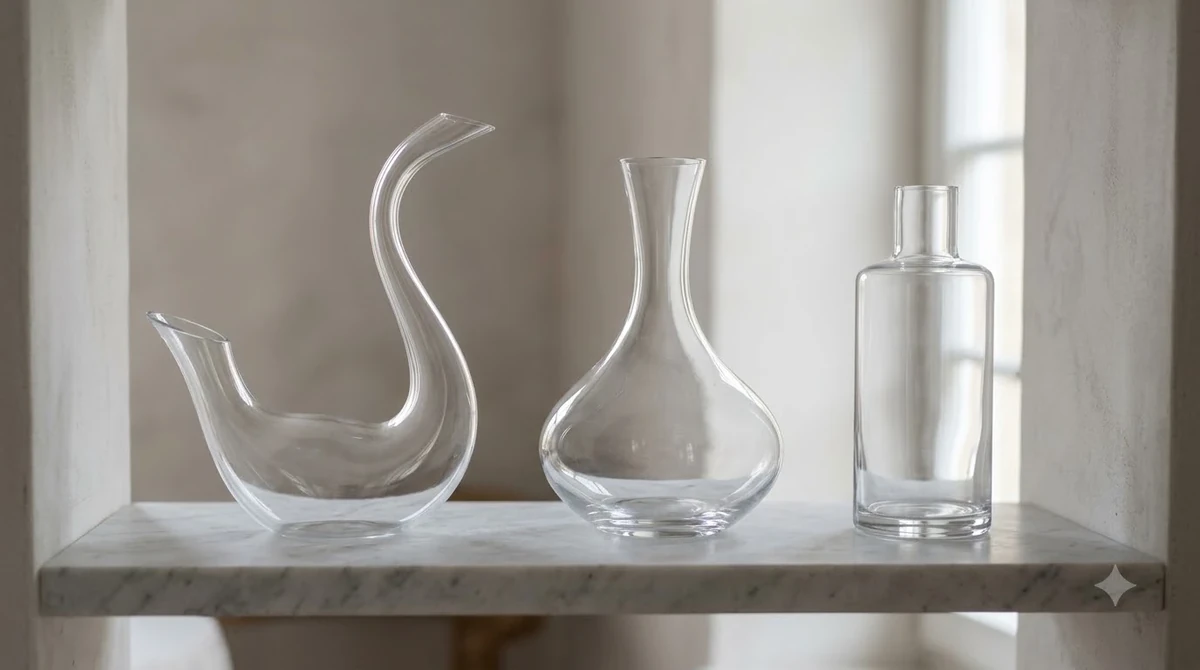
The best substitute is a clean container with a wide opening. A glass pitcher, a glass jug, or a large bowl all expose plenty of wine to air, and they are easy to pour from. A carafe is a close relative of the decanter, although the Wikipedia article describes it as similar in design but without a stopper, so a carafe is a practical choice for everyday wine. Stainless steel and plastic work too, but glass is easier to check for sediment as you pour.
Avoid containers with a narrow neck, since they expose little wine to air and can make the pour harder to control. Make sure whatever you use is spotless. Any soap residue, dust, or odor can change the wine’s taste, so rinse the container with hot water and dry it completely. The guide on how to dry a decanter covers the cleaning step in more detail.
| Container | Good for | Keep in mind |
|---|---|---|
| Glass pitcher or jug | Aeration and an easy pour | Choose one with a smooth, wide mouth |
| Large bowl | Maximum air contact for a young red | Cover it lightly if the wine will sit a while |
| Carafe | Everyday serving and light aeration | No stopper, so keep it covered if needed |
| Clean stainless or plastic jug | Sediment-free wines | Harder to see sediment as you pour |
How to pour without stirring up sediment
Stand the bottle upright for a good stretch before you open it, if you have planned ahead, so the sediment settles to the bottom. Open the bottle gently, without shaking it. Hold a light source, such as a candle or a small flashlight, behind the neck. This lets you see the wine as it moves and helps you spot the sediment before it reaches the container.
Pour in one slow, unbroken stream. Stop when the sediment reaches the neck of the bottle, even if some clear wine remains. Leaving a little wine in the bottle is a small loss that protects the rest of the pour. A steady hand and a patient pace matter more than the container you choose.
How long to let the wine breathe
Aeration time depends on the wine and on your taste. Young, firm reds gain the most from air, while delicate whites and most sparkling wines do not need decanting. Pour the wine into your container and taste it at intervals, rather than relying on a fixed rule. If the flavors seem flat, a bit more time may help. If the wine tastes fine right away, serve it.
A wide container speeds the process, because more of the wine touches air. Keeping the container in a cool place slows the change, which can help a bottle hold its shape through a long dinner. For more on timing, the guide on how long to decant red wine goes into the question in more depth.
Tip: If you only have a narrow-necked bottle and no spare container, pour the wine into two glasses and swirl them before serving. This adds some air without special equipment.
Common mistakes to avoid
The most frequent mistake is pouring too fast. A quick splash stirs up sediment and sends it straight into the glass, which can make the wine gritty and bitter. Slow down as the bottle empties, and watch the neck closely. The second mistake is decanting a wine that does not need it. Delicate whites and light reds can lose their freshness if they sit in the air too long, so taste the wine before you pour it into a container.
A third mistake is using a container that has not been cleaned well. A pitcher that held juice, soap, or a strong cleaning product can leave a trace that clashes with the wine. Rinse with hot water, dry the container completely, and give it a sniff before you pour. A clean container keeps the focus on the wine itself.
Finally, do not let the wine sit out for hours without tasting it. Aeration is gradual, and it is easy to forget a glass that was poured earlier in the evening. Set a short reminder, or taste the wine every half hour, so you can serve it at the moment it tastes its best.
Frequently Asked Questions
Can I decant wine into a regular pitcher?
Yes. A clean, wide glass pitcher works well for decanting and is easy to pour from. Make sure it is washed and dried thoroughly first so the wine does not pick up any odor or residue.
Do all wines need to be decanted?
No. Many wines are ready to drink as soon as they are opened, and decanting is most useful for young, firm reds and for older bottles with sediment. Taste the wine first to decide.
How do I know if sediment is in my bottle?
Older and unfiltered wines are the most likely to have sediment, often a fine deposit along the side or bottom of the bottle. Standing the bottle upright for a day before opening helps the deposit settle.
Is a decanter necessary for good wine?
No. A decanter is a convenient tool, but a clean pitcher, jug, or bowl can do the same job. What matters most is a gentle pour, a clean container, and a sensible amount of time for the wine to open up.
Decanting without a decanter is an easy skill to learn, and it lets you enjoy a bottle at its best on any evening. Pick a clean, wide container, pour slowly, and taste as you go. For background on how decanting changes a red wine over time, read the guide on how long to decant red wine, and keep the wine key handy for opening the bottle. The Wikipedia article on decanters gives more background on why winemakers and drinkers decant at all.
More in Wine Basics
 Which Rose Is Best for Your Taste, Budget, and Food PairingsUpdated Nov 21, 2026
 Is Cheap Wine Bad? How to Find Bottles Worth DrinkingUpdated Nov 21, 2026
 What To Write On A Wine Gift Tag: Thoughtful Messages For Every OccasionUpdated Nov 21, 2026
 Which Wine Is Best For Weight Loss? Compare Lower-Calorie ChoicesUpdated Nov 21, 2026
 What Is The Best Wine For Mimosas? Choose Bubbly That Balances Orange JuiceUpdated Nov 20, 2026
 Which Prosecco Is Best for Your Taste and OccasionUpdated Nov 20, 2026