

We may earn a commission when you buy through links on this page, at no extra cost to you. Learn more.
Moscato d asti wine is a lightly sparkling, sweet, low-alcohol white from Piedmont in northwest Italy. It is made from Moscato Bianco, also known as Muscat à Petits Grains, and it holds the DOCG classification, which is Italy’s highest wine rank. The wine is frizzante rather than fully sparkling, has a translucent golden color, and typically tastes of peach, honey, and orange blossom. Its alcohol is capped by law at 5.5% abv, which makes it a popular dessert or brunch wine.
This guide explains what Moscato d’Asti tastes like, how it is made, and how it differs from other moscato wines. It is written for buyers who see the name on a menu or shelf and want to know whether it suits their taste.
What Moscato d’Asti Is
Moscato d’Asti is a DOCG wine, a denominazione di origine controllata e garantita, which is the top tier of Italian appellation rules. The wine was first established as a DOC in 1967 and was elevated to DOCG in 1993. Most production is in the province of Asti in Piedmont, with smaller areas in the provinces of Alessandria and Cuneo.
The grape behind the wine is Moscato Bianco. It is the same variety that appears under the names Muscat à Petits Grains and, in some regions, other local titles. Because the wine is made from this grape and this region, the name Moscato d’Asti refers to a specific style, not just any sweet moscato from elsewhere.
The consortium that protects the designation describes the wider Asti DOCG area as covering the Langhe, Roero and Monferrato hills, with about 9,900 hectares under vines and roughly 3,000 producers spread across 51 townships. Those figures cover the whole designation rather than Moscato d’Asti alone, but they show how much of Piedmont’s landscape is involved. For the official rules and the list of producers, see the Consorzio dell’Asti DOCG.
Flavor and Style
Moscato d’Asti is sweet and low in alcohol, and it is usually served as a dessert or celebration wine. The aroma tends to be earthy and musky, with peach, apricot, honey, and orange blossom on the palate. The color is a clear, golden yellow. Compared with a dry white such as Pinot Grigio, it is much sweeter and softer, with a gentle bubble from its frizzante style.
The table below shows how Moscato d’Asti compares with other styles you may see nearby on a wine list.
| Style | Sweetness | Bubbles | Typical character |
|---|---|---|---|
| Moscato d’Asti | Sweet | Lightly sparkling (frizzante) | Peach, honey, orange blossom, low alcohol |
| Asti Spumante | Sweet | Fully sparkling | Similar fruit, more fizz and a fuller bubble |
| Dry Moscato | Dry to off-dry | Still | Floral and grapey, lighter on sugar |
| Champagne | Dry | Fully sparkling | Bread, citrus, and yeast from second fermentation |
How Moscato d’Asti Is Made
Production is designed to keep the wine’s natural sugar. Grapes are harvested at optimal ripeness and then crushed. The must is chilled almost to freezing, which halts fermentation before the sugar is turned into alcohol. This is why the finished wine is sweet and low in alcohol. The wine is filtered just before bottling.
The frizzante style comes from a different process than Champagne. Moscato d’Asti does not go through a second fermentation in the bottle, so the bubbles are gentler. This is one reason the wine feels light on the palate and is easy to drink with dessert.
Timing matters throughout the process. Winemakers have to judge when the must is ready and when to chill it, because the sugar left in the bottle depends on that decision. For a buyer, the practical takeaway is that a freshly bottled Moscato d’Asti usually shows more of its peach and floral character than one that has sat on a shop shelf for a long time.
How to Serve Moscato d’Asti and What to Pair With It
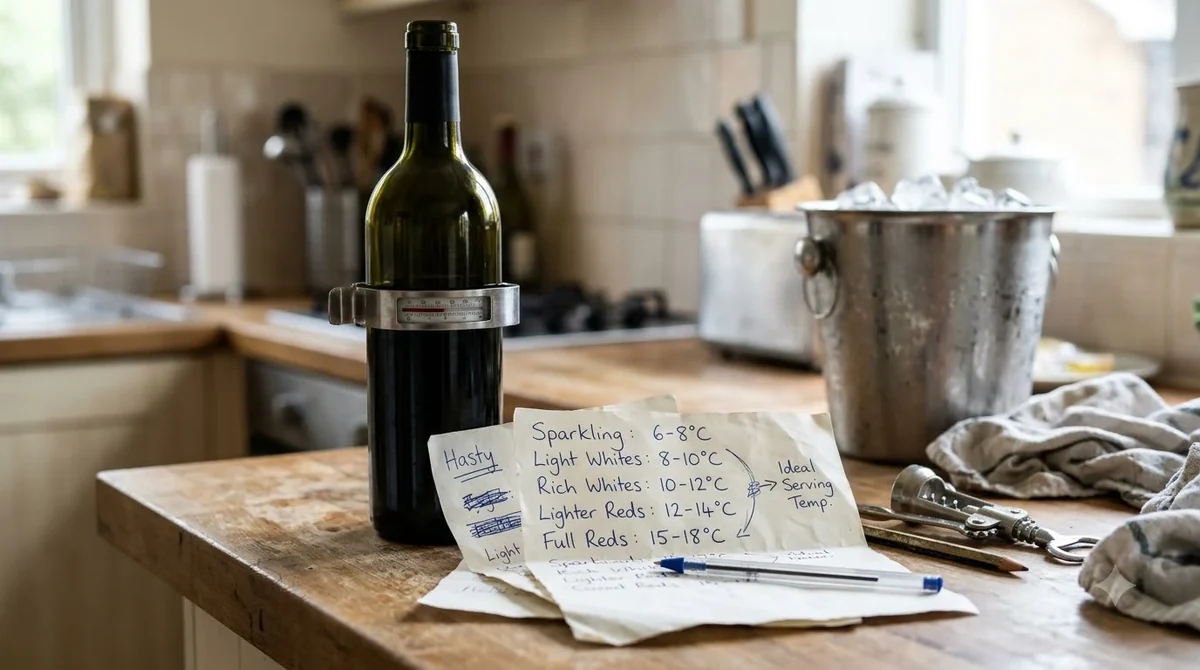
Moscato d’Asti is best served chilled. Because the wine is sweet and gently fizzy, it pairs well with fruit desserts, light pastries, and cakes that are not too heavy. Peach tarts, almond biscotti, and panna cotta are classic partners, and the wine’s honeyed notes match well with fresh fruit.
It also works outside dessert. Brunch dishes with fruit, soft cheeses, and spicy Asian food can be balanced by the wine’s sweetness and low alcohol. Because the bottle is light in alcohol, it is a good choice for an afternoon or a long meal, and it is often served in a flute or a white wine glass.
How to Choose a Good Moscato d’Asti
Read the label for the DOCG designation and the Asti name. Those words tell you that the wine follows the production rules for Moscato d’Asti, rather than a generic sweet white. Check the vintage and the producer, since fresh, recent bottles usually show the grape’s aroma most clearly. Because the wine is best young, avoid bottles that have been stored in a warm place or left on a shelf for a long time.
Look for a bottle with a clean, fresh aroma and a clear golden color. If you want a little less sweetness, look for a dry Moscato from a different region, which will taste lighter on sugar. The moscato grape guide explains how the variety behaves in other styles, and it can help you decide which bottle suits your table.
Tip: Moscato d’Asti is meant for enjoying with food or at the end of a meal, not as a sipping wine for long periods. A small glass after dinner is a common way to serve it.
Moscato d’Asti also sits in a wider family of sweet and aromatic wines, and it helps to know how it differs from them. The wine is much lighter in alcohol than a dessert port or a late-harvest Sauternes, which tend to be heavier and more concentrated. Its gentle bubble makes it feel fresher than a still sweet wine with a similar sugar level. Many people enjoy it as a way to end a meal without the heaviness of a full dessert wine.
Because the wine is made to keep its sugar, the sweetness is part of the design rather than a flaw. Producers aim to show the grape’s musky, peachy character while keeping the body light. That balance is what makes the style popular with people who do not usually drink sweet wine. It is also a gentle way to introduce a guest who is unsure about wine to a pleasant bottle at a celebration.
Frequently Asked Questions
Is Moscato d’Asti the same as Asti Spumante?
They are related but not identical. Both come from the Asti area and use the Moscato grape, but Moscato d’Asti is lightly sparkling, while Asti Spumante is fully sparkling. The two styles also differ in how they are made.
How much alcohol is in Moscato d’Asti?
By law, Moscato d’Asti can contain no more than 5.5% alcohol by volume. That makes it much lighter than most wines, including many white wines.
Is Moscato d’Asti sweet?
Yes. The production method leaves much of the grape’s natural sugar in the wine, so it tastes sweet and honeyed. It is one of the sweeter wines most people will see on a restaurant list.
Can Moscato d’Asti be aged?
It is best enjoyed young, while the fruit and aroma are fresh. Long storage can dull the flavor and the bubbles, so buy a recent vintage and drink it within a year or so of release.
Moscato d’Asti is a light, sweet wine that suits dessert, brunch, and celebrations. Look for the DOCG label and the Asti name to confirm the style, and serve it chilled with fruit or pastry. For more on the grape’s sweet and dry forms, the moscato wine guide covers the wider family, and the Wine by Type section lists other styles.
For details on the wine’s appellation and production, see Wikipedia’s Moscato d’Asti entry.
If you enjoy the sweet, fruity side of this wine, the Asti Spumante wine guide is a natural next read.
More in Wine Types & Grapes
 Zinfandel Sugar Content: Dry Red vs. White Zinfandel GramsUpdated Nov 21, 2026
 Best Zinfandel Substitute Options for Sipping and CookingUpdated Nov 21, 2026
 Zweigelt Food Pairing: Best Dishes, Cheeses, and Serving TipsUpdated Nov 21, 2026
 Zinfandel Tannins Explained: How Structure Shapes Every BottleUpdated Nov 21, 2026
 Zinfandel Sweetness Level: Dry Red vs. Sweet White Zin ExplainedUpdated Nov 21, 2026
 Xinomavro Food Pairing: Best Dishes, Styles, and Serving TipsUpdated Nov 21, 2026