

We may earn a commission when you buy through links on this page, at no extra cost to you. Learn more.
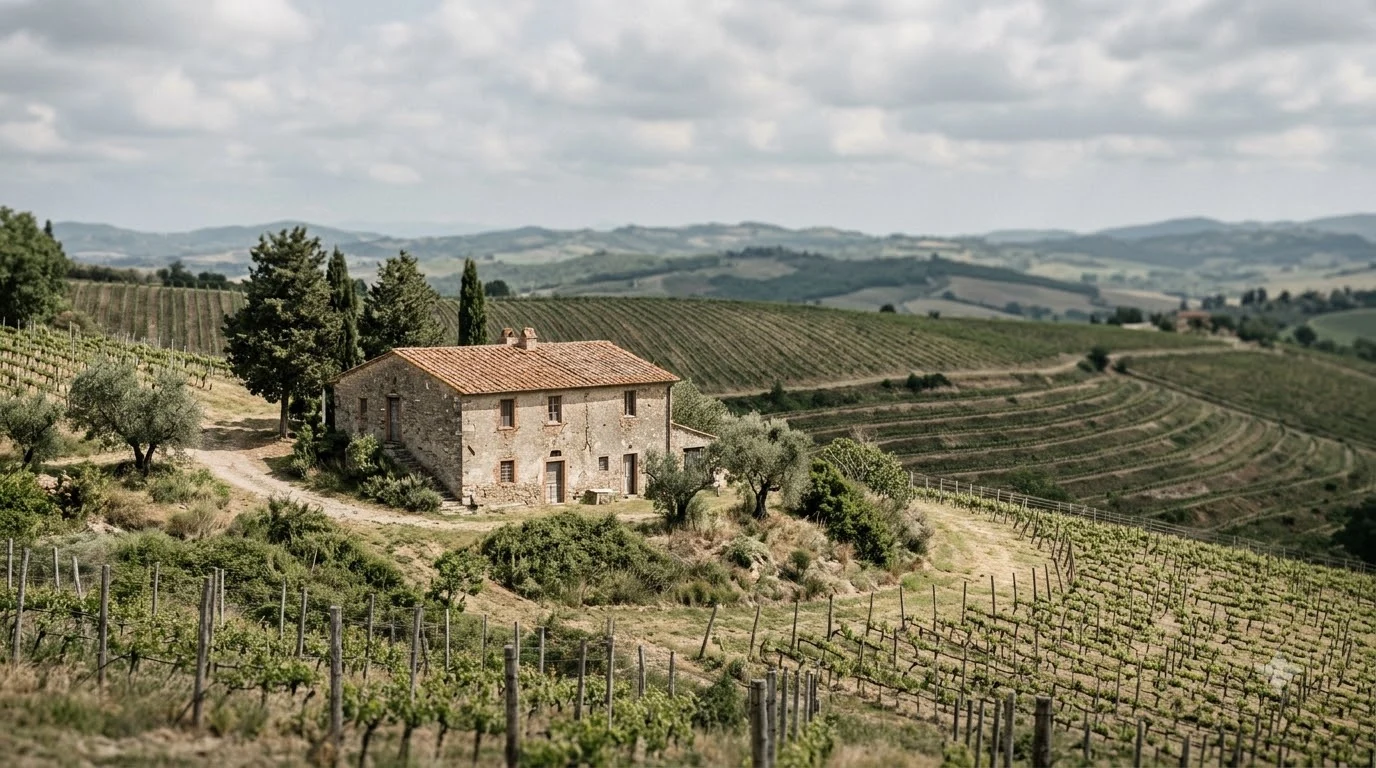
The montalcino wine region in southern Tuscany, Italy, is best known for Brunello di Montalcino, a prestigious red wine made exclusively from Sangiovese grapes and aged for several years before release. Its hillside vineyards, varied limestone and clay soils, and relatively warm, dry climate produce wines with concentrated cherry and dark-fruit flavors, bright acidity, and firm tannins. The area also produces Rosso di Montalcino, Moscadello di Montalcino, and Sant’Antimo wines, offering considerably more variety than its famous Brunello alone.
Montalcino combines a distinctive landscape with a winemaking tradition that has earned international recognition. Understanding its geography, vineyard differences, grape varieties, and appellation rules makes it easier to choose a bottle that suits a particular meal or occasion. Whether you are exploring your first Brunello or comparing established producers, this Tuscan denomination rewards attention to the details behind each wine.
Where Montalcino Sits in Tuscany and Why Its Geography Matters
Montalcino lies in southeastern Tuscany, approximately 40 kilometers south of Siena. Its historic municipal boundaries define the principal production territory for Brunello di Montalcino and several related appellations, making geographical origin particularly important when identifying authentic regional wines.
According to the Consorzio del Vino Brunello di Montalcino, the production territory covers approximately 24,000 hectares, with vineyards occupying only about 15% of that area. The landscape includes rolling agricultural land, woodland, olive groves, villages, and steep hillsides. The Ombrone, Asso, and Orcia rivers help define its roughly square geographical outline. This combination of agricultural land and natural features creates a region in which vineyard conditions can change considerably over relatively short distances.
Elevation is one of the most important influences on local wine styles. The consortium places vineyard elevations between approximately 120 and 650 meters above sea level. Lower sites generally experience warmer growing conditions, while higher vineyards can benefit from cooler temperatures and slower grape maturation. Exposure also matters: a vineyard facing south does not necessarily experience the same sunlight or ripening conditions as one facing north or east.
The region’s position between the Mediterranean coast and the Apennines contributes to a predominantly Mediterranean climate with some continental characteristics. Average annual rainfall is approximately 700 millimeters, with most precipitation arriving in spring and late autumn. Mount Amiata, which reaches approximately 1,740 meters south of Montalcino, provides additional protection from certain weather disturbances, including storms and hail.
These conditions help explain why Montalcino can produce Sangiovese with substantial concentration while retaining the acidity needed for extended aging. Wind, sunlight, elevation, and rainfall all influence vineyard health and grape development. The result is not one uniform regional style but a collection of related expressions shaped by individual vineyard locations.
For a broader understanding of Italian regional wine classifications, the site’s Wine Regions resource provides useful context for comparing geographical designations and their distinctive identities.
Soils, Climate, and the Character of Montalcino Sangiovese
Montalcino’s varied soils and warm growing conditions give its wines a combination of ripe fruit, structural tannins, and refreshing acidity. Understanding these environmental influences helps explain why Brunello from one part of the territory can taste different from a bottle produced several kilometers away.
The Consorzio describes relatively loose soils in lower areas, with increasingly stony ground higher on the slopes. Decomposed marl and limestone contribute to the soil composition in many elevated locations. These geological differences affect drainage, water availability, and the conditions under which vines develop their root systems.
Some vineyards have a greater limestone influence, while others contain more clay, sand, or mixtures of geological materials. These variations do not produce an automatic flavor formula, but they contribute to differences in grape development and the eventual balance of the wines. Vineyard management, exposure, vine age, and harvest decisions remain equally important.
Temperature differences between day and night are another significant influence. Warm daytime conditions encourage grape ripening, while cooler nights can help preserve freshness and acidity. Higher vineyards often experience slower maturation than warmer, lower sites, which can influence the intensity of fruit aromas and the development of tannins.
According to Wine Enthusiast’s regional overview, Montalcino is among Tuscany’s warmest and driest growing areas. The publication associates the region’s wines with intense color, substantial body, bright acidity, and strong tannins suitable for aging. Its descriptions also identify black fruit, cocoa, violet, and leather as recurring characteristics in regional Brunello wines.
These characteristics make Sangiovese particularly interesting here. The grape naturally provides acidity and noticeable tannin, while the local growing environment can encourage concentrated fruit. Depending on vineyard conditions and winemaking choices, the finished wine may emphasize fresh cherry and herbs or develop darker fruit, earth, spice, and more pronounced savory notes.
It is also important not to assume that every bottle will taste equally powerful. A cooler vineyard site and restrained extraction can produce a more aromatic, elegant wine, while a warmer location and different cellar choices may result in a richer, fuller-bodied expression.
Brunello di Montalcino: The Region’s Signature Wine
Brunello di Montalcino DOCG is the region’s best-known appellation and one of Italy’s most recognizable expressions of Sangiovese. Its identity rests on a single grape variety, a defined geographical origin, controlled production yields, and extended mandatory aging.
Brunello is made exclusively from Sangiovese, locally called Brunello. Unlike some other Tuscan red wines, its appellation rules do not permit blending with Cabernet Sauvignon, Merlot, or other grape varieties. This single-variety requirement makes vineyard location and winemaking decisions especially influential in determining the finished wine’s personality.
The wine received DOCG recognition in 1980, an important milestone in the development of Italian wine classification. DOCG stands for Denominazione di Origine Controllata e Garantita. The designation identifies wines subject to defined geographical and production requirements, rather than simply describing a particular quality level or flavor profile.
Brunello’s production regulations establish a maximum grape yield of 80 quintals per hectare, equivalent to 8 metric tons per hectare. The minimum alcohol requirement is 12.5% ABV. Producers must also complete the prescribed aging process before releasing the wine for sale.
In the glass, Brunello typically combines red or dark cherry fruit with savory and earthy characteristics. Depending on the producer, vintage, and age, additional aromas may include dried herbs, violet, leather, tobacco, spice, and forest-floor notes. Its acidity provides freshness, while its firm tannins create the structure that makes the wine suitable for extended cellaring.
The Consorzio describes Brunello as a dry, harmonious, structured wine with an intense aromatic profile. Younger examples can feel tightly structured, with firm tannins and concentrated fruit. Mature bottles often develop more integrated textures and additional savory complexity.
Brunello is therefore a particularly useful reference point for understanding Sangiovese. It demonstrates how the grape can combine aromatic detail, freshness, and substantial structure without relying on blending varieties to create its identity.
Brunello Aging Rules and the Difference Between Riserva and Rosso
Brunello’s mandatory aging requirements distinguish it from many other Sangiovese wines. Rosso di Montalcino follows a separate, less restrictive production schedule, while Riserva represents a longer-aged version of the Brunello denomination.
For standard Brunello di Montalcino, the regulations require at least two years of oak aging and at least four months of bottle aging. Riserva requires a minimum of six months in bottle. Standard Brunello cannot be released before January 1 of the year following the completion of five years calculated from the harvest year; Riserva requires an additional year.
These rules mean that a Brunello bearing a particular harvest year has already spent a considerable period developing before it reaches consumers. The extended schedule is part of the denomination’s identity, although actual drinking readiness still depends on the vintage, producer, and individual bottle.
Rosso di Montalcino DOC is a different expression of the same local grape and territory. It is made exclusively from Sangiovese, but its production requirements permit a much earlier release. The maximum grape yield is 90 quintals per hectare, compared with 80 quintals for Brunello. Rosso can be released from September 1 of the year following harvest, and the appellation does not require a minimum period of oak aging.
The practical difference is easy to understand: Rosso generally emphasizes earlier accessibility and fresh fruit, while Brunello is designed around longer development and more substantial structure. Rosso can still be a serious, carefully made wine, but it does not have to follow Brunello’s lengthy aging schedule.
| Characteristic | Brunello DOCG | Rosso DOC |
|---|---|---|
| Principal grape | 100% Sangiovese | 100% Sangiovese |
| Maximum grape yield | 80 quintals/ha | 90 quintals/ha |
| Minimum oak aging | 24 months | No minimum |
| Minimum bottle aging | 4 months | No minimum |
| Minimum alcohol | 12.5% ABV | 12% ABV |
| Earliest standard release | January 1 of the year following the completion of five years calculated from harvest | September 1 of the year following harvest |
| General style | Structured, ageworthy, complex | Fresh, approachable, fruit-forward |
These distinctions make Rosso a practical introduction to the region. Someone unfamiliar with Brunello’s firm tannins may find Rosso easier to enjoy with an everyday meal, while experienced collectors may prefer the additional structure and aging potential of Brunello.
Riserva should also be understood correctly. It is not a separate grape variety or an entirely different appellation. It is a longer-aged Brunello category with additional bottle-aging requirements and a later release schedule. Its quality still depends on the grapes, vineyard conditions, and producer’s decisions.
For official production information, the Brunello di Montalcino Consortium’s production regulations provide the principal requirements for grape composition, yields, aging, and release.
Understanding Montalcino’s Different Vineyard Areas
Montalcino does not have a single uniform vineyard style. Its northern, southeastern, and southern areas differ in elevation, soil composition, temperature, and exposure, creating recognizable differences in the wines produced across the territory.
Southeastern Montalcino
The southeastern sector contains some of the denomination’s higher vineyards. Decanter identifies sites around 400 to 500 meters as important sources of elegant, complex Brunello with naturally high acidity and firm tannins. The combination of elevation, calcareous soils, and significant day-to-night temperature changes helps preserve aromatic detail and structure.
These wines can require considerable time to reach their best drinking condition. Producers such as Biondi Santi are associated with the historic southeastern area. Bottles from higher sites may initially show firm tannins and concentrated fruit, gradually developing greater aromatic complexity during cellaring.
Castelnuovo dell’Abate
Approximately 10 kilometers southeast of Montalcino, Castelnuovo dell’Abate is another important Brunello-producing area. Decanter describes its varied soils and relatively warm conditions as contributing to wines that combine generous fruit with structure and aging potential.
Vineyards in this area include sites at approximately 250 to 450 meters. Producers associated with Castelnuovo dell’Abate include Mastrojanni and Poggio di Sotto. The wines can be approachable earlier than some particularly structured high-elevation examples, although many still benefit from additional bottle development.
Northern Montalcino
Northern Montalcino generally offers a fresher expression of Sangiovese. Limestone and clay soils, together with variations in elevation, contribute to wines that can emphasize aromatic definition, red fruit, and elegance rather than sheer weight.
Decanter identifies Il Marroneto, Pertimali, and La Capanna among producers associated with this northern area. Montosoli is another important vineyard locality, recognized for distinctive single-vineyard expressions. The wines from these sites demonstrate why the name of a vineyard or locality can be useful when comparing bottles from the same denomination.
Southern Montalcino
Warmer southern locations can produce fuller, more immediately fruit-driven wines. Lower elevations and sandy soils in areas such as Sant’Angelo Scalo can encourage earlier ripening and a softer presentation of fruit.
These regional differences are useful guidelines rather than absolute rules. A producer’s vineyard selection, harvest timing, fermentation approach, and oak choices can change the character of the finished wine. The absence of an official universal subzone classification also means that consumers should treat geographical descriptions as helpful context rather than rigid quality rankings.
For comparison with other mountainous and cool-climate wine areas, the site’s Savoie wine region and Switzerland wine region articles offer useful perspectives on how elevation and local geography influence wine styles.
Other Wines and Food Pairings from Montalcino
Although Brunello dominates the region’s international reputation, Montalcino produces several other wine styles. Rosso, Moscadello, and Sant’Antimo each provide different drinking experiences and expand the region’s appeal beyond ageworthy red wines.
Rosso di Montalcino is the most direct alternative to Brunello. Its fresh fruit, moderate structure, and earlier release make it suitable for pasta, roasted poultry, pork, and mushroom dishes. The Consorzio specifically identifies meat sauces, poultry, mushrooms, truffles, and risotto among appropriate companions.
Moscadello di Montalcino is the area’s traditional white-wine appellation based on white Muscat grapes. The consortium also describes still, sparkling, and late-harvest expressions. Its late-harvest version has a particularly distinctive production limit of 50 quintals per hectare, compared with 100 quintals per hectare for the still and sparkling versions.
Sant’Antimo provides another route into Montalcino’s wine production. Its appellation accommodates a wider selection of grape varieties and wine styles, including white and red wines. This makes it useful for consumers interested in exploring regional production beyond the Sangiovese-based Brunello and Rosso denominations.
Pairing Brunello with Food
Brunello’s high acidity, firm tannins, and substantial body make it particularly compatible with rich, flavorful food. Red meat, game, slow-cooked dishes, and mature cheeses are classic choices because their weight and texture complement the wine’s structure.
Traditional Tuscan pairings include grilled beef, roasted game, wild boar, and dishes featuring mushrooms or truffles. A well-prepared beef stew also works particularly well because its concentrated sauce can stand up to the wine’s tannins and savory character.
Salt and fat soften the perception of tannin, making rich meat dishes and aged cheeses useful companions for younger Brunello. Tuscan pecorino, mature hard cheeses, and roasted lamb are particularly suitable options. The wine’s acidity also helps balance the richness of fatty meat and butter-based preparations.
Rosso di Montalcino is more flexible with moderately structured dishes. Try it with tomato-based pasta, pork, veal, roast chicken, mushroom risotto, or a simple Tuscan sausage dish. Its fruit-forward character works particularly well when a meal does not require the weight and complexity of mature Brunello.
Tip: Serve Brunello at approximately 60–65°F to balance its structure and aromatic complexity. Younger, particularly tannic bottles may benefit from 30–60 minutes of decanting. Older bottles require more careful handling, especially if sediment has developed. Store unopened bottles horizontally in a dark location near 55°F with a stable temperature.
Serving temperature makes a noticeable difference. A bottle served too warm can emphasize alcohol and make its structure feel heavy, while excessive chilling can suppress the wine’s aromas and make tannins seem more prominent. A large red-wine glass gives Brunello room to develop its aromas during the meal.
For other Tuscan-inspired food and wine experiences, the site’s Tasmania wine region article provides an interesting comparison with a geographically distant region where climate and vineyard conditions also play important roles in shaping regional identity.
Choosing, Serving, and Cellaring Montalcino Wines
Choosing a Montalcino wine becomes easier when you consider the occasion, preferred style, and intended drinking time. Rosso is often the practical choice for immediate enjoyment, while Brunello suits meals and occasions where its greater structure and development can be appreciated.
When selecting Brunello, consider the vintage and producer rather than relying only on the denomination. Growing conditions can vary significantly between harvests, and even neighboring vineyards may respond differently to rainfall, temperature, and harvest timing. Producer experience and vineyard location are therefore important considerations.
For earlier drinking, a fruit-forward Rosso or a Brunello from a warmer growing area may be appealing. Those who prefer more restrained, aromatic wines can explore higher-elevation northern and southeastern vineyards. Consumers building a cellar may wish to compare different producers from the same vintage to understand how local conditions influence the wines.
Brunello has considerable aging potential. The Consorzio explains that suitable bottles can develop over periods ranging from approximately 10 to 30 years, depending on the vintage, and some can last longer under appropriate storage conditions. These are general possibilities rather than guarantees for every bottle.
Cellaring conditions are crucial. Keep bottles on their sides in a dark, quiet location with a stable temperature close to 55°F. Avoid frequent temperature fluctuations, direct sunlight, and excessive vibration. Consistent humidity also helps prevent corks from drying out during extended storage.
Decanting depends on the bottle’s age and condition. A young, full-bodied Brunello may benefit from 30–60 minutes of aeration, allowing its aromas to open and its tannins to feel more integrated. An older bottle may need careful separation from sediment instead of prolonged exposure to air.
Rosso di Montalcino generally offers a shorter drinking horizon and is often best enjoyed while its fresh fruit remains prominent. Some carefully produced examples can develop with age, but extended cellaring is not the main reason to choose this appellation.
One useful approach is to buy the two wines for different purposes. Keep Rosso available for regular meals and reserve Brunello for occasions involving richer dishes, more leisurely dinners, or planned cellar openings. This provides a straightforward way to experience the region’s range without expecting every bottle to deliver the same style.
Frequently Asked Questions
Is Montalcino the same as Chianti?
No. Montalcino and Chianti are separate Tuscan wine-producing areas with different geographical boundaries and appellations. Both are strongly associated with Sangiovese, but Brunello di Montalcino has its own specific production regulations and requires exclusively Sangiovese grapes. The wines can therefore differ substantially in structure, aging requirements, and regional expression.
What does the word Brunello mean on a wine label?
Brunello is the traditional local name for Sangiovese in Montalcino. It is not a separate international grape variety. The name on a Brunello di Montalcino DOCG bottle identifies a wine produced under the specific geographical and production requirements of that appellation.
Does Montalcino produce white wine?
Yes. Moscadello di Montalcino is a traditional white-wine denomination based on Muscat grapes. Sant’Antimo also permits white-wine production. These appellations provide alternatives to the region’s internationally famous red wines.
Who founded the Brunello tradition in Montalcino?
Clemente Santi is recognized by the regional consortium as a founding figure in the development of Brunello. His 1865 vintage received a silver medal from the Agrarian Committee of Montepulciano in 1869. His work helped establish the reputation of the local Sangiovese expression before Brunello became an internationally recognized appellation.
When was the Brunello di Montalcino Consortium established?
The Consorzio del Vino Brunello di Montalcino was founded in 1967. Its responsibilities include protecting the denomination, promoting regional wines, supporting producers, and communicating information about production standards. Its establishment followed Brunello’s DOC recognition in 1966 and preceded the denomination’s DOCG recognition in 1980.
The Montalcino wine region offers much more than one celebrated bottle. Its varied vineyard landscapes, distinctive Sangiovese wines, and carefully defined appellations make it one of Tuscany’s most rewarding areas to explore. Start with Rosso di Montalcino for fresh regional character, then compare Brunello from different vineyard areas to discover how elevation, soils, and winemaking shape the finished wine.
More in Wine Regions
 Willcox Wine Trail: Discover Arizona’s High-Elevation Wine CountryUpdated Nov 20, 2026
 Yakima Valley Wine Region: Find the Best Styles to TryUpdated Nov 20, 2026
 Vosne Romanee Wine Tasting: Identify Aromas and Choose Better PairingsUpdated Nov 20, 2026
 Yakima Valley Wine Festival: Find the Best Seasonal Wine EventsUpdated Nov 20, 2026
 Wales Vineyards: Discover Cool-Climate Wines and Where to VisitUpdated Nov 20, 2026
 Yountville Wine Festival: Discover Napa Wines and Local FoodUpdated Nov 20, 2026