

We may earn a commission when you buy through links on this page, at no extra cost to you. Learn more.
The best minimalist wine rack for most homes is a label-forward wall-mounted metal rack, which turns bottles into clean architectural lines while keeping floor space completely open. If you rent or prefer portable storage, a slim freestanding geometric wire rack works well on counters or sideboards, while stackable modular cubes suit growing collections that need flexible placement. For high-ceiling dining areas or open-concept rooms, floor-to-ceiling tension post systems deliver maximum capacity without bulky cabinetry.
Minimalist wine storage is about stripping away heavy ornamental woodwork, scroll details, and oversized cabinets so the bottles themselves become the visual focal point. Whether you keep six weeknight bottles near the kitchen or manage a hundred-bottle rotation in a dining area, choosing the right structural format ensures your bottles stay horizontal, accessible, and visually uncluttered.
Quick Comparison
Comparing the five core minimalist rack styles helps match your wall space, bottle count, and installation preferences to the right build.
| Rack Type | Best For | Typical Capacity | Mounting Style | Label Visibility |
|---|---|---|---|---|
| Label-Forward Wall-Mounted Metal Racks | Zero-footprint visual displays | 6 to 45 bottles per section | Wall studs or drywall anchors | Full side-profile label view |
| Wall-Mounted Peg Systems | Custom sculptural wall layouts | 1 to 3 bottles per peg pair | Direct wall or backer board | Full side-profile label view |
| Compact Geometric Countertop Wire Racks | Renters and small kitchen counters | 6 to 14 bottles | Freestanding (no hardware) | Partial neck or angled view |
| Stackable Modular Wood or Metal Cubes | Gradually expanding collections | 12 to 48 bottles per module | Freestanding or stacked | Cork-forward end view |
| Floor-to-Ceiling Tension Post Systems | High-capacity open-concept dividers | 20 to 120+ bottles | Floor and ceiling plates | Full 360-degree label view |
Best for Zero-Footprint Wall Displays: Label-Forward Wall-Mounted Metal Racks
Label-forward wall racks use parallel steel rods to cradle bottles horizontally by the neck and base, displaying the entire front label rather than just the cork end. This design eliminates floor clutter while turning an empty dining room or kitchen wall into a clean, gallery-style wine display.

Why it stands out: Unlike traditional wooden grids where you have to pull bottles out to read what you own, label-forward rails make bottle identification effortless at a glance. According to Wine Enthusiast’s guide to the best wine racks, open metal structures also promote steady air circulation around the glass and weigh far less than solid hardwood cabinetry. Most systems come in single-, double-, or triple-deep configurations, allowing you to increase storage density without widening your wall footprint.
Keep in mind: Installing a loaded metal rack requires anchoring into wood studs or using heavy-duty hollow-wall toggles, as a full 18-bottle section carries substantial weight. Best for: Homeowners seeking a sleek wall mounted wine rack that keeps everyday bottles organized and easy to scan without sacrificing square footage.
Best for Custom Architectural Layouts: Wall-Mounted Peg Systems
Wall-mounted peg racks replace continuous vertical rails with individual pairs of machined aluminum or steel pins that protrude directly from the wall. Each bottle rests across two independent pegs, creating a floating effect with minimal visible hardware.
Why it stands out: Peg systems offer unmatched geometric freedom because you control the exact spacing, column count, and grid pattern across drywall, wood paneling, or masonry. Designers at VintageView note that modern metal rack systems use protective rubber tips or precision-machined grooves to hold bottles securely while preventing label scuffs. You can arrange a tight vertical column in a narrow pantry recess or spread rows asymmetrically across a feature wall.
Keep in mind: Precision measuring during installation is critical—if two pegs are misaligned by even a fraction of an inch, bottles can sit unevenly or roll. Best for: Design-focused spaces where you want bottles to appear suspended on the wall with virtually invisible structural framing.
Best for Renters and Countertops: Compact Geometric Wire Racks
Compact geometric wire racks use thin, powder-coated steel bars arranged in honeycomb, diamond, or wave silhouettes to hold six to fourteen bottles on a countertop, bar cart, or inside a pantry cabinet. They require zero tools, zero wall fasteners, and can be moved in seconds.
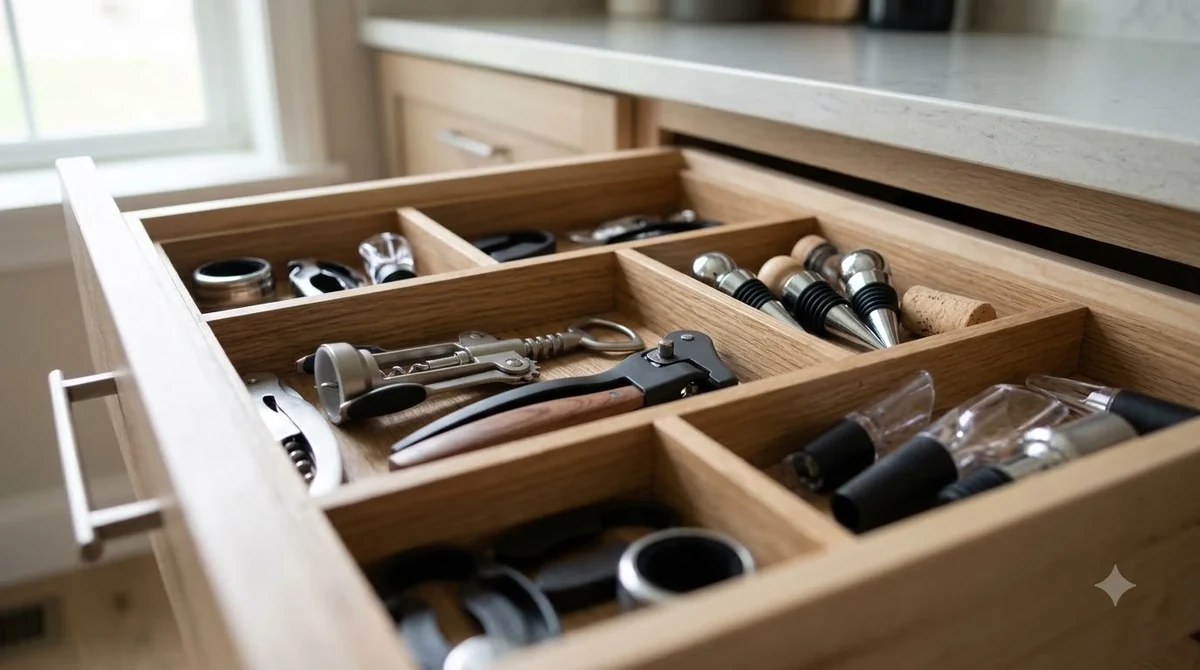
Why it stands out: A well-proportioned wire frame provides strong structural rigidity while remaining visually airy enough that it never makes a small kitchen counter feel cramped. The open wire geometry holds bottles horizontally so corks stay moist, and slim matte-black, brushed-brass, or chrome finishes blend easily with modern kitchen appliances. Because they sit self-supported on flat surfaces, they are simple to wipe underneath and relocate whenever you rearrange your kitchen.
Keep in mind: Tightly welded wire hexagons often fit standard 750ml Bordeaux bottles snugly, meaning wider-bellied Burgundy, Pinot Noir, or Champagne bottles may not slide into interior slots. Best for: Apartment dwellers, renters, and casual drinkers who want an affordable, no-drill wine rack for a weeknight rotation.
Best for Growing Collections: Stackable Modular Cubes and Grids
Modular wine cubes and interlocking wooden or metal grids let you start with a single compact unit and stack additional tiers upward or sideways as your bottle count expands. Clean, unstained natural ash, walnut, or matte steel frames keep the silhouette sharp and free of ornate trim.
Why it stands out: Guessing future storage needs often leaves buyers with either an oversized half-empty cabinet or an overflowing rack within a year. Modular systems solve that problem by letting you buy capacity incrementally, and many designs feature flat tops that double as a serving surface for decanters and glassware. Reviewers at Wine Enthusiast point out that open modular grids keep everyday bottles at a comfortable reach while letting you separate “drink now” bottles from bottles meant to rest longer.
Keep in mind: When stacking modular units more than three feet high, secure the upper tiers to the wall with anti-tip brackets so the frame stays stable when you pull a bottle from the middle. Best for: Developing wine enthusiasts who buy by the mixed case and want scalable Racks & Storage that adapts to changing room layouts.
Best for High-Capacity Open Spaces: Floor-to-Ceiling Tension Post Systems
Floor-to-ceiling post systems anchor slender vertical metal columns between the floor and ceiling, supporting horizontal rails or pegs from both sides. They create a freestanding, see-through wine wall that works against a flat surface or as a dramatic room divider.
Why it stands out: By transferring weight vertically into structural floor and ceiling plates rather than relying solely on drywall, post systems can hold upwards of 100 bottles in a slim footprint. Double-sided mounting lets you view bottle labels from both sides of a dining room or kitchen island, keeping sightlines open and letting natural light pass between the rows. Clean anodized or powder-coated finishes give the installation the crisp look of custom architectural millwork without the cost of building an enclosed cellar.
Keep in mind: Standard kits typically fit ceiling heights up to ten feet and must be cut to exact room height during installation, so double-check your ceiling joists before ordering. Best for: Open-concept homes and serious collectors who want high-density, double-sided bottle display without enclosing a room.
How to Choose
Selecting the right minimalist rack comes down to balancing bottle geometry, installation permanence, and environmental conditions in your home.
- Check slot diameter for bottle shapes: Standard Bordeaux bottles measure roughly 2.9 to 3 inches across, whereas Burgundy, Rhône, and sparkling wine bottles often reach 3.4 to 3.6 inches. Verify that slot spacing or rail width accommodates wider bottles if you drink Pinot Noir or Champagne regularly.
- Match capacity to your buying habits: If you typically keep a few bottles on hand for dinner parties, an 8- to 12-bottle countertop rack is plenty. If you regularly order in bulk—and you know how many bottles in a case of wine you bring home each month—opt for modular grids or wall rails that hold at least 24 to 36 bottles.
- Prioritize horizontal orientation: Any rack designed for more than a few days of storage should hold bottles flat or at a slight downward tilt so liquid stays in contact with the cork, preventing it from drying out and letting air seep in.
- Evaluate wall and floor surfaces: Drywall-only installations work well for lightweight 6- to 9-bottle wall racks using proper anchors, while heavier multi-column metal systems should tie into wood studs, masonry, or floor-to-ceiling plates.
Tip: Keep your rack away from heat sources and direct sunlight—never mount a minimalist display directly above a stove, next to a sunny window, or beside a refrigerator exhaust vent, as temperature swings accelerate wine aging.
Frequently Asked Questions
Do minimalist wine racks fit Champagne and Burgundy bottles?
Not all minimalist racks accommodate wider bottle silhouettes. Tightly spaced honeycomb wire racks and narrow wooden cubbies are often sized strictly for 750ml Bordeaux bottles, so look for racks with at least 3.5 inches of clearance or open parallel rails if you store Champagne, Pinot Noir, or Syrah.
Is it better to store wine labels facing out or corks facing out?
Both orientations keep the wine in contact with the cork, which is what matters most for short- and medium-term preservation. Label-forward racks make it much faster to find a specific vintage without disturbing neighboring bottles, while cork-forward grids pack more bottles into a narrower wall width.
How much weight can a wall-mounted minimalist wine rack hold?
A standard filled 750ml wine bottle weighs roughly 2.6 to 3 pounds, meaning an 18-bottle rack adds around 50 pounds of static load. When secured into wood wall studs with proper lag screws, steel wall racks easily support hundreds of pounds, whereas hollow-drywall toggle anchors are best reserved for smaller 6- to 12-bottle sections.
Can you store wine long-term on an open minimalist rack?
Open minimalist racks are ideal for bottles you plan to drink within a few weeks to a year, provided the room stays cool, dark, and free of major temperature fluctuations. For multi-year aging of collectible vintages, pair your rack with a climate-controlled room or a dedicated temperature-regulated wine cooler.
The right minimalist wine rack strips away visual bulk while keeping your favorite bottles organized, horizontal, and ready to open. Whether you choose a slim countertop wire frame for a studio apartment or a full-height label-forward wall system for a dining room, focusing on sturdy materials and generous bottle spacing will keep your collection looking sharp for years.
More in Racks & Storage
 Best Wine Barrel Racks for Distinctive Bottle StorageUpdated Nov 20, 2026
 Best Wine Storage Tower: Sizing, Protection and Room LayoutUpdated Nov 18, 2026
 Best Pyramid Wine Rack: Materials, Sizes and Where It FitsUpdated Nov 18, 2026
 Best Kitchen Cabinet Wine Rack Insert for Built-In Bottle StorageUpdated Nov 18, 2026
 Best 16 Bottle Wine Rack Options for Kitchens, Bars and CellarsUpdated Nov 18, 2026
 Best 48 Bottle Wine Rack Options for Cellars, Kitchens, and Tight SpacesUpdated Nov 18, 2026