

We may earn a commission when you buy through links on this page, at no extra cost to you. Learn more.
Meursault vineyards are celebrated Chardonnay-growing sites in Burgundy’s Côte de Beaune, France, known for expressive white wines, limestone-rich soils, and 19 officially classified Premier Cru Climats. The appellation includes famous vineyards such as Les Perrières, Les Genevrières, and Les Charmes, each contributing a different expression of Chardonnay. Although Meursault has no Grand Cru classification, its leading Premier Cru wines are frequently compared with the finest white Burgundies. Understanding vineyard location, elevation, soil, and classification helps explain why bottles from different Meursault sites can taste remarkably different.
Meursault occupies a distinctive position in Burgundy’s white wine landscape. Its reputation rests on the relationship between Chardonnay and a varied hillside environment, where differences in soil depth, exposure, and elevation influence the character of individual vineyards. From structured, mineral-driven Premier Cru wines to approachable village-level bottlings, the appellation offers considerable diversity within a relatively small geographical area. Learning the names and characteristics of its vineyards provides a useful starting point for understanding one of France’s most recognizable Chardonnay regions.
Where Meursault Sits in the Côte de Beaune
Meursault is located in the Côte de Beaune, the southern section of Burgundy’s famous Côte d’Or wine-producing area. Its vineyards occupy the slopes around the village of Meursault, between Volnay to the north and Puligny-Montrachet to the south, placing the appellation among some of Burgundy’s most respected Chardonnay-producing communities.
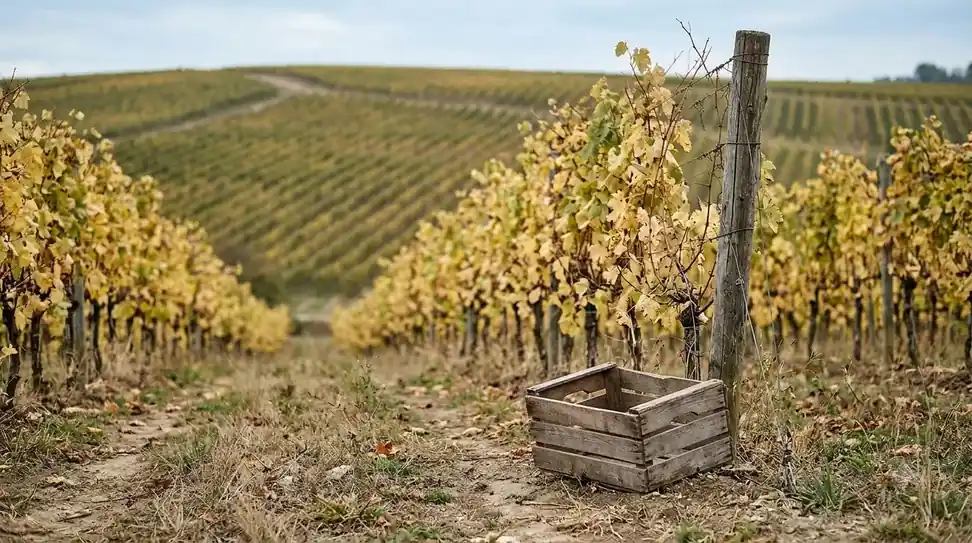
The village is approximately 7 kilometers southwest of Beaune, making it relatively easy to reach when exploring the central Côte de Beaune. Its vineyard landscape stretches along a hillside rather than forming one uniform block. Differences in altitude, slope position, and geological composition create numerous named growing areas, known locally as Climats or lieux-dits. These names are important because Burgundy identifies individual vineyard sites as distinct geographical expressions rather than treating the entire village as one interchangeable growing area.
The Meursault appellation was officially established on July 31, 1937. It is classified as a Village appellation, with an additional Premier Cru category covering 19 designated Climats. Importantly, Meursault has no Grand Cru vineyards. This does not mean its best vineyards are considered ordinary. Les Perrières, Les Genevrières, and Les Charmes have international reputations and are frequently discussed alongside Grand Cru sites in neighboring villages.
According to the Burgundy wine board, the appellation’s reported production area includes 382.64 hectares of white vineyards and 9.19 hectares of red vineyards. The difference illustrates just how strongly Meursault is associated with Chardonnay. Pinot Noir also has an established presence, but red wine represents a comparatively small part of the appellation’s overall identity.
The location is important for another reason: Meursault sits within a relatively compact sequence of prestigious Burgundy villages. To its south are Puligny-Montrachet and Chassagne-Montrachet, while Volnay and Pommard are among its northern neighbors. These nearby communities share aspects of Burgundy’s limestone geology and continental-influenced climate, but their vineyard classifications and wine styles differ.
For readers comparing international wine regions, Meursault offers a useful example of how a relatively small appellation can develop a recognizable identity through detailed vineyard classification. The same geographical approach can help explain the diversity found in Tasmania vineyards, although the climate, grapes, and wine traditions are quite different.
Soils, Elevation, and Vineyard Exposure
The character of Meursault Chardonnay begins with its limestone and marl geology, combined with the elevation and orientation of individual vineyard parcels. Many important sites sit around 260 meters above sea level, where hillside exposure and soil composition contribute to the balance between ripe fruit, texture, and freshness.

The geological foundation belongs largely to the Jurassic period. The Burgundy wine board identifies limestone marl as an important component of the appellation’s soils, with Callovian limestone and Argovian marl contributing to the underlying geological structure. Patches of magnesian limestone also occur. These formations are not distributed evenly, which helps explain the differences between individual Climats.
Some vineyard parcels have relatively shallow, stony soils, while others contain more clay and deeper marl deposits. Shallow soils over fractured limestone can provide relatively limited water retention and encourage vines to develop within a constrained rooting environment. Deeper soils may retain more moisture and provide a different growing environment. These differences can influence vine development, fruit concentration, and the resulting wine’s texture.
Exposure is another important consideration. Many of the appellation’s most celebrated vineyards face east or southeast, receiving morning sunlight that supports grape ripening. Their hillside positions also provide drainage, while elevation creates variations in temperature and growing conditions across relatively short distances.
The lower and middle sections of the slope generally contain some of the recognized Premier Cru vineyards. Higher locations include village-level sites that can produce particularly fresh, mineral expressions of Chardonnay. Decanter identifies several vineyards at higher elevations, including Les Vireuils, Les Clous, Les Casse Têtes, Les Tillets, Les Narvaux, and Les Chaumes.
These higher sites can produce wines with pronounced citrus, lemon, and white-floral characteristics. They often differ from the broader, more powerful expressions associated with some of the lower Premier Cru vineyards. Elevation alone, however, does not determine quality. Soil, exposure, vineyard management, grape maturity, and winemaking all influence the final result.
Water movement through the landscape also matters. The Ruisseau des Cloux, a stream descending from the Auxey valley, influences nearby vineyards through cooler conditions. Some village-level sites on its left bank experience a different growing environment from vineyards farther south. This is one reason that two bottles carrying the same Village appellation can have noticeably different profiles.
Meursault’s geology should therefore be understood as a collection of interacting factors rather than a single soil type. Limestone contributes to the physical character of the growing environment, but the finished wine reflects the combined effects of location, vine cultivation, harvest decisions, and cellar practices. The Burgundy wine board’s Meursault appellation profile provides additional information about the area’s classification, production, and typical wine characteristics.
The Three Famous Premier Cru Vineyards
Les Perrières, Les Genevrières, and Les Charmes are the three most recognizable Premier Cru vineyards in Meursault. Their positions along the hillside are relatively close, but their different soil conditions and vineyard characteristics help create distinctive expressions of Chardonnay.
Les Perrières: Structure and Mineral Intensity
Les Perrières is widely regarded as one of the appellation’s most distinguished vineyards. The name refers to the area’s historical association with stone quarries, an appropriate reference for a site known for its rocky, limestone-influenced environment. Its wines are frequently described as concentrated, structured, and mineral-driven.
Decanter identifies several sections within the broader Perrières area, including Les Perrières-Dessous, Clos des Perrières, Les Perrières-Dessus, and Aux Perrières. These names help identify different vineyard locations, although not every producer includes the smaller designation on the bottle label.
The wines from Perrières are often admired for combining the richness associated with Meursault with a firm structure and pronounced mineral character. Their depth and concentration can make them particularly suitable for extended cellaring, depending on the producer and vintage.
Les Genevrières: Complexity and Elegance
Les Genevrières lies north of Perrières and is another highly respected Premier Cru site. Its name is associated with juniper bushes, which historically grew in the area. The vineyard produces Chardonnay known for combining texture with aromatic complexity.
Compared with the more forceful reputation of Perrières, Genevrières is often associated with a slightly more floral and refined character. Ripe orchard fruit, citrus, almond, and subtle mineral notes can appear alongside a broad palate structure. These characteristics make it an attractive choice for drinkers seeking both richness and freshness.
Genevrières is also divided into upper and lower sections, identified as Dessus and Dessous. Such distinctions are useful when comparing individual bottlings, although the producer’s vineyard practices and winemaking decisions remain important considerations.
Les Charmes: Generosity and Texture
Les Charmes lies downslope from Perrières and is particularly associated with generous texture and ripe fruit. Its wines can display hazelnut, pear, yellow apple, and rounded citrus characteristics, often accompanied by a broad, satisfying palate.
Like several other important Meursault vineyards, Charmes has upper and lower sections. The terms Charmes-Dessus and Charmes-Dessous identify these areas. Their different positions on the slope can influence soil depth and growing conditions, creating variations within the broader Premier Cru designation.
Charmes is often an appealing introduction to Premier Cru Meursault because its fuller texture can be immediately enjoyable. That does not mean it lacks structure or aging potential. Well-made examples can develop considerable complexity with bottle age.
| Premier Cru vineyard | Relative position | Typical wine character | Useful buying consideration |
|---|---|---|---|
| Les Perrières | Prominent middle-slope site | Structured, concentrated, mineral | Look for depth and balance |
| Les Genevrières | North of Perrières | Complex, floral, textured | Compare upper and lower sections |
| Les Charmes | Downslope from Perrières | Broad, generous, rounded | Consider the producer and parcel |
| Les Porusots | North of Genevrières | Structured, mineral, substantial | Compare individual bottlings |
| Les Gouttes d’Or | Northern Premier Cru group | Ripe fruit and rich texture | Explore smaller vineyard names |
These descriptions are general guides rather than rigid rules. Decanter notes that local growers recognize broadly similar exposure across Perrières, Charmes, Genevrières, Porusot, Bouchères, and Gouttes d’Or. The producer, individual parcel, and vintage can therefore be just as important as the vineyard name when comparing bottles. Its regional profile of Meursault vineyards and producers provides further detail about these sites and their differences.
Other Important Climats and Lesser-Known Sites
Beyond the three famous Premier Crus, Meursault includes numerous other named vineyards that contribute to its diversity. The official classification contains 19 Premier Cru Climats, while additional village-level lieux-dits provide opportunities to discover distinctive Chardonnay without choosing one of the best-known vineyard names.
The 19 Premier Cru Climats are:
- Blagny
- Charmes
- Clos des Perrières
- Genevrières
- La Jeunellotte
- La Pièce sous le Bois
- Le Porusot
- Les Bouchères
- Les Caillerets
- Les Cras
- Les Gouttes d’Or
- Les Plures
- Les Ravelles
- Les Santenots Blancs
- Les Santenots du Milieu
- Perrières
- Porusot
- Sous Blagny
- Sous le Dos d’Ane
Some names deserve particular attention. Les Porusots, sometimes written as Les Poruzots, is located in the northern part of the important Premier Cru band. Its wines can show a structured profile with mineral character, making it an interesting alternative to more widely recognized sites.
Les Bouchères is another worthwhile vineyard to understand. It shares broadly similar exposure with several neighboring Premier Crus, although individual parcels and winemaking choices produce differences between bottlings. Les Gouttes d’Or is also an established name, associated with ripe fruit and a relatively generous expression of Meursault Chardonnay.
Blagny is especially interesting because of its higher hillside location. The vineyards around the hamlet include La Pièce sous le Bois, La Jeunellotte, Sous Blagny, and Sous le Dos d’Ane. Their altitude and position can contribute to wines with more restrained fruit, citrus character, and mineral freshness.
Village-level vineyards also deserve attention. Names such as Les Narvaux, Les Chevalières, Les Tessons, Les Tillets, and Les Vireuils appear on bottles and provide additional geographical information beyond the main appellation name.
These sites can be particularly useful when exploring the range of Meursault without focusing exclusively on its most prestigious Premier Crus. A well-produced village wine from a clearly identified lieu-dit may provide impressive complexity and a strong sense of place.
One unusual feature involves the Santenots area near Volnay. Certain vineyard sections can produce white wine labeled Meursault Premier Cru when planted with Chardonnay, while Pinot Noir from the relevant parcels is sold under the Volnay Santenots designation. This illustrates how Burgundy’s appellation boundaries and grape-specific regulations influence the names that appear on wine labels.
Grape Varieties, Winemaking, and Wine Characteristics
Chardonnay defines Meursault, accounting for nearly all of its vineyard production. The grape’s adaptability allows it to express differences between limestone-rich parcels, deeper marl soils, and changing hillside elevations, while winemaking determines how those characteristics appear in the glass.
Meursault white wines are typically dry, medium to full-bodied, and characterized by a combination of fruit, texture, and acidity. Common aromas include green apple, pear, ripe citrus, white peach, almond, hazelnut, and floral notes. With bottle development, some wines acquire additional complexity involving honey, dried fruit, toasted nuts, and savory nuances.
Oak is frequently part of the winemaking conversation, but it should not be confused with the identity of the appellation itself. Some producers use barrel fermentation and maturation to develop additional texture and subtle spice. Others favor restrained oak influence to emphasize fruit, freshness, and vineyard character.
Lees aging is another technique that can influence texture. Wine left in contact with fine yeast deposits may develop additional weight and complexity. Stirring the lees, known as bâtonnage, can further affect mouthfeel, although producers differ considerably in how frequently they use this technique.
Malolactic fermentation is also common in white Burgundy. This process converts sharper malic acid into softer lactic acid and can contribute to a rounder palate. Its influence depends on the fermentation conditions, temperature, and producer’s intended style.
Not every Meursault is heavily buttery or overtly oaky. Contemporary examples can emphasize citrus, precision, and restrained texture. Others remain broad and generous, with ripe fruit and noticeable toasted-nut characteristics. Both approaches can represent the appellation when the wine retains balance and a clear sense of origin.
Although Chardonnay dominates, Pinot Noir is also grown in Meursault. Red wines are relatively uncommon, but they form a legitimate part of the appellation’s production. They typically offer a lighter-bodied Burgundy profile, with red fruit, moderate tannin, and freshness rather than the powerful structure associated with some more tannic varieties.
The difference between Village and Premier Cru wine is primarily a matter of geographical classification and production rules. Premier Cru identifies a designated vineyard site within the appellation. It does not guarantee that every bottle will outperform every Village wine. Farming quality, fruit selection, harvest timing, fermentation, and maturation remain essential factors.
For a broader understanding of how these classifications work across international wine-producing areas, readers can explore Wine Regions and compare Burgundy’s vineyard-centered system with other regional traditions.
Choosing, Serving, and Pairing Meursault Wine
Choosing Meursault becomes easier when the vineyard designation, producer, vintage, and preferred wine style are considered together. The most famous Premier Crus offer distinctive expressions, but village-level bottlings can also provide excellent examples of the appellation’s Chardonnay identity.
For a structured, mineral-driven style, begin with Perrières. For a combination of aromatic complexity and rounded texture, explore Genevrières. Charmes is a useful choice for drinkers who prefer a broader, more generous Chardonnay profile. These are general tendencies, not guarantees, and individual producers can create very different wines from the same vineyard.
Village Meursault offers another useful starting point. Look for labels identifying vineyards such as Les Narvaux, Les Tessons, Les Chevalières, or Les Tillets. These names provide more information about the wine’s geographical origin and can help readers compare different expressions of the appellation.
Serving temperature has a substantial effect on how Chardonnay expresses itself. The Burgundy wine board recommends 12–14°C for Meursault, approximately 54–57°F. This range helps preserve freshness while allowing the wine’s aromatic complexity and texture to develop.
Very cold serving temperatures can make a structured white Burgundy seem closed, while excessive warmth can emphasize alcohol and reduce the impression of freshness. A brief period in the glass can help a wine reveal its aromas, particularly when it has been opened directly from a cool cellar or refrigerator.
Food pairing is another area where Meursault’s texture and acidity are particularly useful. Its combination of body, freshness, and nutty character works naturally with rich foods that need a wine with sufficient structure.
- Roast chicken: The combination of golden skin, tender meat, and savory juices complements the wine’s texture and orchard-fruit character.
- Veal in cream sauce: The creamy consistency matches Meursault’s body, while its acidity helps balance the richness.
- Lobster: Grilled or lightly buttered lobster works especially well with the wine’s depth and fresh citrus character.
- Scallops: Seared scallops complement the wine’s texture and delicate nutty aromas.
- White fish: Richer preparations, particularly fish served with butter-based sauces, are generally better choices than very lean preparations.
- Mushroom dishes: Roasted mushrooms and creamy mushroom preparations complement the savory and earthy notes that can develop with bottle age.
Cheese can also work well, particularly with aged or creamy varieties. The important consideration is matching the intensity of the food with the wine rather than allowing a strongly flavored ingredient to overwhelm the Chardonnay.
Tip: Serve Meursault around 54–57°F and begin with a glass alongside roast chicken, seared scallops, or lobster. If the wine is young and particularly concentrated, allow it some time in the glass before assessing its full aromatic profile.
Storage conditions are important for bottles intended for extended aging. Keep unopened bottles in a dark, temperature-stable environment near 55°F, preferably with humidity that helps prevent corks from drying out. Bottles sealed with natural cork should generally be stored horizontally.
Meursault can develop considerable complexity over time, but not every bottle requires lengthy cellaring. Village-level wines are often enjoyable relatively young, while structured Premier Cru examples may benefit from several additional years of development. The producer, vintage, and wine’s underlying acidity should guide expectations.
After opening, refrigerate unfinished still wine and use a suitable closure. Many opened still wines remain enjoyable for approximately three to five days, although freshness gradually declines. More mature bottles may be more sensitive to oxygen exposure than young, firmly structured examples.
When comparing Burgundy with other regions, it is also useful to remember that Chardonnay behaves differently according to climate and vineyard conditions. Readers interested in other distinctive growing environments can compare Meursault with Uruguay vineyards, where different climatic influences and regional traditions shape the character of the wines.
Frequently Asked Questions
Why is Meursault called a village appellation rather than a Grand Cru region?
Meursault’s official classification distinguishes Village and Premier Cru wines without including a Grand Cru category. Burgundy’s classification is based on established geographical and regulatory designations rather than simply the reputation of an individual producer or wine. Its most celebrated vineyards have nevertheless earned considerable international recognition.
What does the word Climat mean on a Burgundy wine label?
In Burgundy, a Climat refers to a precisely identified vineyard site with its own recognized geographical identity and historical characteristics. The term is not a reference to weather alone. Burgundy’s Climats of the Côte de Beaune and Côte de Nuits have also received UNESCO World Heritage recognition as an important cultural landscape.
What does the name Perrières mean in Burgundy?
Perrières is associated with stone quarries and rocky ground. The name reflects the historical extraction of building stone in the area. This connection is particularly relevant to the vineyard’s reputation for its stony limestone environment and the structured character of its Chardonnay wines.
Can Meursault wines be made from Pinot Noir?
Yes. Although Chardonnay accounts for the overwhelming majority of Meursault production, Pinot Noir is permitted under the appellation regulations. The area also has an interesting relationship with Volnay, particularly in the Santenots sector, where the grape variety influences the applicable wine designation.
What is the difference between a lieu-dit and a Premier Cru Climat?
A lieu-dit is a named geographical place, while a Premier Cru Climat is a vineyard site with an officially recognized higher classification within the appellation. A named lieu-dit does not automatically qualify for Premier Cru status. This distinction explains why some bottles carry a vineyard name without the words Premier Cru.
Meursault’s vineyards demonstrate how geology, hillside position, and carefully defined vineyard boundaries shape the identity of Burgundy Chardonnay. From the mineral intensity of Perrières to the generous texture of Charmes and the complexity of Genevrières, each site offers a different perspective on the appellation. Understanding these distinctions makes it easier to select bottles, appreciate individual producers, and explore the wider diversity of the Côte de Beaune.
More in Wine Regions
 Willcox Wine Trail: Discover Arizona’s High-Elevation Wine CountryUpdated Nov 20, 2026
 Yakima Valley Wine Region: Find the Best Styles to TryUpdated Nov 20, 2026
 Vosne Romanee Wine Tasting: Identify Aromas and Choose Better PairingsUpdated Nov 20, 2026
 Yakima Valley Wine Festival: Find the Best Seasonal Wine EventsUpdated Nov 20, 2026
 Wales Vineyards: Discover Cool-Climate Wines and Where to VisitUpdated Nov 20, 2026
 Yountville Wine Festival: Discover Napa Wines and Local FoodUpdated Nov 20, 2026